
Your Actionable Guide to Above Ground Pool Security Fences

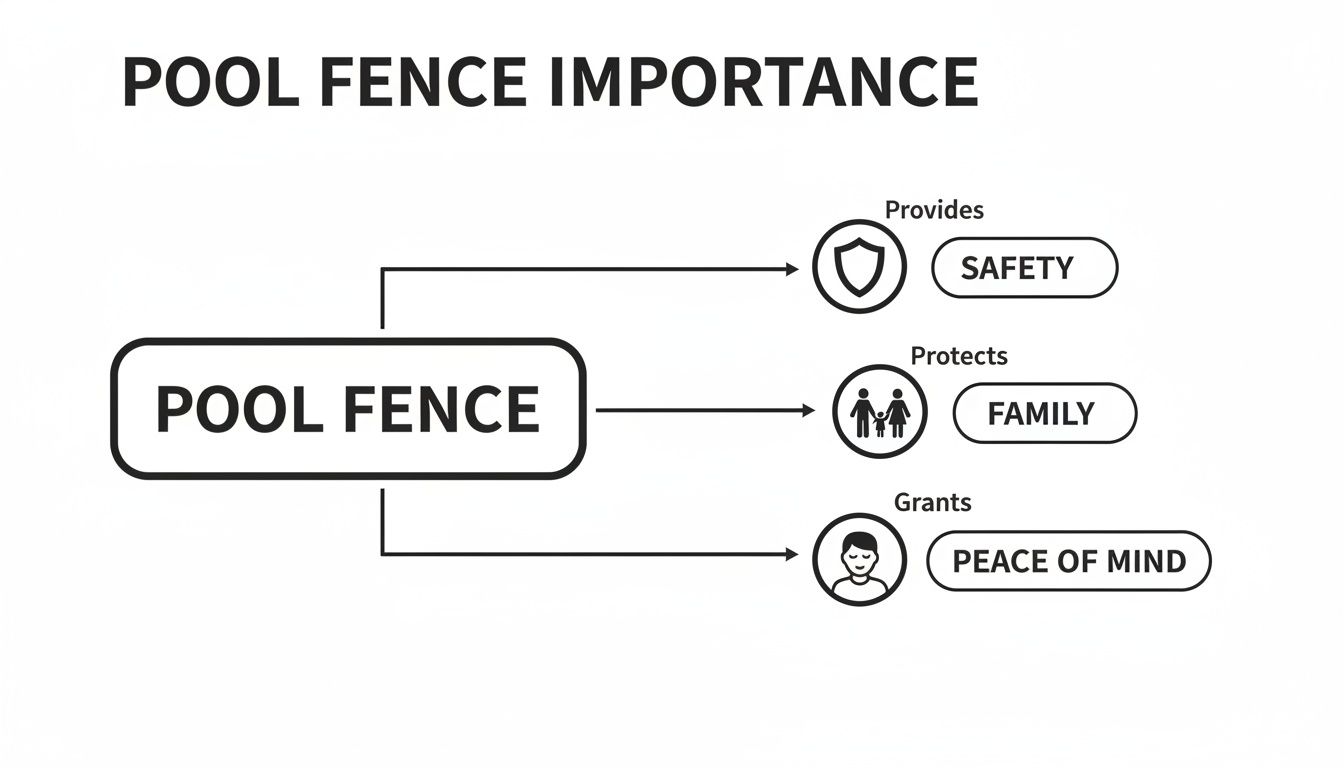
Picture this: a perfect summer afternoon. The barbecue is sizzling, your family is laughing, and the pool looks incredibly inviting. What completes this scene? The peace of mind that comes from knowing everyone is safe. To achieve that, your first step is installing an above ground pool security fence. It isn't just a barrier; it's the most critical safety feature for your summer oasis.
Why Your Pool Fence Is Your Most Important Summer Project
Adding an above ground pool is a fantastic way to create a personal backyard retreat. But with that fun comes a serious responsibility. Drowning is a leading cause of accidental death for young children, and an unsecured pool is a constant hazard. This is where a proper fence shifts from being a good idea to an absolute necessity.
Instead of viewing it as an expense, think of it as a direct investment in your family’s safety. A well-built fence acts as a silent, always-on-duty lifeguard, giving you a concrete tool to prevent toddlers, pets, or neighbourhood kids from accessing the water unsupervised.
It's About More Than Just Ticking a Box
Yes, local bylaws in Ottawa and Gatineau dictate specific fence requirements, and meeting them is mandatory. But the true reason for a professionally installed fence goes beyond avoiding fines.
Here’s the actionable value you get:
Implement Effective Accident Prevention: A physical barrier is the single most effective tool for stopping accidental falls into the pool. Toddlers are fast and inquisitive; a fence is the one thing that reliably keeps them safe.
Secure Yourself from Liability: In the event of an accident, a compliant fence is your proof that you took every reasonable precaution. This is a critical step for protecting yourself, both for insurance purposes and from potential legal issues.
Increase Your Home's Value: A secure, professionally fenced pool is a major selling point. It signals to potential buyers that your backyard is not only fun but also safe and ready for immediate use.
This guide provides the practical steps you need to take. We'll show you how to choose materials that can handle a Canadian winter, outline the key differences between a DIY job and a professional installation, and give you the checklist to ensure your backyard is the true sanctuary you envisioned.
Getting to Grips with Ottawa and Gatineau Pool Fence Bylaws
Understanding the local rules for an above-ground pool security fence is your first actionable step. These regulations are not arbitrary; they are a proven safety system based on years of data, designed to prevent tragic accidents.
Think of the bylaws as your project checklist. They provide clear, straightforward steps that remove guesswork from securing your pool. By following them, you ensure your fence will pass inspection the first time and, more importantly, that you are actively protecting the people you care about.
The rules in both cities are similar, though slight differences exist due to provincial codes. Whether you're in Ontario or Quebec, the core principle is the same: create a solid barrier that a small child cannot climb over, squeeze through, or crawl under.
A proper fence is the cornerstone of pool safety. It’s what stands between a fun summer day and a potential emergency, giving you the freedom to relax.
The Unmistakable Height Requirement
Let's start with your first critical measurement: the fence height. This is your primary defence against unsupervised pool access. A fence that’s even a few inches too short can be scaled by a determined child, completely defeating its purpose.
Across the Ottawa-Gatineau region, both the Ontario Building Code (OBC) and the Quebec Construction Code are clear: your fence must be at least 60 inches (5 feet) tall. Actionable Tip: Always measure this from the outside of the fence, looking in. This prevents a child from using a planter, toy, or any other object on the ground to get a boost over the top. This 5-foot standard is specifically designed to be taller than the average preschooler can reach or climb.
Beyond Height: Spacing and Clearance Details
While height is crucial, the smaller construction details are just as vital for creating an effective barrier. A tall fence with large gaps or climbable features is not a secure fence.
Here are the specific measurements you must adhere to:
Picket Spacing: The gap between vertical bars or pickets must not exceed 100 mm (4 inches). Actionable Tip: Use a standard baseball to test the spacing; if it can fit through, the gap is too wide.
Ground Clearance: The space between the bottom of your fence and the ground must also be no more than 100 mm (4 inches) to prevent children from crawling underneath.
Non-Climbable Design: The outside face of the fence must be smooth and free of handholds or footholds. Actionable Step: Ensure any horizontal support rails are installed on the inside of the fence, facing the pool.
These rules work together to create a solid, seamless barrier. Each specification closes a potential loophole in your safety system.
"A compliant pool fence is more than just panels and posts. It is an interconnected system where every component—from the latch height to the picket spacing—plays a vital role in preventing tragedies."
The Non-Negotiable Self-Closing Gate
Finally, let's focus on the gate—arguably the most critical piece of your above-ground pool security fence. A gate left open renders the entire fence useless. That’s why bylaws are so strict about its hardware.
Your pool gate must have both a self-closing device and a self-latching mechanism. This means every time the gate is opened, it must swing completely shut and latch securely on its own.
The latch itself must be on the inside of the gate, at least 54 inches from the ground, where a small child cannot reach it. This two-part system is your fail-safe, ensuring the pool remains secure even when someone forgets to close the gate. We provide a more detailed checklist in our complete Ottawa above ground pool fence guide.
Choosing Fence Materials That Survive Canadian Seasons
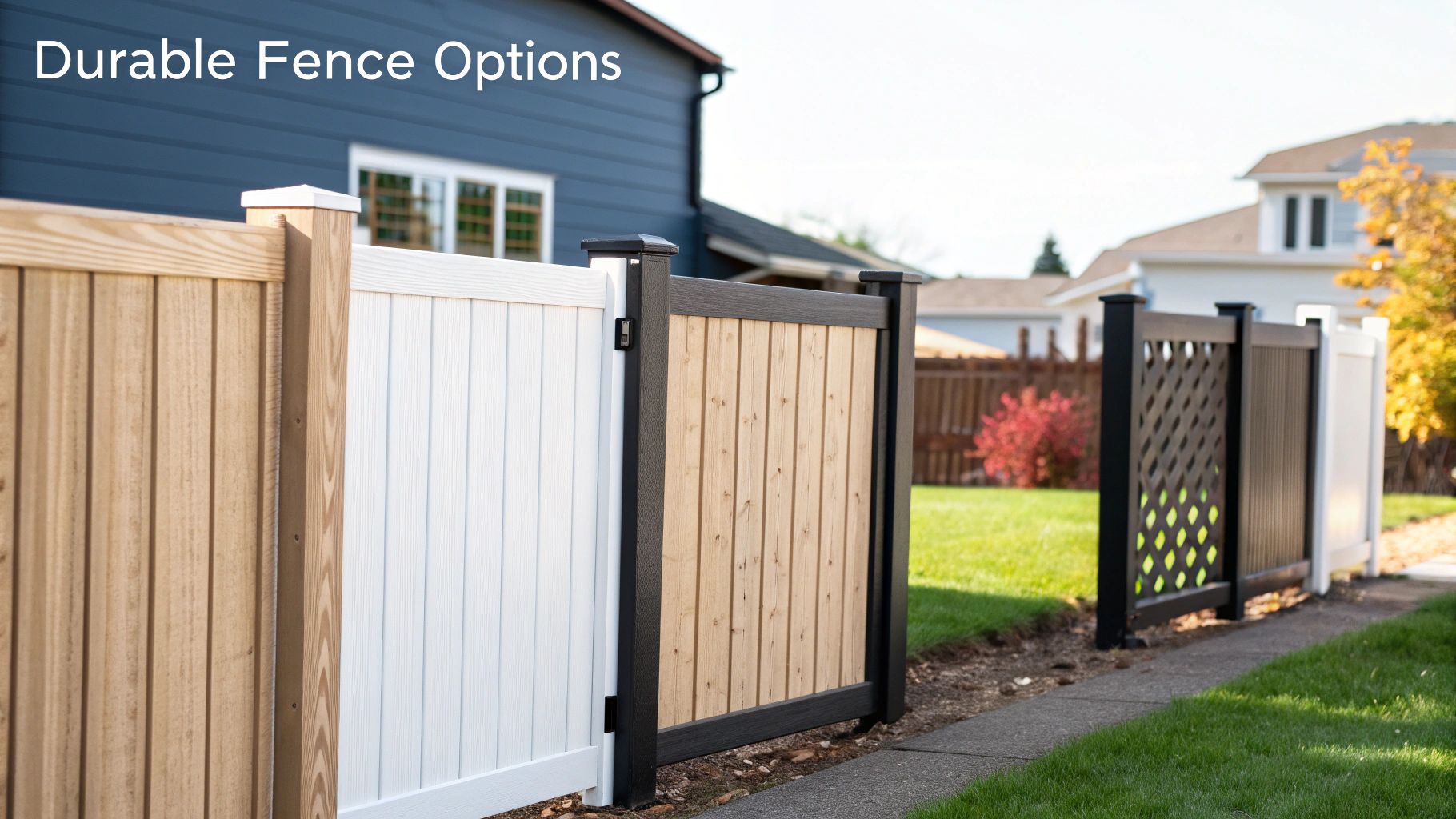
In the Ottawa-Gatineau region, an above ground pool security fence must withstand a demanding climate. From deep freezes to humid heatwaves, the material constantly expands and contracts. This stress can quickly warp, crack, and weaken a fence that isn't up to the task.
Your choice of material is a balance of initial cost, long-term durability, and the amount of maintenance you are willing to perform. A fence that looks great in its first summer can become a faded, twisted eyesore if not chosen for our unique weather. Let’s review the practical options that hold up in our region.
Pressure-Treated Wood: The Classic Choice
Pressure-treated wood is a popular starting point due to its affordability and natural look. When installed correctly, it creates a solid barrier that meets all local bylaw requirements. The treatment process helps it resist rot and insects, which is essential during our damp seasons.
The trade-off is maintenance. To prevent splintering, twisting, or greying from our freeze-thaw cycles, you must clean and re-seal or stain it every two to three years. Actionable Tip: Schedule this maintenance into your spring-cleaning routine. If you skip this task, moisture will penetrate the wood, leading to rapid deterioration and potential structural issues. For a deeper look at wood options, compare cedar versus pressure-treated fences.
PVC (Vinyl) Fencing: The Low-Maintenance Champion
If your goal is a "set it and forget it" solution, PVC (vinyl) fencing is your best bet. Modern PVC is engineered to handle extreme temperatures without cracking or becoming brittle. It will not rot, warp, or fade like wood, and since the colour is integral to the material, scratches are barely visible.
The primary benefit of a PVC above ground pool security fence is its minimal upkeep. Actionable Step: A quick wash with soap and water once a year is all that’s needed to keep it looking new. While the upfront cost is higher than wood, you save significant time and money over the years by eliminating the need for stain, sealant, and replacement boards.
A well-installed PVC fence is like a good appliance—it just works. Its resilience against moisture and UV rays makes it a top performer in a climate that puts constant stress on exterior materials.
Ornamental Iron: The Elegant Guardian
For maximum durability combined with a sophisticated, open aesthetic, consider ornamental iron (typically aluminum or galvanized steel). This style provides an unobstructed view of your pool, which many parents prefer for supervision. Its strength is unmatched, and modern powder-coated finishes effectively prevent rust and corrosion.
Ornamental iron fences are virtually maintenance-free and can last for decades. Their smooth vertical pickets make them non-climbable, ensuring they easily meet safety codes. The main barrier is the initial investment, as it is the most expensive option. However, if longevity and timeless style are your priorities, the long-term value is undeniable.
A Clear Comparison for Your Decision
The right material depends on your priorities: budget, aesthetics, or long-term maintenance. Use this table to compare how the top contenders perform in the Ottawa-Gatineau climate.
Above Ground Pool Fence Material Comparison for Ottawa-Gatineau
Material | Upfront Cost | Durability & Lifespan | Maintenance Level | Best For |
|---|---|---|---|---|
Pressure-Treated Wood | Low | Good (15-20 years with care) | High (Requires regular sealing/staining) | Homeowners on a budget who don't mind annual upkeep and prefer a natural look. |
PVC (Vinyl) | Medium | Excellent (25+ years) | Very Low (Occasional cleaning) | Families seeking a durable, low-maintenance solution that will look great for years. |
Ornamental Iron | High | Exceptional (50+ years) | Very Low (Check for scratches in finish) | Those prioritizing security, elegance, and maximum longevity with an open view. |
By evaluating how each option handles the real-world stress of our Canadian seasons, you can confidently invest in a fence that delivers safety, beauty, and peace of mind for years to come.
The Critical Safety Features Your Fence Must Have
A proper above ground pool security fence is a complete safety system, where small components do the most important work. These purpose-built features are what transform a simple barrier into a reliable, life-saving enclosure.
While the fence panels establish the perimeter, it's the gate hardware and the climb-resistant design that actively prevent unsupervised access. Getting these elements right is the key to creating a backyard that is not just compliant, but genuinely safe. These details are where professional design and installation truly prove their value, providing constant protection that works seamlessly in the background.
The Gate: The Brains of the Operation
The gate is the most common point of failure in any pool enclosure. A gate left ajar, even for a moment, negates the entire fence. This is why local codes in Ottawa and Gatineau demand a two-part automated system.
Your action plan must include these two key parts:
Self-Closing Hinges: These are not standard gate hinges. They are spring-loaded or hydraulic, engineered to swing the gate shut automatically from any open position.
A Self-Latching Mechanism: As the gate closes, this latch must engage and lock on its own, without requiring manual intervention.
Think of it as a built-in fail-safe. Someone can walk through with their hands full and forget to close the gate, and the hardware still does the job. The pool area is immediately secured again.
Latch Height: The Crucial Detail
The self-latching mechanism is only effective if it's placed out of reach. Bylaws are specific: the latch release must be on the pool side of the gate, at least 54 inches (137 cm) from the ground.
This height was deliberately chosen because it is above the reach of the average toddler or preschooler, making it nearly impossible for them to open the gate independently. Actionable Step: During installation, measure this height precisely. Combining a high latch with a self-closing system creates a formidable barrier that provides reliable security. Our guide on pool safety fence requirements dives deeper into these technical details.
A fence is only as strong as its weakest point. For most pool enclosures, that point is an improperly secured gate. Investing in high-quality, code-compliant hardware is non-negotiable for true peace of mind.
Creating a Non-Climbable Zone
The final piece of the safety puzzle is ensuring the fence itself doesn't offer an easy path up and over. The entire exterior surface must be difficult to scale. This means paying attention not just to the fence design, but also to the area immediately surrounding it.
A pivotal 2021 Ottawa-Gatineau Public Health study highlighted that properly installed fences slashed child drowning incidents by an incredible 82%. The study noted that only 4 out of 28 reported cases (14%) involved a breach of compliant 60-inch barriers with no more than 100 mm (4-inch) gaps.
Here is your checklist for maintaining a non-climbable surface:
Place Horizontal Rails on the Inside: Any horizontal support beams must be on the pool side. On the outside, they become a ladder.
Choose Smooth, Vertical Designs: Avoid chain link, which offers foot- and hand-holds. Vertical picket styles in PVC or ornamental iron are better choices.
Clear the Perimeter: Maintain a "clear zone" around the outside of the fence. Remove patio furniture, large planters, storage bins, or even sturdy tree limbs that could give a child a boost.
By focusing on these three critical areas—a self-securing gate, correct latch height, and a non-climbable surface—you create multiple layers of protection that work together to keep your pool area secure.
DIY vs. Professional Installation: Which Path Is Right for You?
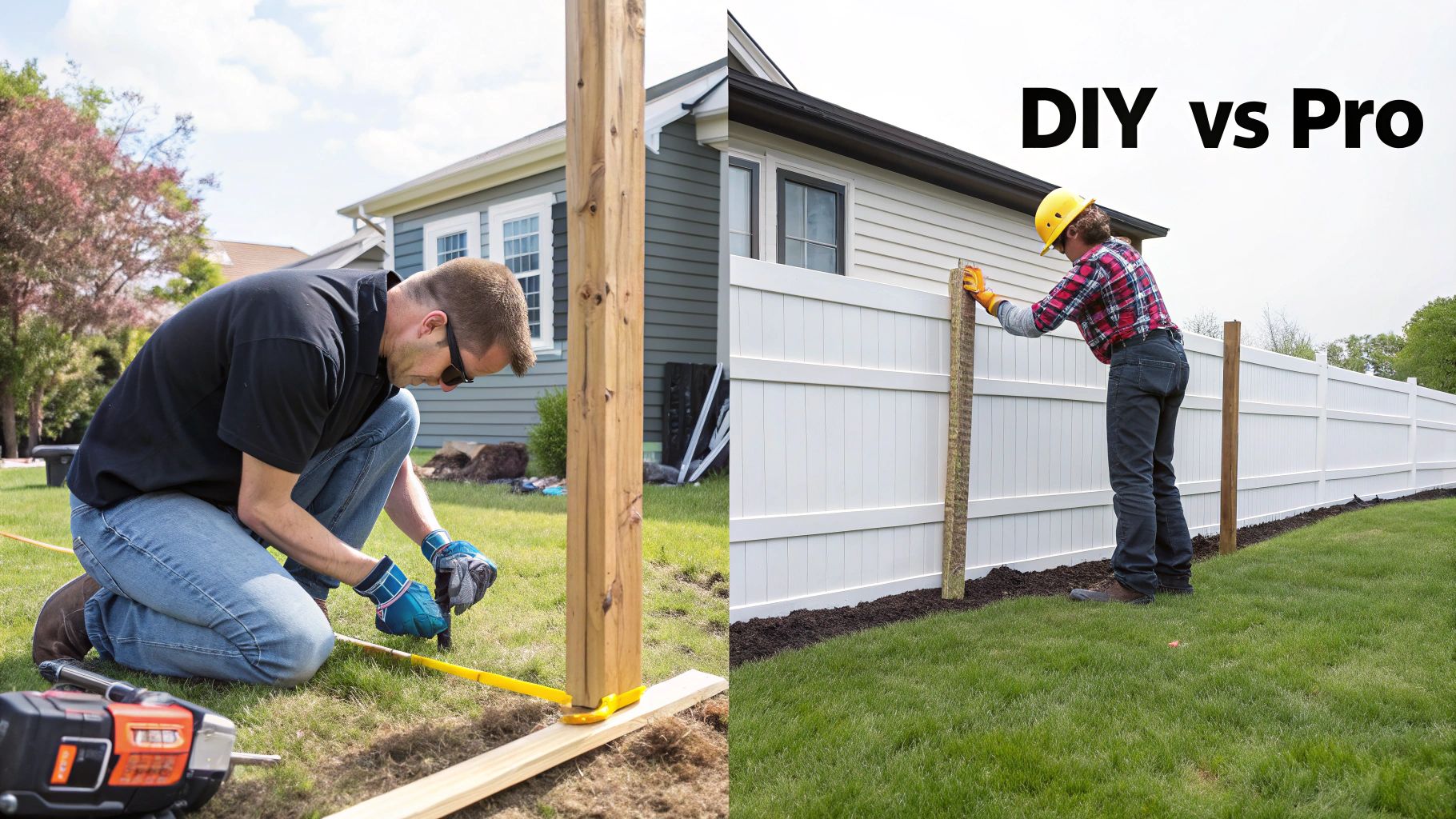
You’ve chosen your materials. Now you face a major decision: do you build your above ground pool security fence yourself, or do you hire professionals?
The DIY route can seem appealing due to potential cost savings. However, this is not a typical weekend project. A small mistake in measurement, the wrong hardware, or an improperly set post can have severe safety consequences. Professional installation means paying for precision, compliance, and efficiency. It’s important to look beyond the initial quote and consider the long-term value.
The Honest Truth About a DIY Pool Fence Project
Taking on this installation involves more than just a free weekend and a post-hole digger. The challenges are significant, especially in the Ottawa-Gatineau region with its difficult soil conditions and specific building codes.
Here are the hurdles you must overcome if you go it alone:
Mastering Local Bylaws: You are solely responsible for knowing and meeting every local requirement, from picket spacing to gate latch height. A failed inspection often means dismantling your work and starting over.
Battling Tough Ground: Our local soil is often filled with rock, heavy clay, or tree roots. Manually digging straight, deep post holes can quickly become a back-breaking ordeal.
Achieving Absolute Precision: There is no room for "good enough." A fence line that is slightly off-level or posts that aren't perfectly plumb can compromise the entire structure's stability and prevent a self-closing gate from latching reliably.
The stakes are high. A report from the Ottawa Paramedic Services and Gatineau Fire Department revealed that over 75% of above-ground pool accidents in our area between 2018 and 2025 involved non-compliant fences. These were often cases where barriers were too short or had gaps large enough for a child to squeeze through. You can review these critical above-ground pool barrier requirements for more detail.
The Value of Bringing in the Pros
Hiring an experienced installer like FenceScape is an investment in skill, safety, and durability. A professional team arrives with specialized tools, deep local knowledge, and an efficiency that is nearly impossible for a DIYer to replicate.
A professional installation transforms a fence from a simple product into a fully integrated safety system. It's the assurance that every post is set below the frost line and every gate latch is perfectly aligned for reliable security.
A professional crew manages the entire process, from site assessment to final cleanup. This approach provides tangible benefits that save you money and stress.
Guaranteed Code Compliance: A seasoned contractor knows the local bylaws inside and out. They build your fence to pass inspection the first time—no guesswork required.
Expert Site Assessment: A professional will identify potential issues you might miss, such as buried utility lines or tricky slopes, and create a plan to address them correctly.
Built to Last Our Winters: Professionals know how to set posts below the frost line to prevent frost heave, a major issue in our climate. This ensures your fence remains stable and your gate functions properly for years.
While a DIY project can be rewarding, an above ground pool security fence is a life-saving feature. The peace of mind from knowing it was built right by experts is invaluable.
How to Budget for Your Pool Fence Project
Budgeting is the first practical step toward a smooth installation of your above ground pool security fence. While it’s tempting to seek the lowest price, a smart budget focuses on long-term value and non-negotiable safety. Your final investment depends on a few key factors that, once understood, allow you to plan with confidence.
The cost is determined by several variables. The main ones are the total length of the fence, the material you choose, and any additional features like gates or custom sections.
Breaking Down the Core Costs
Here’s a look at the main items that will appear on your quote. Understanding these helps you see where your money is going and identify areas for adjustment.
Linear Footage: This is the most direct cost driver. The longer the fence, the more material and labour are required. A professional installer will provide an accurate quote based on precise perimeter measurements.
Material Choice: As discussed, materials come with different price tags. Pressure-treated wood is the most budget-friendly upfront, followed by PVC/vinyl. Ornamental iron is the premium option. This choice will have the single largest impact on your initial cost.
Gates and Hardware: Every pool fence requires at least one gate, and this is not an area to cut corners. Your quote will include a specific line item for code-compliant, self-closing, and self-latching hardware, as this is a mandatory safety feature.
Smart Ways to Manage Your Investment
A professionally installed fence is a significant home improvement, but there are practical ways to manage the cost without compromising on quality or safety.
Investing in a professionally installed fence isn't just a project expense; it's a long-term investment in your property's value and, more importantly, in your family's daily safety and peace of mind.
At FenceScape, we believe safety should be accessible. We offer solutions to help homeowners in Ottawa and Gatineau manage their budgets effectively.
A great way to save is with our neighbourhood group discount. If you coordinate with neighbours who also need fences, everyone benefits from bulk material pricing and efficient scheduling, reducing the cost for the entire group. We also offer flexible financing options for residents in both Ontario and Quebec, allowing you to spread the cost over manageable monthly payments. This makes it easier to get the high-quality, secure fence you need now without straining your finances.
Your Top Questions About Above Ground Pool Fences Answered
Even with careful planning, questions about your above ground pool security fence will arise. Homeowners across the Ottawa-Gatineau region often have the same concerns, especially regarding local bylaws and design choices.
Getting clear answers is key to moving forward confidently and avoiding costly mistakes. Here are the most common questions we receive from our clients.
Does a Locking Ladder Replace the Need for a Fence?
This is the most frequent question, and the answer is an emphatic no. Both Ottawa and Gatineau bylaws are clear: a locking or removable ladder is a secondary safety feature, not a substitute for a proper fence.
It's too easy to forget to lock or remove the ladder after a swim. A permanent, four-sided fence provides a constant, reliable barrier that protects the pool area 24/7. It is the primary safety system an inspector will look for.
Can I Use My House as Part of the Pool Fence?
Yes, you can often use a wall of your house as one side of the pool enclosure. However, this common practice comes with strict rules for any doors or windows opening directly into the pool area.
Using your home as a barrier isn't a shortcut; it's just a different design that has its own demanding set of safety rules. Any door or window becomes a potential "gate" and must be secured to the same standard.
Actionable Step: Any door providing access to the pool must be equipped with special safety hardware. This typically means installing a certified self-closing and self-latching device high up, out of a child's reach, or an alarm that sounds when the door is opened. It is crucial to get a professional consultation to ensure this setup is fully compliant with local code.
How Long Does Professional Installation Take?
For a standard residential above-ground pool, a professional crew can typically install the entire fence in one to three days. This timeline includes digging and setting the posts, hanging the panels, and fine-tuning the gate.
Factors like rocky soil, the total length of the fence, or a complex layout can extend this timeline. A professional installer will always provide a realistic schedule before starting work, so you know exactly what to expect.
A secure backyard provides priceless peace of mind. The expert team at FenceScape is here to ensure your above ground pool security fence is installed perfectly, meeting all safety codes and your aesthetic goals. Explore our fencing solutions and get a free estimate today!
Comments