
Pool safety fence requirements: Your actionable guide to a compliant, safe pool

When it comes to pool fences in Ottawa and Gatineau, the rules aren't just suggestions—they're law. If your pool can hold more than 60 cm (24 inches) of water, you must surround it with a climb-resistant fence that’s at least 1.5 metres (5 feet) high and equipped with a self-closing, self-latching gate. This isn't red tape; it's the most critical action you can take to protect your family.
Your Quick Guide to Ottawa and Gatineau Pool Fence Rules
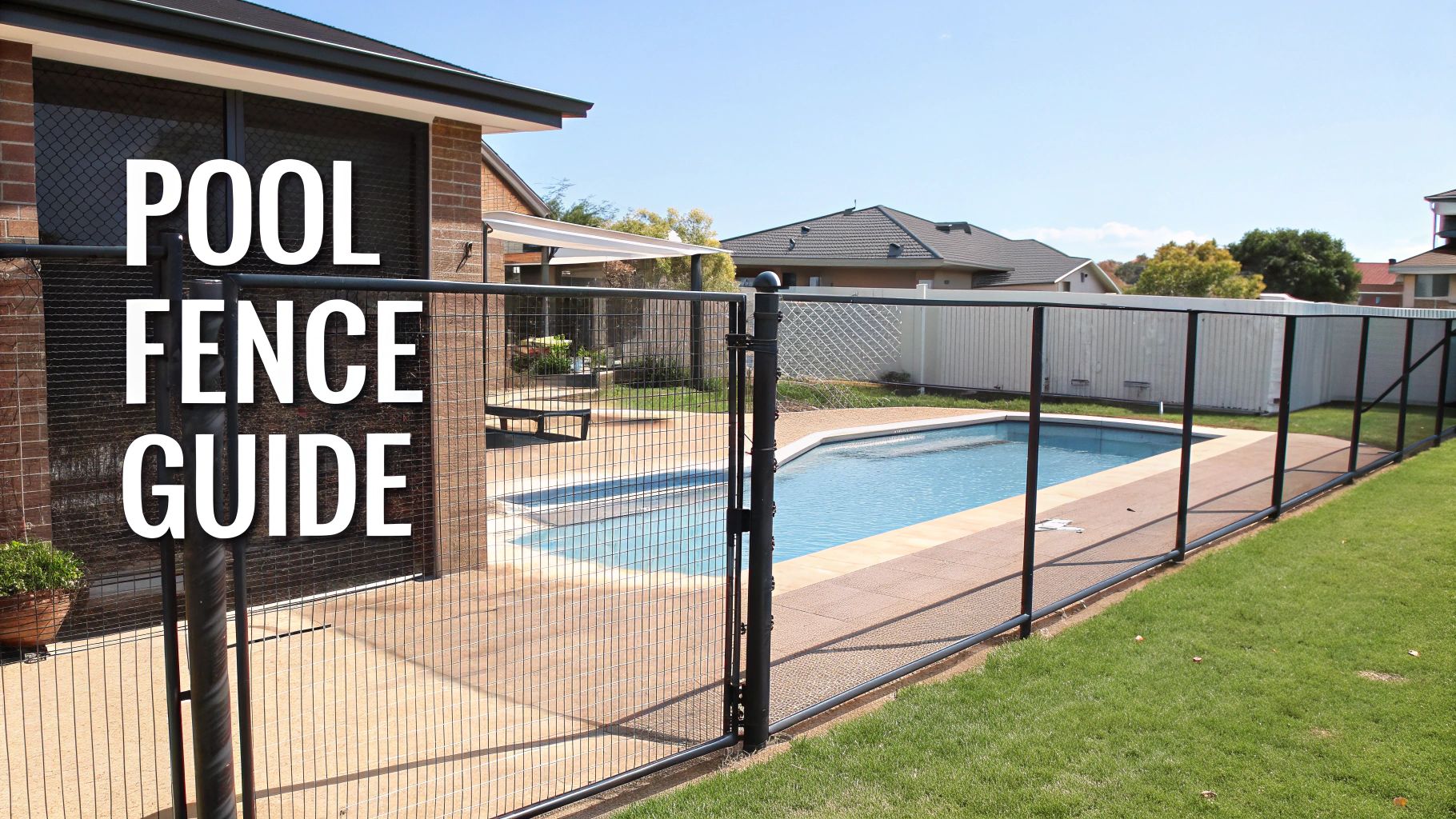
Deciphering local by-laws can be a headache, but mastering the key pool fence rules is your first step toward a safe backyard. Use these regulations as a blueprint for your project. They provide the essential structure for a build that's both safe and up to code.
This guide is your shortcut to understanding the must-knows for both sides of the river. While Ottawa and Gatineau have minor differences, the goal is identical: prevent tragic accidents. Nailing these fundamentals now will save you from major headaches and costly fixes down the road.
Actionable Steps for Pool Fence Compliance
At the heart of every pool by-law are common-sense safety principles designed to create a barrier a child cannot bypass. Once you understand these core ideas, the specific regulations become much clearer.
Here’s your checklist of what inspectors will look for:
Verify the Height: Your fence must be at least 1.5 metres (about 5 feet) high. Measure from the ground on the outside of the enclosure to ensure it's high enough to deter climbing.
Eliminate Handholds: Ensure the fence design is climb-resistant. This means no horizontal slats that act like a ladder. Keep vertical pickets spaced closely to prevent a child from getting a foothold.
Secure the Gate: Gates are the most common point of failure. Confirm yours swings outward (away from the pool), closes automatically, and has a self-latching lock positioned high enough to be out of a child's reach.
Check All Gaps: Any space, whether under the fence or between pickets, must be less than 10 cm (4 inches). This prevents a child from squeezing through.
These are the non-negotiable pillars of a compliant pool fence. Note that rules can vary by pool type. Our Ottawa above-ground pool fence guide explains how pool walls can sometimes act as part of the barrier.
A compliant pool fence is your silent, ever-vigilant lifeguard. It's the most effective, passive safety system you can install, providing continuous protection even when you're not actively supervising the pool area.
The "Why" Behind Pool Enclosure By-Laws
Let's be honest, meeting pool safety fence requirements can feel like just ticking boxes. It's easy to see by-laws as bureaucratic red tape standing between you and a refreshing swim. But these rules have a much deeper purpose.
They are life-saving measures, developed from decades of data and heartbreaking lessons, with the sole purpose of preventing the unthinkable.
In both Ottawa and Gatineau, the core mission of every pool enclosure by-law is to stop unsupervised access to water, especially for young children. Accidental drowning is a leading cause of preventable death for kids under five. It happens in an instant. Use these by-laws as a proven framework for safety, turning compliance from a chore into a proactive investment in your family's well-being.
Your Fence: The 24/7 Lifeguard
Think of your pool fence as a silent lifeguard that’s on duty around the clock. While nothing replaces active supervision when people are in the water, a compliant fence provides that critical physical barrier when you can't be watching.
This "silent lifeguard" is engineered to block the most vulnerable. A curious toddler can't scramble over a 1.5-metre fence or figure out a high, self-latching gate. That delay creates a window of precious, life-saving seconds for a caregiver to intervene.
At its heart, a pool enclosure by-law is about creating a secure, isolated zone around the water. It’s your first and most effective line of defence in a layered safety plan that should also include supervision, alarms, and swimming lessons.
Implement a multi-layered safety plan so that if one system fails, others are there to back it up:
Active Supervision: Always keep your eyes on the water. This is your primary layer.
Physical Barriers: Install a compliant fence and gate to prevent accidental entry.
Alarms: Use door alarms or pool-surface alarms to signal a potential breach.
Education: Teach your family about water safety and enroll in swimming lessons.
More Than Just a Barrier
Beyond its crucial safety role, a well-built fence gives you something priceless: peace of mind. It clearly defines the pool area, helping keep toys, furniture, and tripping hazards away from the water's edge. It also keeps wandering pets safe and can reduce your liability by demonstrating you’ve taken every responsible step to secure your property.
When you embrace the spirit behind these by-laws, you ensure your pool remains a place of joy. Understand that every rule—from fence height to latch type—is a direct response to a real-world risk. This makes following them feel less like an obligation and more like a fundamental part of responsible pool ownership.
Getting the Basics Right: Fence Height, Gates, and Clearances
To ensure a smooth project, you must get the core requirements right from the start. City by-laws in Ottawa and Gatineau boil down to three make-or-break elements: the height of your fence, how your gate operates, and the size of any gaps.
Think of it like a three-legged stool. If any one of these—height, gate, or clearance—is weak, the whole system fails. Let’s break down the actionable steps to meet these standards.
A fence is just one part of a complete safety strategy. It’s a physical barrier that works hand-in-hand with active supervision and other alerts, like pool alarms, to create layers of protection.
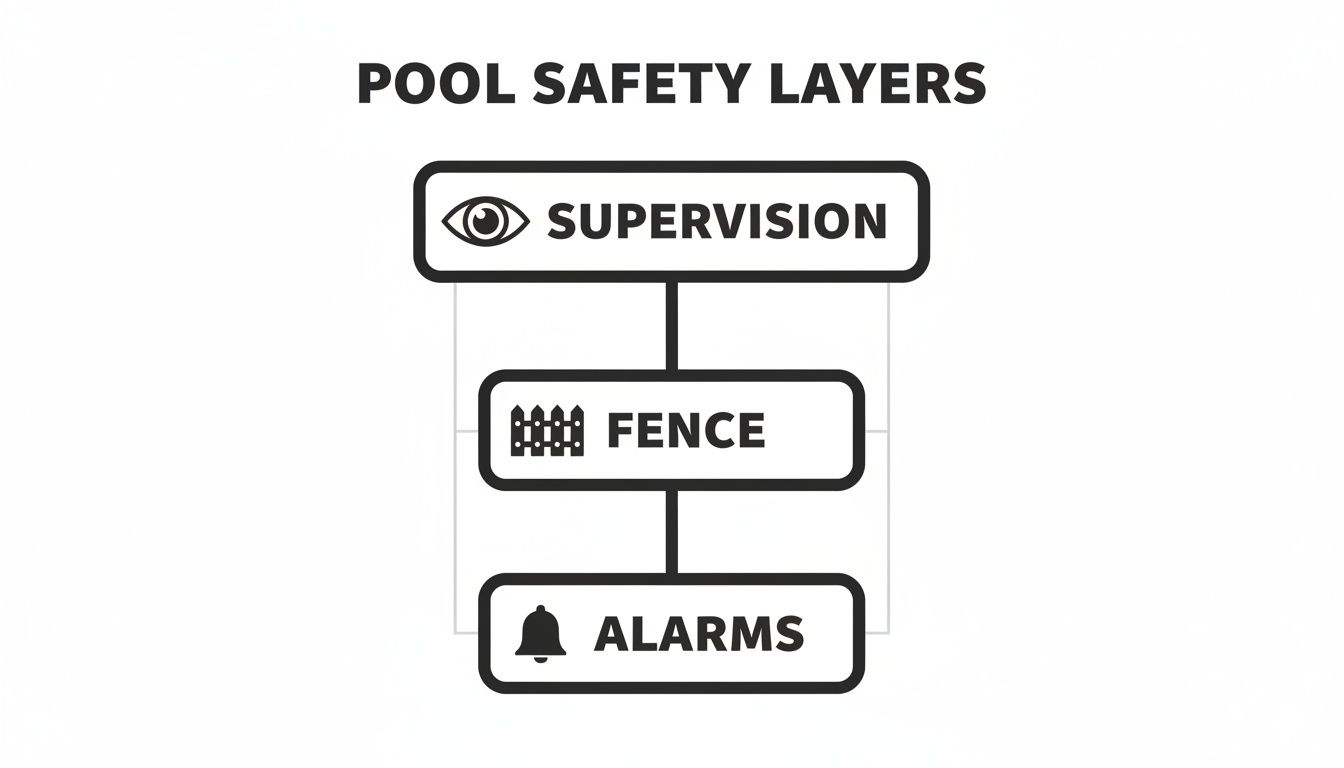
While nothing replaces watching your kids, a proper fence is the one layer that's on duty 24/7, offering constant peace of mind.
Action Step 1: Verify Your Fence Height
There’s no grey area here. For both Ottawa and Gatineau, the absolute minimum height for a pool fence is 1.5 metres (about 5 feet). Always take this measurement from the ground on the outside of the enclosure, where someone would attempt to enter.
This height was chosen specifically because it is a serious deterrent for a young child. For a toddler, a 5-foot barrier is a formidable obstacle, not a fun climbing challenge. Confirming this height is your first and most important action.
Action Step 2: Ensure Your Gate is Secure
If a pool fence has a weak spot, it's almost always the gate. Because it must open and close, it's the most common point of failure. A proper pool gate must be an active safety device, not just a door.
To pass inspection, every pool gate must have these three features:
Confirm it's self-closing. The hinges must be spring-loaded to automatically swing the gate shut from any position, even if it's only slightly ajar. Test this yourself.
Confirm it's self-latching. When the gate swings shut, it must lock itself without assistance. The latch must be on the inside (pool side) of the gate, at least 1.5 metres off the ground, well out of a child's reach.
Confirm it swings outward, away from the pool. This is a crucial detail. It prevents a small child from leaning on the gate and accidentally pushing it open into the pool area.
These three components work together to ensure the gate secures itself every time. To learn more about hardware, see our practical guide for pool gates in Ottawa, which covers the best latches and hinges on the market.
Action Step 3: Master Clearances with a Simple Test
The final piece is managing the gaps—under the fence, between the pickets, and in decorative patterns. A 5-foot fence is ineffective if a child can squeeze through an opening.
The easiest way to check your fence is with the "4-inch sphere" rule. If you can pass a ball or object that is 10 cm (4 inches) in diameter through any opening, the gap is too big and the fence will fail inspection.
Apply this test to every part of your enclosure:
Under the Fence: Measure the gap between the bottom rail and the ground. It cannot exceed 10 cm.
Between Vertical Pickets: The space separating any two vertical bars must be less than 10 cm.
Decorative Cut-Outs: Any patterns or designs in the fence panels must also follow this 10 cm rule.
This simple test removes guesswork and gives you a clear, measurable standard to ensure your fence is a solid, impenetrable barrier.
Navigating the Permit and Inspection Process
Getting the fence height and gate hardware right is half the battle. Now you must navigate the permit and inspection process. This isn't just bureaucracy; it's a crucial safety check to validate your plans before construction begins.
Think of it as an expert second opinion. Submitting your plans allows the city to catch potential red flags early, saving you from headaches and expensive fixes. This process takes the guesswork out of the by-laws and provides a clear path to getting the job done right.
Your Permit Application Roadmap
Whether you're in Ottawa or Gatineau, you need a permit before installing a new pool and its fence. The paperwork may differ slightly, but the required information is fundamentally the same: a clear picture of what you're building and where.
To apply, you will need to assemble the following:
A completed application form, available on your city's website.
A detailed site plan. This is the most critical document. Create a bird's-eye view of your property showing your house, lot lines, the new pool, and a clear outline of the entire fence with gates marked.
Fence and gate details. Specify the materials, fence height, and the self-closing hinges and self-latching hardware you will install.
A detailed, to-scale site plan is your secret weapon for a quick approval. It’s the easiest way to show the city that your fence is properly set back from property lines and that your pool area will be completely secure.
If you're starting from scratch, working with a company that offers professional swimming pool services can be a huge help. They are experts at navigating these codes and can streamline the entire permit process.
Passing the Final Inspection with Flying Colours
Once your permit is approved and the fence is installed, the final step is the inspection. A city inspector will visit to ensure the finished product matches your plans and meets every requirement of the local by-law.
To pass, you must meet their checklist. Here’s what to prepare for:
Measurements: They will use a tape measure to check the 1.5-metre fence height, the under-fence gap (no more than 10 cm), and picket spacing.
Gate Operation: They will open and release every gate from various positions to confirm it swings shut and latches securely every time. They will also verify the latch height and location.
Climb-Resistance: The inspector will scan the area outside the fence for anything a child could use as a step, such as benches, planters, or A/C units placed too close.
Structural Integrity: They will confirm your fence materials do not create a ladder. A wood fence with horizontal rails on the outside, for instance, is an automatic fail.
Knowing the inspector's criteria gives you an advantage. Conduct your own pre-inspection walkthrough to spot and fix issues yourself. It’s the best way to ensure you pass on the first try and get the green light to enjoy your pool.
Choosing Materials That Are Safe, Durable, and Compliant
Selecting a material for your pool fence is a critical safety decision. The right material must withstand Ottawa-Gatineau's weather, meet strict climb-resistance by-laws, and align with your maintenance preferences. This is where safety, durability, and compliance intersect.
The wrong choice can lead to a failed inspection or a deteriorating fence that creates safety risks. A poorly designed wood fence can become a ladder, while a flimsy material might warp or rust, leaving dangerous gaps. Let's break down the most popular options to help you make an informed decision.
Ornamental Iron: A Top Choice for Safety and Visibility
Ornamental iron (typically aluminum or galvanized steel) is a popular choice for one key reason: superior visibility. The slim, vertical pickets provide a clear, unobstructed view of the pool from your house or deck—a massive safety advantage. This design is also inherently difficult to climb.
From a compliance standpoint, ornamental iron simplifies the process. Its vertical picket design naturally meets anti-climb rules. Manufacturers build these fences with pickets spaced to pass the 10 cm (4-inch) sphere test, making them compliant from the factory. It also stands up to our cold winters and humid summers, remaining safe for years with minimal maintenance.
PVC and Vinyl: Low Maintenance and Highly Compliant
For a great mix of privacy, easy upkeep, and safety, PVC or vinyl fencing is hard to beat. Unlike wood, it never rots or splinters, and you won't spend weekends staining it. This resilience makes it a smart, set-it-and-forget-it solution for homeowners in our region.
To ensure your vinyl fence complies with pool safety fence requirements, you must choose the right style.
Privacy Panels: Solid PVC panels are an excellent option. They offer total privacy and are nearly impossible to climb.
Picket Styles: If you prefer a more open feel, select a vinyl picket style with closely spaced vertical pickets.
Here's the most important thing to remember: never install a fence with the horizontal support rails on the outside. An inspector will flag that as a climbing hazard in a heartbeat, and you'll fail your inspection. Always make sure any structural supports are on the inside, facing the pool.
Wood Fencing: Classic Appeal with Critical Caveats
Wood offers a timeless look and can be budget-friendly, but you must be meticulous with the design to make it a compliant pool fence. Its texture and typical construction can easily create handholds if you're not careful.
The number one mistake with wood pool fences is using a standard "good neighbour" design with horizontal rails on both sides, creating a perfect ladder. To use wood safely, the outside face of the fence must be completely smooth and vertical. This typically means building a solid board fence where the entire support frame is on the pool side.
Furthermore, a wood fence is only as strong as its foundation. For a deep dive, see our guide on cementing in fence posts the right way for a lasting build, which has key tips for a build that can handle our region's seasonal ground shifts.
Comparing Your Material Options
Each material offers different pros and cons for meeting safety codes and surviving our climate. Your best fit will depend on how you balance visibility, maintenance, and budget. And don't forget the ground around your pool—understanding proper pool deck paver installation is another piece of the puzzle for creating a truly safe and durable space.
Material | Key Safety Benefit | Durability in Ottawa Climate | Primary Consideration |
|---|---|---|---|
Ornamental Iron | Excellent visibility; naturally climb-resistant design. | High; resistant to rust, rot, and temperature swings. | Higher initial cost. |
PVC / Vinyl | Low maintenance; solid panels offer zero handholds. | Excellent; will not rot, warp, or need repainting. | Must ensure horizontal rails face inward. |
Wood | Cost-effective; can be built for total privacy. | Good, but requires regular maintenance (staining/sealing). | Design must prevent a "ladder effect" on the outside. |
Glass | Unmatched visibility for total pool supervision. | Excellent, but requires frequent cleaning to be effective. | Highest cost and professional installation is a must. |
Ultimately, choosing your material is a balancing act. By making climb-resistance and long-term durability your top priorities, you can be confident your fence won't just pass inspection—it will act as a reliable "silent lifeguard" for many years to come.
Your Essential Pool Fence Maintenance Checklist
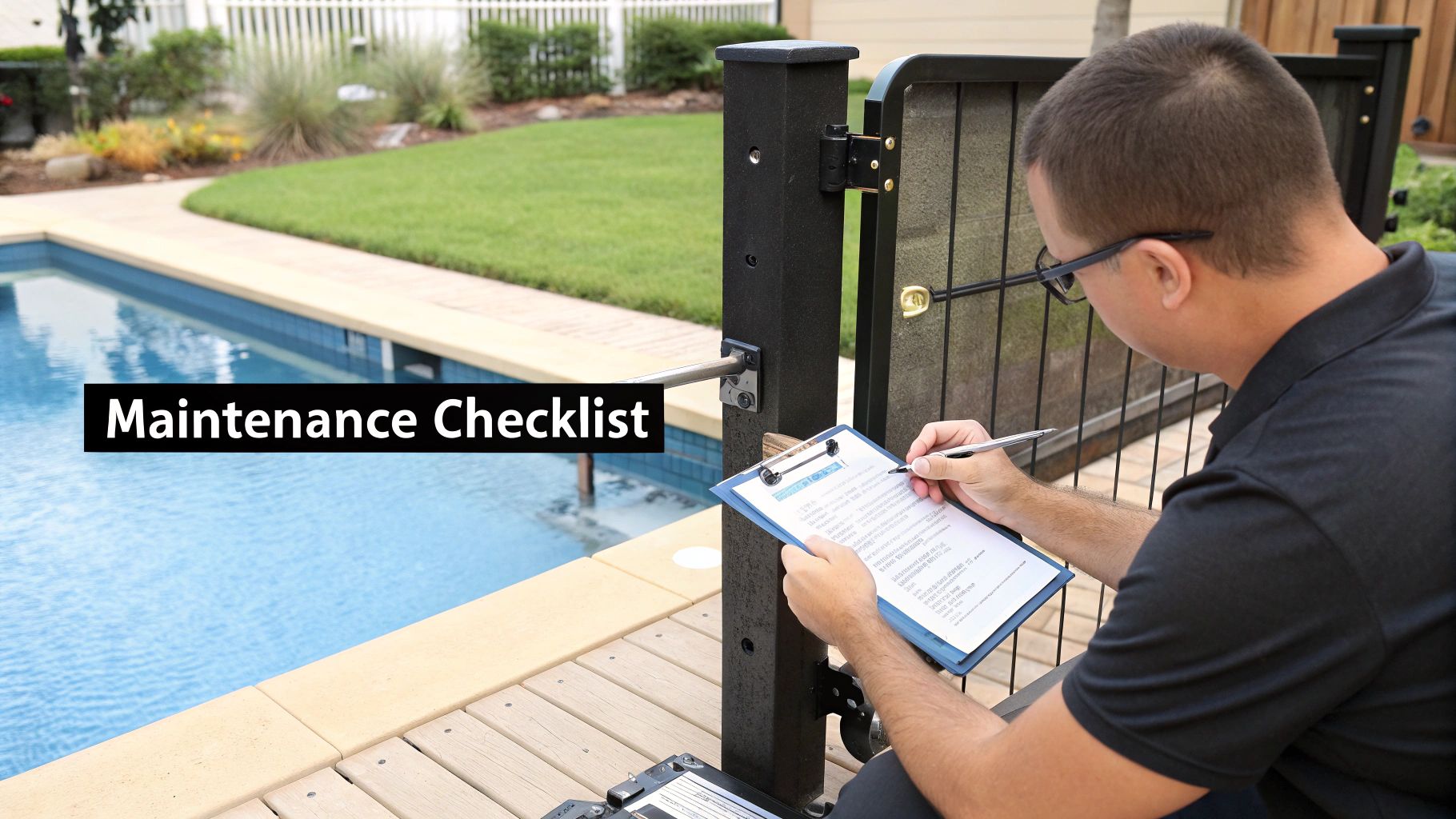
A compliant pool fence isn't a one-time project; it's an ongoing commitment to safety. Passing the final inspection is a great first step, but the real work starts now. Think of your fence as a silent lifeguard that needs to be in top shape. Over time, ground shifts, hardware wears out, and new climbing hazards can appear.
Like the brakes on your car, you shouldn't wait for them to fail before a check-up. A proactive maintenance routine ensures every part works as intended, providing reliable protection. Use this seasonal checklist to catch small issues before they become serious safety risks.
Sticking to a routine protects your fence's structural integrity, keeps your family safe, and ensures you remain compliant with local pool safety fence requirements.
Spring Kick-Off Inspection
When you open your pool for the summer, make the fence your first stop. Canadian winters are harsh on outdoor structures, so a thorough check-up is non-negotiable.
Check for Ground Shift and Gaps: Walk the entire perimeter, inspecting the bottom edge. Frost heave can push posts up, creating dangerous gaps. Measure any space under the fence; anything larger than 10 cm (4 inches) is a violation and must be fixed.
Inspect All Hardware: Examine every screw, bolt, and fastener on your fence panels and posts. The freeze-thaw cycle can loosen them, so tighten anything that feels wobbly.
Test Every Gate: This is the most critical step. Open each gate fully and let it go. It must swing completely shut and latch securely on its own. If it’s slow or doesn’t click firmly into place, adjust the hinges or latch immediately.
Mid-Summer Safety Sweep
During peak swimming season, shift your focus to the area around the fence. Summer activities can unintentionally create new dangers that undermine your fence's security.
Your fence is only as tall as the nearest climbable object. A perfectly compliant 1.5-metre fence becomes a much shorter obstacle if a planter, bench, or stack of pool toys is placed next to it.
Perform this quick check every couple of weeks:
Clear the Climb Zone: Maintain a clear space of at least 1.5 metres around the entire outside of the fence. Scan for and move any patio furniture, large planters, woodpiles, or toys that a child could use as a step.
Check for Damage: Do a quick visual inspection of the fence for bent pickets, cracked panels, or other damage. A stray ball or a summer storm can create an opening you weren't aware of.
Autumn and Winter Lock-Down
As you close the pool, a final inspection will prepare your fence for the weather ahead. This ensures it remains a solid barrier even when the pool is out of sight.
Apply lubricant to the gate hinges and latch to prevent them from seizing up in the cold. Give the gate one final swing test to confirm it still closes and latches perfectly. This simple habit ensures your fence provides crucial, year-round protection.
Common Questions About Pool Fence Regulations
When you dig into the details of pool safety fence requirements, specific questions often arise. Here are actionable answers to the most common ones we hear from homeowners in the Ottawa-Gatineau region.
Can My House Wall Count as Part of the Fence?
Yes, you can use a wall of your house as one side of the pool enclosure, but you must secure any doors that open directly into the pool area. This is a critical step to prevent accidents.
You have two primary options to secure the door:
Install an audible alarm that sounds immediately when the door is opened.
Equip the door with a self-closing and self-latching device so it automatically swings shut and locks.
These rules close a dangerous loophole, preventing a child from slipping out an unlocked back door and into the pool area unnoticed.
What About the Rules for an Above-Ground Pool?
For above-ground pools, the walls can often serve as the barrier if they are at least 1.5 metres (5 feet) high and have smooth, vertical sides that are not climbable.
The key is to secure the single point of entry: the ladder or stairs. You must ensure this access point is controlled. This means the ladder must either be fully removable (and stored safely away from the pool) or be fitted with a lockable, child-proof gate.
Do I Really Need a Permit for a Temporary or Inflatable Pool?
Yes, you almost certainly do. The guiding principle in both Ottawa and Gatineau is that if a pool can hold more than 60 cm (24 inches) of water, it requires a permit and a fully compliant fence.
Don't let the word "temporary" fool you. A large inflatable pool poses the same serious drowning risk as a permanent in-ground one, which is why the by-laws demand the same safety measures.
Figuring out how these rules apply to your specific backyard is where having an expert on your side really pays off. The FenceScape team knows the local by-laws inside and out, and we can design and build a fence that's perfectly compliant, no matter the unique challenges of your property. Get your free, no-obligation estimate from FenceScape today.
Comments