
A Homeowner's Guide: pool fences above ground in Ottawa

An above-ground pool is your ticket to summer fun, but it also brings a serious responsibility. A proper fence isn't just a good idea—it's the single most effective action you can take to prevent accidental drownings, especially for young children. Think of it as the essential safety system for your backyard.
Why Your Pool Fence Is Non-Negotiable
It's tempting to think an above-ground pool's height makes it safe, but pool walls are not a reliable barrier. Ladders can be left down, and children are surprisingly effective climbers. A dedicated fence creates a controlled perimeter, ensuring entry to the pool area is always intentional and supervised.
This isn't just about peace of mind; the data is clear. Fencing is a proven lifesaver. One comprehensive review found that a proper fence around an above-ground pool reduces the risk of drowning to just 23% compared to an unfenced pool. You can review these critical pool safety findings for yourself.
More Than Just a Barrier
While child safety is the primary goal, a well-planned fence offers practical benefits for your backyard.
Define the Pool Zone: A fence creates a clear physical boundary, separating the swim area from play areas. This is invaluable for managing backyard activities during family barbecues or parties.
Reduce Your Liability: Installing a fence that meets local code demonstrates you've taken necessary safety precautions as a homeowner. This action can significantly reduce your liability in the event of an accident.
Keep Unwanted Guests Out: A sturdy fence is effective at keeping neighbourhood pets and wildlife out of the water, which helps maintain pool cleanliness and protects the liner from claws and teeth.
Actionable Insight: Treat your pool fence like a seatbelt for your backyard. You hope you never need it to save a life, but you would never go without it. It’s an essential, non-negotiable safety system.
The Foundation of a Safe Backyard
Ultimately, installing a compliant fence around your above-ground pool is the most impactful step toward creating a secure backyard oasis in the Ottawa-Gatineau region. It transforms a potential hazard into a managed source of family fun. This guide provides the actionable steps you need—from navigating local bylaws to selecting the best materials—to build a safe, strong, and lasting fence.
Navigating Ottawa and Gatineau Pool Fencing Bylaws
Understanding local bylaws for your above-ground pool fence can seem complex, but their purpose is simple: prevent accidental drownings. Whether you're in Ottawa or Gatineau, these regulations are not just bureaucratic hurdles; they are life-saving measures based on decades of safety data.
Treat these bylaws as a safety checklist for your project. They specify everything from minimum fence heights to the exact type of self-latching gate required. Each rule is designed to close a potential safety gap a child might exploit. A fence that's too short can be climbed, and a gate that doesn't latch automatically is a standing invitation for disaster.
Adhering to these regulations is about more than avoiding a fine—it's about creating a genuinely secure space. The proof is in the results. After California implemented its Swimming Pool Safety Act, the state saw a significant drop in childhood drownings. Over two decades, fatalities decreased by over 50%, underscoring the critical role of a proper barrier.
Key Bylaw Requirements for Ottawa Homeowners
In Ottawa, the rules are designed to create a completely isolated enclosure around the pool. You cannot use a wall of your house as part of the barrier; the fence must be a standalone structure to prevent direct access from doors or windows.
Here’s your checklist for compliance:
Minimum Height: Ensure your fence is at least 1.5 metres (5 feet) tall. This height is chosen specifically to make it extremely difficult for a small child to climb.
Gate Hardware: Every gate must be equipped with self-closing hinges and a self-latching device. The latch must be installed on the pool side of the gate, at least 1.5 metres from the ground, putting it well out of a toddler's reach.
Clearance and Gaps: The gap between the bottom of the fence and the ground must not exceed 10 centimetres (4 inches). For fences with vertical slats, ensure a 10 cm sphere cannot pass through, preventing a child from squeezing between them.
This infographic summarizes the key principles for a safe and compliant pool area.
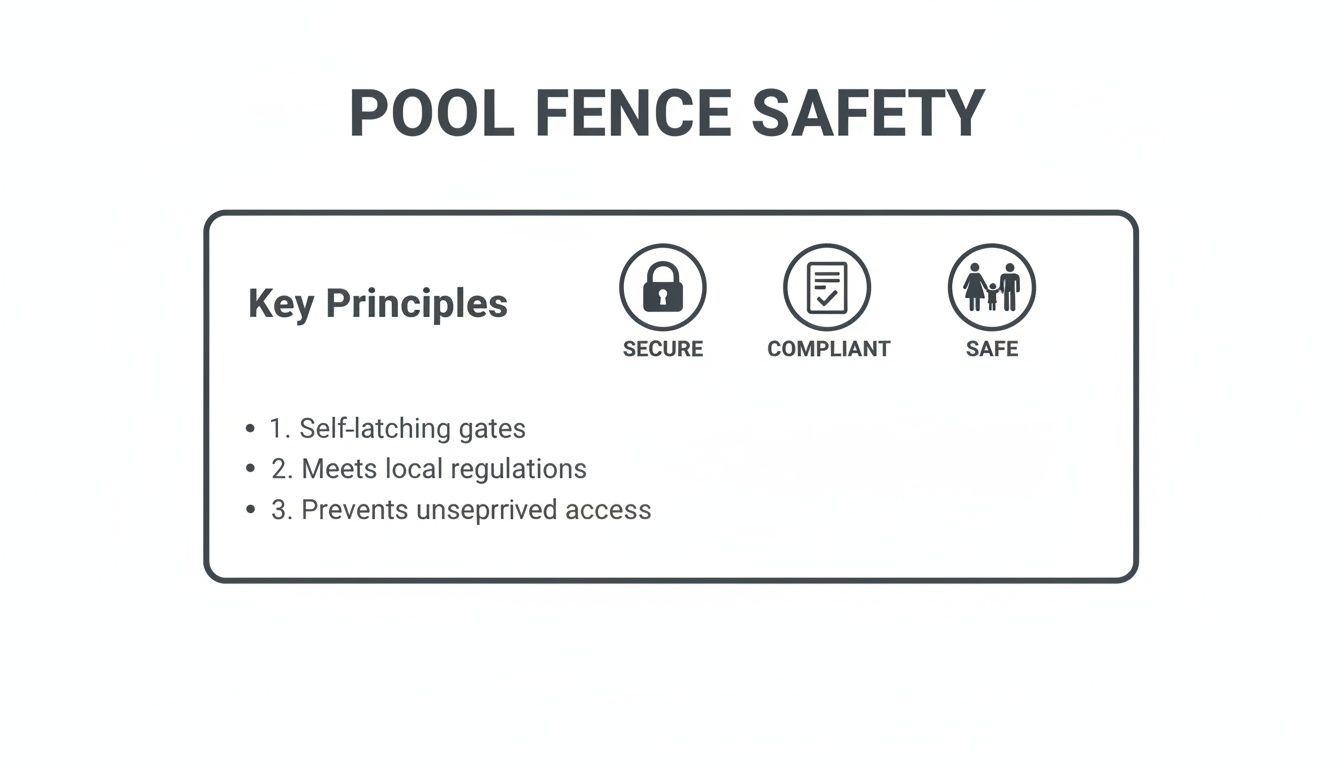
Your fence installation must be secure, compliant, and safe to be effective.
Understanding Gatineau's Fencing Regulations
Across the river in Gatineau, the regulations share the same core goal: the fence must be a continuous, non-climbable barrier with a secure, self-locking gate as the sole entry point.
Here's what to check for in Gatineau:
Minimum Height: The fence must be at least 1.2 metres (4 feet) high. While shorter than Ottawa's requirement, it remains a formidable barrier.
Gate Mechanism: As in Ottawa, gates must be self-closing and self-latching. The latch should be placed high on the inside of the gate, inaccessible to a small child.
Structural Integrity: The fence must be constructed from materials that do not offer handholds or footholds for climbing. If you choose chain link, for example, the mesh size must be small enough to prevent it from being used as a ladder.
Actionable Insight: The single most critical element in both sets of bylaws is the requirement for an automatic, foolproof gate system. A gate that fails to latch properly renders the entire fence ineffective for safety.
While specifics differ, the objective is identical: create a passive safety system that is on duty 24/7. To ensure your project is compliant from day one, review our complete Ottawa above-ground pool fence guide.
To simplify your planning, here is a direct comparison of the key requirements.
Ottawa vs. Gatineau Pool Fence Bylaw Requirements at a Glance
Requirement | City of Ottawa (Ontario) | Ville de Gatineau (Quebec) |
|---|---|---|
Minimum Fence Height | 1.5 metres (5 feet) | 1.2 metres (4 feet) |
Gate Latch Location | Pool-side, minimum 1.5 m high | Pool-side, out of a child's reach |
Ground Clearance | Maximum 10 cm (4 inches) | Specifics vary; must prevent passage |
Permit Required | Yes, a pool enclosure permit is mandatory. | Yes, a permit is required for any pool. |
Remember, these bylaws are mandatory safety requirements, not suggestions.
Choosing the Right Fence Material for Canadian Weather
Selecting a material for your above ground pool fence is a practical decision impacting safety, longevity, and maintenance. In the Ottawa-Gatineau region, any outdoor structure must withstand humid summers and harsh freeze-thaw cycles. Choosing the right material ensures your fence remains a strong, secure barrier for years, not just a single season.
Your material choice directly dictates future maintenance, lifespan, and overall cost. A fence that warps, rusts, or rots becomes a safety hazard and a wasted investment.
Here's a practical breakdown of the most common options and how they perform in our climate.
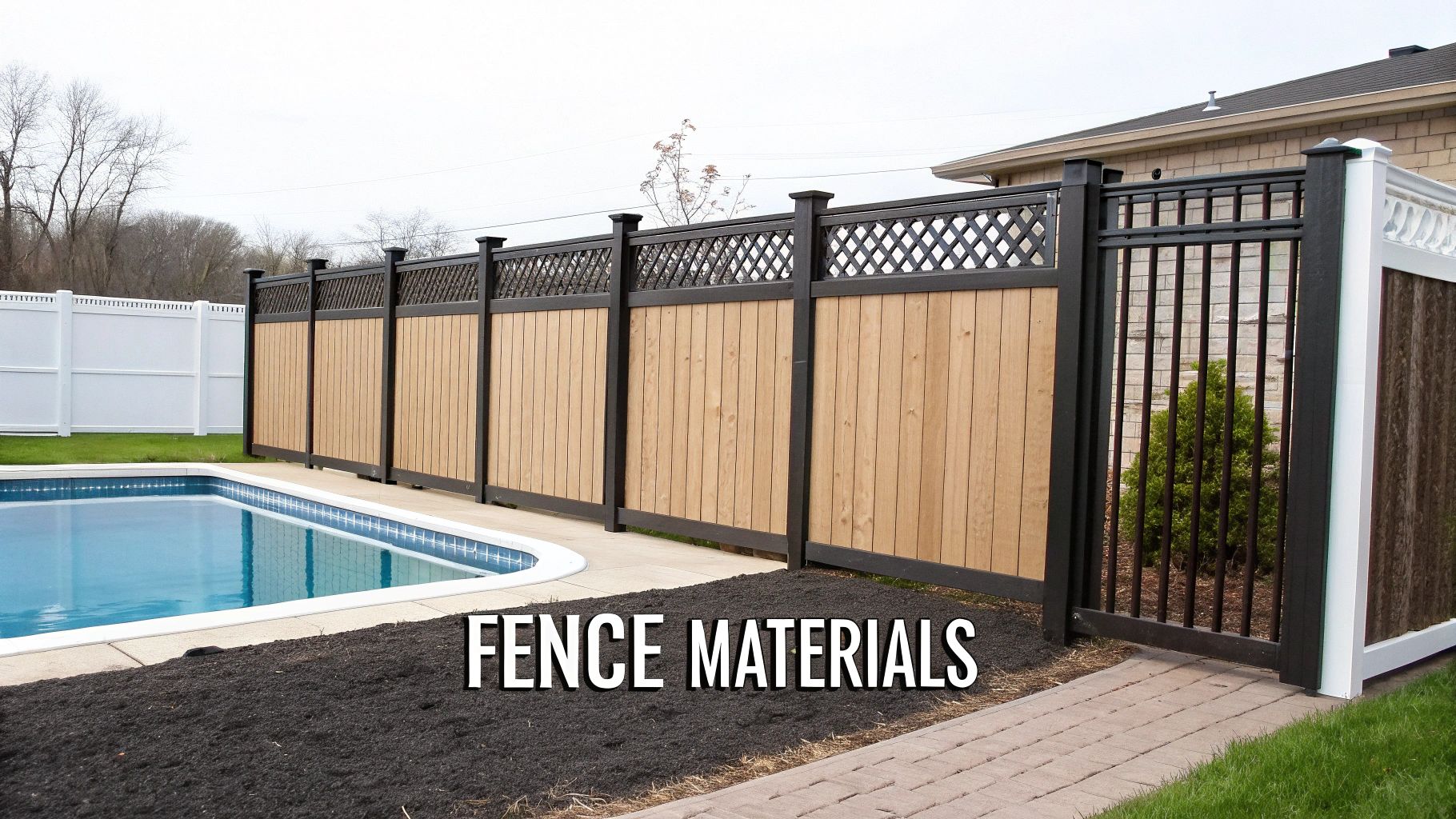
PVC Vinyl for a Low-Maintenance Solution
For a "set it and forget it" fence, choose PVC vinyl. Unlike wood, vinyl is non-porous, meaning it won't rot, warp, or splinter when exposed to melting snow and summer rain. It is highly resistant to damage from our region's freeze-thaw cycles.
Modern PVC is also formulated with UV inhibitors to resist fading from sun exposure. Your only maintenance task will be an occasional wash with a garden hose to remove dirt. To learn more, consult our actionable guide to plastic PVC fences in Ottawa.
Classic Wood for Natural Appeal
A classic wood fence offers timeless, natural appeal. Pressure-treated pine and cedar are the best choices for our climate, as they are chemically treated or naturally resistant to rot and insects. Wood provides a sturdy, solid barrier that also enhances privacy.
However, wood requires active maintenance. To prevent moisture absorption that leads to warping and decay, you must apply a stain or sealant every few years. Neglecting this task will cause the fence to deteriorate, compromising both its appearance and its structural safety.
Actionable Insight: Your fence material is a shield against the elements. Choose a material suited for our local weather to invest in lasting peace of mind, not just seasonal security.
Ornamental Iron for Security and Style
For maximum strength and an elegant look, select ornamental iron (typically aluminum or galvanized steel). This material provides top-tier security without obstructing your view of the pool—a key safety feature for parents supervising swimmers.
Modern ornamental fences feature a durable powder-coated finish that prevents rust and corrosion, making them ideal for Canadian weather. They are incredibly strong and difficult to climb, offering superior security. While the initial investment is higher, their long lifespan and minimal maintenance provide excellent long-term value.
Some homeowners also opt for modern glass balustrade systems, which offer a sleek, transparent, and robust safety barrier for decks and pools.
Comparing Your Material Options
The best choice balances your style, budget, and the amount of maintenance you are willing to perform.
Use this table to make your decision:
Material | Key Advantage | Primary Consideration | Best For |
|---|---|---|---|
PVC (Vinyl) | Extremely low maintenance and weather-resistant. | Higher upfront cost than some wood options. | Homeowners who want a durable, hassle-free fence. |
Wood | Natural aesthetic and lower initial cost. | Requires regular staining/sealing to prevent rot. | Those prioritizing a classic look and willing to perform upkeep. |
Ornamental Iron | Unmatched strength and elegant, open sightlines. | Generally the most expensive option. | Families who value security, durability, and visibility. |
The right fence for your pool is one that meets bylaws, fits your budget, and can confidently withstand Ottawa-Gatineau's seasons year after year.
Understanding Your Pool Fence Mounting Options
After selecting a material, you need to decide how to install your fence. The mounting method for pool fences above ground is critical for stability and safety. It’s not just a technical detail; it’s what transforms fence panels into an effective barrier.
There are three primary installation methods, each suited for a different backyard configuration. Understanding them will help you choose the most effective approach for your property and local bylaws.
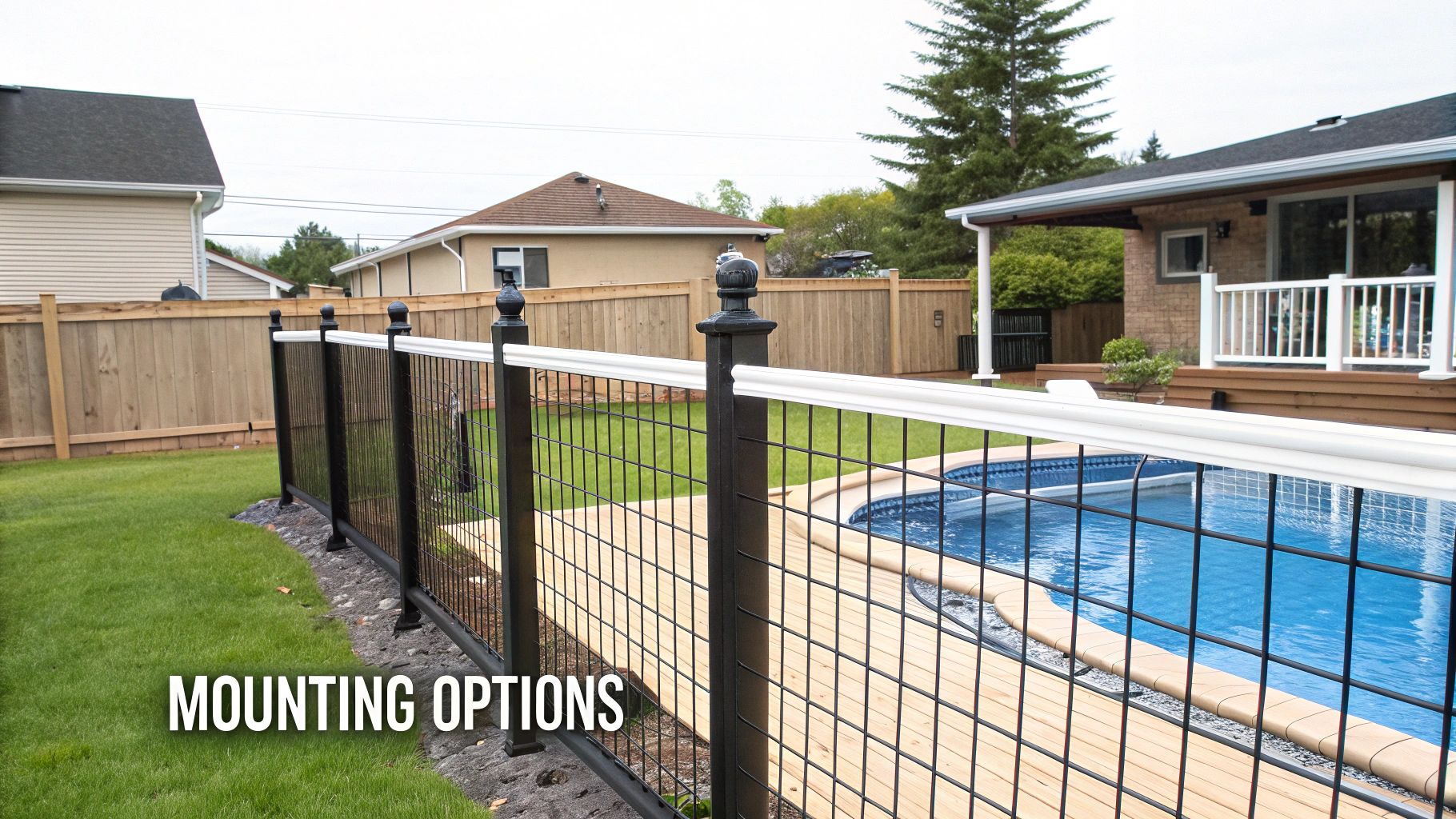
Pool-Mounted Fences: The Guardrail Approach
These fences attach directly to the pool's vertical supports, running along the top edge like a guardrail. This option seems simple because it saves space and requires no post holes.
However, this method has significant safety drawbacks. It only blocks access from the sides, leaving the pool ladder and pump area unsecured. If the ladder is left down, the fence becomes useless. Furthermore, many pools are not engineered to support the additional stress of a fence, and installing one may void your pool's warranty.
Actionable Insight: A pool-mounted fence places a barrier on the pool. A freestanding fence puts a barrier around the pool. To create a truly secure zone, choose the second approach.
Freestanding Fences: The Secure Perimeter
For complete safety, a freestanding fence is the industry standard. This method creates a fully independent enclosure around the entire pool area, cordoning off the pool, ladder, and all related equipment.
By setting posts securely in the ground, you achieve an exceptionally sturdy and reliable barrier. This design ensures that no one can approach the pool's edge without passing through a compliant, self-latching gate. This is the most effective way to meet the strict pool enclosure bylaws in both Ottawa and Gatineau.
The system's integrity depends on proper post installation, especially given our region's frost heave. For detailed instructions, see our guide on how to secure a fence post to concrete.
Deck-Mounted Fences: The Integrated Solution
If your above-ground pool is surrounded by a deck, mounting the fence directly to the deck surface is the most practical choice. This approach integrates the fence with your outdoor living space, with posts securely bolted to the deck’s substructure.
This method offers clear benefits:
Integrated Safety: It secures the entire pool and deck area as one large, safe zone.
Aesthetic Appeal: The fence appears as a natural extension of the deck, creating a polished, unified look.
Functional Space: It clearly defines the pool area, separating it from other parts of your yard.
The critical factor is your deck's structural integrity. It must be strong enough to support the fence. A professional installer will always inspect the deck's framing to confirm it can handle the load. When executed correctly, a deck-mounted fence provides a perfect combination of robust security and elegant design.
What to Expect for Installation and Cost
Once you've chosen your fence style, the next step is understanding the installation process and costs. A professional installation is a systematic process designed to ensure your fence is safe, code-compliant, and built to last through Ottawa-Gatineau's seasons.
The process begins with a detailed site assessment. A professional will visit your property to evaluate the layout, soil conditions, and identify any challenges like slopes or buried utilities. This step is crucial for planning a rock-solid fence that is guaranteed to meet all local bylaws.
These regulations can be extremely precise. For example, California’s safety codes for removable pool fences specify exact measurements for heights and gaps. You can see how detailed these life-saving pool fence requirements are, which highlights the value of expert guidance. Following the assessment, your installer will manage the city permit process, ensuring all paperwork is approved before work begins.
Key Factors Influencing Your Final Cost
Several factors determine the final price of your pool fence. Knowing them upfront helps you set a realistic budget.
Total Length (Linear Feet): This is the primary cost driver. A larger perimeter requires more materials and labour.
Fence Material: As discussed, materials like ornamental iron and high-end PVC have a higher upfront cost than pressure-treated wood.
Gate Complexity: A standard single self-latching gate is the baseline. A wider double gate or one with custom hardware will increase the cost.
Site Conditions: A flat, clear yard simplifies installation. Slopes, rocky soil, or the need to remove an old fence will add to the labour cost.
Budgeting for Your Above Ground Pool Fence
To help you plan, here are typical cost estimates per linear foot for a professionally installed above-ground pool fence in the Ottawa-Gatineau region. Use these as a starting point; a detailed quote is necessary for a final price.
Actionable Insight: Investing in professional installation is not just paying for labour. You are paying for expertise in local bylaws, for posts set below the frost line to prevent heaving, and for the peace of mind that comes with a secure, professionally built fence.
Here’s a practical cost breakdown:
Fence Material | Estimated Cost Per Linear Foot | Primary Benefit |
|---|---|---|
Pressure-Treated Wood | $45 - $75+ | Natural look and affordability. |
PVC (Vinyl) | $60 - $95+ | Extremely low maintenance and durability. |
Ornamental Iron/Aluminum | $80 - $150+ | Unmatched security and elegant design. |
Chain Link | $30 - $60+ | Most economical and functional option. |
These ranges cover a standard installation. Upon completion, you will do a final walkthrough with the installation crew to inspect every detail and confirm all safety features, especially the self-latching gate, are functioning perfectly.
Answering Your Above-Ground Pool Fence Questions
Here are direct answers to the most common questions we hear from homeowners in the Ottawa-Gatineau area to help you move forward with your project confidently.
Do I Need a Permit for My Pool Fence?
Yes, a permit is required in almost all cases. Both Ottawa and Gatineau mandate a permit for any new pool enclosure. This is a critical safety step that ensures your fence is officially inspected and verified to meet all local bylaws, protecting both your family and your investment.
When you work with an experienced installer like FenceScape, we manage the entire permit process. We handle the application, submit the required plans, and coordinate inspections, guaranteeing your fence is 100% compliant from day one.
Is It a Good Idea to Install a Pool Fence Myself?
While DIY is great for many projects, pool fencing carries significant risks. Local bylaws have highly specific requirements for gate hardware, latch height, and picket spacing.
An error in any of these details can lead to a failed inspection, fines, or, most importantly, a fence that fails to provide the necessary safety.
Actionable Insight: The single most critical safety feature is the gate. Professional installation guarantees this component is installed flawlessly to provide reliable, automatic security that a DIY job may not achieve.
For guaranteed safety and peace of mind, professional installation is the smartest choice. It ensures your fence is built to withstand our climate and provide foolproof protection for years.
What Is the Best Kind of Gate for a Pool Fence?
The best and only acceptable gate is one that closes and latches automatically, every time. In fact, self-closing and self-latching gates are required by law in our region. This feature is your primary fail-safe against a gate being accidentally left open.
Choose a gate with high-quality, weather-resistant hinges and a latch positioned high on the inside face of the fence, where a small child cannot reach it. This design ensures your pool's entry point is always secure, making it the most critical piece of your safety system.
Ready to Make Your Backyard Safer?
This guide has provided the essential information you need to make an informed decision about your above-ground pool fence. It's clear that the right fence is the most important safety feature you can install—not just to satisfy a bylaw, but to protect your family and create genuine peace of mind.
Your key actions are straightforward: understand the specific bylaws for Ottawa or Gatineau, choose a material that can withstand our climate, and prioritize a professional installation. Getting it done right the first time is the only way to ensure lasting safety.
Your Next Steps to a Secure Pool
Securing your pool doesn't have to be a complicated process. The path to a finished, secure fence starts with a professional site evaluation. This initial consultation is where you can get a clear plan tailored to your property.
An expert can walk your yard with you, identify the best fence placement and mounting options, and explain the installation process from start to finish. This ensures your pool fences above ground are not only compliant but are a perfect fit for your backyard and lifestyle.
At the end of the day, this is about enjoying your summer without constant worry. A beautiful, secure, and fully compliant backyard oasis is completely achievable.
If you're ready to take action, the next logical step is to schedule a professional evaluation. Let an expert handle the permits, planning, and construction, so you can focus on enjoying your pool safely.
Ready to secure your above-ground pool with confidence? The expert team at FenceScape is here to help. Get your free, no-obligation estimate today and take the first step toward a safer summer. Learn more at https://www.fencescape.ca.
Comments