
Wood Privacy Fence Materials: A Complete Buyer's Guide

You're standing in a Gatineau lumber yard in February, comparing the clean, reddish grain of cedar with a stack of pressure-treated boards. The price tags are different, but the harder question is less obvious: which fence will still stand straight after years of wet clay, frost movement, summer humidity, and repeated thawing?
The board on the rack is only half the decision. Wood privacy fence materials succeed or fail as a system, and that system includes the buried post, ground-contact rating, rail layout, fastener compatibility, drainage, and treatment of every fresh cut. A beautiful cedar picket won't compensate for a weak post or corroded screws.
Choosing Wood Privacy Fence Materials Without Regret
A fence can look sound on installation day and still develop problems after several Ottawa–Gatineau winters. The useful comparison happens at the supplier's yard, before you choose between cedar and pressure-treated lumber. Ask what each component is rated for, how it will be installed, and who will maintain it.
Start with the post specification. Is the post rated for ground contact? Above-ground boards and buried structural posts perform different jobs, so a post intended only for above-ground use is the wrong choice below grade. Ask how the supplier expects the material to perform in wet, clay-heavy soil and through repeated frost movement. Regional guidance notes that these conditions can shorten wood-fence service life compared with drier ground conditions, as described in regional guidance on cedar and pressure-treated fence materials.
Then check the installation plan rather than judging the pickets alone:
What maintenance will the fence require? Cedar benefits from cleaning and finishing. Pressure-treated lumber reduces the initial material cost, but it still needs inspection and protection.
Which parts are being pressure-treated? A treated structural post may be appropriate below grade, while cedar pickets provide the appearance homeowners want above ground.
How will the supplier match materials to the site? A sloped lot, wet corner, shaded yard, or heavy clay soil may call for different drainage and post details than a dry, level property.
What is included in the quote? Confirm whether it covers posts, rails, pickets, gates, disposal, and finishing. Missing structural items can make a low material price misleading.
The most practical specification often separates the visible face from the structural backbone. Cedar pickets offer a natural appearance and moisture resistance, while properly rated pressure-treated posts handle the buried structural load. FenceScape's pressure-treated lumber lifespan guidance supports considering treated lumber for the parts exposed to soil and moisture.
Installer's rule: Choose the post system, wood species, site details, and maintenance plan together. The picket is only the visible part of the decision.
Cedar, Pressure-Treated Lumber, Hardwoods, and Engineered Options Compared
After five Ottawa–Gatineau winters, the weak point is rarely the species name on the invoice. Rot usually begins at unsealed cut ends, buried posts, and fastener zones that hold moisture against the board. Compare materials by how they handle those details, not only by colour, grain, or purchase price.
Western Red Cedar suits visible above-ground work where appearance and moderate moisture resistance matter. Its natural oils help resist moisture and insects, and maintained cedar fence boards commonly serve for 20 to 30 years, according to Canadian fence-board guidance. Cedar is light and easy to cut, but every cut end needs protection, and soft fibres can compress around fasteners or split near board edges.
Pressure-treated pine or spruce is the practical lower-cost choice for structural members and budget builds. Treatment improves decay resistance, especially where lumber faces damp conditions, but it does not correct poor drainage. Use compatible exterior fasteners, keep fresh cuts protected, and avoid assuming that treated boards can sit against wet soil indefinitely.
Hardwoods such as white oak and black locust offer dense grain and a distinctive finish. They also weigh more, require sharper tooling, and can develop movement or splitting when boards dry unevenly. For hardwood gates or architectural details, cabinet fittings in hardwood provides a relevant reference for compatible components.
Engineered options, including Accoya and thermally modified lumber, provide more controlled movement than many standard boards. Their performance still depends on the product specification, coating system, edge treatment, and warranty conditions. A stable board can still fail where water enters an unsealed end or sits around a screw.
Wood privacy fence material comparison
Material | Ottawa–Gatineau failure points | Upfront cost position | Appearance | Best fit |
|---|---|---|---|---|
Western Red Cedar | Seal field cuts and end grain. Use corrosion-resistant fasteners, and keep boards clear of splashback and trapped moisture. | Premium wood option, with local cedar privacy fences about CAD 70 to 100 installed, according to Ottawa–Gatineau pricing guidance | Warm grain, natural weathering | Homeowners who prioritise appearance and accept routine care |
Pressure-treated pine or spruce | Specify ground-contact treatment for posts. Protect cut ends, use compatible hardware, and provide drainage around buried members. | Lower upfront cost, with regional guidance placing it about 30% to 40% below cedar, as described in this material comparison | Practical, often painted or stained | Budget-conscious fences and structural posts |
White oak or black locust | Pre-drill dense boards, allow for movement, and protect end grain. Heavy gates need hinges and posts sized for the load. | Premium, project-specific | Dense grain and distinctive character | Custom gates, screens, and high-end designs |
Accoya or thermally modified lumber | Follow the manufacturer's edge-sealing and fastening requirements. Warranty coverage depends on correct installation and coating maintenance. | Premium engineered option | Consistent, refined, cedar-like alternatives | Projects where reduced movement justifies added cost |
The practical choice is clear. Select cedar for a maintained, appearance-led fence. Select pressure-treated lumber where budget and structural service matter most. Select hardwood for a custom design that can support heavier components. Select engineered lumber when stability, specified detailing, and warranty terms justify the premium. Choose the post and board system together, then verify the treatment details with the supplier.
Posts, Rails, Pickets, and Fasteners That Hold the Whole Fence Together
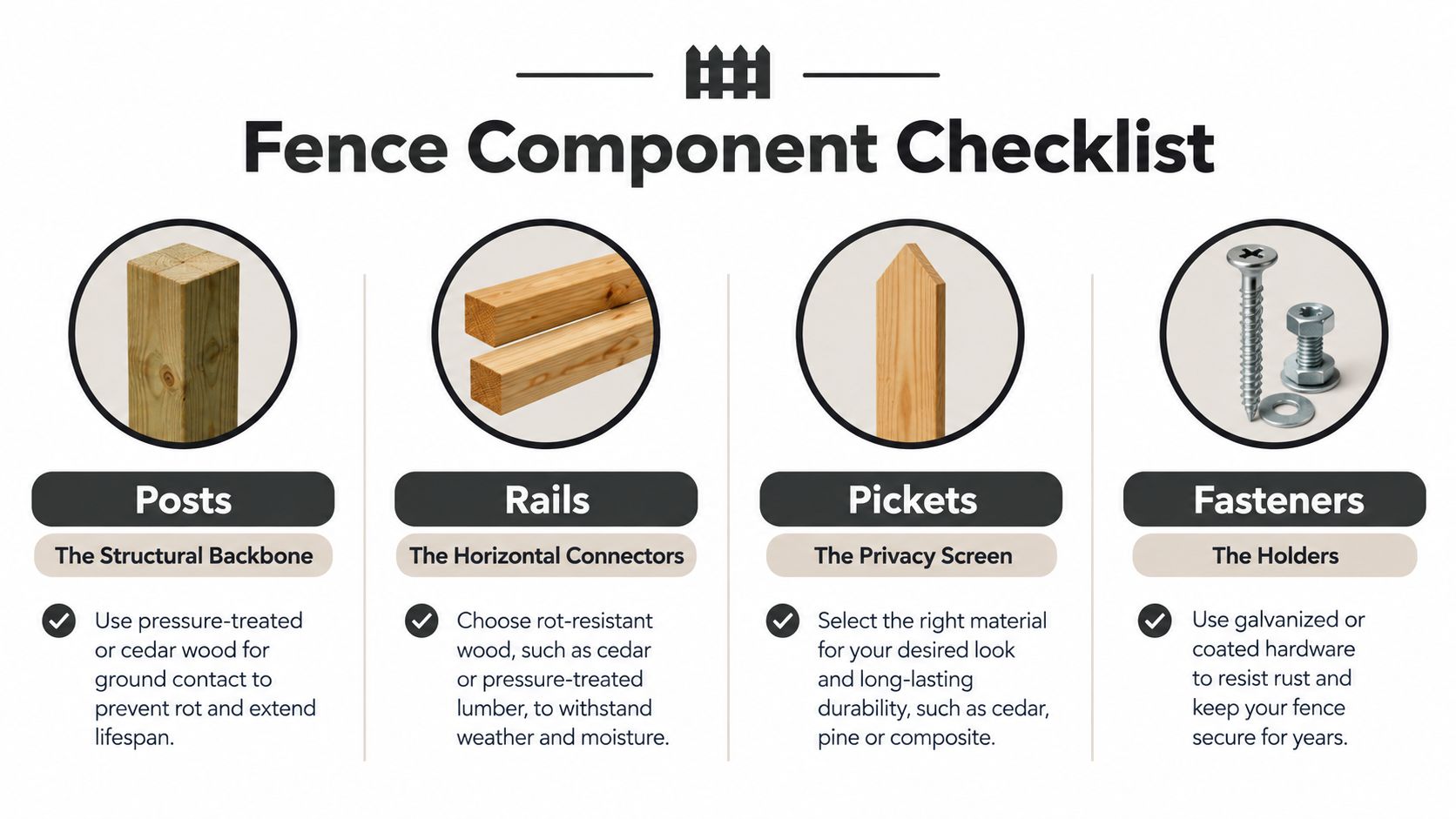
A privacy fence has four working layers, and each one faces a different kind of stress. Treating every component as if it were just “wood” is how a fence ends up with attractive pickets and failing structure.
Start with the buried structure
Posts take the ground-contact abuse. Specify pressure-treated lumber intended for ground contact, with a treatment category suitable for the exposure. Regional guidance recommends buried structural posts rated UC4B or UC4C, and notes that cedar posts in direct soil contact typically last 10 to 20 years, while pressure-treated posts in Ontario soil commonly last 20 to 30 years when properly specified, as outlined in regional installation guidance.
Rails carry the horizontal load between posts. They're less exposed than buried posts, but they still need rot-resistant material and a layout that keeps water from sitting against joints. Keep rail ends well supported, avoid trapping moisture behind boards, and inspect areas around gates especially carefully.
Choose the face for the conditions
Pickets are the visible privacy screen. Cedar works well here because its natural oils help resist moisture and insects. Engineered boards can offer more consistent movement and finish, while pressure-treated boards remain a practical choice where budget takes priority over grain and colour.
Fasteners are the quiet failure point. Modern treated lumber can be corrosive to ordinary steel, so use stainless steel or hot-dipped galvanised hardware selected for exterior treated-wood applications. Fastener zones deserve extra attention because water can sit around the head or shank, creating a small but persistent path for corrosion.
Before assembly: Seal every fresh cut end with a copper-based preservative, such as a copper-naphthenate product, before the piece goes into the fence. The factory treatment doesn't penetrate a new saw cut.
Use the FenceScape guide to placing fence posts when checking layout, alignment, and post installation details. A straight string line can't correct an incorrectly treated post, but accurate layout prevents extra stress on rails, gates, and pickets.
How Ottawa–Gatineau Weather Changes Every Material Choice
A fence can look sound after installation and still fail after several Ottawa–Gatineau winters. The weak point may be hidden below grade, where wet clay shifts around the post, or at a fastener zone where water sits against the wood. Freeze-thaw cycles, spring saturation, and humid summers make material choice inseparable from drainage and installation details.
Start by separating above-ground performance from ground-contact exposure. Cedar often performs well as a picket, while a cedar post in persistently wet soil faces a harsher service condition. Pressure-treated lumber offers better decay resistance, but only when the treatment category, drainage, and hardware suit the application.
Match the material to the exposure
Material | Freeze-thaw resistance | Clay soil contact | Moisture cycling | Cut-end vulnerability |
|---|---|---|---|---|
Western Red Cedar | Handles seasonal movement well when installed and maintained correctly | Use caution with cedar posts in direct soil contact. Regional guidance places typical post life at 10 to 20 years, regional material guidance | Natural oils help above-ground resistance, but boards still absorb humidity and need airflow | Seal fresh cuts, as noted earlier |
Pressure-treated pine or spruce | Performs well structurally when correctly treated and installed | Ground-contact posts generally outlast untreated alternatives | Treatment resists decay, but wet joints and fastener zones can still deteriorate | New cuts still require the earlier treatment step |
White oak | Tolerates cold but may develop surface checking on exposed faces | Better suited to carefully detailed above-ground work | Dense boards need controlled drying and finish maintenance | End-grain protection remains important |
Black locust | Dense and durable when properly detailed | Suitable for premium applications when drainage is well managed | Can move and check as moisture changes | Requires sealing and careful detailing |
Engineered or thermally modified lumber | Often more dimensionally stable than ordinary wood | Still requires suitable post detailing and drainage | Movement is more predictable, but maintenance depends on the product | Follow the product system for end sealing |
Clay soil deserves a construction detail, not just a warning. Set posts below the local frost depth where required, use free-draining stone around the buried portion, and slope the concrete cap away from the post. A slight concrete crown keeps meltwater from pooling at the soil line. Do not leave a flat collar that directs water toward the wood.
The post should also be checked for movement before rails and gates are installed. If the hole fills with water, correct the drainage rather than relying on extra concrete to hold a wet foundation in place. Gate posts need particular care because repeated swinging adds stress while the surrounding soil is soft.
South-facing runs bring a different exposure. Strong sun dries the outer face unevenly, and dense hardwoods may show checking more clearly than cedar. Leave room for airflow between boards, keep vegetation from trapping moisture, and maintain drainage at the fence base. Those details often determine whether a material remains serviceable after five winters more than its species label does.
Lifecycle Cost and the True Price of a Wood Privacy Fence
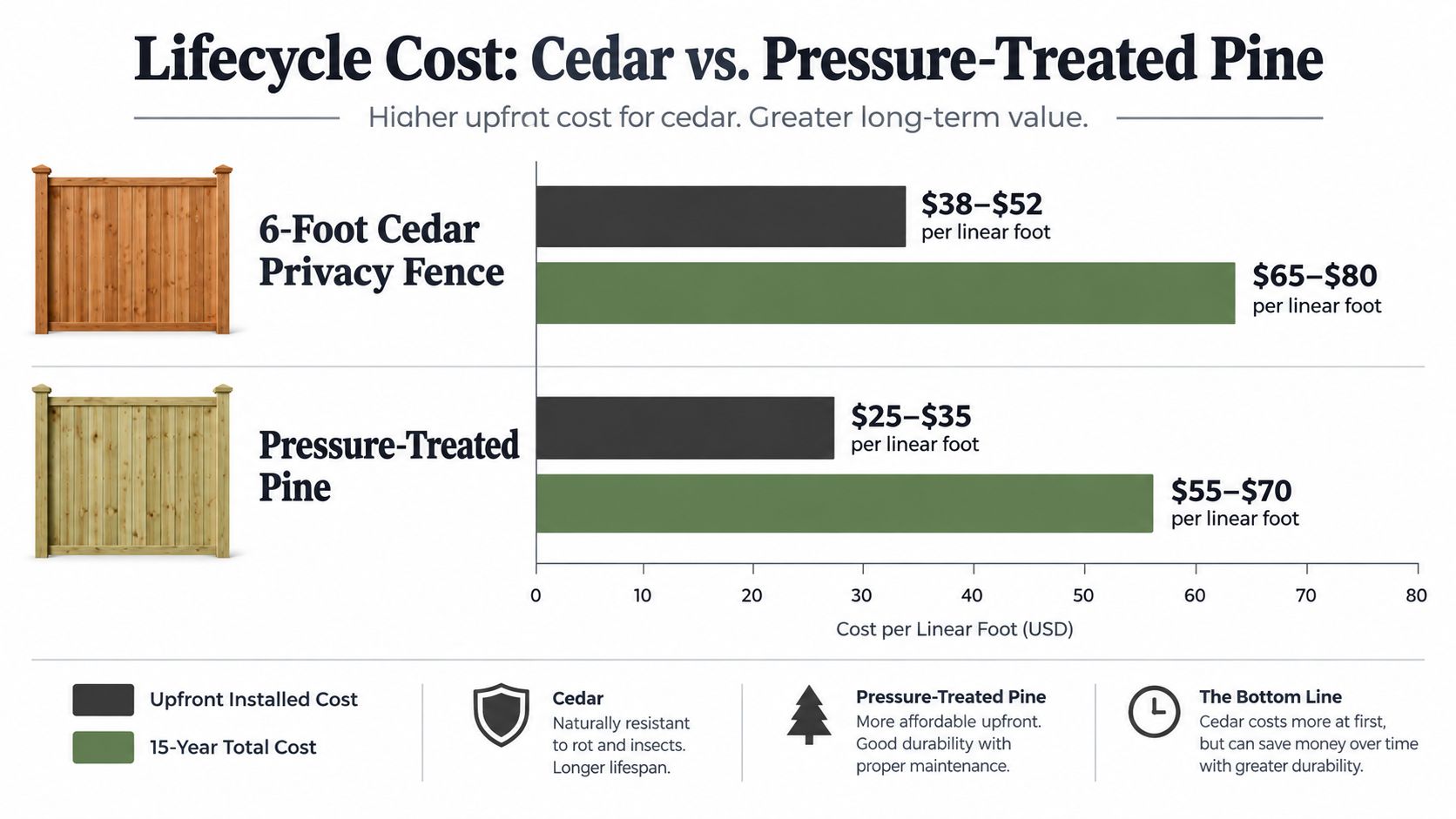
A fence can look inexpensive on installation day and become costly after its first few winters. In Ottawa–Gatineau, the ownership calculation should include the material, labour, finish, inspections, hardware, gate repairs, and replacement of posts that were not suitable for ground contact.
For local context, installed wood fencing commonly falls within a broad range, depending on species, layout, access, and construction details, according to local wood fence cost guidance. Treat any quote as a starting point, then confirm what protects the cut ends, buried posts, and fastener zones from repeated wetting and freezing.
Build the ownership calculation
Use a simple worksheet rather than comparing material prices alone. For a 100-linear-foot fence, compare the installed quote with the expected staining, hardware, gate adjustments, and likely repairs over the period you expect to own the property.
Ask these questions before signing:
Structural specification: Are posts rated for ground contact, and are every cut end and drilled area sealed?
Maintenance plan: Who will clean and stain the fence, and at what interval?
Hardware allowance: Does the quote include corrosion-resistant screws, nails, hinges, and latches?
Repair exposure: What happens if a post leans, a picket splits, or a gate sags?
Resale objective: Will consistent finishing support the property's presentation, or will neglected wood become a visible liability?
Pressure-treated SPF can reduce the initial material bill, but its published service rating does not guarantee performance at every property. Drainage, treatment category, soil contact, and workmanship determine whether the buried portion survives freeze-thaw cycles. The first failure often begins at a cut end or around hardware, not across the middle of an intact picket.
Read FenceScape's wood fence staining guidance before accepting a maintenance-free promise. Match the finish to the species, sun exposure, and colour target. A homeowner who will not maintain wood should compare another fence system before choosing one on appearance alone.
DIY Installation Versus Hiring a Professional Crew
A confident homeowner can build a good fence on flat ground with manageable soil, careful layout, and the right tools. Ottawa–Gatineau properties often add clay, slopes, roots, access limitations, frost concerns, and municipal requirements that turn a simple weekend project into a structural job.
The difference shows up first during excavation. A hand-held auger may work in easy ground, but dense clay can demand powered equipment and a more deliberate post layout. Long runs also expose alignment errors. A small deviation at one post becomes a visibly drifting fence line several posts later.
What the installer brings
A professional crew typically arrives with equipment for repetitive, accurate work rather than improvised solutions:
Powered excavation equipment for difficult soil and consistent holes.
String-line layout methods that keep posts aligned across a long run.
Concrete handling capacity suited to multiple posts in one installation window.
Gate-building experience because gates concentrate movement, weight, and hardware stress.
Warranty procedures that identify what the contractor covers and what the lumber manufacturer covers.
Local requirements also vary. Before ordering materials, confirm fence height, property-line responsibility, sight-line restrictions, permits, and any utility-locate obligations with the relevant municipality. Don't rely on a neighbour's fence as proof that your planned height or placement is acceptable.
A fence can be straight, attractive, and still be incorrectly installed if the posts, property line, or local requirements weren't verified first.
DIY can make sense when you already own the tools, understand the soil, can manage accurate layout, and have time to correct mistakes. It becomes less attractive when equipment rental, concrete, delivery, disposal, and a later post replacement consume the expected savings. For a broader perspective on weighing time, risk, and capability, The Green Advantage expert insights provide useful context.
The strongest reason to hire a capable local crew isn't just speed. It's accountability. Ask for written workmanship terms, material specifications, and a clear explanation of how the contractor handles buried posts, cut ends, gates, and changes caused by soil or access conditions.
Sourcing, Sustainability, and Your Next Steps
A good purchase begins with a specification, not a species name. Tell the lumber yard or contractor where each piece will be used, then verify that the material matches the exposure. Posts, rails, pickets, and hardware should never be treated as one interchangeable shopping list.
Use this sourcing checklist
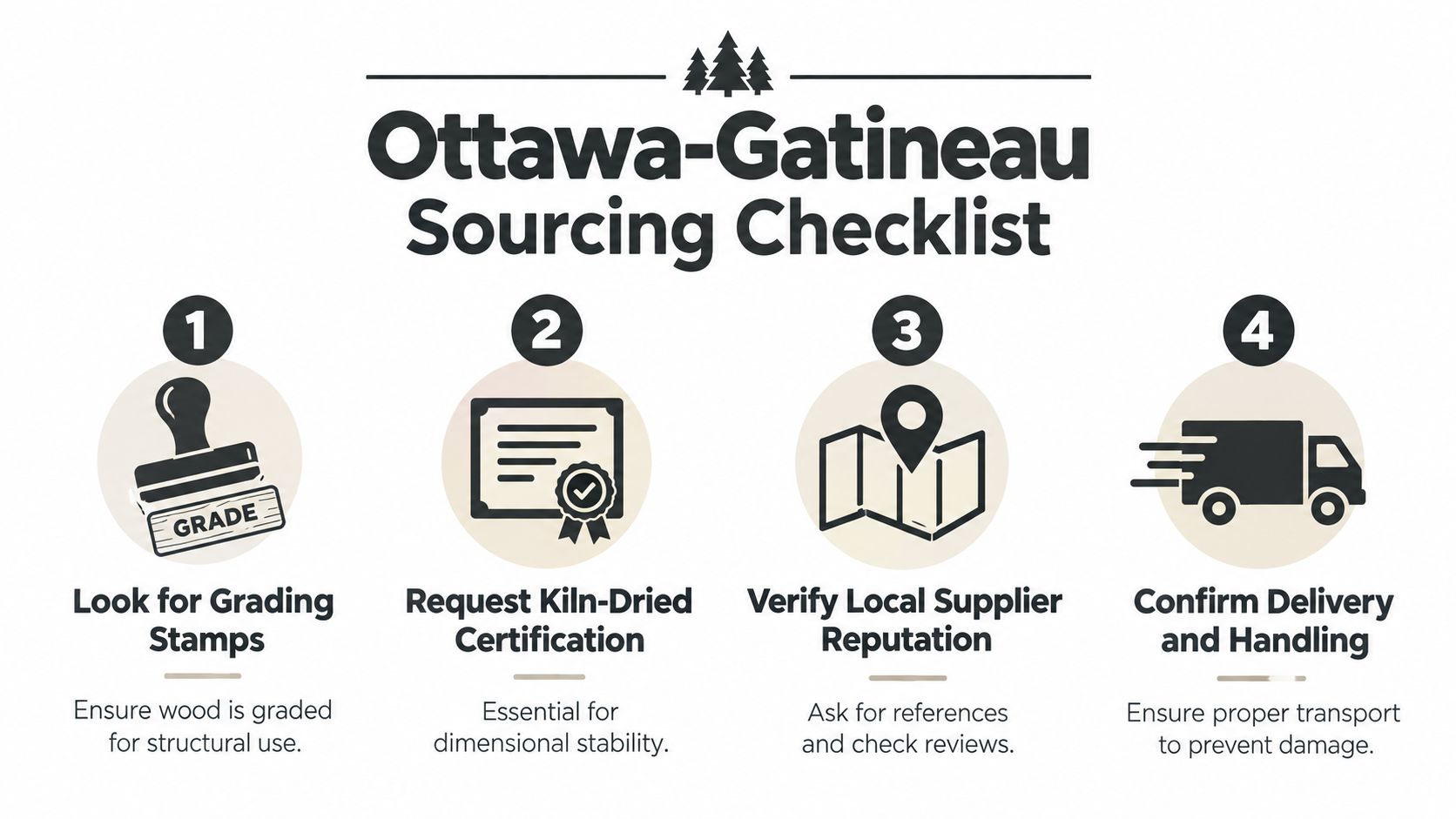
Verify grading and treatment stamps. Ask to see the grade mark and confirm that structural posts are intended for ground contact, not garden edging or light-duty landscaping.
Separate appearance stock from structural stock. Cedar pickets can provide the finish you want, while pressure-treated members can serve where moisture and soil exposure are most severe.
Inspect the hardware coating. Hot-dipped galvanised hardware has a heavier coating than basic electroplated fasteners. Ask the supplier to identify the product rather than accepting “outdoor screws” as a specification.
Plan for cut ends before delivery. Keep an appropriate copper-based preservative available so fresh cuts are protected immediately.
Ask about responsible sourcing. FSC-certified Western Red Cedar, locally milled Eastern White Cedar, and thermally modified hardwoods can support a more deliberate material choice. Confirm the certification or product documentation instead of assuming a sustainability claim from appearance alone.
Check how materials are stored and transported. Boards need protection from standing water and crushing, but they also need airflow. Poor storage can create cupping and staining before installation begins.
Vet the contractor, not just the quote
Request the company's business and insurance information, confirm WSIB clearance where applicable, and obtain warranty terms in writing. Ask for three local reference addresses you can drive past this week. A completed fence tells you more than a polished sample board, especially around gate alignment, post straightness, fastener staining, and weathering.
A useful shortlist should record:
The proposed species and grade.
The post treatment category and ground-contact use.
The fastener material and coating.
The cut-end preservation method.
The maintenance recommendation.
The workmanship warranty and exclusions.
The handling of permits, property lines, and site cleanup.
Wood remains a strong choice for privacy because it can be repaired board by board and adapted to a property's shape. It only delivers that value when the hidden components receive as much attention as the visible cedar. For homeowners who want a managed project, FenceScape offers wood fence planning and installation in the Ottawa–Gatineau region, including cedar and pressure-treated options, with support from material selection through final walkthrough.
If you're planning a privacy fence, start by sending FenceScape your approximate fence line, preferred look, gate locations, and any concerns about clay soil or drainage. Visit FenceScape to arrange a project discussion and compare a properly specified cedar, pressure-treated, or hybrid build for your property.
Comments