
Your Actionable Guide to Plastic PVC Fences in Ottawa

A plastic PVC fence is a smart, modern alternative to traditional wood, engineered to stand up to the elements without demanding constant upkeep. For homeowners here in the Ottawa-Gatineau region, that translates into a beautiful, long-lasting boundary that saves you a ton of time, effort, and money down the road.
Why Plastic PVC Fences Are Winning Over Ottawa Homeowners
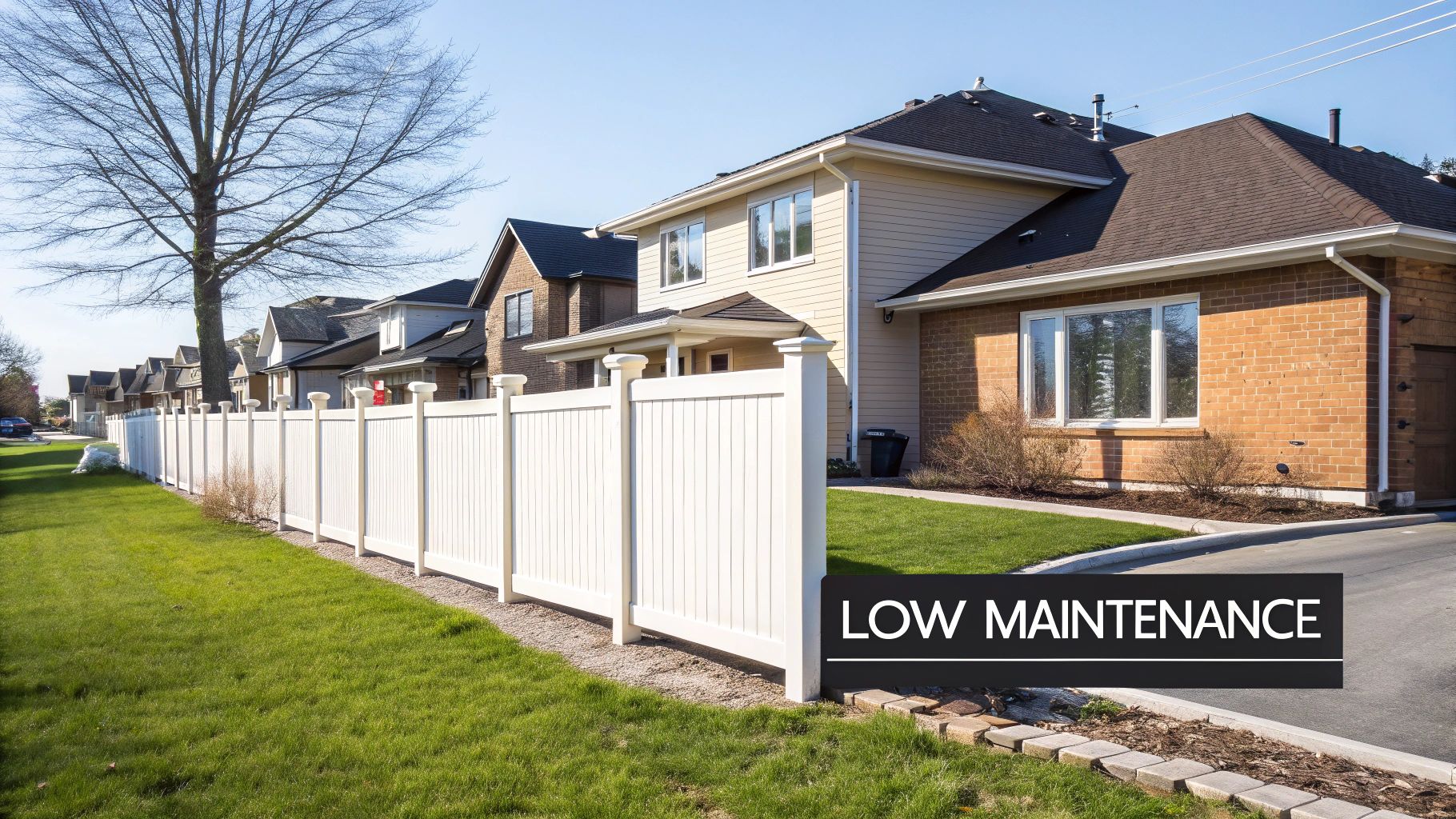
Picking a fence in the Ottawa-Gatineau area isn’t just about marking your property line. It’s about choosing a material that can go toe-to-toe with our demanding climate—from sticky, humid summers to deep-freeze winters and all the temperature swings in between.
This is where a plastic PVC fence shines. It’s not just another option; it’s a practical, long-term solution built for our reality.
Unlike wood that inevitably warps, rots, and peels after seasons of assault from moisture and UV rays, PVC is engineered for resilience. To get the most from it, treat it like high-performance outdoor gear for your property—invest in a quality product and a professional installation, and it will perform without the endless cycle of sanding, staining, and sealing.
The Low-Maintenance Advantage
Let’s be honest, the biggest draw for busy homeowners is how incredibly little maintenance is required. A PVC fence literally gives you your weekends back.
Instead of dedicating precious hours to upkeep, your action plan is simple: a wash with a hose, soap, and water is all it ever needs to look brand new. This isn't just about convenience; it’s a clear financial win over the long haul, as you completely avoid the recurring costs of paint, stains, and sealants that wood fences demand every few years.
A well-installed PVC fence is a one-time investment in your property and your free time. It’s designed to provide decades of performance with minimal effort, allowing you to enjoy your backyard instead of constantly working on it.
To put it simply, here’s a quick rundown of what makes PVC such a great fit for our area.
Plastic PVC Fence At a Glance
Use this table to quickly assess if a PVC fence meets your property's needs and your long-term goals.
Feature | Benefit for Ottawa-Gatineau Homeowners |
|---|---|
Material Composition | Made from durable polyvinyl chloride, it won't rot, splinter, or peel. |
Maintenance Needs | A simple wash with soap and water is all that's required. No sanding or staining. |
Weather Resistance | Engineered to withstand our harsh winters and humid summers without damage. |
Longevity | Offers a lifespan of 20-30+ years with minimal signs of aging. |
Colour & Style | Comes in a wide range of colours and styles that won't fade over time. |
In short, a PVC fence is a set-it-and-forget-it solution that keeps looking great year after year.
Built for Our Climate
When selecting a modern PVC fence, verify that it is specifically formulated to handle a four-season Canadian climate. Here are the key technical advantages to look for:
Moisture Resistance: Because PVC doesn’t absorb water, it’s immune to the rot and insect damage that plague wood fences, especially during our wet springs and humid summers.
UV Stability: Ask your supplier about titanium dioxide content. This additive acts like a powerful sunscreen, preventing the material from yellowing or becoming brittle under the intense summer sun.
Temperature Flexibility: Ensure the product is rated for our region's drastic temperature shifts—from -30°C winter nights to +30°C summer days—to avoid cracking or warping.
This built-in durability means your investment remains secure and attractive for decades, boosting your home's curb appeal and property value without ever becoming another chore on your to-do list.
What Makes a PVC Fence Tick? A Look at the Science
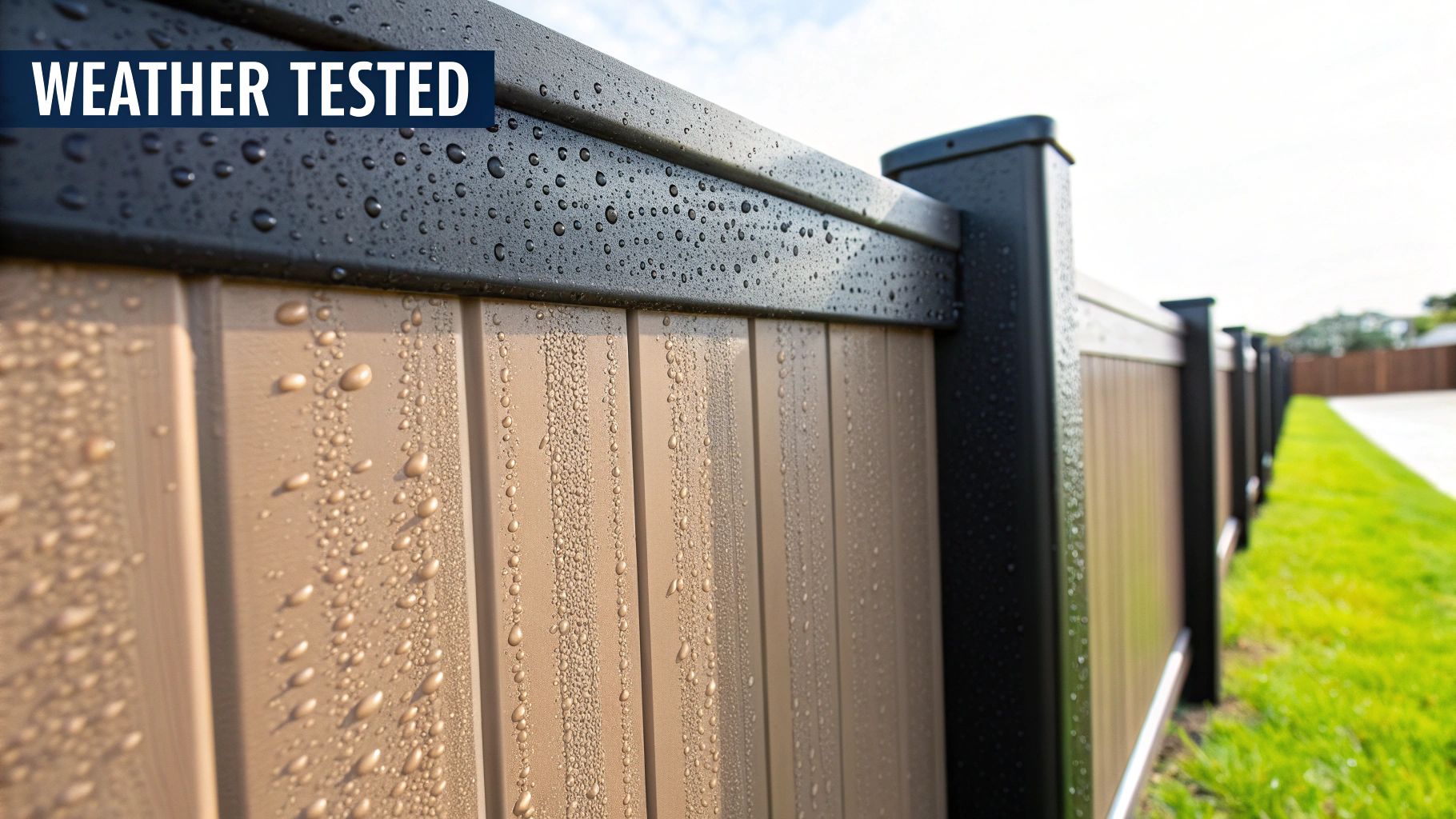
Ever wondered what makes a plastic PVC fence so tough, especially against the wild swings of an Ottawa-Gatineau climate? It's not just "plastic." The real secret is in the chemistry—a smart blend of ingredients that turns a basic material into a high-performance shield for your property.
To make an informed purchase, it helps to understand this technology. High-quality PVC fencing is built with specific additives to perform its job for decades, no constant fuss required.
It All Starts With Polyvinyl Chloride
The backbone of every vinyl fence is polyvinyl chloride (PVC), a remarkably strong and adaptable synthetic plastic. On its own, raw PVC is pretty tough. The problem is, it wouldn't last a single season in our region without help—the intense summer UV rays would make it brittle, and the deep winter cold would finish it off.
That's where the real magic happens during manufacturing. The base PVC gets a serious upgrade with a precisely measured cocktail of additives. This transforms it from a simple polymer into an advanced composite built to handle everything the outdoors can throw at it.
The Additives That Defend Against Our Climate
When choosing a PVC fence, ask about the additives in its formulation. These are the behind-the-scenes players that make the "low-maintenance" promise a reality.
Here are the key players to verify:
Titanium Dioxide (TiO₂): This is the MVP of UV protection. It acts like a powerful, permanent sunscreen mixed right into the material. By reflecting harmful ultraviolet rays, it stops the fence from yellowing, fading, or getting chalky over time. Your fence’s colour stays true, year after year.
Impact Modifiers: Think of these as the fence’s shock absorbers. Usually acrylic-based, these compounds are blended in to give the PVC more strength and flexibility. They’re the reason your fence can take a hit from a flying soccer ball or a gust of wind without cracking, and they’re absolutely critical for keeping it resilient when temperatures plummet in January.
Stabilizers: These additives are the guardians of the fence's structural integrity. They protect the PVC from breaking down under the intense heat of the manufacturing process and continue to shield it from environmental stress throughout its life.
This carefully engineered formula is what gives you a fence that won't rot in the spring thaw, warp in a July heatwave, or crack in a February deep freeze. To see how these features come together in different styles, take a look at our guide to plastic vinyl fence solutions.
The real power of a plastic PVC fence is its molecular stability. It is engineered to be chemically inert, meaning it doesn't react with water, sunlight, or common lawn chemicals, which is why it avoids the rot, pests, and decay that inevitably break down wood.
It's no surprise that homeowners are catching on. The demand for durable, set-it-and-forget-it materials is changing the entire industry. The U.S. fencing market is expected to climb from $9.33 billion to $14.86 billion by 2033, a surge driven by the popularity of low-maintenance options like PVC. Features like superior UV protection and impact resistance don't just offer peace of mind—they add real, lasting value to your home. You can see more on the growth of the fencing market at Grand View Research.
Choosing the Right PVC Fence Style for Your Home
When you think "plastic PVC fence," a plain white panel might be the first thing that comes to mind. But the reality is a whole world of design possibilities that can totally transform your property’s look and feel. The key action is to match the fence’s design to its job and its location. A towering privacy fence that creates a secluded backyard oasis would look completely out of place in a front yard, where a shorter, more welcoming style is usually the better fit. Let's dig into the most popular options we see here in Ottawa and figure out where they shine.
Privacy Fences for a Backyard Sanctuary
For most homeowners in the Ottawa area, the backyard is their personal escape. A full privacy fence is the go-to choice for creating that true sense of seclusion, especially for homes backing onto busy streets or with neighbours close by.
These fences are typically six to eight feet tall and built with interlocking tongue-and-groove panels, which means there are absolutely no gaps. This solid barrier is your best tactical choice for:
Securing a pool area and making sure you’re up to code with local enclosure bylaws.
Creating a quiet, peaceful space for relaxing without an audience.
Keeping kids and pets safely contained within your yard.
Blocking out unsightly views or dampening some of that neighbourhood noise.
While classic white never goes out of style, today's privacy fences come in a great range of colours like tan, grey, and even deep, rich tones that can give your outdoor space a sharp, modern edge.
Semi-Privacy and Picket Fences for Curb Appeal
While total privacy is the name of the game for the backyard, your front yard needs a completely different approach. Out front, you want to define your property line without throwing up a visual wall. This is where semi-privacy and picket fences really come into their own.
A fence in your front yard should act as a "welcome" sign, not a "keep out" sign. Your design choice should guide the eye toward your home and garden, adding charm and structure without sacrificing an open, inviting feel.
Here’s how to choose between them:
Picket Fences: Select this style for maximum curb appeal. A classic picket fence adds a timeless charm that’s hard to beat. Because the pickets are spaced apart, it marks out your front garden beautifully without blocking the view, making your home feel welcoming and polished.
Semi-Privacy Fences: Choose this as a fantastic middle-ground option. These designs have small gaps between the vertical boards or might feature a decorative lattice top. This lets light and air filter through while still providing a good amount of screening. They work wonderfully for side yards or as a graceful transition from the public-facing front of your house to the private back.
Customizing Your Plastic PVC Fence
Beyond the basic styles, the real magic of a plastic PVC fence is how much you can customize it. To create a fence that’s truly one-of-a-kind, combine these elements to match your home's exterior.
Colours and Textures:Forget just white. Today’s PVC fences are available in a whole palette of colours, from soft, earthy neutrals to bold, contemporary shades. For a high-end look, consider textures that mimic natural materials. You can get embossed wood-grain finishes that have the warm, rustic appearance of cedar without any of the sanding, staining, or sealing. It’s the best of both worlds.
Decorative Accents:It’s the finishing touches that can really take a fence from functional to fantastic. Consider adding these elements:
Post Caps: You can swap out the standard flat caps for more decorative styles—like pyramid, gothic, or even solar-powered caps that cast a soft glow at night.
Lattice and Spindle Tops: Adding a section of decorative lattice or a row of spindles to the top of a privacy fence is a great way to break up a solid wall of vinyl. It adds a touch of elegance and architectural interest.
By mixing and matching these elements, you end up with a fence that is anything but a cookie-cutter solution. For more ideas on how different outdoor elements can work together to enhance your home, you might want to look into Exayard's solutions. A fence is a long-term investment in your home’s value and your enjoyment of it—it’s worth taking the time to get the style just right.
How PVC Fencing Compares to Wood and Aluminum
Choosing the right fence material is a big decision, especially here in Ottawa–Gatineau. You’re not just picking a look; you’re investing in something that has to stand up to our wild weather. A plastic PVC fence brings a lot to the table, but the best way to see its real value is to put it head-to-head with the old standbys: classic wood and sleek aluminum.
Here's how to analyze the materials based on what really matters—what you’ll pay upfront, what you’ll spend on upkeep, and how long each one will actually last on your property.
The Upfront Cost versus Lifetime Value
Most people start by looking at the price tag, and that’s fair. On day one, a pressure-treated wood fence is usually the cheapest option. A plastic PVC fence typically lands in the middle of the pack, costing more than basic wood but generally less than aluminum.
But the initial invoice is just the first chapter of the story. The real cost shows up over the years.
The smartest way to think about fence cost isn't the installation price, but the total cost of ownership over its entire life. That "cheaper" fence can easily become the more expensive one once you factor in years of maintenance.
Take wood, for instance. Your maintenance plan involves staining or sealing it every 2-3 years just to fend off moisture, rot, and bugs. The cost of materials and labour for that work adds up fast. PVC, on the other hand, asks for virtually nothing after it's installed, which makes its long-term value incredible.
Maintenance: A Clear Win for PVC
This is where the differences really jump out. To decide, consider the time and effort you're willing to commit to upkeep.
Wood Fencing: Easily the most demanding. Requires regular sanding, staining, and sealing to stop it from rotting, warping, or splintering. You’ll also find yourself checking for insect damage or replacing loose boards.
Aluminum Fencing: Very low-maintenance. Its powder-coated finish is tough and won’t rust. A quick wash to get rid of dirt is usually all it needs.
Plastic PVC Fence: The undisputed champion of low maintenance. It never needs to be painted, stained, or sealed. A simple spray-down with soap and water once a year is enough to make it look brand new again.
If you’d rather spend your weekends relaxing than working on your fence, the "set it and forget it" nature of PVC is a game-changer.
The image below gives you a sense of just how versatile PVC can be, offering everything from total privacy to charming picket styles.
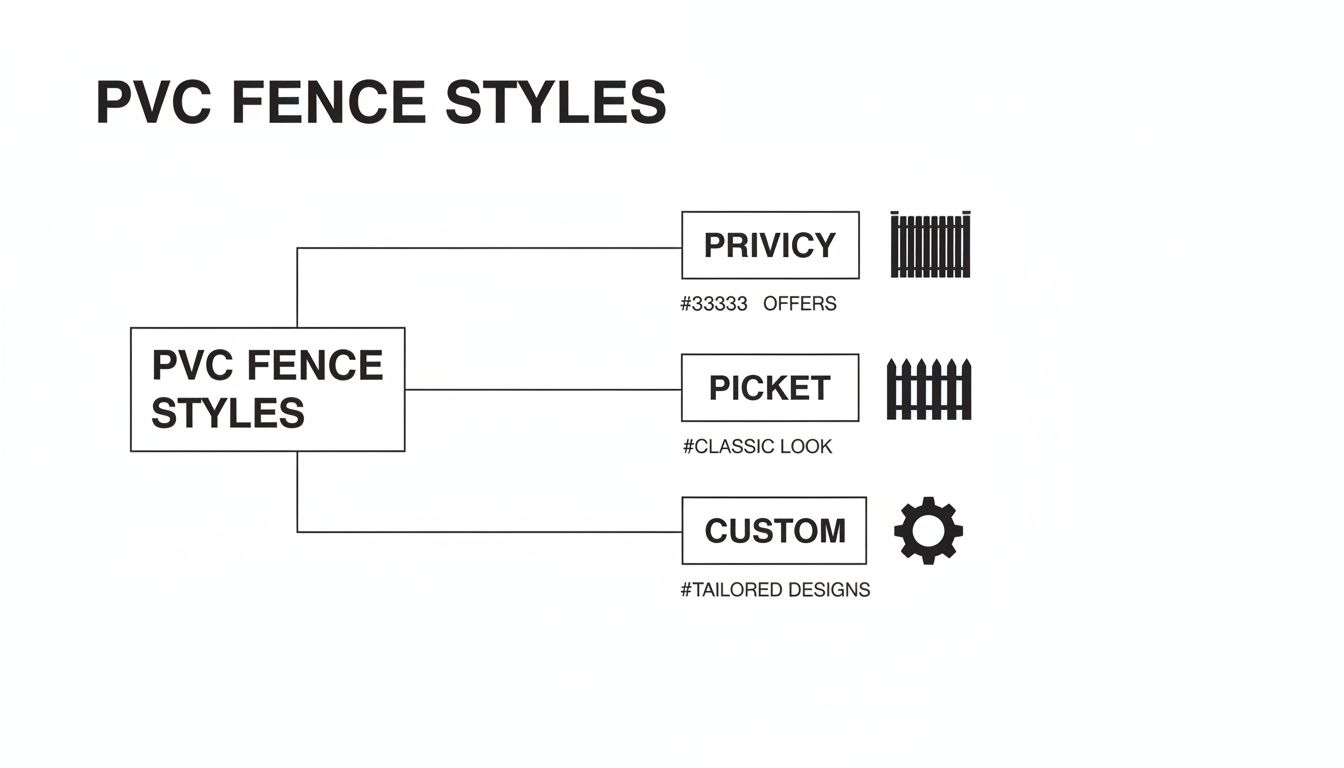
It’s clear that PVC isn't a one-trick pony. It’s a flexible material that can be shaped to fit exactly what you need for both security and style.
Durability and Lifespan in the Ottawa Climate
Our region’s climate is the ultimate stress test. Heavy snow, ice storms, summer humidity, and the constant freeze-thaw cycle will break down lesser materials.
Wood is the most susceptible to our weather. It soaks up moisture, which causes rot and warping. It expands and contracts with every temperature swing, leading to cracks and splits. A wood fence in Ottawa might last 15-20 years, but you'll have to work hard to get it there.
Aluminum is exceptionally durable. It won’t rust, which is a huge plus for longevity, but it can get dented by a hard impact. Its open style is great for views but doesn’t offer much privacy.
A high-quality plastic PVC fence is built for this. It doesn't absorb water, so rot is a non-issue. It's also engineered with enough flexibility to handle temperature extremes without cracking or becoming brittle. Installed correctly, a PVC fence can easily last 30 years or more and still look great.
This shift toward durable, low-maintenance options is a huge driver of growth in the fence construction industry. To get an idea of the scale, this market is valued at $1.7 billion in California alone, where new construction and homeowner demand are booming. As more people look for ways to boost their property’s security and curb appeal without adding chores, materials like PVC are quickly becoming the new gold standard. You can explore more on the fence construction market on IBISWorld.
Fence Material Showdown: PVC vs. Wood vs. Aluminum
Use this comparison chart to make your final decision based on your top priorities, whether it's budget, longevity, or ease of ownership.
Attribute | Plastic PVC Fence | Wood Fence | Aluminum Fence |
|---|---|---|---|
Upfront Cost | Mid-range | Lowest | Highest |
Maintenance | Almost none (occasional cleaning) | High (sanding, staining, sealing) | Very low (occasional cleaning) |
Lifespan | 30+ years | 15-20 years | 50+ years |
Durability | Resists rot, insects, moisture | Prone to rot, warping, insects | Rust-proof but can dent |
Privacy Options | Excellent (full privacy panels) | Excellent (full privacy panels) | Poor (open-slat design) |
Style Variety | High (many colours and textures) | High (can be stained any colour) | Moderate (limited colours) |
Ultimately, while each material has its place, PVC strikes an impressive balance between cost, aesthetics, and sheer convenience, making it an increasingly popular choice for savvy homeowners.
Navigating Installation and Local Fence Regulations
You can buy the best PVC fence on the market, but its real strength and longevity come down to one thing: the quality of the installation. A fence is only as solid as its foundation. Following proper procedure isn't just about aesthetics; it's about building a structure that can stand up to our unique climate for decades.
Putting up a fence isn't just about digging a few holes. A professional installation means every post, panel, and gate is perfectly aligned and secured, ready to face whatever our weather throws at it without shifting, leaning, or failing.
The Critical Role of Frost Depth
If there’s one thing that can destroy a poorly installed fence in our area, it's the frost. Every winter, the ground freezes deep and expands with incredible force—a phenomenon called "frost heaving." Any post that isn't set deep enough will be slowly but surely pushed right out of the ground, causing your fence line to warp and buckle.
This is exactly why a professional installation is so vital. Your action item here is to ensure your installer digs post holes to a minimum of four feet (48 inches). This gets the base of the post well below the frost line, anchoring it in stable ground that won't move. It's the only way to guarantee your fence's foundation stays put year after year.
A fence post set just two or three feet deep might look fine when the crew leaves, but it’s a ticking time bomb. Proper depth is the difference between a fence that lasts 30 years and one that’s a wreck after its first winter.
Understanding Ottawa-Gatineau Bylaws
Before any dirt is moved, you need to know the rules. Both Ottawa and Gatineau have very specific bylaws about how high your fence can be, where it can be placed, and the special requirements for properties with pools.
Here is your pre-installation checklist:
Property Lines: Confirm your boundaries. The best first step is always consulting your property's site plan to know exactly where the line is and avoid any disputes with neighbours.
Pool Enclosures: If you have a pool, review the local codes. Fences must typically meet a minimum height of five feet and have gates that are self-closing and self-latching to prevent accidents.
Height Restrictions: Check the maximum allowed fence heights for your front, side, and back yards. Building too high without a permit can result in fines and an order to tear it down.
The 'Call Before You Dig' Mandate
This isn't a suggestion; it's a mandatory action. Before any digging starts, a request must be filed with Ontario One Call (in Ottawa) or Info-Excavation (in Gatineau).
This free service will send crews to mark the location of any buried gas lines, hydro cables, and water pipes. Hitting one of these is incredibly dangerous and can lead to massive repair bills and serious legal trouble. A professional fencing contractor takes care of this entire process for you, ensuring the project is safe and compliant from day one.
Keeping Your PVC Fence Looking Great Through Canadian Seasons
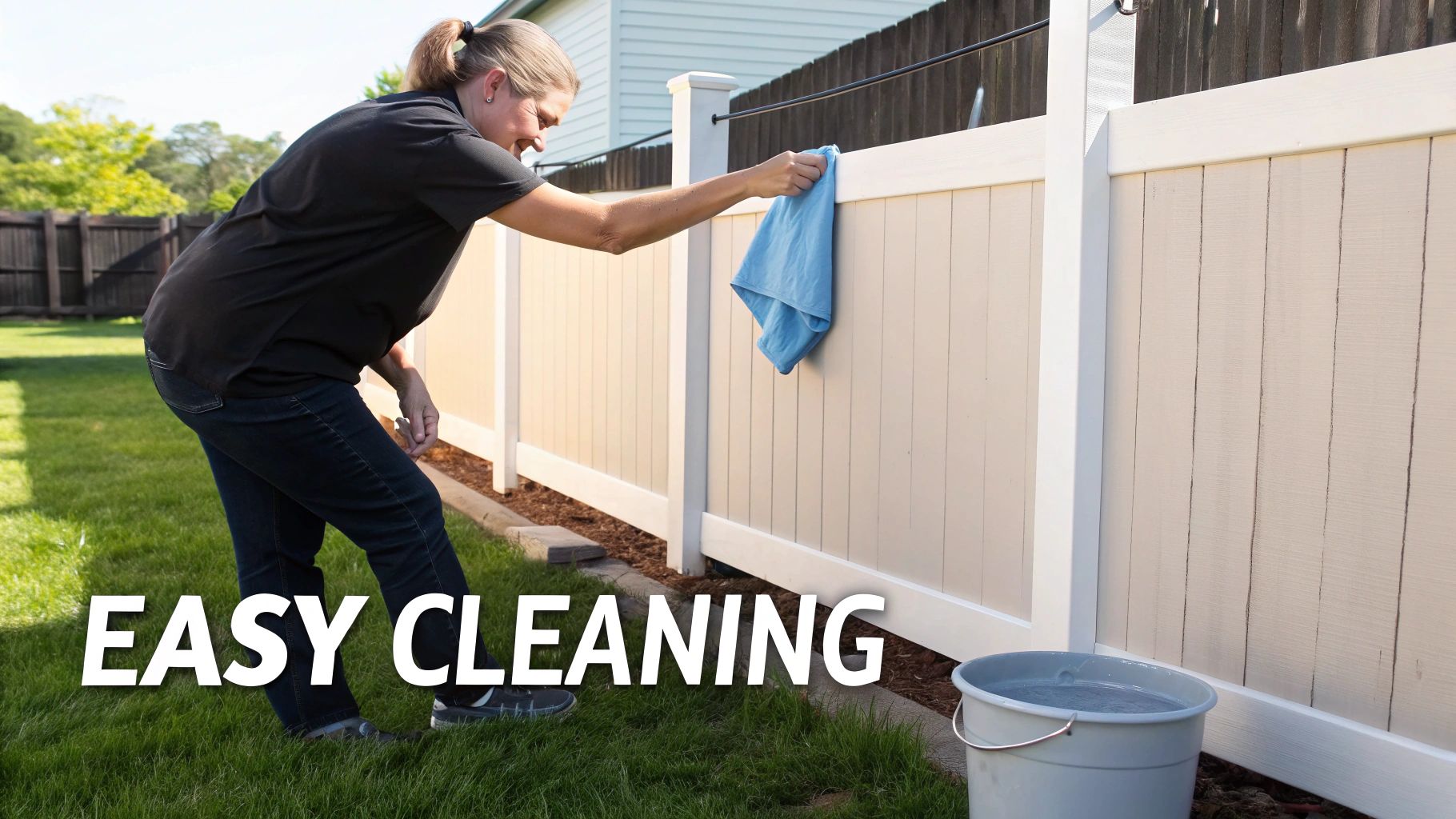
One of the best things about a plastic PVC fence is how little it asks of you once it's in the ground. It’s about as close as you can get to a ‘set it and forget it’ fence. Still, a few simple checkups will ensure your fence looks brand new for decades. It's this low-maintenance appeal that's making PVC so popular. In fact, the plastic fencing market in North America is expected to nearly double from $2.1 billion to $4.1 billion by 2035, driven by homeowners who want durable, cost-effective materials. You can find more details on the growth of plastic fencing at EIN Presswire.
A Super-Simple Annual Maintenance Routine
Forget about sanding, stripping, and staining. Follow this simple plan to keep your PVC fence clean with no special tools.
Simple Soap and Water: For most of the year's grime, all you need is a bucket of soapy water and a soft cloth or brush. Gently wipe away any dirt, grass clippings, or pollen that has built up. For stubborn spots, a mild household cleaner will usually take care of it.
A Quick Rinse: Once you're done washing, a gentle rinse with a garden hose is all you need to clear away any soap. It's best to avoid high-pressure washers, which can be too aggressive and potentially damage the surface finish or pop a post cap off.
A PVC fence’s superpower is its non-porous surface. Unlike wood, which soaks up dirt and stains, PVC repels them. That’s why a simple wipe-down is often enough to restore its original shine.
What to Look for After a Tough Ottawa Winter
Our winters can be tough on any outdoor structure. While a properly installed PVC fence is built to withstand the deep freeze, performing this quick walk-around in the spring is a smart preventative measure.
Check Your Gates: Heavy snow and shifting ground can sometimes knock gate alignment off. Swing the gates to ensure they open smoothly and latch properly. If something feels off, a quick tweak to the hinge adjustments with a wrench is usually all that’s needed.
Inspect Posts and Panels: Once the snow melts, walk the fence line. Look for any posts that might have shifted during winter thaws. This is where professional installation really matters—sinking posts below the frost line is crucial for stability. We cover this in detail in our guide to frost depth in Ontario.
Scan for Any Damage: PVC is tough, but not indestructible. A heavy, falling branch or a bad hit from a snowblower could cause a crack. The good news is that PVC fences are modular, so if you find a damaged section, you can replace it without taking apart the whole fence.
Frequently Asked Questions About PVC Fences
You've got the big picture, but it's the specific, practical questions that often make or break a decision. Here are direct answers to the most common questions from Ottawa-Gatineau homeowners.
Will a Plastic PVC Fence Fade or Turn Yellow in the Sun?
No, not if you buy a quality modern product. High-quality PVC is manufactured with titanium dioxide (TiO2) and other UV inhibitors. This acts as a permanent, built-in sunscreen. This formulation is specifically engineered to fight off the harsh summer sun we get in Ottawa, preventing the fading and yellowing that plagued older products. You can count on your fence’s colour to stay true and vibrant for many years.
How Does a PVC Fence Hold Up to Ottawa Winters?
They are built for it, provided they are installed correctly. Quality vinyl contains impact modifiers that keep it from becoming brittle in the cold. However, the real secret to winter survival is proper installation. The posts must be set deep below the frost line to prevent the ground from heaving them up during freeze-thaw cycles. The fence’s smooth surface also helps snow and ice slide right off.
A common myth is that PVC shatters easily in the cold. That's not the case with good quality vinyl. It contains special impact modifiers that keep it flexible enough to handle typical winter stress and even a nudge from a snowblower without failing.
Can I Repair a Damaged Section of a PVC Fence?
Yes, and this is one of its best features. A plastic PVC fence is a modular system of individual posts, rails, and panels. If a single piece gets damaged, you can simply swap it out. There’s no need to tear down the whole fence line to fix one spot. This makes repairs much faster and cheaper compared to other materials, a huge factor in the long-term cost of ownership, which you can read more about in our guide to vinyl fence cost in Ottawa.
Is a PVC Fence a Good Investment for My Property Value?
Without a doubt. A high-quality plastic PVC fence is a fantastic investment that boosts curb appeal and value. When potential buyers see a beautiful, sturdy fence that needs almost zero maintenance, it’s a massive plus. They see a premium feature they won't have to sink time or money into. That perception of a hassle-free, long-lasting asset makes your property stand out and can directly contribute to a better resale price.
Ready to upgrade your property with a fence that combines lasting beauty and unbeatable convenience? The team at FenceScape provides expert design and installation services across the Ottawa-Gatineau region, ensuring your project is done right from the very first post. Get your free estimate today and discover the difference professional quality makes.
Comments