
Your Guide to Vinyl Fence Cost in Ottawa

When budgeting for a new fence in the Ottawa–Gatineau area, it's crucial to have a clear starting point. For a professionally installed vinyl fence, you can plan for a cost between $45 and $90 per linear foot.
For a standard backyard, this translates to a total investment in the $4,500 to $9,000 range. To get an accurate estimate, you'll need to account for project specifics like total length, desired height, and the style you choose.
Calculating Your Vinyl Fence Cost in Ottawa
To accurately budget for your new fence, you need to treat it like a custom project, not an off-the-shelf purchase. Think of a base price as your starting point; from there, every choice you make—from the height of the panels to the style of the post caps—will adjust the final quote.
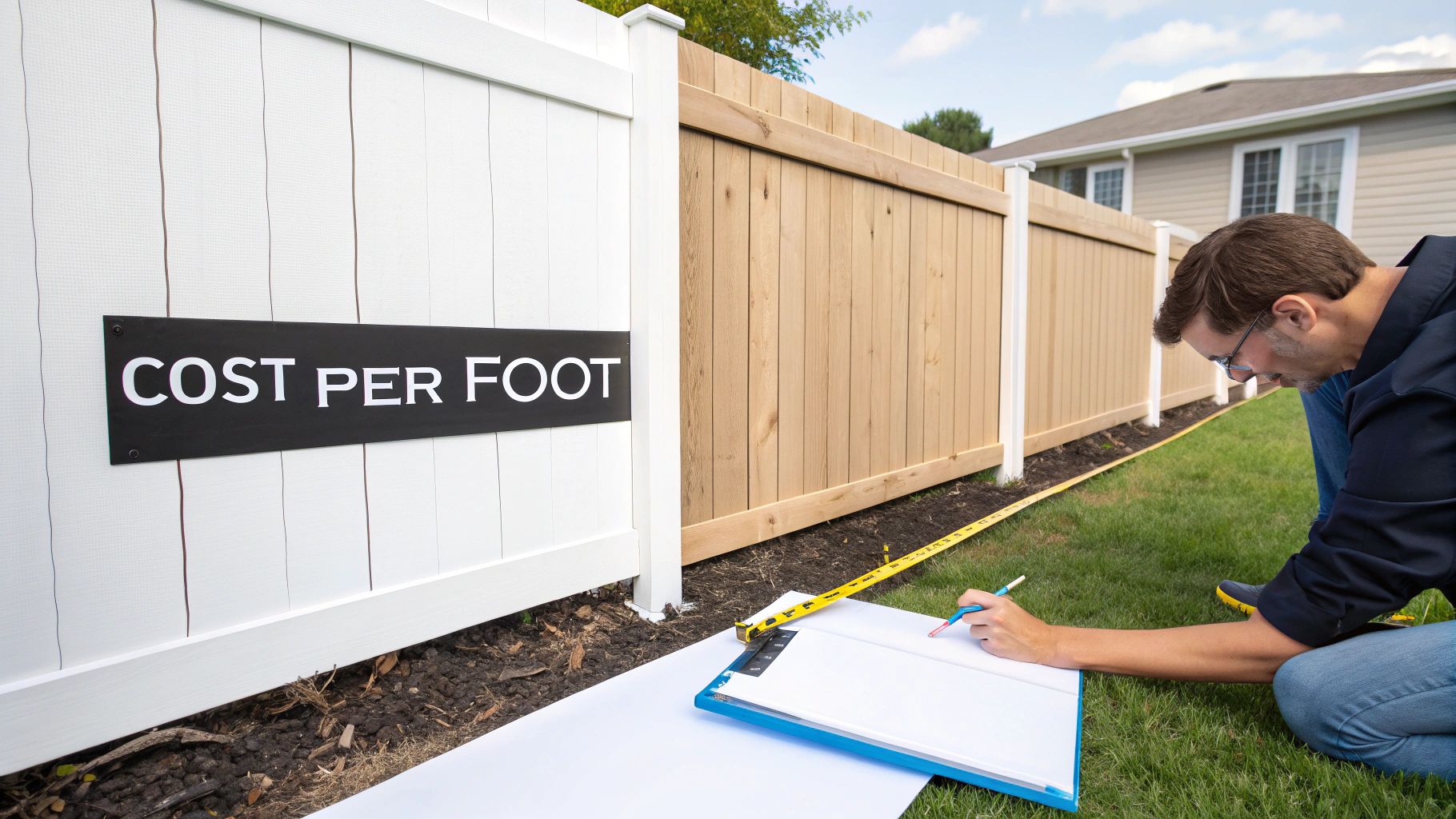
Let's break down the main variables that will influence your final quote. By understanding these factors, you can make informed decisions that align with your budget and see exactly where your money is going.
Key Cost Variables
Your total investment is primarily shaped by three key components:
Materials: This includes the quality, colour, and style of the PVC fencing options you select—from the panels and posts right down to the caps.
Professional Installation: Labour is a significant part of your fence project. Budgeting for an expert installation ensures your fence is sturdy, level, and built to withstand Ottawa's weather for years to come.
Fence Height and Style: A practical consideration: a tall, six-foot privacy fence requires more material than a decorative four-foot picket fence, directly impacting the cost.
Understanding these costs in the context of our local economy is also useful. Home improvement projects are just one piece of the puzzle when you consider the true cost of living in Ottawa.
To give you a clearer idea of what to expect, here’s a quick breakdown of potential project costs based on common fence lengths in the Ottawa area.
Ottawa Vinyl Fence Cost At a Glance
Project Size (Linear Feet) | Average Cost Per Linear Foot | Estimated Total Project Cost (Materials & Labour) |
|---|---|---|
50 ft (Small Yard/Patio) | $60 - $90 | $3,000 - $4,500 |
100 ft (Standard Lot) | $55 - $85 | $5,500 - $8,500 |
150 ft (Larger Lot) | $50 - $80 | $7,500 - $12,000 |
200+ ft (Acreage/Corner Lot) | $45 - $75 | $9,000+ |
Note: Use these estimates for your initial budgeting. The final price can change based on your specific site conditions, style choices, and other factors.
An actionable tip: Treat a vinyl fence as a long-term investment. While the upfront cost is important, factor in its durability and low-maintenance nature, which offer significant savings over time compared to materials like wood.
While every market is different, these local prices are in line with what homeowners pay elsewhere. For example, in a competitive market like Orange County, California, vinyl fence installation often runs from $30 to $51 USD per linear foot, with total project costs falling between $3,200 and $10,100 USD.
Ultimately, the only way to lock in your final cost is to get a detailed, personalized quote for your property.
What Goes Into Your Fencing Installation Quote?
When you get a quote for a new fence, don't just look at the final number. To compare offers effectively, you need to understand the itemized breakdown. A professional quote should clearly separate every cost, from the panels down to the last screw, plus the skilled labour required to install it.
When you understand each line item, you can see exactly what you're paying for and compare quotes with confidence.
The Cost of Materials
The largest portion of your quote will be materials. A detailed quote should break this down so you can see the cost of each component:
Fence Panels: The main material expense. The cost varies based on the style (e.g., full privacy vs. picket), height, and colour you choose.
Fence Posts: The structural backbone of your fence. They are set in concrete for stability, and their price is determined by their thickness and length.
Post Caps: These are a functional and aesthetic finish. They protect the post interiors from water and snow while providing a polished look.
Gates & Hardware: Gates are complex moving parts. The cost depends on the width, single vs. double gate configuration, and the quality of the hinges and latches.
Knowing what these individual parts are helps you make smarter choices. For a deeper dive into all things vinyl, check out our actionable guide to plastic vinyl fence solutions.
Understanding Labour Charges
Professional installation is a critical investment in your fence's longevity. The labour charge reflects the expertise and time needed to build a fence that will last. This is a precise process to ensure every section is straight, level, and secure.
Contractors calculate labour based on project length and complexity. A straightforward fence on a flat, clear lawn will have lower labour costs than one on a steep hill or in rocky soil, which requires special equipment and more time. Even site access matters; if the crew must manually carry materials a long distance, the extra effort will be factored into the price.
An actionable tip: Prioritize professional installation. An improperly set post or poorly secured panel can lead to sagging, leaning, or wind damage, resulting in costly repairs down the line.
Often Overlooked Expenses
A thorough quote will include other essential costs. These are not "hidden" fees but necessary components of a professionally managed project.
Site Preparation: Before installation, the fence line must be cleared of obstacles like bushes, small trees, or rocks. This prep work is essential for a clean, straight installation.
Old Fence Removal & Disposal: If you have an existing fence, this service covers the labour for demolition and the fees for responsible disposal of the old material.
Permits: Depending on your location in the Ottawa–Gatineau area, you may need a building permit. A reputable contractor will handle the application process, and the permit fee will be included in the quote.
Seeing these items on a quote is a good sign—it indicates your contractor is thorough. It's also important to remember that costs can change a lot depending on the region. For example, in San Diego, the cost to install a vinyl fence can range from $27.33 to $61.33 USD per linear foot, driven by local labour rates, terrain, and fence styles. Reviewing regional data can be helpful to learn more about how these factors affect pricing in different markets.
Key Factors That Drive Your Final Fence Price
To control your budget, you need to understand what drives the final price up or down. Your vinyl fence cost is a custom calculation based on your design choices and your property's specific conditions.
Think of it like ordering a pizza. A basic cheese pizza has a set price, but adding premium toppings, opting for a gluten-free crust, and asking for delivery will increase the final bill. Every fencing choice, from panel colour to the lay of your land, acts as a "topping" that adjusts the price. Understanding these variables is the key to managing your budget effectively.
This diagram helps visualize how a typical quote breaks down into three main categories.

As you can see, the total cost is a mix of materials, labour, and other project-specific expenses. Each one plays a big part in what you'll ultimately pay.
Design Choices That Shape Your Budget
Your design vision is where you have the most control over the final cost. Every decision related to the materials has a direct impact on the price tag. Making smart choices here is the most powerful way to manage your overall spending.
Here are the design elements that move the needle the most:
Fence Height: A six-foot privacy fence requires more vinyl material than a shorter four-foot picket fence. This increases panel and post costs. Taller fences also often need deeper post holes and more concrete, which can increase labour time.
Fence Style: A solid privacy panel uses the most raw material and is typically more expensive than a semi-private or picket style. Decorative additions like lattice tops or ornate post caps will also add to the material cost.
Colour and Texture: Standard white is the most cost-effective option. Premium colours and wood-grain finishes require special pigments to prevent fading, making them about 10-20% more expensive than standard white.
Site Conditions and Their Impact
Once your design is set, the physical characteristics of your property become the next major cost factor, primarily influencing labour. A challenging worksite requires more time, specialized equipment, and greater effort from the installation crew, which will be reflected in your quote.
Your property's terrain is a silent partner in your fence project. A flat, clear yard is straightforward, but slopes, rocks, and tight spaces introduce complexities that demand extra expertise and time from your installation team.
For example, a simple installation on level ground will always be less expensive than a complex one. Down in Riverside, California, the cost for a standard vinyl privacy fence installed by pros usually falls between $30 and $51 USD per linear foot, with the final price swinging based on job complexity and terrain. You can get a clearer picture of how regional factors influence installation prices and see how those numbers stack up against the Ottawa market.
Common Site Challenges in Ottawa
If your property has any of the following characteristics, be prepared for a higher labour estimate, as they are common in the Ottawa area and increase installation time:
Sloped Ground: Installers must use a stepped or racked method to follow the contour of a hill correctly. This requires precise measurements, extra cuts, and more labour.
Rocky Soil or Clay: Ottawa is known for challenging soil. Digging post holes in dense clay or rocky ground is difficult and may require a heavy-duty auger or a jackhammer, adding significant time to the job.
Poor Accessibility: If the crew cannot get their truck and equipment close to the fence line, they will have to manually haul materials. This extra time and effort will be factored into the labour cost.
Obstacles: A clear fence line is essential. Removing thick tree roots, working around buried utility lines, or demolishing old concrete footings will add to the labour bill.
To help you see how these choices add up, here’s a quick-glance table breaking down the impact of different factors.
How Different Choices Impact Your Vinyl Fence Cost
Cost Factor | Low-Cost Option (Example) | High-Cost Option (Example) | Estimated Price Impact |
|---|---|---|---|
Height | 4-foot picket fence | 6-foot privacy fence | High: Taller fences require more material and deeper post holes. |
Style | Standard picket or semi-private | Solid privacy with a lattice top | Medium to High: More complex styles use more material. |
Colour | Standard white | Dark colours or wood-grain texture | Medium: Premium colours can increase material cost by 10-20%. |
Terrain | Flat, clear lawn | Steep slope with rocky soil | High: Difficult terrain significantly increases labour time. |
Accessibility | Drive-up access to the fence line | Narrow access, manual hauling | Medium: Poor access adds hours of labour for material transport. |
Site Prep | Clear, unobstructed fence line | Removing old fence, roots, rocks | Low to High: Varies based on the extent of removal needed. |
As you can see, a few "high-cost" choices combined with a challenging property can quickly add up. By thinking about your design preferences and your property's unique landscape ahead of time, you can build a realistic budget and have a much better conversation with your fencing contractor.
Comparing Vinyl Against Other Fencing Materials
To make a smart financial decision, you must look beyond the initial installation quote and consider the total cost of ownership over the fence's lifetime. A fence is a long-term investment, and the material you choose will determine your future maintenance costs and effort.
When you compare vinyl side-by-side with other popular materials like wood, chain-link, and aluminum, you can see how its low-maintenance nature translates into significant long-term value.
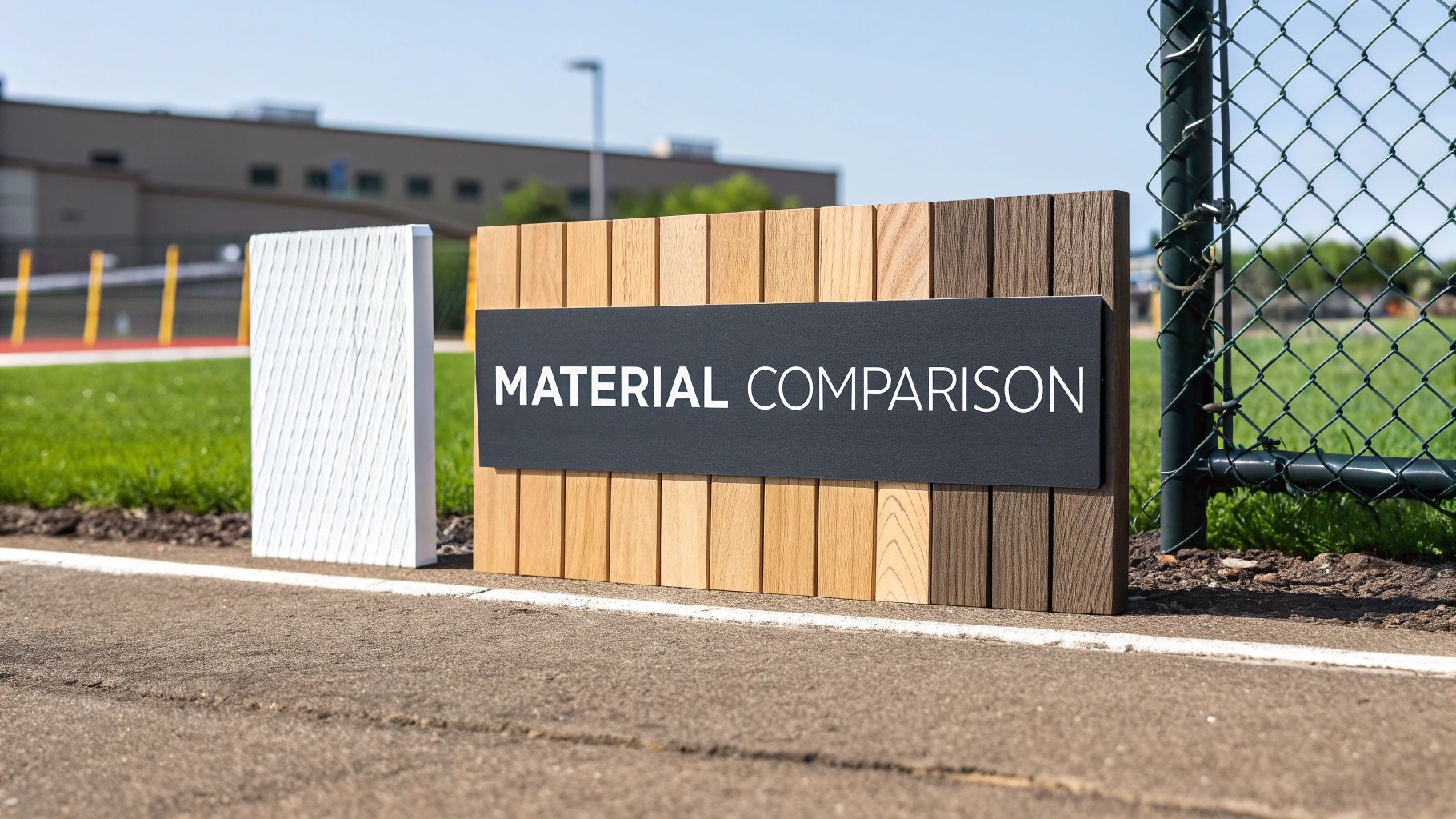
Vinyl vs. Wood Fencing
A pressure-treated wood fence often has a lower upfront cost, making it an attractive option. However, this is where the long-term cost story begins.
To protect a wood fence from Ottawa's harsh weather, you must stain or seal it every two to three years. These recurring costs for materials and labour can add up to hundreds of dollars every few years. In contrast, vinyl never needs staining or sealing. A simple wash with soap and water is all it requires, saving you significant time and money over its lifespan. For a closer look, our guide to the price of a wood fence breaks down how those long-term expenses really compare.
An actionable tip: Think of a vinyl fence as a "set it and forget it" solution. While a wood fence demands a continuous investment of time and money for upkeep, vinyl’s durability offers predictable, long-term savings.
Vinyl vs. Chain-Link Fencing
Chain-link has the lowest upfront cost and is a functional choice for marking a boundary. However, it provides almost no privacy or aesthetic appeal.
While chain-link is low-maintenance, it doesn't offer the security or visual screen that most homeowners desire. Adding privacy slats increases the cost and can look temporary. For homeowners who value curb appeal and a private backyard, the higher initial vinyl fence cost delivers immediate and lasting value that chain-link cannot match.
Vinyl vs. Aluminum Fencing
Aluminum fencing shares many benefits with vinyl: it's durable, low-maintenance, and resistant to rust. It offers a sleek, modern look often compared to wrought iron.
The key differences are privacy and price. Aluminum fences are almost always more expensive than vinyl. Their open, picket-style design offers very little privacy. If your goal is to create a secluded backyard, a solid vinyl privacy fence is a more effective and budget-friendly solution that still delivers exceptional durability.
Here's a quick comparison of what you can expect to spend on each material over a 20-year period.
Lifetime Cost Comparison At a Glance
Fencing Material | Initial Installation Cost | Typical Lifespan | Estimated 20-Year Maintenance Cost | Total 20-Year Cost of Ownership |
|---|---|---|---|---|
Vinyl (PVC) | Moderate to High | 25-30+ Years | $0 - $100 (Cleaning supplies) | Lowest |
Wood | Low to Moderate | 15-20 Years | $1,500 - $3,000+ (Staining, sealing, repairs) | Highest |
Chain-Link | Lowest | 20-30 Years | $50 - $150 (Minor repairs) | Low |
Aluminum | Highest | 30+ Years | $0 - $100 (Cleaning, hardware checks) | High |
This data shows that the initial price is just the beginning. Although vinyl may require a larger upfront investment than wood or chain-link, its minimal maintenance needs make it one of the most cost-effective long-term fencing solutions for your home.
Actionable Ways to Save On Your New Fence
With smart planning, you can reduce the final cost of your new fence without sacrificing quality. The goal is to get the best possible value for your project here in Ottawa.
One of the most effective strategies is timing your installation. The fencing industry's busy season runs from spring through late summer. If you schedule your project during the off-season—such as late fall or a mild winter—installers may offer more competitive pricing to keep their crews working.
Plan Ahead for Smart Savings
Planning your fence project in advance unlocks multiple opportunities to save money. When you're not in a rush, you can explore all your options and make budget-friendly choices.
One effective strategy is to talk to your neighbours. If you share a property line and they are also considering a new fence, you can approach a contractor for a group installation. This can lead to significant discounts, as the contractor saves on travel and logistics, and you both benefit from the reduced cost.
A long-term savings strategy that always pays off is investing in high-quality materials from day one. Premium vinyl might cost a bit more upfront, but its durability means you won't be paying for repairs or a full replacement in just a few years.
Get Multiple Quotes the Right Way
Getting multiple quotes is standard advice, but the key is to ensure you are comparing them accurately. The lowest price is not always the best value. A proper quote must be fully itemized, breaking down all costs: materials, labour, gate hardware, and old fence removal.
Here's a checklist for getting clear, comparable quotes:
Request Identical Specs: Provide each contractor with the exact same project details: style, height, linear footage, and gate specifications.
Ask About Warranties: A reputable contractor stands by their work. Inquire about warranties on both the vinyl materials and the installation itself.
Check Local Reviews: Find out what other homeowners in the Ottawa–Gatineau area are saying. A strong local reputation is a sign of quality and customer satisfaction.
Getting detailed quotes from trusted local companies is the best way to ensure transparent and competitive pricing. This puts you in control, allowing you to make a decision based on both cost and quality.
So, you’ve waded through all the numbers, compared the different materials, and have a solid handle on how to save a few dollars. What's next? It's time to take all that great research and start turning it into a real fence.
Making the leap from planning to doing doesn't have to be complicated. The key is to organize your thoughts so you can have a clear, productive conversation with a contractor. Think of it as sketching out a simple blueprint for your fence—it's the best way to get an accurate quote that truly reflects what you want for your property.
Your Pre-Quote Action Plan
Before you pick up the phone, a little prep work goes a long way. Running through this quick checklist will make your consultation much more efficient and help any estimator give you a price that’s right on the money.
Get a Rough Measurement: Use a measuring tape to determine the approximate length of your planned fence line. A close estimate in linear feet is all you need for a preliminary quote.
Define Your Goal: Decide the primary purpose of your fence. Are you aiming for total privacy, a secure boundary for children and pets, or an aesthetic upgrade? Choose a style (e.g., 6-foot privacy or 4-foot picket) and a colour that meets your needs.
Prepare Your Questions: Have a list of questions ready for your contractor. Ask about their installation timeline, the warranties they offer on materials and labour, and how they handle site-specific challenges like sloped terrain.
Once you have these details sorted out, you're in a great position to have a meaningful discussion. You’ve done your homework and can confidently bring in a professional to make it happen.
You're now well-prepared to make a smart, informed decision for your Ottawa–Gatineau home. The next logical step is to get a professional, no-obligation quote to see exactly how these costs will look for your unique property.
Ready to get a firm price for your project? The team at FenceScape has been helping homeowners across the Ottawa–Gatineau region for years. Get your free, no-obligation estimate today and take that first exciting step toward your beautiful new fence.
Your Top Vinyl Fence Questions, Answered
Even with all the numbers laid out, you probably still have a few practical questions kicking around in your head. That's completely normal. We hear these all the time from homeowners across Ottawa, so let's get you some straight answers.
How Long Does a Vinyl Fence Really Last in a Canadian Winter?
This is a critical question for any Ottawa homeowner. Modern, high-quality PVC is engineered to handle our harsh winters, including deep freezes, heavy snow, and thaw cycles.
Unlike wood, which absorbs moisture and can crack when it freezes, vinyl is non-porous. It will not rot, warp, or become brittle in the cold. A professionally installed vinyl fence has the flexibility to handle ground movement from frost heave and the strength to withstand drifting snow. You can expect your fence to last 25 to 30 years or more with minimal maintenance.
Will a New Vinyl Fence Increase My Property Value?
Yes, absolutely. A new fence is an immediate and highly visible home upgrade. In a competitive real estate market like Ottawa's, curb appeal is a significant factor. A clean, modern vinyl fence makes your entire property appear more polished, secure, and well-maintained.
Beyond aesthetics, a privacy fence transforms a backyard into a private outdoor living space—a highly sought-after feature for buyers. For families with children or pets, a secure, fully enclosed yard is a major selling point. It's an investment that enhances your lifestyle now and can lead to a better sale price later.
A well-chosen fence doesn’t just define your property line; it enhances your lifestyle and adds measurable value to your home. It’s an upgrade that buyers notice and appreciate immediately.
Do I Need a Building Permit for a Fence?
This depends on your municipality and the fence's height. Both Ottawa and Gatineau have specific bylaws. Typically, you do not need a permit for a standard backyard fence under a certain height, often around 2 metres (6.5 feet).
However, regulations can differ for front yards, corner lots, or properties adjacent to protected areas. The best course of action is to check your local municipality's website. An experienced contractor will be knowledgeable about local codes and can manage the permit process for you, ensuring the project complies with all regulations.
Beyond the initial build, it's also smart to think about long-term protection. A common question we get is, "Does homeowners insurance cover fences?" It's a great thing to ask, especially with the risk of storm damage. Coverage really depends on your policy, so it’s worth a quick call to your insurance agent once your beautiful new fence is up.
Ready to turn these answers into action? The team at FenceScape is here to help you build the perfect fence for your Ottawa–Gatineau home, combining premium materials with expert installation. Get your free, no-obligation estimate today and start your project with confidence.
Comments