
Your Actionable Guide to Fence Gate Closures

A fence gate closure isn't just a piece of hardware; it's the critical component that determines if your gate provides real security, safety, and convenience. Your goal is a gate that latches securely every single time. This guide provides the actionable steps to choose, install, and maintain the right closure for your needs.
Why Your Gate Closure Is a Security Linchpin
Your fence is only as strong as its weakest point—the gate. A gate left ajar or with a faulty latch nullifies the purpose of the entire fence. It becomes a security vulnerability and a significant safety risk, especially if you have a pool, children, or pets.
For homeowners in the Ottawa-Gatineau region, the challenge is amplified. Harsh winters cause ground heave, which can misalign a perfect latch. Heavy snow and ice place immense strain on hinges. A closure that performs flawlessly in July can fail in January, leaving your property exposed.
The Core Functions of a Gate Closure
To select the right fence gate closure, understand its three critical functions and how they apply to your property:
Security: This is your first line of defence. To improve security, choose a latch that can be locked and is difficult to bypass, actively deterring intruders.
Safety: For a pool, a self-closing and self-latching gate is a legal requirement. Actionable step: Check your local bylaws immediately to ensure compliance and prevent accidents.
Convenience: To ensure your gate is never left open by accident, install an automatic closure. This gives you smooth entry and exit without needing to double-check.
Figuring out how to secure your home involves thinking in layers, with your fence gate being a crucial first one. While large-scale infrastructure projects demonstrate the power of secure barriers, the principle applies directly to your backyard.
The impact of reliable barriers on public safety is significant. For example, the Golden Gate Bridge's suicide deterrent system saw a more than 50% reduction in confirmed suicides in 2023 during its construction, dropping from a historical average of over 30 to just 14.
This guide gives you the practical steps to choose, install, and maintain a closure that stands up to every Canadian season.
Choosing the Right Type of Fence Gate Closure
Selecting the right closure requires matching the hardware to your gate's material, weight, and primary function—be it security, child safety, or convenience. Let's walk through the most common types so you can make an informed decision.
This flowchart maps out the decision process. Use it to identify which factors are most critical for your situation.
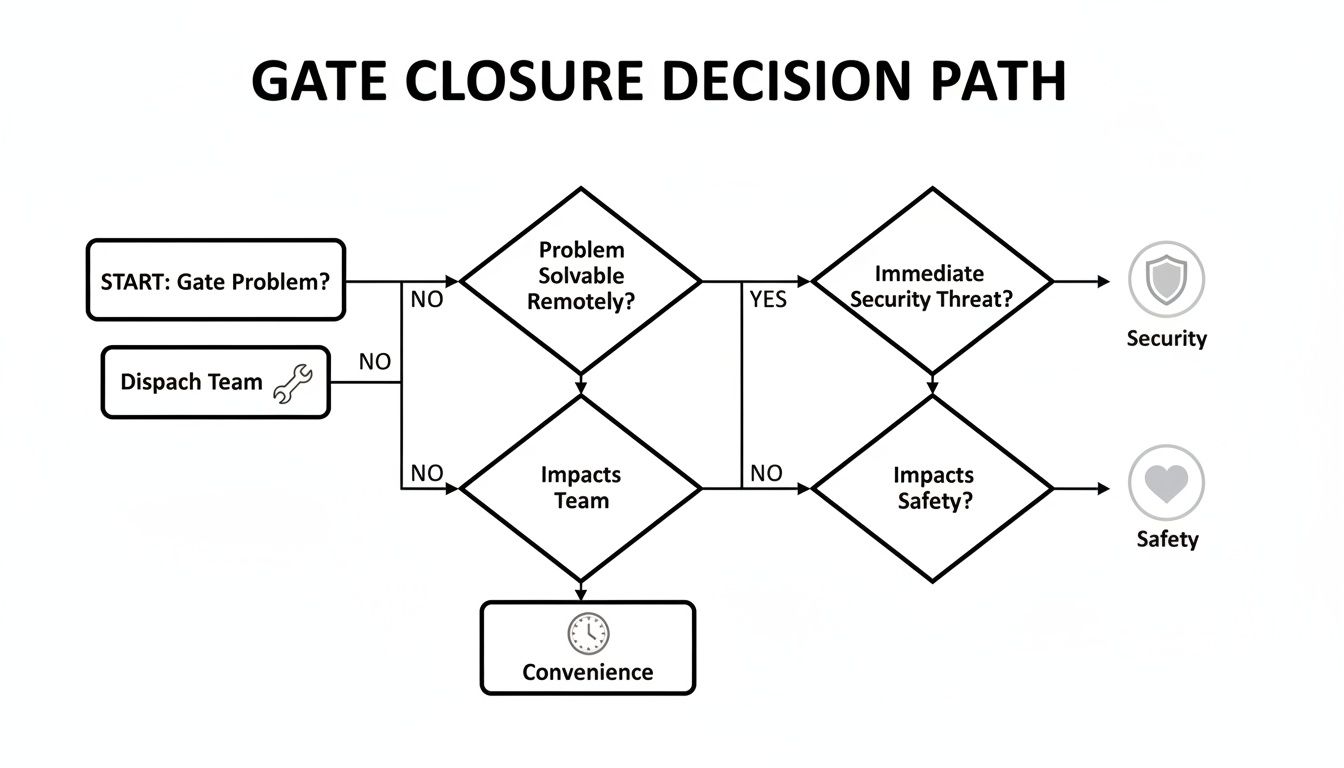
Your primary goal—high security, child safety, or ease of use—will point you directly to the best type of gate hardware.
Automatic Closures: Set-It-and-Forget-It Peace of Mind
An automatic or self-closing mechanism is a non-negotiable feature for pool safety and for preventing pets or young children from wandering off.
Self-Closing & Spring Hinges: These are the workhorses of automatic closures. A spring inside the hinge pulls the gate shut. Actionable Insight: Choose spring hinges for lightweight wood or vinyl gates as a budget-friendly solution to ensure your gate always closes.
Hydraulic & Pneumatic Closers: These provide a smooth, controlled close, preventing slamming. Actionable Insight: Select a hydraulic closer for heavy ornamental iron or solid wood gates to manage their weight safely and ensure a reliable latch without jarring impacts.
A self-closing gate is a silent, always-on-duty guardian. Around a pool, this isn't just convenient; it's a critical safety layer mandated by local bylaws.
Secure Latches: The Final Click of Security
Once a gate swings shut, the latch secures it. The right latch style is critical for security and often depends on your fence material. If you're still deciding on a fence, explore options in our guide to the best types of fences.
Gravity & Slide Latches: These are classic, manual options. A gravity latch arm drops into a catch, while a slide bolt is moved by hand. Actionable Insight: Use these for basic containment where self-latching is not a priority and manual operation is acceptable.
Magnetic Latches: This is a significant leap in safety and reliability. Powerful magnets pull the latch bolt securely into the catch without manual assistance. Actionable Insight: For pool gates, choose a high-quality magnetic latch. They are self-latching, often lockable, and designed to be difficult for small children to open, providing essential peace of mind.
To simplify your choice, use this comparison table.
Fence Gate Closure Comparison
Closure Type | Best For | Pros | Cons |
|---|---|---|---|
Spring Hinges | Lightweight wood & vinyl gates, basic containment. | Inexpensive, easy to install, ensures gate closes. | Can slam shut, spring may wear out over time. |
Hydraulic/Pneumatic | Heavy ornamental iron or solid wood gates. | Smooth, quiet, controlled close; adjustable speed. | More expensive, complex installation. |
Gravity/Slide Latches | General-purpose gates where self-latching isn't needed. | Simple, durable, very affordable. | Must be operated manually, not childproof. |
Magnetic Latches | Pool gates, child safety areas, premium security. | Self-latching, highly reliable, difficult for kids to open. | Higher initial cost, requires precise alignment. |
The best closure fits so seamlessly into your life you forget it's there—while delivering the exact safety and security your family requires.
Matching Closures to Your Fence Material
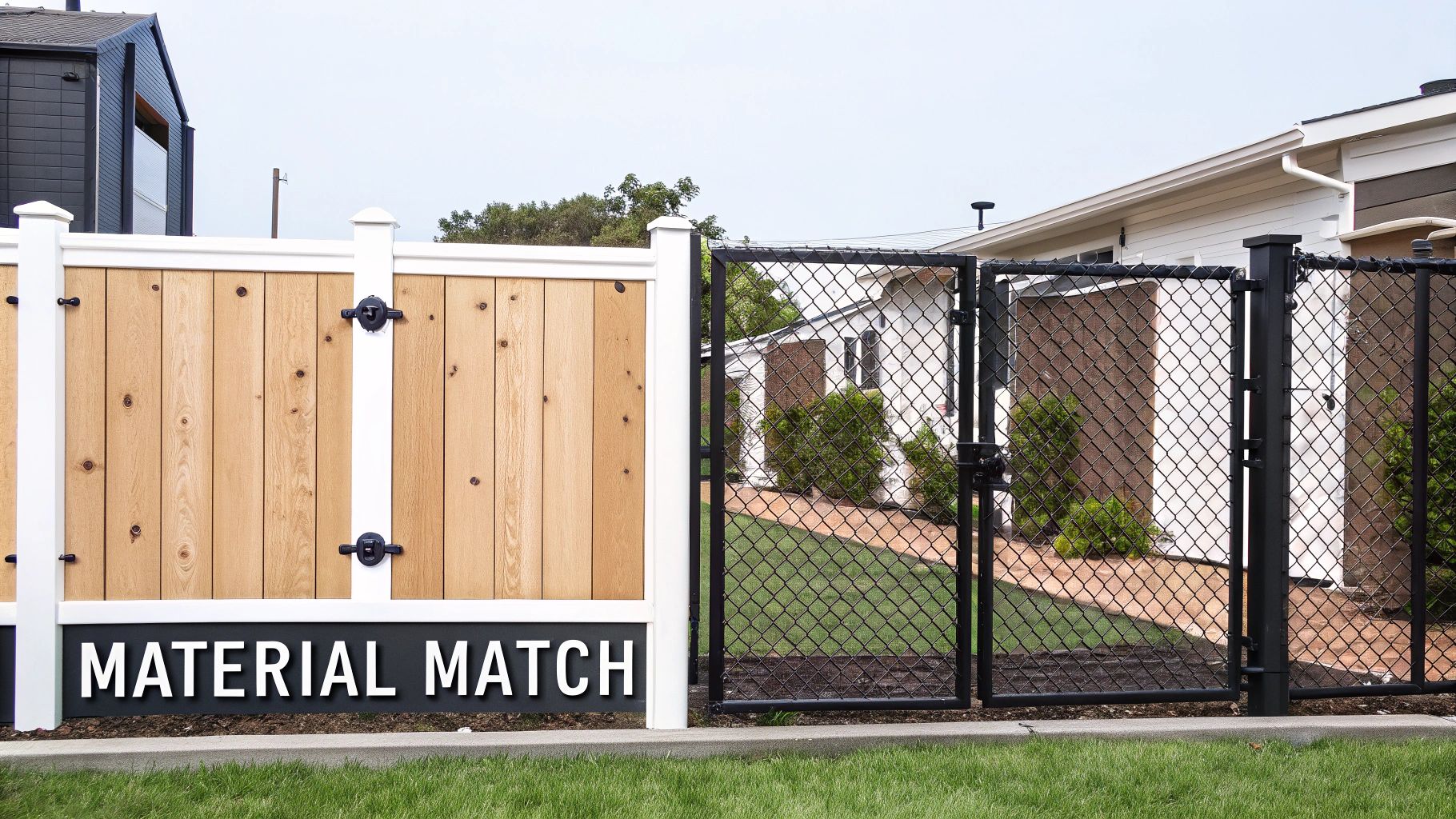
When selecting a gate closure, you must create a partnership between the hardware and the fence material. A lightweight closer will fail on a heavy iron gate. Material compatibility is the secret to a gate that lasts, performs reliably, and looks cohesive. Your choice must be based on the weight and properties of your gate.
Wood Gates: A Special Case in Canadian Climates
Wood is a beautiful but dynamic material. In Ottawa, wood gates swell in summer humidity and shrink in the dry winter cold. This movement, combined with frost heave, puts immense stress on hardware.
Actionable Insight: For wood gates, heavy-duty, adjustable hinges are non-negotiable. The ability to make small adjustments throughout the year is essential to keep your gate swinging true and latching securely. A fixed hinge will quickly lead to a sagging, misaligned gate.
Matching Hardware to Specific Fence Types
Get the hardware-material match right from day one to avoid future problems. Here’s how:
PVC/Vinyl Fences: These gates are lightweight. Actionable Insight: Choose stainless steel or polymer-based hardware to prevent ugly rust stains that can permanently discolour the clean PVC finish.
Ornamental Iron Fences: These gates are heavy. Actionable Insight: You must install robust hardware. We use powerful hydraulic closers and heavy-duty hinges to control the gate's momentum safely. For more, see our guide on metal gates and fences.
Chain Link Fences: Durability and function are key. Actionable Insight: Use simple, galvanized hardware like fork latches and sturdy spring closers. They are practical, effective, and built for longevity.
Selecting hardware that complements your fence isn’t just about aesthetics. It’s a practical step that prevents long-term damage like rust, warping, and mechanical failure, protecting your investment.
Ensuring Pool Safety and Local Bylaw Compliance
For pool owners, the fence gate is a critical safety device. In Ottawa and Gatineau, local bylaws are strict and designed to prevent tragic accidents. Your gate must function as a full-time, silent lifeguard.
Decoding Local Pool Fence Bylaws
In both Ottawa and Gatineau, the rules for a fence gate closure on a pool enclosure are specific and non-negotiable. They are built on two core safety principles.
Your gate absolutely must have:
A Self-Closing Device: The gate must swing completely shut on its own from any position. This is typically achieved with self-closing or spring-loaded hinges.
A Self-Latching Device: As the gate closes, it must automatically lock without manual help. The latch must be designed to be difficult for a small child to operate.
These are legally required layers of protection. A gate that closes but doesn't latch fails inspection. A gate that latches but doesn't close on its own also fails. Both features must work perfectly.
Latch Height and Placement Are Crucial
Actionable Insight: To comply with bylaws, the release mechanism for the latch must be at least 1.5 metres (about 5 feet) above the ground to keep it out of a toddler's reach.
If the latch must be positioned lower, it must be installed on the pool side of the gate. This forces an individual to reach up and over the top, an action a small child cannot perform.
This is why pool-code magnetic latches are the gold standard. They are engineered to meet these rules, providing a reliable self-latch and often including a key lock for added security. For more details, review our guide on pool safety fence requirements.
Getting Your Gate Closure Installed and Dialled In
For the handy homeowner, installing or adjusting a gate closure can be a satisfying project. With basic tools, you can get your gate closing smoothly and latching securely.
First, ensure your gate posts are perfectly plumb and the gate itself is level. A misaligned gate will undermine even the best closure system.
Quick Tips for Installation and Adjustment
The goal is to find the sweet spot: enough force to latch firmly without slamming. Here are actionable adjustments you can likely handle yourself:
Tensioning a Spring Hinge: Use the adjustment tool (usually a hex key) included with your hinge. Insert the tool and turn to the next hole to add tension for a faster close, then insert the locking pin. Reverse the process to reduce tension. Make small, one-hole adjustments and test after each one.
Realigning a Latch: If the latch doesn't catch, loosen the screws on the latch bar or catch, nudge it into perfect alignment, and then re-tighten the screws. This is a common fix for gates affected by seasonal ground shifts.
Lubricating the Works: Apply a silicone-based lubricant to hinge pins and the internal latch mechanism. Actionable Step: Do this once or twice a year to prevent sticking, squeaking, and rust, ensuring smooth operation.
A gate that closes and latches reliably is a critical piece of your safety puzzle. The principle of dependable closures is so important, it's used in large-scale public safety infrastructure.
For instance, in managing highway incidents where seconds matter, studies flagged road sections for automated closure systems if they had more than two fatal accidents with emergency response times over 20 minutes. This shows how a dependable closure is key to ensuring safety. You can learn more about this infrastructure safety report.
Knowing When to Call a Pro
While many adjustments are DIY-friendly, some jobs require an expert. A botched installation can result in an unsafe gate that fails to meet code.
Call a professional like FenceScape if you face these situations:
Heavy Gates: Large wood or ornamental iron gates require specialized, heavy-duty hardware. Incorrect installation is a major safety hazard.
Complex Closers: Hydraulic and pneumatic closers require precise calibration that cannot be eyeballed.
Pool Code Compliance: When pool safety is at stake, there is no room for error. A professional will guarantee your gate is 100% compliant with all local bylaws.
Structural Problems: If your gate posts are leaning or the gate is sagging, this underlying issue must be fixed by a professional before installing new hardware.
Troubleshooting Common Gate Closure Problems
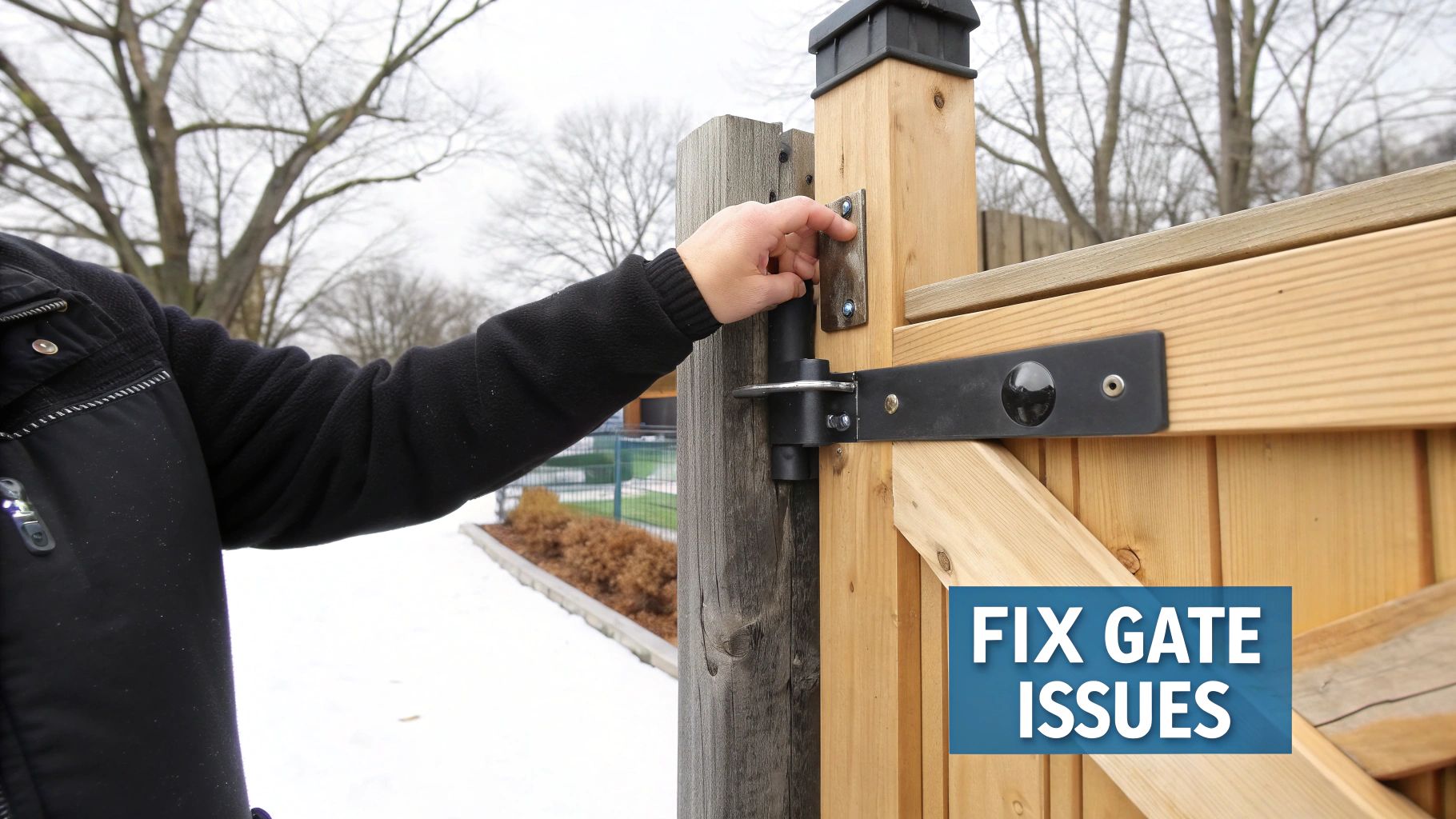
Even a well-installed gate closure can develop problems, especially with the dramatic seasonal shifts in the Ottawa-Gatineau region. A gate that won’t latch is a weak link in your home’s security. Fortunately, most common issues have simple, actionable solutions.
The primary culprit is a misaligned latch, almost always caused by frost heave. As the ground freezes and thaws, it shifts fence posts just enough to throw the gate's alignment off, preventing the latch from meeting the catch. A sagging gate, especially with heavy wood, is another frequent issue that stresses the entire closure mechanism.
Quick Fixes for Common Issues
Before calling a professional, run through this troubleshooting checklist. These simple steps often resolve the problem.
Adjust the Latch: Loosen the screws on the latch bar or the strike plate. Slide the component into the correct position for perfect alignment, then tighten the screws. Modern latches are designed for this adjustment.
Check Hinge Tension: If your self-closing gate isn't closing completely, the spring tension has likely loosened. Use the adjustment tool to tighten the spring one click at a time until the gate closes with a firm, satisfying click.
Lubricate Moving Parts: For squeaky hinges or a sticking latch, spray a silicone-based lubricant on all moving parts. This displaces moisture, prevents rust, and ensures smooth operation.
The need for robust, weather-resistant hardware cannot be overstated. Extreme weather always exposes weak points in outdoor structures. Historical events highlight how gate failures can worsen damage during severe weather, a lesson Canadian homeowners should heed. You can learn more about weather's impact on infrastructure.
Your best defense is a proactive one. Investing in high-quality, weather-resistant fence gate closures from the start will save you significant trouble and ensure your gate functions reliably through every tough Canadian season.
Still Have Questions About Fence Gate Closures?
Getting answers to your specific questions is key to choosing a closure that will provide years of reliable service. Here are some of the most common inquiries we receive.
How Much Do Fence Gate Closures Cost?
The price depends entirely on the function. A simple gravity latch or a set of basic spring hinges for a light gate might only be a minor expense for a DIY installation.
For a top-tier system, such as a pool-code compliant magnetic latch with heavy-duty self-closing hinges, expect to pay several hundred dollars for the hardware. At the premium end, a powerful hydraulic closer for a heavy ornamental gate represents a significant investment. Actionable Advice: Always invest in quality hardware upfront. It is more cost-effective than dealing with the frustration and expense of premature failure.
Can I Add a Self-Closing Mechanism to My Existing Gate?
Yes, in most cases, you can retrofit a gate to be self-closing. The most direct method is to replace one or two existing hinges with self-closing spring hinges.
However, the success of this upgrade depends on your gate's condition. It must swing freely without dragging, and the posts must be solid and plumb. Actionable Insight: Before buying new hardware, address any underlying structural issues like sagging gates or leaning posts. Otherwise, even the best fence gate closures will not work correctly.
The lifespan of your gate closure is directly tied to its quality and suitability for our climate. Inexpensive, basic hardware may only last a few seasons in a harsh Ottawa winter before rusting or losing tension.
Conversely, a well-maintained hydraulic closer or a high-quality polymer-based magnetic latch is engineered to perform for a decade or more. For long-term peace of mind in our region, always choose weather-resistant materials like stainless steel or metals with a protective powder coating. This is the most important factor for durability.
Ready to secure your gate with a closure system that’s built to last through every Canadian season? The experts at FenceScape can help you choose and install the perfect hardware for your fence. Contact us today for a free estimate.
Comments