
Your Actionable Guide to an Above Ground Pool Fence
- Nicka Marzzz
- Feb 13
- 15 min read

An above-ground pool fence is the single most important safety feature you can add to your backyard. It's a purpose-built barrier designed to stop anyone, especially young children, from getting into the pool without supervision. This fence can attach directly to the top rail of the pool itself or be installed around the perimeter on a deck or on the ground.
Either way, it’s not just an accessory; it’s an essential layer of protection that’s often required to meet local safety bylaws. This guide provides the actionable insights you need to choose, install, and maintain a fence that guarantees safety and peace of mind.
Why Your Above Ground Pool Needs a Dedicated Fence
Having an above-ground pool is a ticket to endless summer fun, but it comes with serious responsibility. Many homeowners mistakenly believe the pool's high walls are a sufficient barrier. This is a dangerous assumption. In fact, local bylaws across Ontario and Quebec, including in Ottawa and Gatineau, are very specific: the pool wall itself does not count as a compliant safety barrier.
The reason is simple: the removable ladder that comes with most pools isn't a permanent, secure solution, even if you take it away or lock it up. A dedicated pool fence above ground is the only actionable step to create a truly safe and compliant enclosure. It's your most effective line of defence against accidental drowning, which remains a leading cause of unintentional death for children under five.
More Than Just a Safety Measure
While keeping your family safe is the number one reason to install a fence, the benefits extend further. A well-built fence actually enhances your entire backyard experience and protects your investment. Instead of seeing it as a restriction, think of it as the framework that allows for total peace of mind.
Here are the key benefits you can act on:
Achieve Full Legal Compliance: Install a proper fence to meet strict municipal safety regulations. This is a direct action to avoid steep fines and potential legal liability.
Boost Your Property Value: A safe, professionally fenced pool is a major selling point for potential buyers, especially those with children. It's a tangible investment in your home's appeal.
Control Access Proactively: A fence keeps curious neighbourhood kids and pets from wandering into your yard and accessing the pool unsupervised, preventing accidents before they can happen.
A purpose-built fence transforms your pool area from a potential hazard into a secure family sanctuary. It's the structural component that allows everyone to relax, knowing the water is safely enclosed.
Ultimately, installing a fence is about being proactive. It's about creating a backyard where the focus is on fun and making memories, not on constant worry. Understanding its importance is the first step toward making a smart decision that protects your family, your friends, and your community.
Decoding Pool Fence Bylaws in Ontario and Quebec
Figuring out the local bylaws for a pool fence above ground can feel overwhelming, but getting this right is your most important task for a safe, legal, and stress-free installation. For anyone in the Ottawa-Gatineau area, these rules aren't just suggestions—they are absolute requirements designed to prevent tragic accidents.
Treat the bylaws as a proven safety blueprint. They’re built on years of real-world data, translated into practical steps that every pool owner must follow. Knowing these rules empowers you to sidestep hefty fines and, most importantly, build your backyard oasis on a solid foundation of real security.
Why Your Pool Wall Is Not a Fence
One of the most common—and dangerous—mistakes is assuming the high walls of an above-ground pool are an adequate barrier. Municipalities in both Ontario and Quebec are firm on this: they are not. The rationale is straightforward: a removable ladder, even when locked or taken away, does not constitute a permanent, secure enclosure that prevents unsupervised entry.
When an inspector visits, their checklist requires a continuous, four-sided barrier that completely isolates the pool from your house and the rest of the yard. This means a separate fence is almost always mandatory for full compliance. For more context, reviewing broader Canadian Safety Standards helps explain why these local rules are so specific.
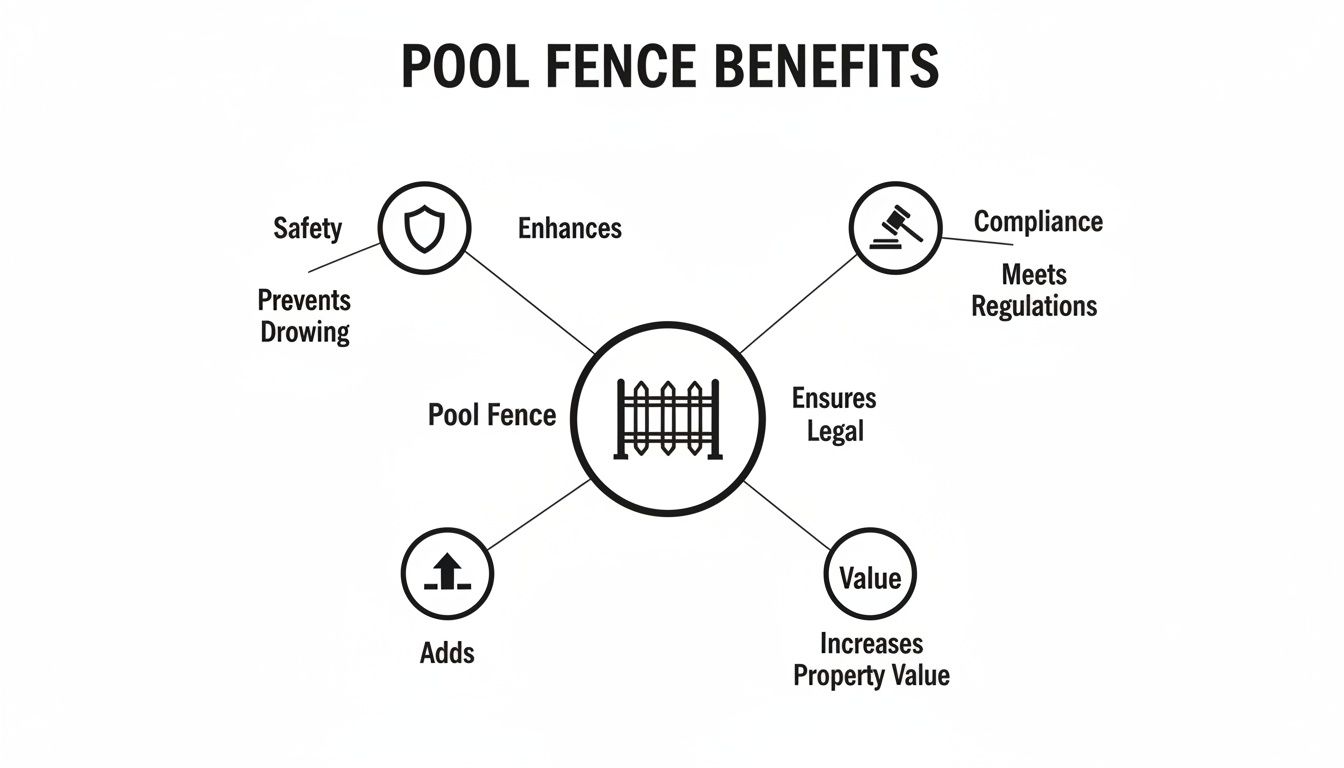
As you can see, a proper fence isn't just an expense; it's an investment that pays you back in safety, peace of mind, and even your property's overall value.
Ontario vs Quebec Pool Fence Bylaw Snapshot
For homeowners in the Ottawa-Gatineau region, knowing which side of the river your rules come from is key. While the goal is the same—preventing accidents—the specific requirements can differ. Use this table as an actionable checklist for your project planning.
Requirement | Typical Ontario Guideline (e.g., Ottawa) | Typical Quebec Guideline (e.g., Gatineau) |
|---|---|---|
Minimum Height | 1.2 m (4 ft) measured from the outside ground. | 1.2 m (4 ft) measured from the outside ground. |
Climbability | No horizontal members or nearby objects that could act as a ladder. | Fence must not allow passage of an object 10 cm (4 in) in diameter. |
Ground Clearance | Maximum 10 cm (4 in) gap under the fence. | Maximum 10 cm (4 in) gap under the fence. |
Gate Latch Location | Must be on the pool side, out of reach of small children. | Latch must be on the pool side and at least 1.5 m (5 ft) high. |
Gate Operation | Must be self-closing and self-latching. | Must be self-closing and self-latching. |
Actionable Tip: This table is a great starting point, but your next step is to download and review your exact municipal bylaw. Small variations exist, and having the official document on hand is crucial for compliance.
Key Bylaw Requirements You Cannot Ignore
While specifics vary slightly between Ottawa and Gatineau, the core principles of pool fence bylaws are universal. They are designed to stop a child from climbing over, squeezing under, or slipping through the barrier.
Here are the non-negotiables your installation must meet:
Minimum Height: Your fence must stand at least 1.2 metres (4 feet) high, measured from the ground on the outside of the fence.
Climb Resistance: Ensure your fence design has no horizontal rails or footholds. Also, remove any nearby objects like benches, planters, or playsets that could give a child a boost.
Limited Gaps: The space between the bottom of the fence and the ground cannot exceed 10 cm (4 inches). The same 10 cm maximum applies to gaps between vertical pickets.
Safety experts call this "layers of protection." A compliant fence is your most important physical layer, but your actionable plan should also include constant adult supervision and teaching children water safety rules.
The Gate: Your Most Important Component
A fence is only as strong as its weakest point, which is almost always the gate. Bylaws are incredibly strict about gate hardware for a good reason: a gate that fails to close and latch properly renders the entire fence useless.
To pass inspection, your gate must have these three features:
A Self-Closing Device: Install a spring-loaded hinge or a similar mechanism that automatically pulls the gate shut every time it's opened.
A Self-Latching Mechanism: The latch must engage and lock automatically as the gate swings closed. You should not have to manually secure it.
An Inaccessible Latch: The opening mechanism must be located on the pool side of the gate, at least 1.5 metres (5 feet) above the ground, making it unreachable for a small child.
These features work in tandem to ensure the gate is never accidentally left open.
Choosing the Best Fence Materials for Canadian Weather
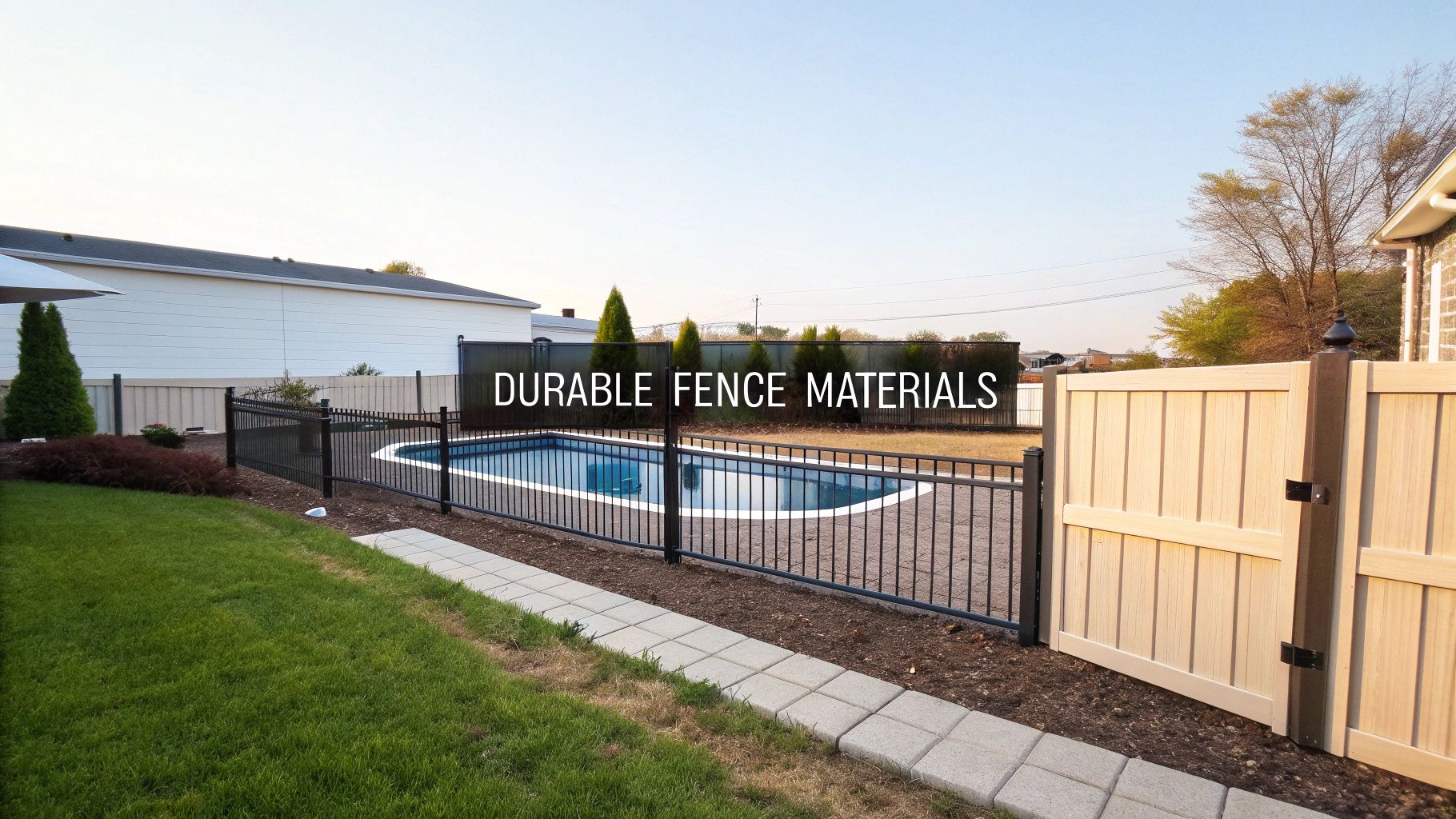
Selecting the right material for your pool fence above ground goes beyond aesthetics. Here in Canada, with our heavy snow, deep freezes, and constant freeze-thaw cycles, your fence must be a true four-season performer. It needs to repel moisture, resist warping, and maintain its structural integrity year after year.
Think of your fence material as the backbone of your pool’s safety system. If it cracks, rusts, or warps, it can create dangerous gaps or lose the strength needed to prevent access. Making a smart choice now is an actionable step to avoid future headaches and costly repairs.
Here’s a practical breakdown of the most popular fencing materials, highlighting their pros and cons for our demanding Ottawa-Gatineau climate.
Premium PVC: The Low-Maintenance Champion
For homeowners who want durability without the weekend chores, premium PVC is a clear winner. Modern PVC fencing is engineered to handle everything Canadian weather throws at it. It will not fade, chip, or peel under intense sun or frigid winter conditions.
PVC's primary advantage over wood is its non-porous nature; it doesn't absorb moisture. This means no rot, no warping, and no insect damage—critical benefits when a fence is buried in snow or exposed to a spring thaw. Its smooth surface also offers zero handholds or footholds, making it a superior choice for preventing climbing.
The most actionable benefit of PVC is its "set it and forget it" quality. While other materials demand yearly sealing or staining, a PVC fence just needs a quick wash with soap and water to look new again. This means more time enjoying your pool and less time on maintenance.
For more practical details, explore our in-depth guide to plastic PVC fences in Ottawa to see style options and installation specifics.
Ornamental Iron: Enduring Strength and Elegance
Ornamental iron offers a classic, sophisticated look combined with incredible strength. Its slim pickets provide security while maintaining a clear view of the pool—a critical safety feature for supervising children. A well-made iron fence can easily last for decades.
However, the key action for our climate is rust prevention. You must choose an iron fence that has been galvanized and then powder-coated. This two-step process creates a durable barrier that shields the metal from moisture and road salt.
Actionable Tip: Each spring, walk the fence line and inspect for any scratches or chips in the coating. Touching up these small spots immediately with a rust-inhibiting paint is the key to stopping corrosion before it starts.
Wood Fencing: The Natural Choice with a Catch
Wood, especially pressure-treated pine or cedar, offers a warm, natural aesthetic that blends seamlessly into a backyard landscape. Cedar has natural resistance to rot and insects, while pressure-treated wood is a budget-friendly option chemically treated for longevity.
The main consideration for a wood pool fence above ground is the required maintenance commitment. To survive our weather, a wood fence needs consistent upkeep.
Annual Sealing: Plan to seal or stain the wood every one to two years. This is a non-negotiable step to protect it from moisture that causes warping and rot.
Regular Inspections: Make it a habit to check for splinters, loose boards, and signs of decay, paying close attention to the posts and gate.
Snow Management: Do not pile heavy, wet snow against a wood fence. The weight and trapped moisture will stress the structure and accelerate rot.
If you are prepared for the annual maintenance routine, wood can be a beautiful and effective choice.
Chain Link: The Practical and Affordable Option
Modern chain link has evolved far beyond its industrial reputation. Now available with black or green vinyl coatings, it blends into your yard while offering a super durable and affordable barrier. That vinyl coating is essential—it protects the galvanized steel underneath from rust and corrosion.
From a safety perspective, the mesh size is what you need to focus on. Actionable Step: Specify a small diamond pattern (typically 1-1/4 inch mesh) that makes it very difficult for a child to get a foothold for climbing. Coated chain link is tough against impacts and requires almost no maintenance, making it a smart, no-fuss solution for homeowners needing a reliable, compliant fence without a large budget.
Mastering the Details of a Secure Installation
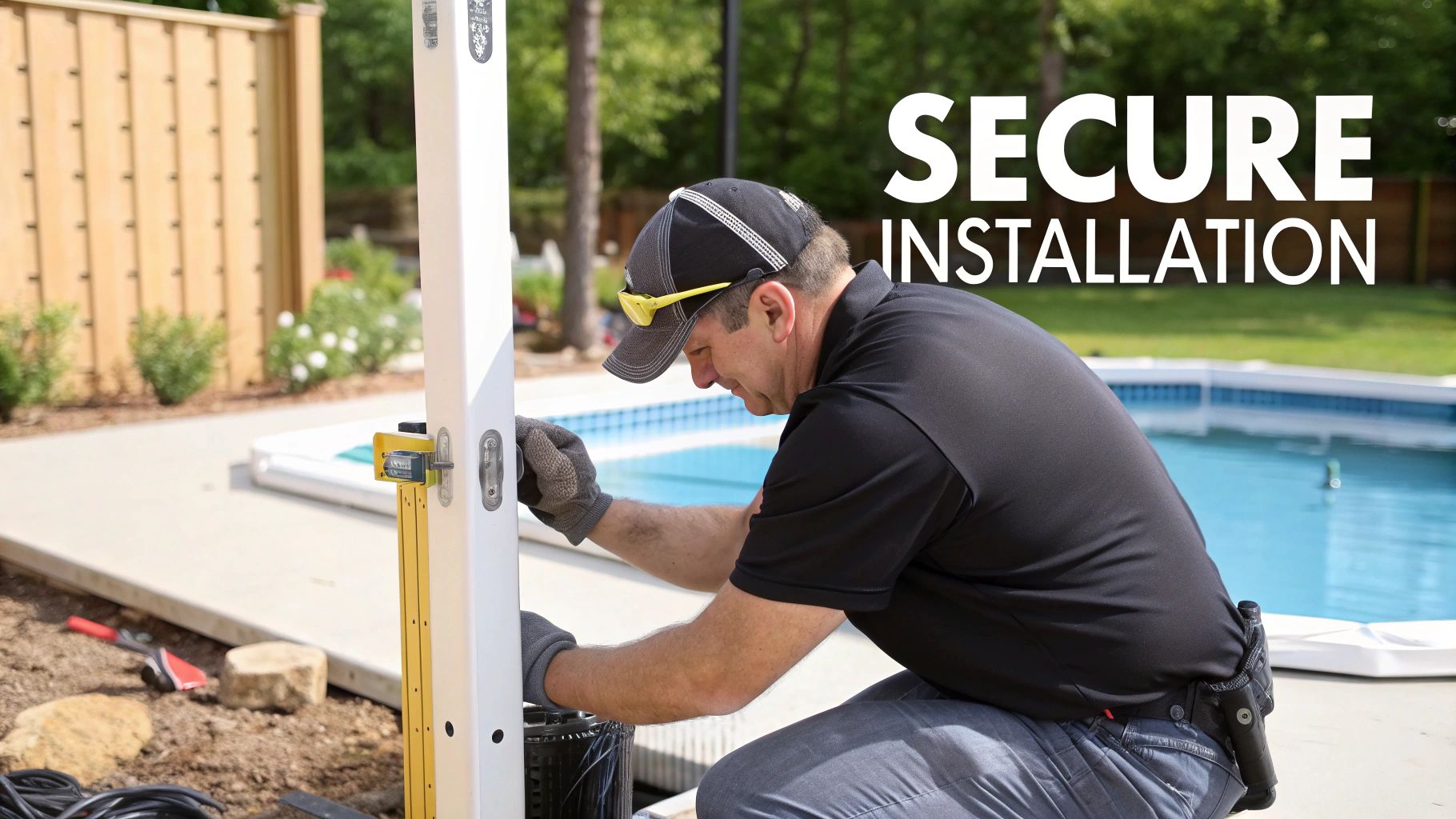
You can choose the best materials available, but a pool fence above ground is only as secure as its installation. The small details—post depth, hardware quality, and precise gate alignment—are what transform a set of panels into a reliable safety barrier.
A flimsy or poorly anchored fence provides a false sense of security, which is more dangerous than no fence at all. This is where professional craftsmanship is critical. It’s not just about erecting a fence; it's about building an unshakeable, compliant structure engineered to last in your specific yard.
Tackling Unique Installation Challenges
Above-ground pools are rarely installed on perfectly level ground. We frequently encounter slopes, uneven terrain, or existing decks that require specialized installation techniques.
Here are actionable solutions to common challenges:
Uneven Terrain: On a sloped yard, you must prevent dangerous gaps under the fence. The correct method is to "rack" or "step" the fence panels, allowing them to follow the ground's contour while ensuring the bottom gap never exceeds the 10 cm (4 inches) bylaw limit.
Deck Installations: Never just screw fence posts into deck boards. For a secure installation, use heavy-duty surface mounts anchored directly to the deck's underlying joists. This is the only way to ensure the fence can withstand significant force.
Post Stability: For in-ground installations, every post must be set in concrete below the frost line (typically 4 feet in our region). This is a non-negotiable step to prevent posts from heaving and shifting during our harsh freeze-thaw cycles. Explore this crucial process in our practical guide to cementing fence posts.
The Critical Role of the Self-Latching Gate
The gate is the most important moving part of your safety system. Its installation demands absolute precision. A gate that sags, sticks, or fails to latch automatically is not just an annoyance—it's a critical safety failure and a bylaw violation.
The mechanics must be flawless. Self-closing hinges must have the correct tension to swing the gate shut from any position, and the self-latching mechanism needs to click securely into place every time. Per local bylaws, the latch must also be on the pool side of the gate, well out of a small child's reach.
A landmark study highlighted a direct link between proper fencing and safety, showing fenced pools reduce drowning risk by 73% compared to unfenced ones. However, the study also noted that many drownings occur in regulated pools, underscoring that the quality of the installation and adherence to standards are just as critical as the fence's presence.
This data provides a clear takeaway: simply having a fence isn't enough. It must be installed correctly to be effective.
Common Installation Shortcuts and Their Dangers
Cutting corners on a fence installation is a dangerous gamble. These shortcuts might save a little time or money upfront, but they compromise the fence’s integrity and its ability to keep people safe.
Avoid these common mistakes at all costs:
Shallow Post Holes: Failing to dig below the frost line guarantees your posts will shift as the ground freezes and thaws, leading to an unstable fence and a misaligned gate.
Improper Fasteners: Using standard wood screws instead of corrosion-resistant hardware is a critical error. They will rust and weaken, causing connections to fail.
Ignoring Bylaw Details: Details like latch height or picket spacing are not suggestions—they are legal requirements. Overlooking them will cause you to fail inspection, forcing you to pay for rework.
A truly secure installation starts with meticulous planning. Professionals use tools like Exayard landscape takeoff software for precise measurements and project mapping. Ultimately, a professional installation ensures every post is plumb, every panel is secure, and every gate works perfectly, giving you actionable peace of mind.
DIY vs. Professional Installation: A Realistic Comparison
You’re at a crossroads: should you install the pool fence yourself or hire a professional? The desire to save money with a DIY project is understandable. But installing a pool fence is not like assembling furniture; it's a critical safety installation where small mistakes have serious consequences.
Opting for DIY means you are solely responsible for every detail. You must decipher dense municipal bylaws, source specialized tools like a post-hole auger, and perform all the strenuous labor. Digging, mixing concrete, and setting posts perfectly level is more difficult than it appears. A single miscalculation can compromise the entire structure.
Hiring a professional team like FenceScape changes the equation. You are investing in expertise, efficiency, and a guarantee of code compliance. A professional crew knows the local regulations inside and out and has the experience to handle unforeseen challenges, like hitting bedrock where a post needs to go.
The True Cost of DIY
The biggest myth about DIY is that the only cost is materials. The hidden costs, in both money and time, can accumulate quickly, often shrinking the perceived savings.
Here’s an actionable breakdown of overlooked expenses:
Tool Rentals: Renting a power auger or a commercial-grade cement mixer adds a significant, often unbudgeted, cost to your project.
Material Miscalculations: Under- or over-estimating materials leads to wasted money or multiple frustrating trips to the hardware store.
The Value of Your Time: A job that takes a professional crew 1-2 days can consume several of your weekends. That's time you could be spending enjoying your pool.
The Price of Mistakes: Setting a post incorrectly or failing a bylaw inspection means redoing your hard work, costing more time, more materials, and significant frustration.
The initial savings of a DIY project can vanish with a single, costly error. Professional installation provides a fixed price and the assurance that the job is done right the first time, backed by a solid warranty.
The Professional Advantage
Hiring an experienced team provides tangible benefits that go beyond simple labor. It's about achieving a safe, durable, and fully compliant fence without the risk and stress.
This table provides a direct comparison to help you make an informed decision.
DIY vs. Professional Pool Fence Installation
Factor | DIY Installation | Professional (FenceScape) |
|---|---|---|
Bylaw Expertise | Your responsibility to research, understand, and perfectly execute complex local codes. High risk of non-compliance. | Guaranteed compliance with all Ottawa and Gatineau pool bylaws. We handle the details so you don't have to. |
Tools & Equipment | You must buy or rent all specialized equipment (augers, mixers, levels), adding to the total cost. | Our crews arrive with all necessary professional-grade tools and equipment, included in the price. |
Time Commitment | Can take multiple weekends or even longer, depending on your skill level and any unexpected issues. | Fast and efficient. Most installations are completed in just 1-2 days, minimizing disruption to your life. |
Material Quality | Limited to materials available at retail stores, which may not be the highest contractor-grade quality. | Access to superior, contractor-grade materials designed for durability in Canadian climates. |
Structural Integrity | Risk of errors in post depth, alignment, or concrete mixing, which can lead to fence failure. | Posts are dug below the frost line and set expertly in concrete, ensuring a stable fence that won't heave. |
Problem Solving | Unexpected issues like rocky soil or slopes are your problem to solve, often requiring more time and money. | Our experienced team has seen it all and can quickly adapt to any site challenges without delays. |
Warranty & Support | If something goes wrong, you're on your own. The only warranty is the one you can provide yourself. | Our work and materials are backed by a comprehensive warranty, giving you long-term peace of mind. |
Ultimately, the choice between DIY and professional installation depends on your skills, time, and risk tolerance. While a hands-on approach can be rewarding, a professional installation is a direct investment in your family's safety, your property's value, and your own peace of mind.
Maintaining Your Fence Through Canadian Seasons
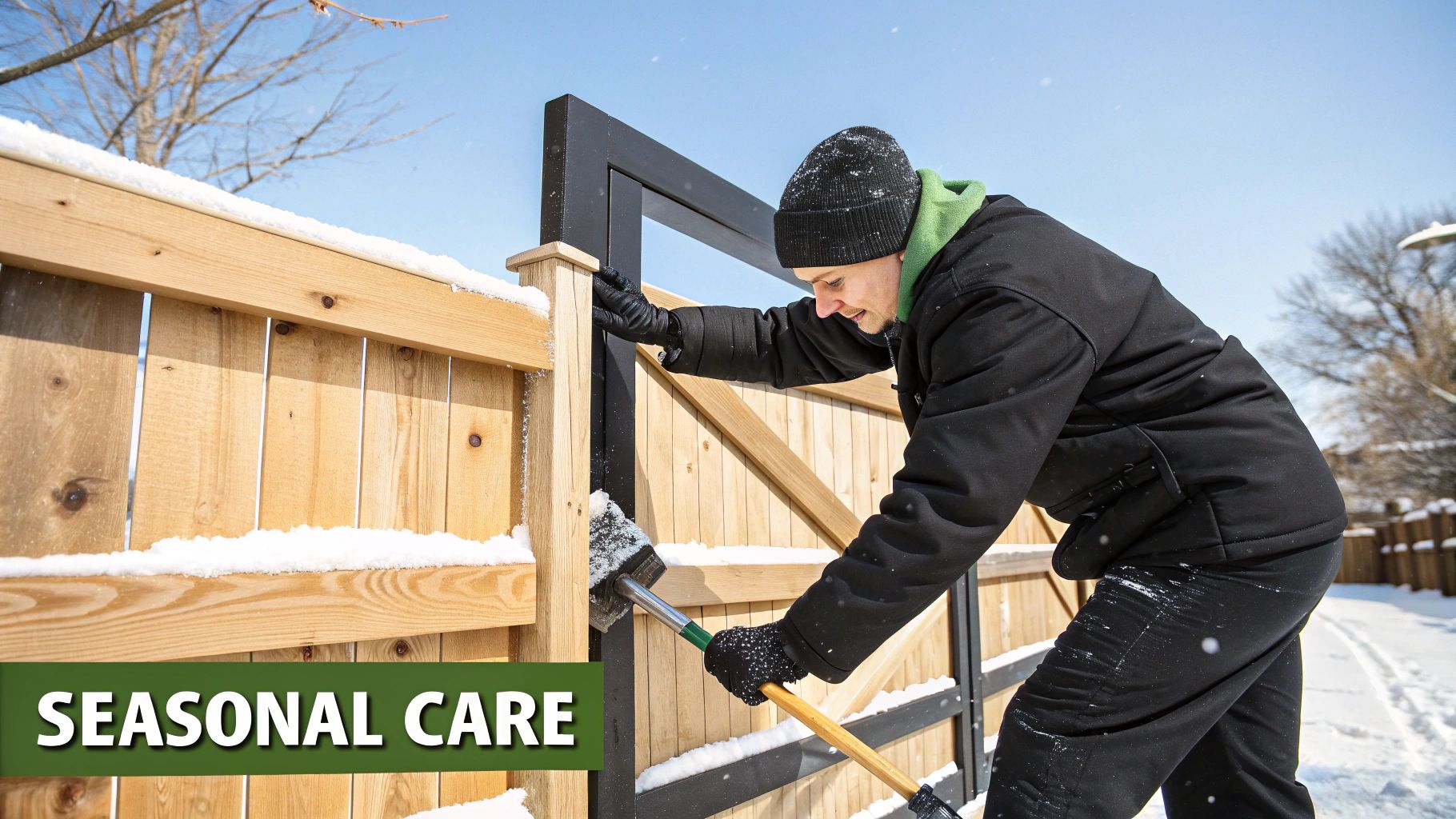
Your pool fence above ground is a year-round safety barrier. Keeping it in top condition through heavy snow, spring thaws, and summer sun is a non-negotiable part of responsible pool ownership.
A simple seasonal maintenance checklist is the most effective way to catch small problems before they become big hazards. This ensures your fence remains strong, compliant, and looking great.
Autumn and Pre-Winter Checks
Before the first snowfall, perform a thorough inspection. This is your best chance to fix weak points before they're buried in snow, preventing bigger issues in the spring.
Actionable Checklist:
Tighten All Hardware: Go around and tighten any loose screws on hinges, latches, and panels.
Test the Gate: Ensure the gate swings smoothly and latches securely every single time. Adjust the hinges or latch mechanism if needed.
Seal Wood Fences: If you have a wood fence, apply a fresh coat of sealant now to protect it from winter moisture.
A critical winter task is clearing heavy, wet snow from the base of your fence. The sheer weight can strain connections, warp wood panels, and slowly compromise the entire structure's integrity. Don't let the snow build up.
Spring Thaw and Inspection
Once the snow melts, it’s time to assess how your fence weathered the winter. The freeze-thaw cycle is tough on outdoor structures, often causing posts to shift due to frost heave.
Use this inspection checklist to identify any issues:
Check Post Stability: Grab each post and give it a firm shake. Anything more than a slight give is a red flag that the post has shifted and may need to be re-secured.
Inspect Gate Alignment: Frost heave often misaligns gates. Check that yours still lines up perfectly with the latch and can close and lock on its own without being lifted or forced.
Look for Damage: Do a careful visual scan for new cracks in vinyl, rust spots on metal, or warped boards on wood fences. Addressing these issues early is a simple fix.
This routine isn't just about appearances; it's about safety. Research shows that while proper fencing is key to preventing drowning, many incidents occur at fenced pools with faulty gates or poor maintenance. To learn more about how professional fencing impacts safety and property value, see the research. A well-maintained pool fence above ground is one of the most important safety features you can have.
Your Above-Ground Pool Fence Questions Answered
When planning for a pool fence, many questions arise. Here are clear, actionable answers to the most common inquiries we receive from homeowners.
Can I Use My Pool Wall as Part of the Fence?
No. This is a critical point. Bylaw officers in Ottawa, Gatineau, and surrounding municipalities do not consider the pool wall a compliant safety barrier.
Even with the ladder removed, it is not considered a permanent, non-climbable enclosure. The bylaws are strict for a reason: they mandate a separate, four-sided fence of the proper height, complete with a self-latching gate, to fully prevent unsupervised access. Your actionable step is to plan for a separate, fully enclosing fence.
How Much Does an Above-Ground Pool Fence Cost?
The final cost depends on three key factors: the total length of the fence, your chosen material, and the installation complexity of your yard.
Chain link is typically the most budget-friendly option. Premium PVC and ornamental iron are excellent choices for enhanced aesthetics and long-term durability, though they represent a larger initial investment. The most practical step is to get a detailed quote. We can provide a precise, no-obligation estimate tailored specifically to your property and needs.
In the U.S., a shocking 71% of drowning deaths involving children under 15 happen at private residences. This statistic underscores a crucial takeaway: a professionally installed, fully compliant fence isn't a "nice-to-have"—it's the single most effective layer of protection you can implement.
Viewed through this lens, a proper fence is a small price to pay for daily peace of mind.
How Do You Install a Fence on a Pool Deck?
Installing a fence on an existing deck requires specialized techniques to ensure it is completely secure. The correct method involves using high-quality surface mount hardware designed to anchor the posts directly to the deck’s structure—the joists underneath—not just the surface boards.
This approach provides the rock-solid stability needed to withstand pressure and meet safety codes. We also focus on precise gate installation to maintain its self-closing and self-latching function, creating a seamless, safe barrier.
Secure Anchoring: We bolt mounts directly into the deck joists for maximum strength. Simply screwing them to floorboards is unsafe and will fail.
Code Compliance: The installation must guarantee that every detail—from fence height to gate latch location—meets local bylaws.
Structural Integrity: This method protects your deck from damage and ensures the fence will stand strong for years.
Getting the installation right on a deck is absolutely critical for both safety and the long-term health of your deck and fence.
Ready to secure your pool with a fence that's built to last? The experts at FenceScape are here to walk you through every step, from picking the right materials to ensuring a flawless, bylaw-compliant installation. Get in touch today for a free, no-obligation estimate and ask us about our flexible financing options.
Comments