
A Complete Guide to the Best Types of Fences

Choosing the right fence requires balancing aesthetics, function, and budget. Your main options are timeless wood, low-maintenance vinyl (PVC), sophisticated ornamental iron, and the ever-practical chain link. Each offers a different mix of privacy, security, durability, and cost. The "best" choice is the one that solves your specific problem.
How to Choose the Right Fence for Your Home
A new fence is a significant investment that impacts your home's security, curb appeal, and value. Instead of getting lost in material details, start by answering three practical questions. Your answers will immediately clarify which fence types are right for your property, especially in the demanding Ottawa–Gatineau climate.
Define Your Fence's Primary Job
First, determine what you need your fence to do. This is the most important step because it instantly narrows your options. Focus on the primary problem you're trying to solve.
Privacy: To create a secluded backyard, you need a solid fence with no gaps. Your best options are PVC with tongue-and-groove panels or tall cedar privacy fences.
Security: To keep intruders out or ensure pets and kids stay in, you need a strong, tall barrier. Ornamental iron and heavy-duty chain link are excellent security choices, but any tall, solid fence is a strong deterrent.
Curb Appeal: For purely aesthetic purposes, like defining a garden or adding classic charm, a wood picket fence or elegant ornamental iron provides timeless style.
Pool Safety: This is non-negotiable and dictated by local by-laws requiring specific heights and self-latching gates. Aluminum and ornamental fences are ideal as they provide security without obstructing the view of the pool.
This decision tree shows how to get from your priority to the right material.
As you can see, identifying your top concern—privacy, cost, or maintenance—provides a clear path, simplifying the entire decision-making process.
Aligning Budget with Long-Term Value
Next, address the budget. It’s a mistake to only consider the upfront cost; you must factor in long-term value. A fence that seems cheap now can cost you more later in repairs and replacement.
A fence is a long-term asset. To make a smart investment, calculate the total cost of ownership—including maintenance and lifespan—before you buy. This ensures you get a fence you’ll be happy with for years, not just on installation day.
Take pressure-treated wood. It has a low initial cost, but preventing rot and warping in Ottawa's climate requires regular staining or sealing.
In contrast, a vinyl (PVC) fence costs more upfront but requires only occasional washing. Over its lifespan, you save significant time and money on maintenance. Analyzing the total investment, not just the initial quote, gives you a true cost comparison.
The Timeless Appeal of Wood Fences
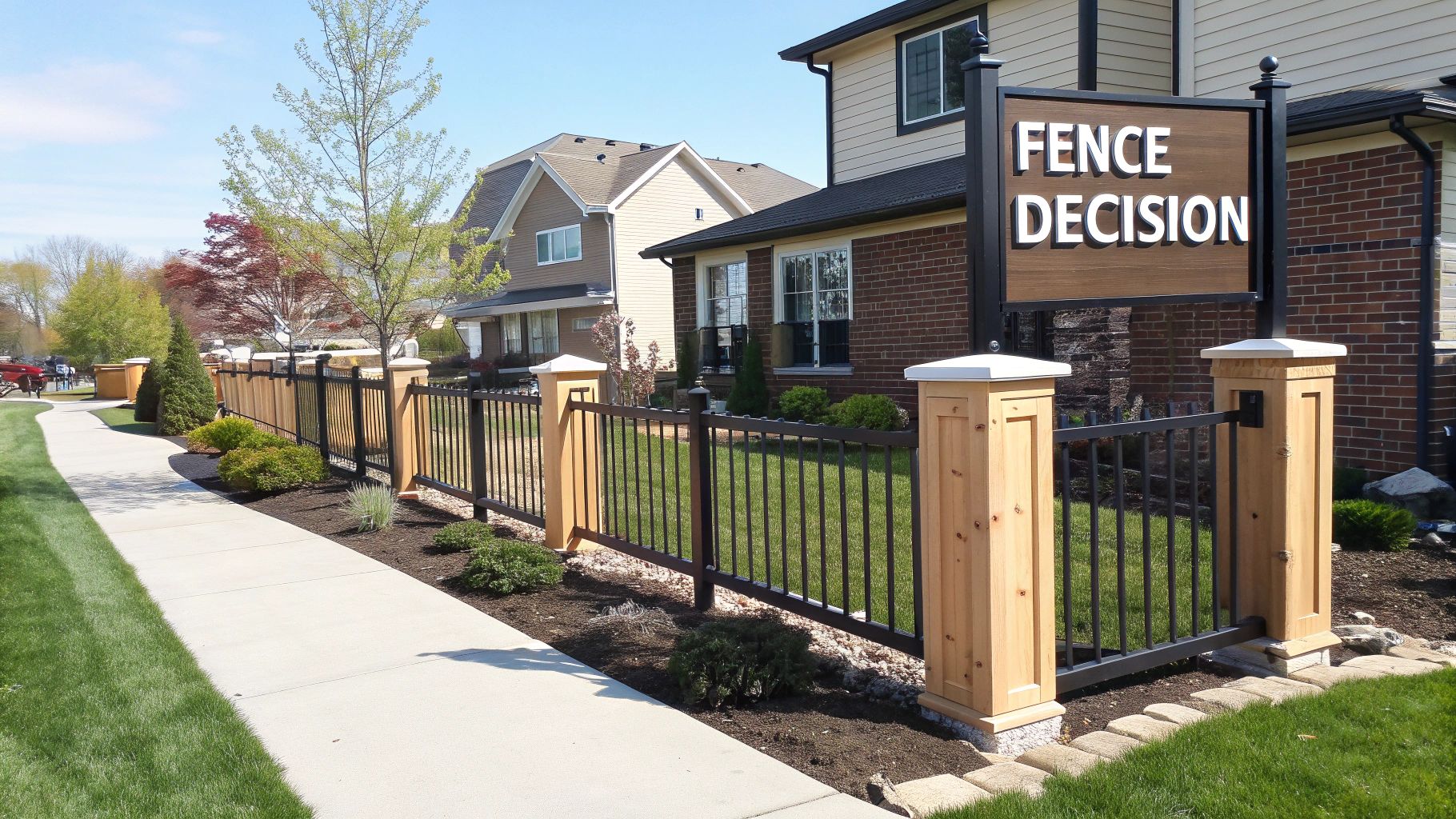
For a classic backyard boundary, wood is the go-to material. Its natural look and versatility make it a popular choice that balances security with aesthetic warmth. In the Ottawa–Gatineau region, your choice comes down to two climate-resilient options: cedar and pressure-treated wood. Understanding their practical differences is key to making the right choice for your property.
Cedar Fencing: The Premium Choice
Cedar is the top-tier option for wood fencing. It contains natural oils that provide built-in resistance to moisture, decay, and insects—a critical advantage in our freeze-thaw climate.
Its rich colour and straight grain offer a high-end look that elevates curb appeal. While cedar has a higher upfront cost, its natural durability means it often outlasts other wood types, making it a sound long-term investment.
Pressure-Treated Wood: The Reliable Workhorse
For a dependable, budget-friendly fence, pressure-treated (PT) wood is the solution. This lumber (typically pine or spruce) is chemically treated to resist rot and insects.
While it lacks the immediate aesthetic appeal of cedar, PT wood is a practical choice that delivers reliable performance. It's the standard for homeowners who want the benefits of a wood fence without the premium price tag.
Cost and Lifespan: A Realistic Comparison
When budgeting, look beyond the initial price and consider the total value over time. Here’s a direct comparison of the two most common wood types.
Cedar: Expect to pay $45 to $75 per linear foot installed. This cost reflects its superior natural durability and premium look. With proper maintenance in our climate, a cedar fence will last 20 to 25 years, justifying the initial expense.
Pressure-Treated Wood: This more accessible option typically costs $30 to $55 per linear foot installed. A well-maintained PT fence will provide 15 to 20 years of service. It offers excellent value, but you must factor in the recurring cost and effort of maintenance.
Actionable Insight: If your budget allows for the upfront cost, cedar offers superior longevity and aesthetics with less intensive maintenance. If you need a lower initial investment and are prepared for regular upkeep, pressure-treated wood is a solid, reliable choice.
Maintenance Needs for Lasting Durability
No wood fence is maintenance-free in our four-season climate. To protect your investment, you must shield the wood from moisture and UV rays by staining or sealing it every 2-3 years.
Staining adds colour and protects against UV damage, while a clear sealer preserves the wood's natural appearance while repelling water. A key decision is choosing between paint and stain. For a detailed breakdown, review this resource on Fence Stain Vs Paint: Which Is Best For Your Wood Fence.
To see how you can apply these materials to different designs, check out our guide on trending wooden fence styles for Ottawa homes for actionable ideas.
The Practical Benefits of Vinyl and Hybrid Fences
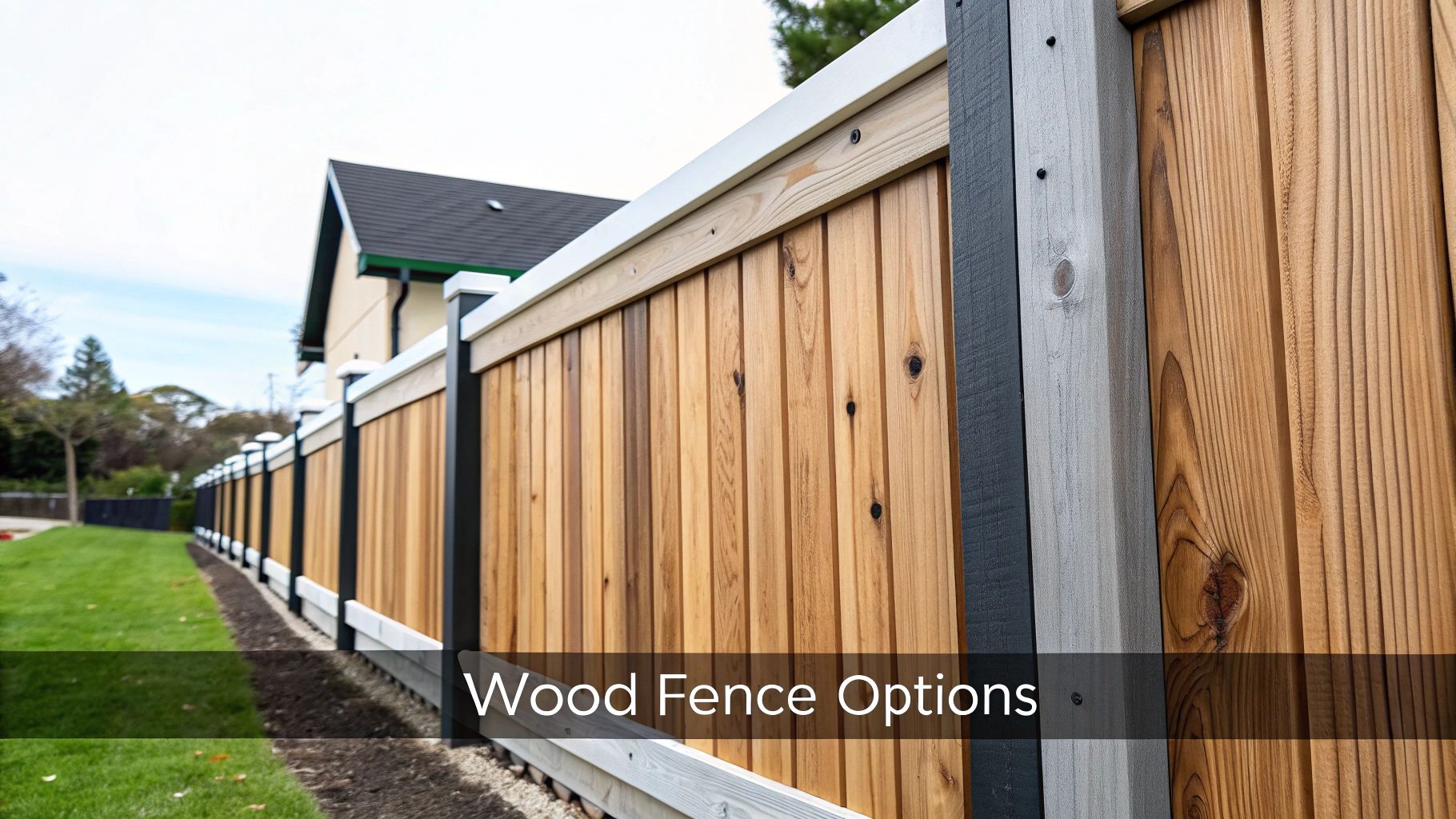
If you want to avoid the recurring chore of fence maintenance, modern materials like vinyl and hybrid fences are your answer. These options are engineered to provide an attractive, reliable boundary without demanding your time and effort.
A fence that looks as good in its tenth year as it did on day one—requiring little more than a rinse—is achievable with PVC (vinyl) fencing. It is the most practical choice for homeowners who value a "set it and forget it" solution.
The Low-Maintenance Champion: PVC Fencing
Vinyl fencing is a high-tech plastic engineered to withstand Canadian weather. It will not rot, warp, or be damaged by insects. The colour is integrated into the material, so you will never have to paint or stain it. Fading is minimal.
This resilience translates to years of hassle-free ownership. A simple wash with a garden hose is usually all that’s needed to remove dirt and keep it looking new. To make an informed decision, weigh its pros and cons:
Pro: Easy Cleaning. A quick wash is all it takes to restore its appearance.
Pro: Variety of Styles. Vinyl is available in designs that mimic everything from classic picket fences to full privacy panels.
Con: Higher Upfront Cost. The initial investment is greater than for pressure-treated wood.
Con: Cold Weather Performance. In extreme cold, vinyl can become brittle. A hard impact from a snowblower could cause a crack.
Actionable Insight: The true value of vinyl lies in the time and money saved on maintenance. When you factor in the cost of staining and replacing wood boards over 15-20 years, vinyl's higher upfront cost becomes a compelling long-term investment.
For a deeper analysis, our actionable guide to plastic and vinyl fence solutions provides more detail.
Hybrid Fences: The Best of Both Worlds
A hybrid fence combines the structural strength of steel with the aesthetic of wood or vinyl. This modern system uses rugged steel posts as a durable backbone, paired with your choice of infill panels.
The steel posts provide the unyielding support needed to resist heavy snow loads and frost heave, while the panels—whether cedar, pressure-treated wood, or vinyl—deliver the desired style.
This results in a fence that is dramatically stronger and longer-lasting than an all-wood installation. Steel posts will not rot at ground level, which is the primary failure point for wood fences in our climate. You get the look you want without sacrificing structural integrity, making it one of the most durable fence types available.
Ornamental Fences: Where Elegance Meets Security
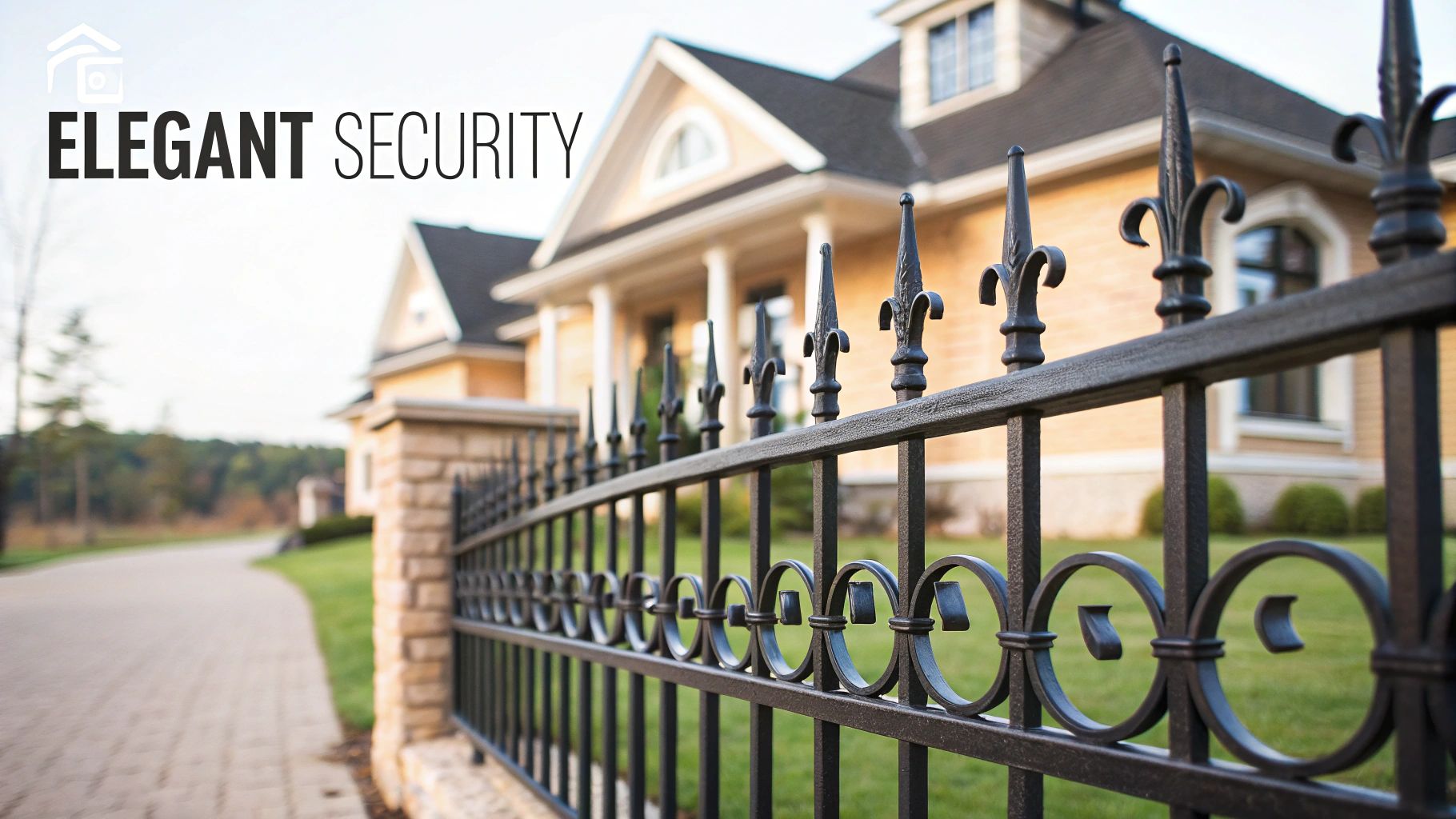
For a fence that provides both high security and undeniable curb appeal, nothing compares to ornamental fencing. It adds a sense of permanence and class, elevating a property's style while clearly defining its boundaries.
While often called "wrought iron," modern ornamental fences are almost always made from powder-coated steel or aluminum. These materials deliver the classic, sophisticated look without the rust and maintenance issues of traditional wrought iron.
What Makes Modern Ornamental Fences Different?
Today’s ornamental fences combine timeless design with modern engineering for a long, low-maintenance lifespan. This is a critical advantage in the Ottawa–Gatineau region, where fences face constant exposure to moisture and road salt.
The key is the powder-coating process, where a dry powder is electrostatically applied and baked onto the metal. This creates a finish that is far more durable than paint, resisting chipping, fading, and rust to keep your fence looking pristine for years.
Where Does Ornamental Fencing Shine?
Ornamental fencing is a versatile solution for a wide range of properties where both strength and aesthetics are priorities.
Here are the best applications:
Boosting Curb Appeal: An ornamental fence at the front of your property adds elegance and defines your space without creating a visual barrier.
Pool Safety: It's a top choice for pool enclosures because its open design provides a clear line of sight—crucial for safety—while meeting strict local codes for height and self-latching gates.
Securing High-End Properties: For luxury homes or commercial spaces, an ornamental fence complements the architecture while reinforcing an atmosphere of security.
Deterring Intruders: The strong, imposing pickets are a clear visual and physical deterrent, unlike a solid fence that can conceal unwanted activity.
Actionable Insight: Ornamental fencing serves a dual purpose. For guests, it projects sophisticated elegance. For trespassers, its solid steel or aluminum construction sends a clear "keep out" message, making it both welcoming and intimidating.
This fencing style has a long history. You can see its timeless appeal by exploring the iconic iron fencing at historical landmarks in California and observing its durability over decades.
The Investment and Why Professional Installation Is Key
An ornamental fence is a significant investment, typically costing $60 to $120+ per linear foot. The final price depends on the material (aluminum is often more budget-friendly), fence height, and design complexity.
This is not a DIY project. Professional installation is essential to ensure a flawless, long-lasting result. An expert crew will set the posts deep in concrete below the frost line to prevent heaving and ensure every panel is perfectly level. This guarantees a sturdy, beautiful fence that will stand for decades.
Why Chain Link Fencing Is a Smart, Affordable Choice
Chain link is often overlooked, but for homeowners and property managers, it remains one of the most practical, durable, and budget-friendly fencing solutions available. It is the ultimate workhorse, built to provide a secure boundary for decades.
A chain link fence is designed for effective containment. It is incredibly resilient, withstanding harsh weather without the risk of rot, warping, or insect damage that affects wood. This straightforward durability makes it a smart long-term investment.
Its biggest advantage is cost-effectiveness. Chain link is consistently one of the most affordable materials, allowing you to secure a large area without a major financial outlay. To understand the costs involved, consult our complete Canada cost guide for chain link fences.
More Than Just a Basic Barrier
Modern chain link offers more aesthetic flexibility than you might think. While standard galvanized steel remains popular, new options can help the fence blend into your landscape.
Vinyl-Coated Options: For a less industrial look, choose vinyl-coated chain link. Available in black or green, this coating adds an extra layer of rust protection while softening the fence's appearance.
Privacy Slats: To add seclusion, weave privacy slats through the mesh. This can transform an open fence into a semi-private barrier without requiring a full replacement.
This adaptability makes chain link a strong contender for a variety of practical needs.
Actionable Insight: Chain link delivers maximum function for minimum cost. It provides reliable security and containment with almost no maintenance, making it the most practical choice for budget-conscious projects.
Practical Scenarios Where Chain Link Excels
The open-weave design of chain link is one of its greatest security assets. Unlike a solid privacy fence, it maintains clear sightlines across your property, eliminating blind spots where an intruder could hide. This is why it is the top choice for public works and transportation corridors.
Here are everyday situations where chain link is the ideal solution:
Safe Play Areas: It creates a secure perimeter for kids and pets, providing peace of mind.
Large Property Perimeters: It is the most affordable way to mark property lines on large lots or acreages and deter casual trespassing.
Gardens and Pools: It effectively keeps wildlife out of gardens and can be used as a compliant pool enclosure that doesn't obstruct your view.
Making the Right Call on Your New Fence
Choosing a fence is a major decision that impacts your property's security, privacy, and appearance for years. Now that you understand the options, you can select the one that best fits your needs and budget.
The final step is to assess your property, clarify your goals, and confirm local regulations. Use this blueprint to make a confident and well-informed decision.
A Quick Checklist Before You Commit
Follow this simple game plan to ensure you cover all your bases before signing a contract.
Walk the Line and Define Your 'Why': Walk your property line and note any slopes, trees, or obstacles. Then, identify your single most important reason for the fence. Is it privacy, pet containment, or curb appeal? Your primary goal should guide your material choice.
Check the Rulebook (Bylaws): Before choosing a style, check your local Ottawa or Gatineau bylaws. Confirm regulations on height, materials, and property line setbacks. This is especially critical for pool fences, which are subject to strict safety codes.
Set a Real-World Budget: Determine a realistic budget that includes both materials and professional installation. Consider the total cost of ownership—a higher upfront cost for a vinyl fence may save you money on maintenance compared to wood.
Plan for Our Climate: Any fence in this region must be built to withstand our climate. This means setting posts at least 4 feet deep to prevent frost heave and choosing materials that can handle heavy snow loads.
The Best Fence for the Job: A Quick Recap
To simplify your choice, here is a quick guide matching the right fence to your main priority.
For Total Privacy: Choose Vinyl (PVC) or Cedar Wood with tongue-and-groove or overlapping panels for a solid, gap-free barrier.
For Serious Security: Your best options are Ornamental Steel or a tall Chain Link fence. Both create a durable perimeter that is difficult to breach.
For the "Set It and Forget It" Lifestyle: Vinyl is the clear winner, requiring only occasional washing. Chain Link is a close second, with virtually no maintenance needs.
For Curb Appeal and Added Value: Ornamental Steel provides timeless elegance. A Cedar fence adds natural warmth. Both are known for increasing home value, making them a smart investment.
For When Budget is King: Pressure-Treated Wood and Chain Link are the most cost-effective options for securing your yard.
Actionable Insight: A successful fence project begins with a smart plan. Your final decision should balance what you want, what you can afford, and what your property requires.
This planning process transforms an overwhelming choice into a logical decision, ensuring your new fence will perform well and look great for years.
Frequently Asked Questions About Fence Types
Even with a clear plan, you may still have questions. Here are answers to some of the most common inquiries from homeowners in the Ottawa–Gatineau region.
What Is the Cheapest Fence to Have Installed?
For a professional installation where budget is the top priority, chain link fencing is almost always the most affordable option. The materials are inexpensive, and the installation is fast, which reduces labour costs.
Your next most budget-friendly choice is pressure-treated wood. It has a low upfront cost, but be sure to factor in the long-term maintenance of staining or sealing it every few years.
How Long Should a Fence Last in Our Climate?
A fence's lifespan depends on the material and quality of installation. In our climate, you can expect the following:
Vinyl (PVC) and Ornamental Steel/Aluminum: These materials are the most durable, easily lasting 25 to 30+ years with minimal upkeep. They are engineered to resist moisture, rot, and UV damage.
Cedar Wood: A well-maintained cedar fence will last 20 to 25 years due to its natural resistance to decay and insects.
Pressure-Treated Wood: With consistent sealing every few years, you can expect 15 to 20 years of service.
Chain Link: This is a lifetime material. It's not uncommon for a chain link fence to last 30 years or more, especially vinyl-coated versions that offer extra rust protection.
Which Fence Type Is Best for Privacy?
To create a truly private backyard, you need a fence with solid, gap-free panels.
Your best choice is a vinyl (PVC) privacy fence. Most are designed with interlocking tongue-and-groove panels that eliminate sightlines, creating a seamless wall for total seclusion.
Wood is also an excellent option. A cedar or pressure-treated wood fence built in a board-on-board or shadowbox style effectively blocks views and creates a private space.
The bottom line is this: the right fence for you is the one that solves your biggest need—whether that's privacy, security, or pure curb appeal—while still making sense for your budget and how much maintenance you're willing to do. A smart choice now means you'll be happy with it for years to come.
Choosing the perfect fence is a big decision, but you don't have to figure it all out on your own. At FenceScape, we specialize in helping Ottawa–Gatineau homeowners find that ideal blend of style, durability, and function. Explore our fencing solutions and get a free, no-obligation estimate today.
Comments