
The Ultimate Actionable Guide to Fence Privacy Slats

Picture this: enjoying a quiet afternoon in your backyard, completely shielded from the eyes of passing cars or curious neighbours. Fence privacy slats make this possible, turning a standard chain link fence into a secluded backyard retreat without the cost or headache of a full replacement.
This guide provides your quickest path to privacy. With the right plan, you can transform your space in as little as a weekend.
Transform Your Yard with Fence Privacy Slats
For many homeowners in the Ottawa–Gatineau region, creating a private outdoor space is a top priority. A massive fence overhaul is a daunting prospect, which is why fence privacy slats are such a practical and effective solution.
Think of them as custom-fit inserts you weave vertically or slide horizontally into the gaps of your chain link fence. With this simple change, a see-through barrier becomes a solid visual screen. The process is straightforward, requires minimal tools, and is a manageable project for anyone with basic DIY skills.
Why Homeowners Choose Slats
The appeal of fence privacy slats goes beyond easy installation. They are a genuinely cost-effective way to upgrade the fence you already have. In tightly packed neighbourhoods, slats provide essential seclusion without creating a fortress-like feel.
In fact, a whopping 62% of homeowners choose slats for the incredible cost savings. You can boost your privacy for just $4–$6 per foot while making your yard more secure. To see how other homeowners are upgrading, you can explore more data on fencing trends.
Actionable Insight: By retrofitting your current fence, you are making a smart upgrade to your property's security and curb appeal without starting from square one.
This guide is designed to give you real, actionable advice. We will cover everything from selecting materials that can handle our local climate to weighing the pros and cons of DIY versus professional installation. Whether you want to block a neighbour’s line of sight or create a more intimate backyard, fence slats deliver instant results by balancing function, affordability, and simplicity.
Choosing the Right Slat Material for Your Climate
Selecting the right material for your fence privacy slats is the most critical decision in this process. Your choice determines how your fence will stand up to the Ottawa–Gatineau climate—from icy winters to humid summers—and directly impacts durability, maintenance, and the final look.
This isn't about finding one "perfect" material; it's about finding the perfect fit for your property. Let's walk through your options with actionable advice for each.
The Low-Maintenance Champion: PVC and Vinyl Slats
For a "set it and forget it" solution, Polyvinyl Chloride (PVC) or vinyl slats are the clear winners. If you want durability without weekend chores, this is your go-to material.
These slats are engineered to be tough: they won't rot, warp, or get eaten by insects. Modern vinyl slats include built-in UV inhibitors, so the colour stays true even after years of sun. For maintenance, a quick spray with a garden hose is usually all it takes to make them look new again.
The Timeless Appeal of Wood Slats
For a classic, natural beauty, nothing beats wood slats. Cedar, for instance, offers a warm, inviting look that complements a garden setting. However, this aesthetic requires upkeep.
Wood is vulnerable to moisture and temperature swings, which can cause warping, cracking, or rot. To keep them looking sharp, you must stain or seal them periodically. For homeowners who don't mind annual maintenance, the rich look is worth the effort. For a deeper dive, review our guide on cedar versus pressure-treated lumber for your home.
This visual breaks down the core benefits you get from adding privacy slats—it’s not just about looks.
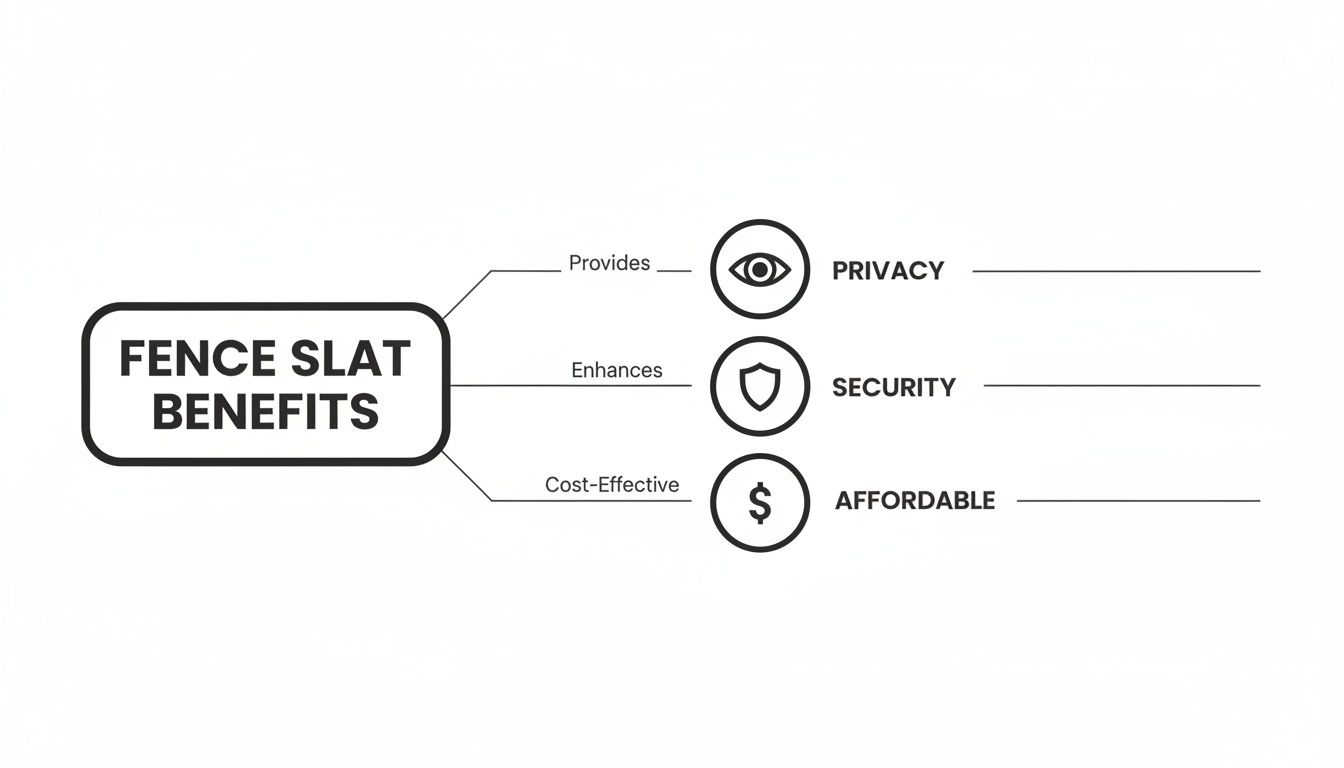
It’s a simple, affordable upgrade that pays off in multiple ways, from a more secure backyard to a more private one.
Hybrid Materials: The Best of Both Worlds?
If you want the toughness of vinyl with a more natural look, innovative hybrid materials are the answer. These products are designed to combine the strengths of different materials.
Actionable Insight: By combining materials like PVC with steel or wood composites, manufacturers create slats that offer low-maintenance benefits with added strength and aesthetic appeal—a direct solution to our extreme weather challenges.
Composites are fantastic for our climate because they resist cracking during freeze-thaw cycles. We’re seeing a 25% installation uptick in regions with tough weather, a trend that reflects the needs of homeowners right here in Ottawa–Gatineau.
Slat Material Comparison for Four-Season Weather
To decide, weigh the pros and cons against your budget and maintenance willingness. This table provides a side-by-side comparison to help you choose.
Material | Durability | Maintenance Level | Typical Cost | Best For |
|---|---|---|---|---|
PVC / Vinyl | Excellent | Very Low | Moderate | Homeowners wanting a long-lasting, hassle-free privacy solution. |
Wood (Cedar) | Good | High | Moderate to High | Those who prioritize a classic, natural aesthetic and are prepared for regular upkeep. |
Hybrid (Composite) | Excellent | Low | High | Homeowners seeking the ultimate balance of style, strength, and minimal maintenance. |
Ultimately, the best slats are the ones that match your priorities. Whether you choose the resilience of PVC, the charm of wood, or the performance of a hybrid, you’re making a smart investment in your home’s privacy and curb appeal.
How to Balance Privacy and Wind Resistance
When adding privacy slats, you must balance seclusion with structural integrity. A chain link fence is designed for wind to pass through; adding slats turns it into a sail. This puts significant strain on your fence posts. If they aren't secure, your fence could lean, get damaged, or fail completely.
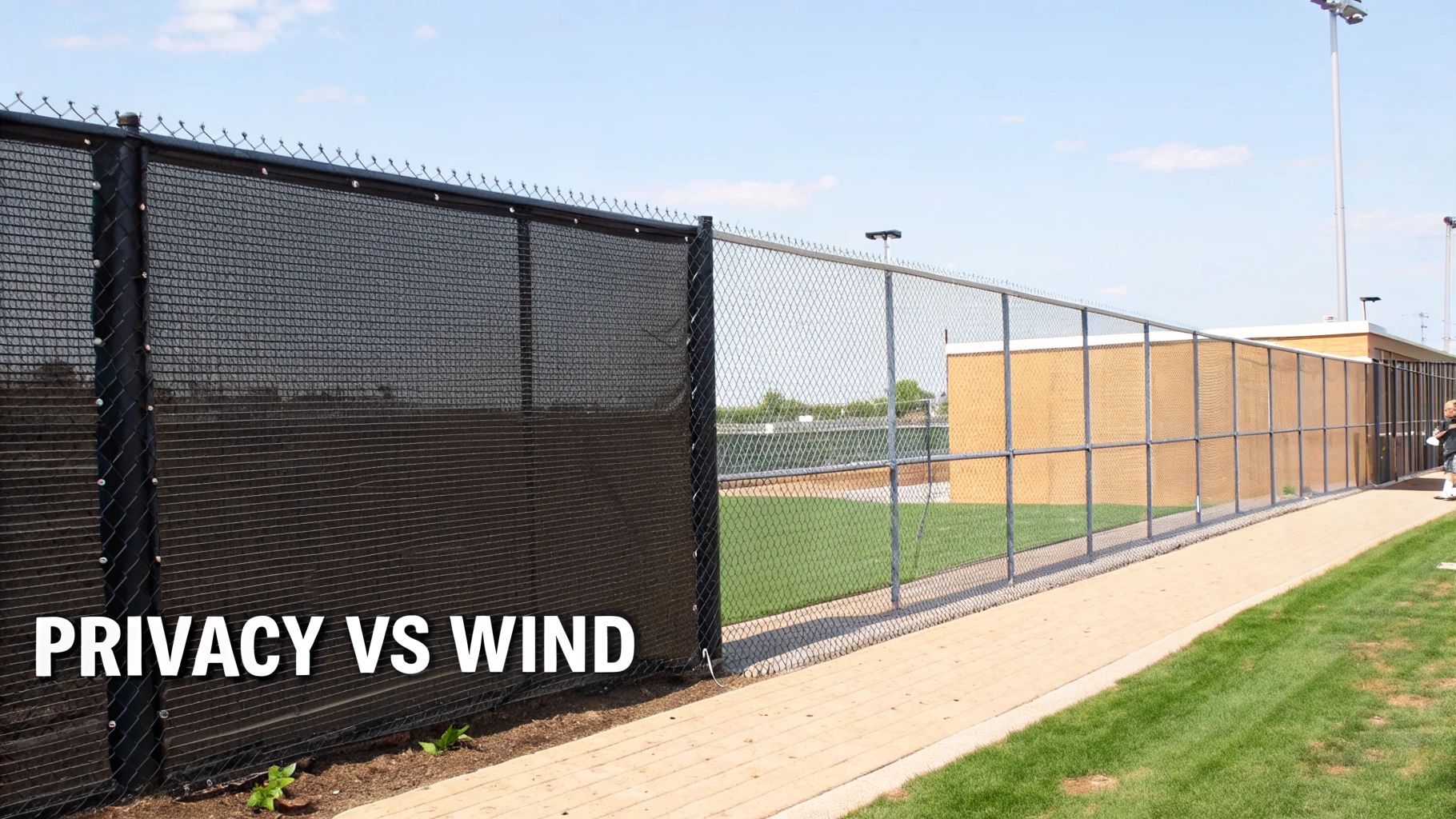
Step 1: Choose Your Privacy Rating
Fence privacy slats are rated by percentage to indicate visual blockage. Use this to guide your choice:
75% Privacy: A great middle-ground option. It provides good screening while allowing air to move through, making it perfect for windy locations.
90%–95% Privacy: The most popular choice. This rating effectively blocks most lines of sight, ideal for creating a private oasis around a deck, patio, or pool.
98%–100% Privacy: For maximum seclusion. These slats create an almost solid barrier and should only be used in areas well-sheltered from strong winds.
Actionable Insight: The higher the privacy percentage, the less airflow you get. More seclusion means more stress on your fence posts. If your yard is exposed, choose a lower privacy rating (75-80%). If it's sheltered, a 95% slat is a safe bet.
Step 2: Select a Slat Design for Airflow
The shape of the slats also affects how they handle wind. Here’s what you need to know:
Standard Flat Slats: The no-fuss option. They offer decent privacy but present a solid face to the wind.
Winged Slats: Designed with "wings" or serrations that lock into the fence mesh. They provide more coverage (often 95% or more) while creating small channels for air to pass through.
Tubular Slats: Oval or circular slats whose curved surfaces can help diffuse wind pressure more effectively than flat surfaces.
Hedge Slats: Designed to look like a hedge, their textured surface breaks up wind gusts while providing nearly 100% privacy.
This choice is irrelevant if the fence itself isn't solid. The posts are the backbone. To handle the extra load, they must be strong, set correctly, and spaced properly. For more details, consult our guide on what you should know about optimal fence post distance.
By understanding how ratings and designs work, you can create a private backyard retreat that’s built to last.
DIY vs. Professional Installation: A Practical Guide
You've selected your slats and privacy rating—now for the big decision: do you install them yourself or hire a professional? This choice boils down to a trade-off between your time, skills, and budget versus the desire for a flawless finish.
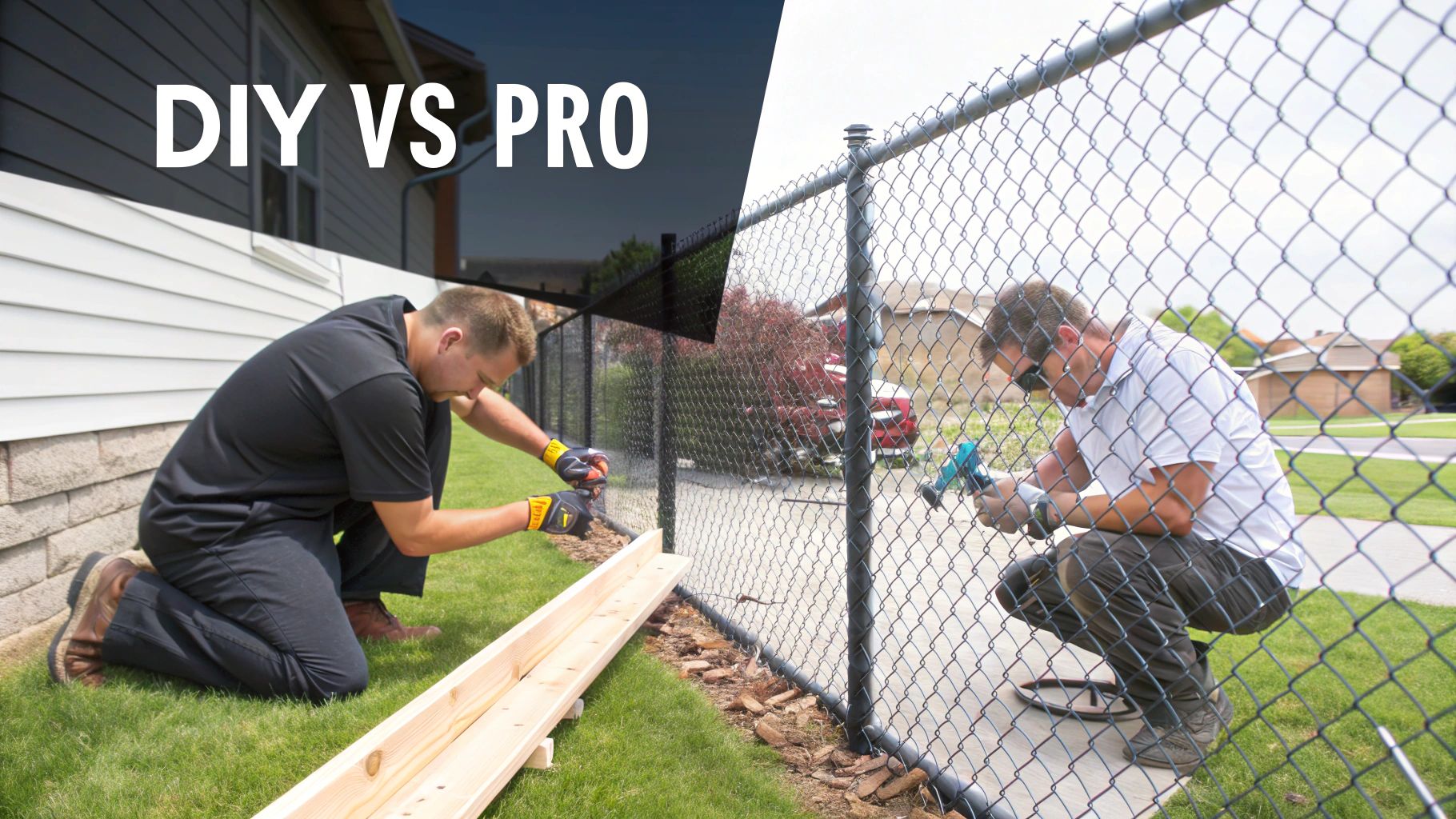
The DIY Installation Route
Installing the slats yourself can be incredibly rewarding. For a handy homeowner with a free weekend, this is a very manageable project. However, success depends on proper preparation.
Your Action Plan for DIY Success:
Gather Your Tools: You will need a measuring tape for accuracy, a utility knife or heavy-duty shears for trimming slats, and a rubber mallet to gently fit slats into tight spots.
Measure Accurately: Measure your fence length and height multiple times to ensure you order the correct amount of material.
Inspect Your Fence: Check for bent or warped mesh. Older fences can make it difficult to slide slats in smoothly. Be prepared to work around these imperfections.
Allocate Enough Time: Be realistic. A typical backyard fence can easily take a full day or an entire weekend. Don't rush the process.
Actionable Insight: The quality of your DIY job is limited by the condition of your existing fence. A pro knows how to handle imperfections, but a novice may struggle to achieve a clean, uniform look on a less-than-perfect fence.
The Professional Installation Advantage
Hiring an expert installer like FenceScape is an investment in expertise, efficiency, and peace of mind. A professional crew has the experience to handle any challenge.
An expert installation ensures every slat is perfectly aligned, secure, and cut to fit. They can manage bent mesh, uneven ground, and other surprises that might derail a DIY attempt.
Key Benefits of Going Pro:
Guaranteed Quality: The finish will be clean, straight, and professional, with no awkward gaps or crooked slats.
Time Savings: A professional team can complete a job in hours that might take you an entire weekend.
Warranty and Assurance: Reputable installers stand by their craftsmanship, providing a safety net you don’t get with DIY.
No Hidden Headaches: Pros arrive with all necessary tools and the experience to solve problems on the spot.
If you are confident in your skills and have the time, a DIY approach can save you money. But for a guaranteed-perfect finish without sacrificing your weekend, investing in a professional ensures your fence looks fantastic for years. For more tips, check out our guide on hiring Ottawa fence builders.
Budgeting for Your Fence Privacy Slat Project
Let's break down the costs for your fence privacy slat project. A solid budget aligns your vision with your spending, preventing surprises later on. The final price is a mix of materials, labour, and property-specific factors.
Breaking Down Material Costs
The largest cost is the fence privacy slats themselves. The price varies significantly by material, so it's best to think in terms of cost per linear foot.
PVC/Vinyl Slats: Often the most budget-friendly option, offering excellent durability and long-term value for a moderate price.
Wood Slats (e.g., Cedar): These come with a higher upfront material cost. Remember to factor in the future costs of stains or sealants.
Hybrid/Composite Slats: The premium option with the highest initial cost, but their blend of aesthetics and durability often saves money on maintenance over time.
When budgeting for materials, also account for items like concrete for post repairs. You can find guidance on figuring out how much concrete you need for your project to be precise.
Uncovering Hidden Cost Factors
Beyond the per-foot price, several factors can affect your total project cost. Knowing these ahead of time helps you create an accurate budget.
Be mindful of these variables:
Fence Height and Length: Taller and longer fences require more material and installation time, directly increasing the cost. A 4-foot fence will be significantly less expensive than a 6-foot privacy fence covering the same distance.
Current Fence Condition: Inspect your existing fence. If the chain-link mesh needs repair or re-tensioning, this will add to the labour costs.
Gates and Corners: Gates, corners, and end posts require extra cuts and custom fitting, which can add to labour costs compared to a simple, straight run.
Actionable Insight: Your fence's total length and current condition are the two biggest variables that can impact your budget. Conduct a thorough inspection before you start to avoid unexpected expenses mid-project.
Getting the Best Value for Your Investment
Budgeting is also about finding smart ways to save. With strategic planning, you can achieve a fantastic result while keeping costs manageable.
Here are a few practical tips:
Ask About Seasonal Promotions: Many fence contractors, including FenceScape, offer promotions during slower seasons. Planning your project for spring or fall could lead to significant savings.
Coordinate with Neighbours: If your neighbour also wants more privacy, organizing a neighbourhood group installation can lower costs for everyone due to the larger project size.
Explore Financing Options: Don't let upfront costs be a barrier. FenceScape offers flexible financing programs for Ontario and Quebec residents, making this valuable upgrade more accessible.
By understanding all the components, you can create a budget you feel confident about. The next step is getting a precise, no-obligation quote.
Keeping Your Slats Looking Great: Maintenance and Local Rules
You've invested in a more private and secure yard. Now, ensure your fence privacy slats last by following a simple maintenance routine and understanding local regulations.
A Simple Upkeep Routine
Different materials require different care, but the process is straightforward. Here’s your action plan for maintenance:
PVC/Vinyl Slats (Easy Mode): Plan for a yearly wash in the spring to remove winter salt and summer dust. Use a bucket of soapy water and a soft brush. For stubborn grime, a pressure washer on its lowest setting, held at a distance, will work.
Wood Slats (A Little Annual TLC): Inspect your wood slats every spring after the snow melts. Look for cracking, warping, or peeling sealant. Every 2-3 years, apply a fresh coat of quality stain or sealant to prevent water damage from freeze-thaw cycles.
Actionable Insight: Think of sealant for wood like a winter coat. It’s a protective barrier that shields the wood from the elements, which is essential for preserving its natural look and longevity.
Staying on the Right Side of Bylaws in Ottawa and Gatineau
Before starting your project, familiarize yourself with local fencing rules. Both Ottawa and Gatineau have bylaws regarding fence height and pool safety.
Fence Height RegulationsIn most residential zones, the maximum backyard fence height is 2 metres (around 6.5 feet). Since fence privacy slats add privacy without increasing height, you are usually compliant. However, always double-check the specific rules for your property, especially on a corner lot.
Pool Enclosure SafetyPools require a secure, non-climbable fence with a self-latching gate. This is a critical safety requirement. A bare chain link fence is easy to climb. By weaving in flat, vertical slats, you eliminate footholds and create a smooth surface. This upgrade can often bring an existing fence up to code, providing both safety and seclusion.
How Long Will They Really Last?
With proper care, fence slats are a lasting investment. PVC and hybrid options can last 20-25 years or more. For wood, longevity depends on maintenance. A well-sealed cedar slat fence can look great for 15-20 years, but neglect can lead to serious wear in under a decade.
By combining a simple maintenance schedule with an understanding of local regulations, you can ensure your fence remains secure, compliant, and beautiful for years to come.
Your Fence Slat Questions, Answered
When considering privacy slats, a few questions always come up. Here are direct answers to the most common inquiries from homeowners.
How Much Privacy Do Fence Slats Actually Provide?
The privacy level depends on the slat style you choose, but you can expect 75% to 98% visual blockage.
Slats with extra "wings" or a tubular shape typically offer the most coverage because they fill the diamond-shaped gaps more completely. To be certain, check the official privacy factor listed on the product specifications before you buy.
Can I Install Privacy Slats on an Old Fence?
Yes, in most cases, you can. The key factor is not the fence's age but its condition. The posts must be solid, and the chain link mesh should be taut and in good shape.
If your fence is leaning, sagging, or has rusty sections, you must address these repairs first.
Actionable Insight: A strong foundation is crucial. Installing slats on a weak frame is like putting new siding on a crumbling wall—it won't fix the underlying issue and will cause problems later.
Do Slats Increase the Risk of Wind Damage?
They can. Slats turn your fence into more of a solid wall, which catches more wind.
However, most slats are designed to allow some air to pass through, relieving pressure. If you live in a windy area, choose a slat with a slightly lower privacy rating to improve airflow. Most importantly, ensure your fence posts are properly anchored in concrete to handle the extra load. A professional installation guarantees this critical step is done right.
Ready to transform your fence into a private, secure, and beautiful boundary? Contact FenceScape today for a free, no-obligation estimate and discover the perfect fencing solution for your home.
Comments