
Top 10 Styles of Wood Fences for Ottawa–Gatineau Homes in 2026

A wood fence is more than just a property line; it's a statement of style, a provider of privacy, and a crucial element of your home's curb appeal. For homeowners in the Ottawa–Gatineau region, selecting the right fence means balancing aesthetics with the demands of our distinct Canadian seasons. From the full seclusion of a privacy fence to the timeless charm of a picket fence, the number of styles of wood fences can feel overwhelming.
This guide provides actionable insights into 10 popular designs, breaking down the practical pros, cons, costs, and maintenance considerations for each. You'll get specific details you need, from material choices like cedar versus pressure-treated wood to installation tips that ensure your investment withstands freeze-thaw cycles. Our goal is to equip you with clear, practical information, so you can confidently choose a design that enhances your property's security, value, and visual appeal for years to come. Whether you're a homeowner planning a DIY project, a contractor sourcing materials, or a property manager coordinating a large-scale installation, this comprehensive roundup will help you make an informed decision.
1. Privacy Fence (Solid Board) - including Dog-Eared Variant
Among the various styles of wood fences, the solid board privacy fence is a perennial favourite for homeowners in Ottawa–Gatineau. Its construction is straightforward: vertical boards are installed tightly side-by-side between rails, creating a complete visual barrier. This design offers maximum privacy, making it a practical choice for backyards, pool enclosures, and properties bordering busy areas.
A popular aesthetic twist is the "dog-eared" variant, where the top corners of each board are trimmed at a 45-degree angle. This simple cut softens the fence's top line and helps shed water, which can prevent premature rot on the board ends. This is a small detail that adds a classic look without compromising the fence's primary function.
Key Details & Actionable Tips
Privacy & Security Level: High. The solid construction effectively blocks views and deters casual entry. This style also provides excellent wind protection.
Best For: Residential backyards, pool safety enclosures (check local bylaws for height requirements), and defining property lines where seclusion is a priority.
Materials: Both pressure-treated lumber and cedar are excellent choices. For a detailed breakdown of which material best suits Ottawa's climate and your budget, explore our comparison of cedar vs. pressure-treated fences.
Pro Tip: To maximize structural integrity against Ottawa’s heavy snow loads and strong winds, ensure fence posts are spaced no more than 6 to 8 feet apart and set in concrete below the frost line. Also, treat any cut ends of pressure-treated boards with a preservative before installation to prevent premature rot.
2. Picket Fence
The picket fence is a timeless North American classic, instantly recognizable for its evenly spaced vertical boards, known as pickets, attached to horizontal rails. This style offers a charming, friendly boundary that enhances curb appeal without obstructing views or light. It is an excellent choice for front yards and gardens in Ottawa–Gatineau, particularly for colonial or cottage-style homes where maintaining an open, approachable aesthetic is key.
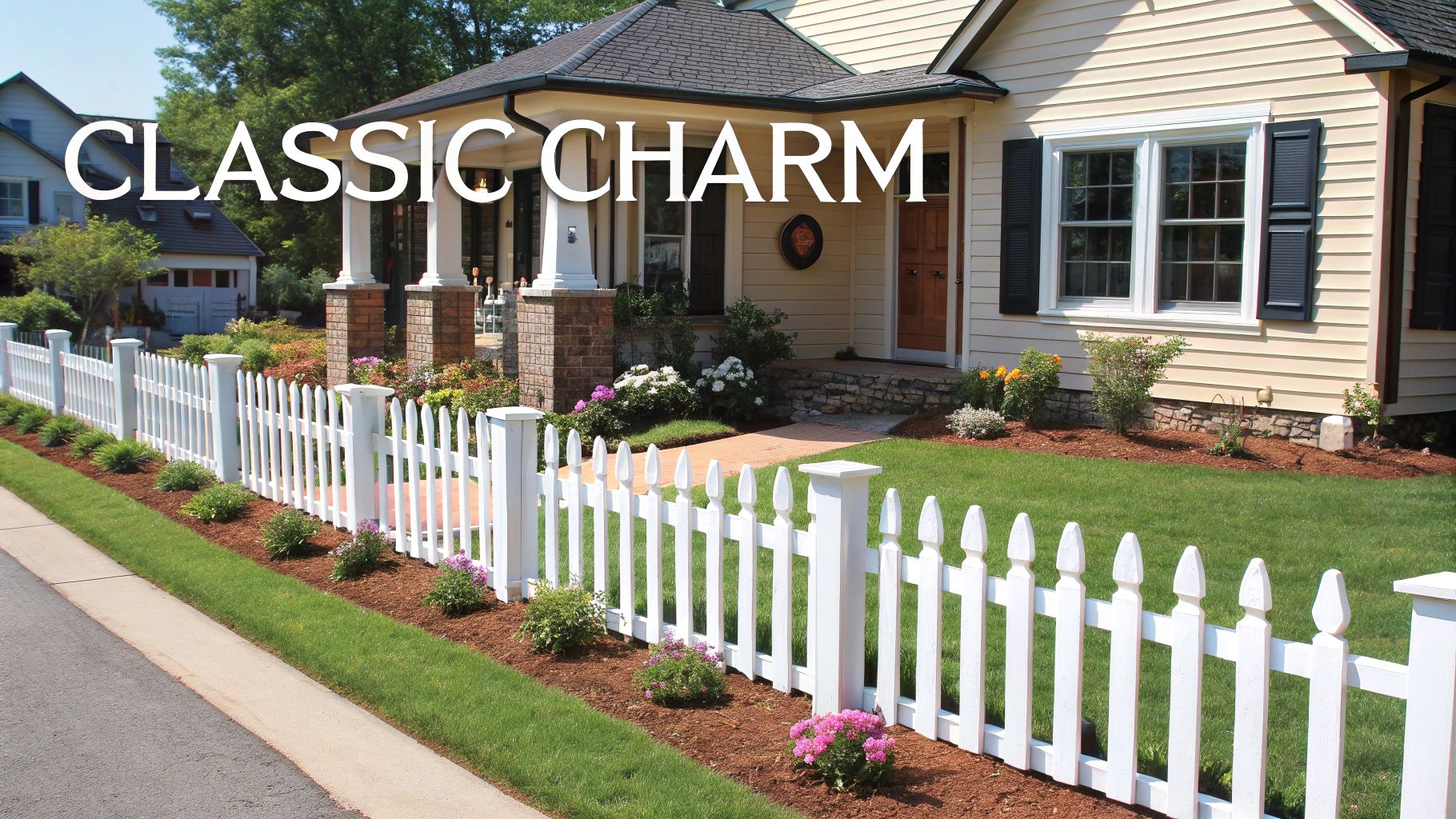
Unlike privacy fences, the picket style is designed for demarcation rather than seclusion, making it popular in heritage districts and communities with aesthetic guidelines. The gaps between pickets create a sense of spaciousness and allow sunlight to reach landscaping, contributing to a vibrant front yard. The tops of the pickets can be finished in various designs, from the traditional pointed top to more decorative options.
Key Details & Actionable Tips
Privacy & Security Level: Low. This style clearly defines property lines and contains pets or small children, but it does not offer visual privacy or act as a significant security barrier.
Best For: Front yards, garden perimeters, and defining property boundaries in neighbourhoods like The Glebe or Westboro where aesthetic appeal is a high priority.
Materials: Both pressure-treated lumber and cedar work well. Cedar offers natural rot resistance and a beautiful grain, while pressure-treated wood is a durable, cost-effective option that holds paint exceptionally well for that classic white picket fence look.
Pro Tip: When installing, use a spacing jig (a simple block of wood cut to your desired gap width) to ensure perfectly consistent spacing between each picket. For longevity against Ottawa's harsh freeze-thaw cycles, apply two to three coats of high-quality exterior paint and plan to repaint every 3 to 4 years to maintain its appearance and protect the wood.
3. Semi-Privacy (Shadow Box) Fence
For homeowners seeking a balance between seclusion and openness, the shadow box fence is one of the most elegant styles of wood fences available. This design features vertical boards attached to the horizontal rails in an alternating pattern, with one board on the inside and the next on the outside. This creates a visually interesting, layered look that offers substantial privacy when viewed head-on but allows for airflow and angled views.
The shadow box fence is often called a "good neighbour" fence because its finished appearance is identical from both sides, eliminating any disputes over who gets the "good" side. Its unique construction provides a sense of boundary and screening without making a yard feel completely closed off, making it popular in Ottawa–Gatineau suburbs.
Key Details & Actionable Tips
Privacy & Security Level: Medium. It provides excellent visual screening from direct angles but allows partial visibility from the side. The design is a good deterrent but less secure than a solid board fence.
Best For: Front or side yards, defining property lines between neighbours, and properties where maintaining airflow and a sense of openness is as important as privacy.
Materials: Cedar is a premium choice for its natural resistance to rot and insects, enhancing the fence's refined look. Pressure-treated wood offers a durable and cost-effective alternative that performs well in the local climate.
Pro Tip: The structural integrity of a shadow box fence relies heavily on its posts. Ensure they are set correctly below the frost line to handle Ottawa's freeze-thaw cycles. For detailed instructions, see our guide to installing fence posts to guarantee a stable foundation.
4. Board-on-Board Fence
For homeowners seeking a premium alternative to standard privacy fences, the board-on-board style offers enhanced durability and a refined, three-dimensional aesthetic. This construction method involves installing vertical boards in an overlapping pattern on the same side of the horizontal rails. This layering technique completely eliminates any potential gaps that might appear as the wood ages and shrinks, providing absolute visual privacy from all angles.
The overlapping design adds significant strength and creates attractive shadow lines that shift throughout the day, adding architectural interest. It's a practical choice for high-end residential properties and contemporary homes where the fence is a key component of the overall landscape design.
Key Details & Actionable Tips
Privacy & Security Level: Highest. The overlapping boards ensure total visual blockage, making it one of the most private styles of wood fences available. Its robust, heavy construction also provides a formidable security barrier.
Best For: Corner lots visible from multiple vantage points, properties in premium neighbourhoods, and homeowners who prioritize both maximum privacy and superior aesthetic appeal.
Materials: Premium-grade cedar is often preferred for its dimensional stability and rich colour. High-quality, straight-grained pressure-treated lumber is also a strong, cost-effective option.
Pro Tip: To support the significant extra weight of a board-on-board fence, space your posts closer together (ideally 6 feet apart) and use deeper concrete footings. When installing, leave a slight gap between the overlapping boards to allow for natural wood expansion and contraction.
5. Lattice Fence
The lattice fence is one of the most decorative styles of wood fences, characterized by a crisscross pattern of thin wooden strips. This design creates an open, airy framework that adds visual interest without completely blocking sightlines. It is often used as a standalone decorative barrier or as a topper for solid privacy fences, blending functionality with classic charm.
This style is particularly popular in Ottawa–Gatineau for its ability to support climbing plants like clematis or morning glories, integrating the fence directly into the garden landscape. It’s an excellent choice for creating semi-private garden nooks, enclosing patios, or adding a touch of cottage-style elegance to a property.
Key Details & Actionable Tips
Privacy & Security Level: Low. Lattice offers minimal visual privacy and is not a security barrier, though it effectively defines spaces and guides foot traffic.
Best For: Garden borders, decorative accents, patio enclosures, or as a topper on privacy fences to add height and style without creating a fortress-like appearance.
Materials: Pressure-treated lumber is highly recommended for its resistance to rot and insects, which is crucial for a structure often in contact with damp soil and foliage. Cedar offers a beautiful, natural alternative but may require more diligent maintenance.
Pro Tip: For a durable installation in Ottawa's climate, use pressure-treated 1x2 lumber for the lattice strips. If combining with a solid base, a 3 to 4-foot solid section with a 2-foot lattice topper provides a perfect balance of privacy and aesthetic appeal. Regularly trim any climbing vines to prevent them from putting excessive weight on the lattice structure.
6. Horizontal Fence (Modern/Contemporary)
Breaking from traditional vertical designs, the horizontal fence has become a hallmark of modern and contemporary architecture throughout Ottawa–Gatineau. This style features boards installed parallel to the ground, creating clean, linear sightlines that enhance a property’s minimalist aesthetic. Its versatile design can be built solid for complete privacy or with intentional spacing between boards for a semi-private, airy feel.
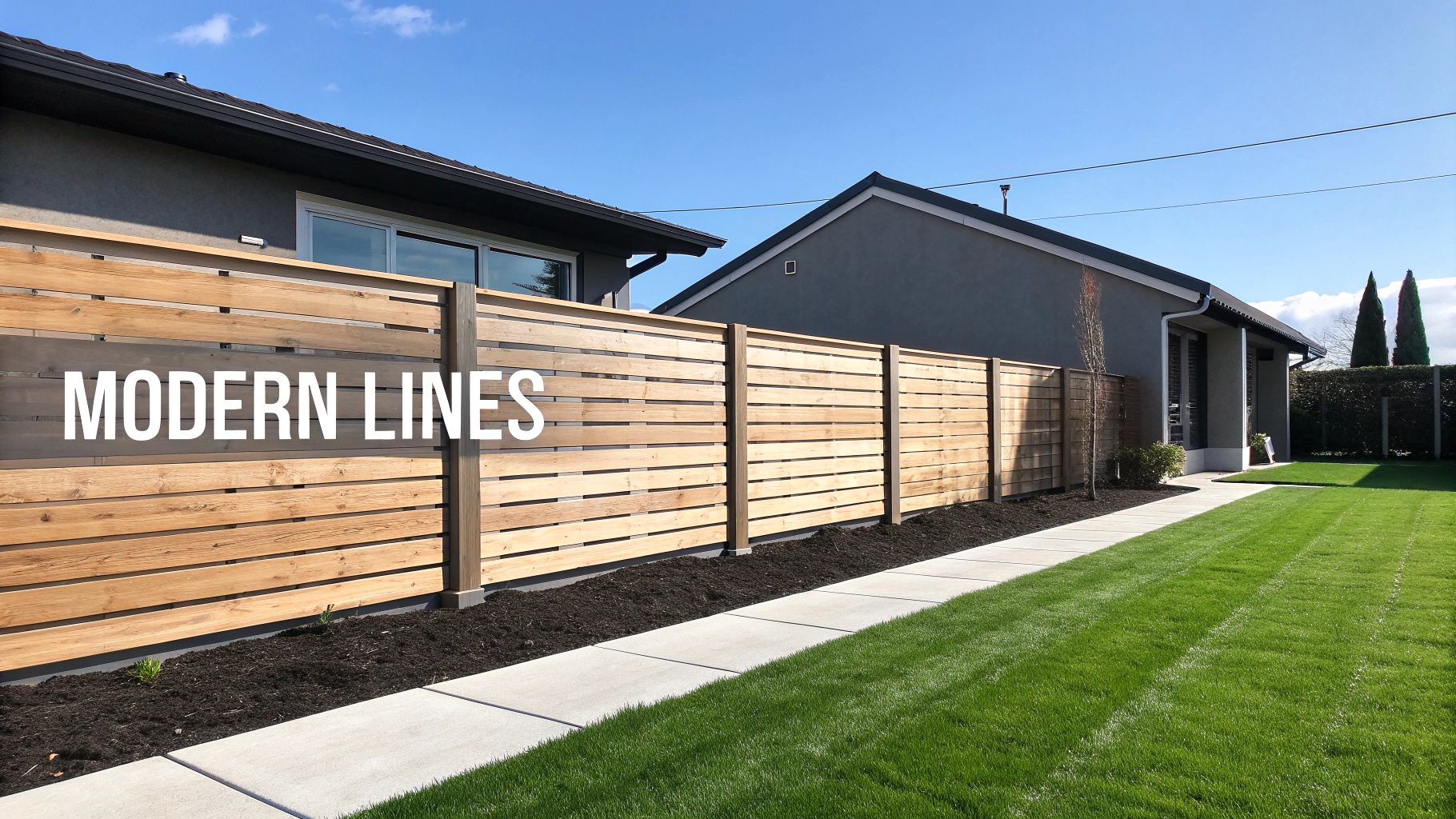
This style demands precise installation, as even minor misalignments are immediately noticeable. However, when executed correctly, a horizontal fence acts as a sophisticated architectural element, not just a boundary. It’s frequently seen complementing modern homes in neighbourhoods like Kanata and West Barrhaven.
Key Details & Actionable Tips
Privacy & Security Level: Variable. It can range from high (solid with no gaps) to low (wide spacing), allowing you to customize the level of seclusion and light penetration.
Best For: Properties with modern, mid-century, or contemporary architecture; creating a unique design statement; and accenting landscaped garden areas or patios.
Materials: Cedar is highly recommended for its natural resistance to rot and its dimensional stability, which helps prevent sagging. Pressure-treated wood is a cost-effective alternative, but requires thorough sealing.
Pro Tip: To prevent sagging over time, a common issue with horizontal styles of wood fences, install support posts closer together, ideally 4 to 6 feet apart. Using thicker boards (like 2x6s instead of 1x6s) and high-quality stainless steel fasteners will also significantly increase the fence's strength and longevity.
7. Rustic Rail Fence
Embodying a timeless, rural charm, the rustic rail fence is one of the most open and traditional styles of wood fences available. Its simple construction consists of horizontal split or rough-hewn rails fitted into sturdy posts, creating a distinctive boundary that enhances the landscape rather than obstructing it. This style is a popular choice for large properties, hobby farms, and homes in the Ottawa–Gatineau area seeking a country aesthetic.
Often called split-rail or post-and-rail, this fence design is more about defining spaces and adding character than providing security or privacy. It's perfectly suited for the sprawling acreage found in communities around Gatineau and the rural outskirts of Ottawa, where it can mark property lines or contain livestock like horses without creating a visual barrier.
Key Details & Actionable Tips
Privacy & Security Level: Low. This is a highly open design intended for decorative purposes or large animal containment, not for privacy or securing a yard from small pets.
Best For: Acreage, horse farms, hobby properties, and defining boundaries on rural or large residential lots where a natural, country aesthetic is desired.
Materials: Cedar and locust are ideal choices due to their natural resistance to rot. Pressure-treated pine is a durable and cost-effective alternative that holds up well in the local climate.
Pro Tip: For an authentic look, source genuine split-rail components. When installing, plan for posts to be 6 to 8 feet apart for stability and material efficiency. To prolong the life of the fence, inspect rails seasonally for significant cracks or rot, especially after harsh Ottawa winters, and plan to replace individual rails as needed.
8. Decorative / Ornamental Wood Fence
Beyond simple function, a decorative wood fence serves as a prominent architectural feature, elevating a property’s entire aesthetic. This style moves past standard designs by incorporating artistic details like custom cutouts, varied board heights, curved lines, or specialized trim. Often custom-built, these fences blend solid construction with ornamental elements, turning a simple boundary into a statement piece.
This approach is particularly popular in Ottawa’s premium neighbourhoods like Rockcliffe Park or The Glebe, where homes have significant architectural character. The fence is designed to complement the home’s style, whether it’s a heritage property or a modern custom build, ensuring a cohesive and sophisticated look. It’s one of the most versatile styles of wood fences for those prioritizing design.
Key Details & Actionable Tips
Privacy & Security Level: Variable. Can be designed for high privacy with solid sections or be more open and decorative, depending on the specific design. Security is often secondary to aesthetics but can be incorporated.
Best For: Enhancing curb appeal on architecturally significant homes, corner lots requiring a standout feature, and high-end properties where design and craftsmanship are paramount.
Materials: Cedar is the preferred choice for its beauty, stability, and workability, which is essential for creating intricate details. High-quality pressure-treated wood can also be used if a specific finish is planned.
Pro Tip: Collaborate with an experienced fence designer early in the process. Integrating decorative elements during the initial design phase is far more effective and cost-efficient than trying to retrofit them later. Ensure the design aligns with your home’s architectural language for a truly custom feel.
9. Basket Weave Fence
For homeowners seeking a unique blend of privacy and sophisticated texture, the basket weave fence is an outstanding choice among the various styles of wood fences. This design involves weaving thin, flexible vertical boards over and under a series of horizontal rails. The result is a stunning, textured panel that looks identical from both sides, making it an excellent "good neighbour" fence. Its intricate pattern adds visual depth and a touch of bespoke craftsmanship to any property.
The tightly woven construction provides a high degree of privacy, similar to a solid board fence, but with a more dynamic and artisanal appearance. This style is particularly well-suited for contemporary homes in Ottawa neighbourhoods where both aesthetic appeal and seclusion are equally important. It serves as a beautiful backdrop for gardens and outdoor living spaces.
Key Details & Actionable Tips
Privacy & Security Level: High. The interwoven boards create a nearly solid screen, effectively blocking sightlines while offering moderate security. The intricate design can also act as a noise buffer.
Best For: Properties emphasizing design and craftsmanship, garden enclosures, defining entertainment areas, and situations requiring a fence that is visually appealing from all angles.
Materials: Cedar is the preferred material due to its natural flexibility, which is essential for the weaving process without splitting. Its resistance to rot and insects is also a significant benefit, especially where boards overlap and may trap moisture.
Pro Tip: To prevent moisture retention and premature decay in Ottawa's climate, it is crucial to apply a high-quality sealant to all surfaces of the boards before installation. Pay special attention to the areas where boards will overlap, as these are the most vulnerable spots.
10. Stepped / Contoured Fence
Not a fence style in itself, but a crucial installation technique, the stepped or contoured fence is the professional solution for properties with sloped terrain. This method involves building the fence in sections that "step down" the hill, keeping the rails level and the pickets plumb. This creates a clean, uniform look while maintaining a consistent gap at the bottom, which is essential for security and containing pets.
This approach is one of the most common styles of wood fences seen on properties with grade changes in Ottawa-Gatineau neighbourhoods like the Glebe or in the Gatineau Hills. It adapts any fence design, from solid privacy to classic picket, to the natural contours of the land without leaving unsightly triangular gaps under the fence. The result is a fence that looks intentional and structurally sound, rather than one that awkwardly follows the slope.
Key Details & Actionable Tips
Privacy & Security Level: Varies depending on the base fence style, but the stepping method ensures there are no large, insecure gaps at the bottom.
Best For: Any property with a noticeable slope, hillside lots, or uneven terrain where a level-top fence would create large gaps underneath.
Materials: This installation technique is compatible with all standard fencing materials, including pressure-treated wood and cedar. Professional planning is key to success regardless of material choice. For a detailed walkthrough, review our guide on how to build a fence on a slope.
Pro Tip: For a polished look, plan the "steps" to be as consistent in height as possible, typically between 12 and 18 inches per section. This requires careful measurement of the slope's rise and run before setting any posts, ensuring a visually pleasing and rhythmic transition down the grade.
Top 10 Wood Fence Styles Comparison
Style | 🔄 Implementation Complexity | ⚡ Resource & Cost | 📊 Expected Outcomes | 💡 Ideal Use Cases | ⭐ Key Advantages |
|---|---|---|---|---|---|
Privacy Fence (Solid Board — dog-eared) | Medium — standard vertical build, heavier posts required | Medium–High — cedar/pressure-treated; moderate labor | 100% visual privacy; strong wind/noise reduction; high resale impact | Backyards, pool enclosures, homeowners needing full screening | Maximum privacy and professional appearance |
Picket Fence | Low — simple rails and evenly spaced pickets | Low — less material; cedar or pressure-treated | Defines boundary and curb appeal; no privacy | Front yards, cottage/heritage homes, HOA areas | Classic curb appeal at low cost |
Semi-Privacy (Shadow Box) | Medium — precise alternating boards for symmetry | Medium — less wood than full privacy; moderate labor | ~50% visibility reduction; good light and airflow; stylish impact | Side yards, modern homes balancing light and screening | Stylish partial privacy with enhanced aesthetics |
Board-on-Board Fence | High — double-board installation, stronger structure needed | High — nearly double material and labor | Full privacy with superior wind resistance and depth | High-end homes, exposed/windy lots, corner properties | Deep, refined appearance with excellent durability |
Lattice Fence | Low–Medium — panel or strip installation, delicate work | Low — 1x2 strips or prefab panels; lower material cost | Decorative openness; supports climbers; minimal privacy | Gardens, gate toppers, decorative accents | Integrates landscaping; lightweight decorative option |
Horizontal Fence (Modern) | Medium–High — requires strong posts and anti-sag design | Medium–High — wide boards and sturdy supports | Clean modern aesthetic; variable privacy; good wind flow | Contemporary homes, design-focused properties | Minimalist linear look; flexible spacing and materials |
Rustic Rail Fence | Low — simple rail installation, minimal complexity | Low — split-rail or rough-hewn wood; economical | Open rural character; no privacy; low maintenance | Acreage, hobby farms, pasture boundaries | Authentic rustic aesthetic at low cost |
Decorative / Ornamental Wood Fence | High — custom design and skilled installation | High — premium materials and craftsmanship | Exceptional curb appeal; custom architectural cohesion | Premium/residential corner lots, heritage properties | Highly customizable focal feature that raises value |
Basket Weave Fence | High — careful weaving pattern and precise layout | Medium–High — moderate material, labor-intensive | Near-solid privacy with textured appearance; strong wind resistance | Mid-to-high-end homes seeking privacy + design | Distinctive woven texture with strong privacy, cost-effective vs board-on-board |
Stepped / Contoured Fence | High — surveying and stepped layout; applied to any style | Medium — depends on chosen style; extra labor for steps | Professional appearance on slopes; consistent clearance; erosion control | Sloped or uneven terrain, hillside and valley properties | Preserves aesthetics and function on challenging terrain |
From Inspiration to Installation: Partner with FenceScape
Navigating the diverse world of wood fence styles is an exciting first step toward transforming your property. As we've explored, your final choice is a delicate balance of aesthetic preference, functional necessity, and long-term maintenance commitment. From the uncompromising seclusion of a solid board privacy fence to the charming, open feel of a classic picket design, each style offers a unique set of benefits tailored to different needs.
The journey doesn't end with a decision, however. The true success of your project hinges on transforming that vision into a durable, professionally installed reality. A fence is more than just a boundary; it's a significant investment in your property's value, security, and curb appeal. The difference between a fence that sags after a few Ottawa winters and one that stands resilient for decades often comes down to the quality of materials and the expertise of the installation crew.
Key Takeaways for Your Fence Project
Before moving forward, let's recap the most critical factors to consider:
Function First, Form Second: Always begin by clarifying your primary goal. Is it maximum privacy (Board-on-Board), pool safety (Picket), air circulation (Shadow Box), or a modern aesthetic (Horizontal)? Your core objective will immediately narrow down the most suitable styles of wood fences.
Material Matters in Ottawa–Gatineau: Our regional climate, with its heavy snow loads and freeze-thaw cycles, demands robust materials. Premium Western Red Cedar offers natural resistance to rot and insects, while properly installed pressure-treated lumber provides a durable, cost-effective alternative. The right material choice is your first line of defence against premature wear.
Beyond the Look: Think about the practical implications. A solid privacy fence might block a refreshing summer breeze, while a rustic rail fence offers no security for pets. Consider how your chosen style will impact your daily life and the overall enjoyment of your outdoor space.
Your Actionable Next Steps
Choosing a style is the "what," but the "how" is equally important. A well-executed installation accounts for critical details like proper post depth to get below the frost line, precise spacing to prevent warping, and adherence to local Gatineau and Ottawa property bylaws. This is where professional expertise becomes invaluable.
A high-quality fence, built with precision and premium materials, is a feature that adds lasting value and functionality. It frames your landscape, secures your sanctuary, and provides peace of mind. By investing in professional craftsmanship, you ensure your new fence not only meets your immediate needs but also withstands the test of time, becoming a proud and permanent fixture of your home.
Ready to bring your vision to life with a fence built to last? The experts at FenceScape specialize in installing all styles of wood fences using premium materials and craftsmanship suited for the Ottawa–Gatineau climate. Contact us today for a free, no-obligation estimate and let our team help you build the perfect boundary for your property.
Comments