
Fence Toppers For Privacy Your Complete Ottawa Homeowner's Guide

Feeling a bit too exposed in your own backyard? Before you start budgeting for a brand-new fence, let's talk about a smarter, more cost-effective solution: adding fence toppers for privacy. This simple upgrade can give you the extra height you need to block wandering eyes and make your outdoor space feel like your own again, all without the headache of a full tear-down.
The Smart Way To Add Backyard Privacy
Sometimes, a perfectly good fence is just a few inches too short. It happens. Maybe a new two-storey home popped up next door, and suddenly your once-secluded yard feels like it's on display. Or you've just installed a beautiful new hot tub and realized you can't quite relax with the neighbours having a clear view.
These are the exact situations where a full fence replacement is often overkill. Why rip out a solid, functional fence when you only need a little more height?
Fence toppers are designed to solve this exact problem. By adding just 12 to 24 inches on top of your existing structure, you can dramatically change the feel of your yard. It’s a targeted fix that closes the privacy gap without forcing you into a massive construction project, saving you a significant amount of time and money.
When Toppers Are the Ideal Fix
Not sure if a topper is the right move for you? Use this checklist to see if they are the right solution for your yard:
Your existing fence is structurally sound. If the posts are solid and the panels are in good shape, there's no need to start from scratch.
You need a quick privacy boost. Maybe new neighbours just moved in, or their new deck gives them a direct line of sight into your yard. Toppers are a fast solution.
You're working with a specific budget. Fence toppers deliver a huge impact for a fraction of the cost of a full replacement.
That cost-effectiveness is a huge draw for many homeowners. As urban lots get smaller across Canada, privacy has become a top priority. Here in Ottawa, where over 60% of new housing starts are on compact lots, adding a 12–24 inch topper to a standard 5-foot fence is an incredibly popular way to hit that ideal 6-foot privacy height.
Think about the numbers: a completely new fence can run you CAD $40–$80 per linear foot. In contrast, adding toppers often costs just 30–50% of that, which can easily save you thousands on a typical project.
Key Takeaway: Fence toppers for privacy aren't just a patch job; they're a strategic upgrade. They offer a direct and efficient way to enhance your quality of life outdoors, creating a more secure and intimate environment.
More Than Just Height
Beyond simply blocking views, the right topper can also be a fantastic design feature. This is your chance to add a new texture or a decorative touch that complements your home’s architecture. A classic lattice can add a touch of charm, while sleek, modern slats can create a more contemporary look.
Of course, a physical barrier is just one piece of the puzzle when it comes to feeling secure at home. Creating a comfortable neighbourhood involves many layers, which is why some communities also look into dynamic measures like residential security patrols to foster a greater sense of safety for everyone.
Choosing the right material and style for your topper is key, as it impacts both privacy and curb appeal. To get a better handle on how different materials perform, our guide on the best types of fences is a great resource. It will help you make an informed choice that balances your immediate need for privacy with long-term style and value.
Choosing Your Ideal Fence Topper Material
Picking the right material for your fence topper is about more than just adding a bit of height. It sets the tone for your entire backyard, defines the look, and dictates how much time you'll spend on upkeep down the road. Here in the Ottawa–Gatineau region, that choice is even more critical—you need something that can handle our notorious freeze-thaw cycles without falling apart.
Let's walk through the most popular options to see what makes the most sense for your home.
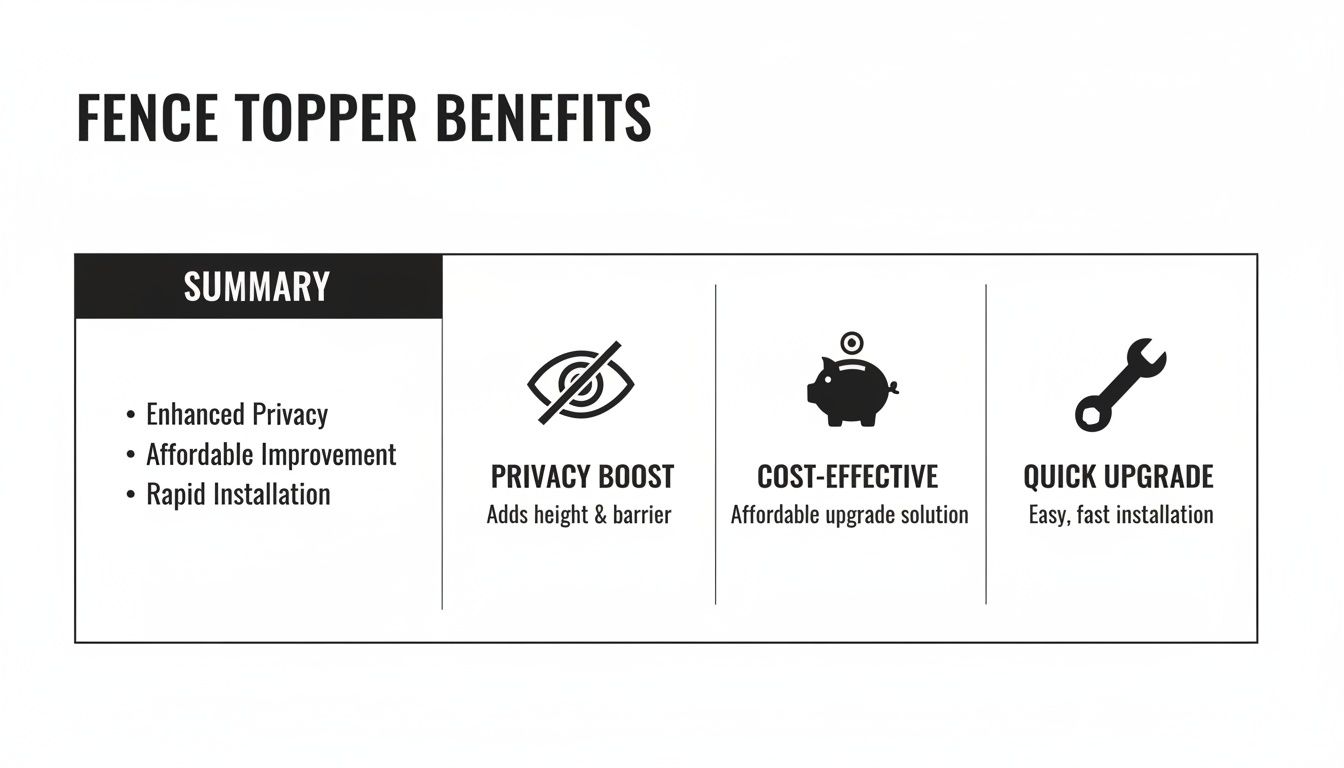
As you can see, toppers aren't just a one-trick pony for privacy; they're a smart, cost-effective way to get more out of your existing fence.
PVC And Vinyl: The Modern, Low-Maintenance Choice
If your goal is maximum privacy with minimum fuss, polyvinyl chloride (PVC) is tough to beat. Its solid, non-porous surface creates a complete visual block. Better yet, because it doesn't absorb moisture, PVC won't rot, warp, or become a feast for insects—a huge plus in our damp springs and snowy winters.
That durability translates into freedom from weekend chores. You'll never have to stain or paint these toppers. A quick spray with a garden hose is usually all it takes to make them look brand new. For a closer look at the benefits, you can explore our actionable guide to plastic and vinyl fence solutions.
The clean, uniform look of PVC is a perfect match for modern homes, giving your yard a crisp, finished frame that stands in sharp contrast to the rustic feel of wood.
Classic Wood: The Timeless and Natural Option
There's a reason wood is a perennial favourite. Its natural beauty and incredible versatility are unmatched. You can paint or stain it to perfectly complement your home's exterior, giving you a level of customization other materials just can't offer.
Cedar: This is the gold standard. Cedar's natural oils make it inherently resistant to rot and insects. It starts with a beautiful reddish hue and, if left untreated, weathers into a distinguished silver-grey that looks stunning on heritage homes in neighbourhoods like The Glebe or Old Ottawa South.
Pressure-Treated Wood: A more budget-friendly workhorse, this lumber is chemically treated to fend off decay and pests. It’s incredibly durable, but it does require regular staining or sealing to keep it looking good and performing well.
The main trade-off with wood is the maintenance. To protect it from cracking and warping in Ottawa's wild temperature swings, you’ll need to seal or stain your toppers every few years.
Expert Tip: When buying wood, always check the grade. Higher-grade lumber has fewer knots and imperfections, which means a cleaner look and better performance over the long haul.
To help visualize the trade-offs, here’s a quick breakdown of how these materials stack up against our local weather.
Fence Topper Material Comparison For Ottawa Weather
Material | Privacy Level | Durability | Maintenance | Estimated Cost / Linear Foot |
|---|---|---|---|---|
PVC/Vinyl | High (Solid) | Excellent | Very Low | $25 - $50 |
Cedar | High (Solid) | Very Good | Moderate | $30 - $60 |
Pressure-Treated Wood | High (Solid) | Good | High | $20 - $45 |
Lattice (Wood/PVC) | Medium | Varies | Low to High | $15 - $40 |
Acrylic | High (Frosted) | Excellent | Very Low | $70 - $120+ |
This table shows there’s a great option for every budget and maintenance preference, from cost-effective pressure-treated wood to premium, hassle-free acrylic.
Lattice Panels: Balancing Privacy And Airflow
Lattice is the perfect compromise when you want to add height and a feeling of enclosure without building a solid wall. The classic crisscross pattern obscures views effectively while still letting light and air filter through, which can make a smaller yard feel much more open and spacious.
This open design also makes it less vulnerable to high winds during our seasonal storms—a practical advantage over solid panels. Since lattice is available in both wood and easy-care PVC, you can get the look you want without sacrificing convenience. A traditional wood lattice is a natural fit for a lush garden, while a crisp white PVC lattice lends a clean, modern edge.
When choosing any outdoor product, understanding its durability is key. Learning about weatherproof material properties can help ensure your investment lasts for years to come.
Acrylic Panels: A Sleek and Modern Statement
For a truly contemporary and high-end look, consider frosted or tinted acrylic panels. These toppers provide excellent privacy by blurring the view with a translucent finish, but they still allow plenty of soft, natural light to pass through. This can be a game-changer for brightening up a yard that would otherwise be darkened by a tall, solid fence.
Acrylic is incredibly tough and UV-resistant, so it won't turn yellow or brittle over time. It's definitely a premium choice, but it creates a sophisticated, architectural feel that’s perfect for homes with modern landscaping or stylish pool enclosures. Best of all, they're virtually maintenance-free.
Navigating Ottawa and Gatineau Fence Bylaws
Before you buy materials for your fence topper, you must verify your local bylaws. Both Ottawa and Gatineau have specific regulations for fence heights. Ignoring them can lead to fines or a costly order to remove your new topper. These rules exist to maintain neighbourhood safety, ensure clear sightlines for drivers, and prevent disputes. A few minutes of research now will save you a major headache later.
Understanding Height Limits In Ottawa
In Ottawa, the bylaw states that a backyard fence can be a maximum height of 2.1 metres (about 7 feet) without a permit. This measurement is taken from the ground level at the base of the fence.
Here's how to apply this rule: If your current fence is 6 feet tall, adding a 1-foot topper is generally compliant. However, if your fence is already close to 7 feet, measure carefully. On sloped ground, the measurement is taken from the highest point along the fence line, which could reduce the allowable height for your topper.
Gatineau’s Fence Height Regulations
In Gatineau, the rules are slightly stricter. The maximum height for a side or rear yard fence is 2.0 metres (roughly 6.5 feet). This lower limit means you have less room for additions.
Before choosing a topper, take a tape measure and check your current fence height in several places. This is the only way to confirm how much height you can legally add.
Crucial Tip: Never assume the rules are the same everywhere. Zoning can change from one neighbourhood to the next, so a quick call or visit to your city’s website is the smartest first step you can take.
Do You Need A Building Permit?
For most fence topper projects, you will not need a permit as long as the final height is under the municipal limit. A permit is typically only required if you plan to exceed the maximum height or if the fence encloses a swimming pool, which has separate, stricter safety regulations.
This approach is common across the region. In Ontario and Quebec, fence toppers fall under building codes. Ontario typically allows solid backyard fences up to 1.8 metres (around 6 feet) without a permit, and municipalities in Quebec's Outaouais region have similar caps in the 1.8–2.0 metre range. With over 50% of Canadian homebuyers calling a private backyard a "must-have," staying compliant is just a smart way to add value. You can learn more about how privacy impacts home value and check out the top fencing trends for 2026 at everfence.com.
To get the official word straight from the source, here are the links you’ll need:
For Ottawa Residents: Head to the City of Ottawa's Fences page for the complete bylaw.
For Gatineau Residents: The Ville de Gatineau's Fencing page has all the local guidelines (note: information is in French).
A Practical Guide to Installing Fence Toppers
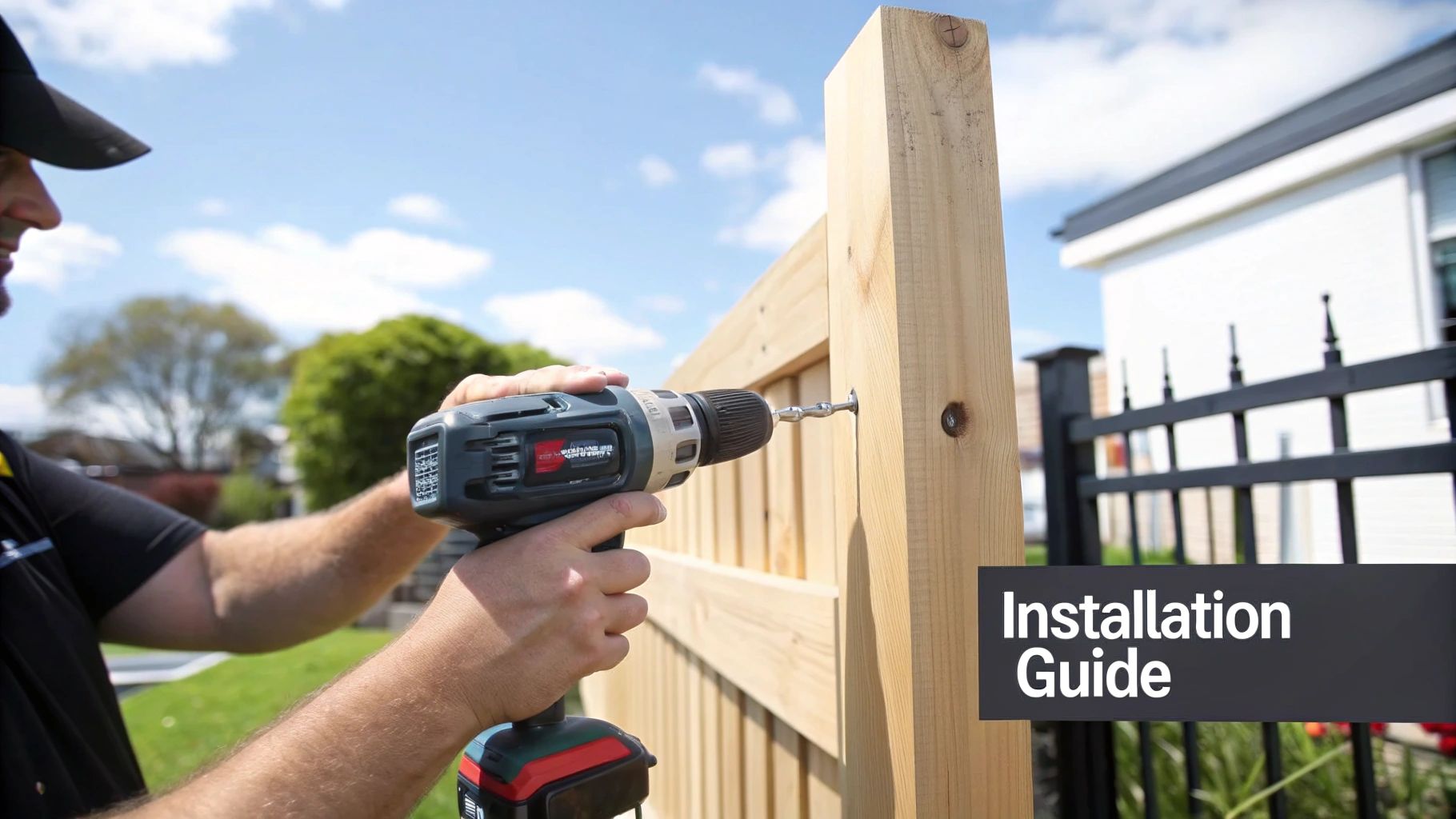
Ready to tackle your fence topper installation? With the right game plan, this can be a fantastic weekend project that pays off in both privacy and curb appeal. We're going to walk through the process, breaking it down into straightforward tasks to help you get a professional-looking result. The goal is to build an extension that is level, sturdy, and ready to handle an Ottawa winter.
First Things First: Check Your Foundation
Before you buy materials, perform a stability check on your existing fence. Your new toppers depend entirely on the strength of your current posts.
Walk the fence line and physically shake each post. If a post wobbles or feels loose at its base, it's a structural weakness that must be fixed. Adding height and weight to a weak post will cause it to fail. Use a level to check that each post is plumb (perfectly vertical).
Expert Insight: Adding a 2-foot topper to a 6-foot fence can increase wind load by as much as 40-50%. A post that seems "good enough" now might fail spectacularly during the first major storm once a topper is attached. Don't skip this critical assessment.
Inspect the base of wooden posts for signs of rot and check concrete footings for cracks. Address these foundational issues before proceeding.
Gathering Your Tools and Materials
Prepare your toolkit and materials in advance to avoid interruptions. A well-prepared workspace is the key to an efficient project.
Here’s a practical checklist of what you'll probably need:
Measuring Tools: Tape measure, string line, and a line level. A laser level is a great tool for ensuring a perfectly straight line across a long distance.
Cutting Tools: A circular or mitre saw for wood. For PVC or acrylic, use a fine-toothed blade to prevent melting and ensure clean cuts.
Drilling and Fastening: A cordless drill/driver with the correct bits for your chosen screws and bolts.
Safety Gear: Safety glasses and gloves are non-negotiable.
For materials, you will need your fence toppers for privacy and the correct fasteners. Actionable Tip: Use only exterior-grade, corrosion-resistant screws (stainless steel or coated deck screws) to prevent rust stains from appearing on your fence over time.
Measuring and Planning Your Layout
Accurate measurements are critical. Measure the distance from the center of one post to the center of the next for each section. Do not assume all sections are identical, as variations are common in older fences.
After measuring each section, cut your topper panels to size. Follow the classic rule: measure twice, cut once. A single miscut can be a costly error. To guarantee your toppers are level, run a string line from the first post to the last at your desired final height. This visual guide is essential for a professional finish, especially on uneven ground.
Secure Attachment Methods
This is the most critical part of the job. The method you use to attach your toppers will depend on your fence type and the toppers you've chosen.
Here are two reliable attachment strategies:
Direct Fastening: The simplest method. Drive weather-resistant screws through the topper's frame directly into your wooden fence posts. This is suitable for lighter panels like lattice, but only if your posts are in excellent condition.
Using Mounting Brackets: This creates a stronger, more versatile connection. Attach metal U-channels or L-brackets to the posts first, then fasten the topper panel to the brackets or slide it into the channel. This is the recommended method for heavier toppers or for attaching panels to vinyl or metal posts.
For example, to add a solid PVC panel between vinyl posts, use C-channel brackets. Screw the channels vertically onto the posts to create a track, then slide the topper panel into place for a secure, seamless fit. Regardless of the method, ensure your fasteners are long enough to penetrate at least 1.5 to 2 inches into the core of a standard 4x4 wood post. This creates the holding power needed for a durable, long-lasting installation.
When It's Time to Call in a Fencing Pro
While DIY projects can be rewarding, installing fence toppers for privacy can be more complex than it appears. Knowing when to call an expert ensures a safe, structurally sound, and professional-looking result.
Certain conditions are immediate red flags that signal a need for professional help. If your yard has a significant slope, achieving a level and consistent installation becomes difficult. If your existing fence posts are wobbly, leaning, or show signs of rot, the project is no longer a simple addition but a structural repair. An experienced installer can assess whether a post can be reinforced or needs to be replaced entirely—a crucial step for the long-term stability of your fence.
Scenarios That Really Need an Expert Touch
Recognize when a project is beyond a simple DIY scope. Partnering with a professional team like FenceScape is the smart choice in these situations:
Big Jobs or Group Projects: Fencing an entire property or coordinating with multiple neighbours requires professional project management to handle logistics, workflow, and communication.
Custom Designs and Fabrication: If you want a unique design not available off-the-shelf, a professional can fabricate custom-fit panels that integrate seamlessly with your existing fence.
Tricky Ground and Obstacles: Professionals have the equipment and expertise to deal with slopes, retaining walls, or large tree roots that can complicate installation.
Navigating Local Bylaws: A professional handles the complexities of local permits and bylaw compliance, including applying for a minor variance if you need extra height, ensuring your project is legal and hassle-free.
It’s no secret that people want more secure and private outdoor spaces. The global fencing market is projected to grow from around USD $35 billion to over $52 billion by the early 2030s, and North America is leading that charge. This demand for privacy is a huge driver, especially for larger projects like HOAs and multi-home communities right here in the Ottawa–Gatineau area. This is exactly why FenceScape offers versatile systems built to meet these local expectations. You can dig into the numbers and trends in this detailed fencing market report.
The Real Value of a Turnkey Service
Working with a professional company like FenceScape is about more than just hiring labour. It's a complete, start-to-finish service where every detail is managed for you. We start with professional design advice, helping you choose materials and styles that will genuinely enhance your home.
Key Benefit: A professional installation comes with accountability. You get a warranty on both the materials and the workmanship, giving you a level of confidence that a DIY project simply can't match.
Our team takes care of the entire installation, making sure every single panel is perfectly level and securely fastened. Once we're done, you have reliable post-project support for any questions or adjustments you might need. We also get that budgeting is a major part of any home improvement. That’s why we offer flexible financing options for both Ontario and Quebec residents, making it much easier to invest in your property.
For more tips on choosing the right team, our guide on hiring Ottawa fence builders is a great resource to help you make a smart, confident decision.
Answering Your Top Questions About Fence Toppers
Even with a solid plan, a few questions always seem to pop up. Here are the answers to the most common things we hear from Ottawa–Gatineau homeowners about adding fence toppers for privacy. We've based this on years of real-world experience to help you get your backyard upgrade right.
How Much More Privacy Will I Actually Get?
The increase in privacy is significant. Here's a practical breakdown:
A 12-inch topper on a 5-foot fence is usually enough to block sightlines from a neighbour's ground-floor windows or patio, creating a tangible sense of seclusion.
A 24-inch topper is the solution for blocking views from second-story windows or a raised deck, establishing a near-complete visual barrier.
The key is that this extra height is positioned precisely where it matters most: at and above eye level.
Can Fence Toppers Withstand Ottawa's Weather?
Yes, provided you choose the right materials and ensure proper installation. Our climate demands materials that can handle constant expansion and contraction.
PVC/Vinyl: An excellent choice. It's non-porous, preventing moisture from seeping in, freezing, and causing cracks. It also has the necessary flexibility for temperature fluctuations.
Pressure-Treated Wood & Cedar: These are proven performers. To make them last, you must commit to regular sealing or staining to protect against rot and warping caused by heavy snow and spring thaws.
Secure Installation: The attachment method is just as important as the material. Use weather-resistant screws and heavy-duty brackets to ensure your toppers can withstand high winds.
Will Fence Toppers Increase My Property Value?
While not a dollar-for-dollar return, the answer is generally yes. In a competitive housing market like Ottawa–Gatineau, a private and well-maintained backyard is a powerful selling feature.
A beautifully finished fence line with privacy toppers boosts curb appeal and signals to buyers that they're getting a move-in-ready outdoor space. It’s a detail that shows a home has been well cared for, and that can definitely influence an offer.
Can I Attach Toppers to Any Type of Fence?
You can attach toppers to most fences, but the difficulty varies.
Wood and Vinyl Fences: Easiest. Their solid posts provide a strong anchor point.
Chain-Link Fences: More complex. You will need specialized hardware like post extension sleeves or clamp-on brackets to create a stable frame before attaching toppers.
Ornamental Iron Fences: Difficult. This usually requires custom fabrication to achieve a secure and aesthetically pleasing result.
Do I Need to Tell My Neighbour About My Plans?
Here's the actionable advice:
If the fence is entirely on your property: You are not legally obligated to inform your neighbour, but a friendly heads-up is a good practice to maintain a positive relationship.
If the fence is on a shared property line: You must discuss the project with your neighbour. This is a great opportunity to see if they are willing to share the cost, as they will also benefit from the added privacy. Clear communication is essential for a successful outcome.
Ready to transform your backyard into the private retreat you deserve? The team at FenceScape has the expertise to design and install the perfect fence toppers for your home, ensuring a beautiful, durable result that stands up to Ottawa's seasons. Contact us today for a free, no-obligation estimate!
Comments