
A Homeowner's Guide to Split Rail Fence Cedar in Ottawa

A cedar split rail fence is more than just a boundary marker; it's a piece of classic, rustic charm that offers surprising durability. It's become a go-to choice for homeowners across the Ottawa-Gatineau region for good reason. The simple, interlocking design of posts and rails delivers a timeless look that feels right at home in any natural landscape, from a sprawling rural property to a cozy suburban garden.
But the real magic is in the material itself. Cedar is packed with natural oils that make it incredibly resistant to rot, decay, and insects—a huge plus in our demanding climate.
Why Choose a Cedar Split Rail Fence for Your Property
Imagine a fence that clearly defines your property without closing it in or blocking valuable views. That’s the unique appeal of a split rail fence. Its open-style construction creates a wonderful sense of space while still serving its purpose as a clear, physical boundary.
This isn’t just about looks, though. It's an incredibly practical solution, especially for larger or sloped properties where a solid fence would feel overpowering or be a nightmare to install.
For anyone living in Ottawa and Gatineau, your choice of wood is a critical decision. Our climate—with its humid summers and heavy, snowy winters—can punish outdoor structures. This is where you can leverage cedar's natural advantages.
The Natural Resilience of Cedar
Cedar isn't just another wood. It’s a high-performance material designed by nature. The secret is in its natural oils and tannins, which act as a powerful, built-in preservative. This biological armour gives a cedar split rail fence some major advantages:
Rot and Decay Resistance: Cedar naturally repels moisture, which stops the fungal growth that causes wood to rot.
Insect Repellence: Those same oils that fight rot also make the wood unappealing to destructive pests like termites and carpenter ants.
Dimensional Stability: It is far less likely to warp, shrink, or swell than other woods when the temperature and humidity fluctuate.
You can get a deeper look at how cedar stacks up against another popular option in our guide on cedar vs. pressure-treated fences.
This built-in durability makes cedar a smart long-term investment. While other materials need constant chemical treatments to survive our weather, cedar’s protection is part of its very fiber. That means less worry and lower maintenance costs for you down the road.
To get the most from your fence, choose cedar for its unique combination of low maintenance and high aesthetic value. It's one of the few fencing materials that actually looks better with age, weathering to a beautiful silvery-grey that blends perfectly into the Canadian landscape.
We've seen its popularity explode right here in our community. Local building data shows that cedar split rail fences now make up 28% of new rural installations in the Ottawa-Gatineau area—a massive jump from just 12% back in 2010. A big reason for this surge? Studies show cedar's natural oils repel insects 85% more effectively than treated lumber. It’s a natural choice that just works. For even more insights, check out this great article on why split rail fencing is a perfect choice at gotoyoungs.com.
To help you see the benefits at a glance, here’s a quick summary.
Cedar Split Rail Fence At a Glance
Use this table to understand the key features of a cedar split rail fence and why each one is a significant advantage for your home in the Ottawa area.
Feature | Description & Local Benefit |
|---|---|
Material | Natural Cedar Wood: Known for its aromatic scent and beautiful grain. It weathers gracefully to a silvery-grey if left unfinished. |
Durability | Exceptional Longevity: Natural oils provide inherent resistance to rot, decay, and insects, making it ideal for Ottawa's humid summers and snowy winters. |
Aesthetics | Rustic & Open Design: Creates a sense of space and enhances natural landscapes without obstructing views. Perfect for both rural and suburban properties. |
Maintenance | Low-Maintenance: Requires no chemical treatments to preserve its integrity. Staining or sealing is optional and purely for cosmetic preference. |
Installation | Adaptable to Terrain: The interlocking design is forgiving on uneven or sloped ground, simplifying installation compared to solid panel fences. |
Environmental Impact | Sustainable Choice: Cedar is a renewable resource, and because it doesn't require chemical treatments, it's a more eco-friendly option. |
Ultimately, choosing a cedar split rail fence means you're investing in a solution that is as practical and resilient as it is beautiful.
Finding the Right Cedar Split Rail Fence Style
Picking a cedar split rail fence isn't just about marking a boundary; it's about choosing the right frame for your property's landscape. The style you land on will shape both the look and the function of your yard, and each one offers a slightly different take on that classic, rustic charm.
To make the right choice, start by defining what you need the fence to do. Are you subtly suggesting a property line, or do you need a more substantial barrier? Let's walk through the main styles to help you decide.
The Classic 2-Rail Fence
The 2-rail is the quintessential decorative fence. It’s the most open style, typically standing about 90 centimetres (36 inches) high, making it more of a visual guide than a physical barrier. Its job is to outline a space without closing it off or blocking a beautiful view.
Choose this style for:
Front Yards: It adds welcoming, rustic character that enhances curb appeal without feeling like a fortress.
Garden Borders: Use it to define flowerbeds or vegetable patches, preventing people from accidentally stepping where they shouldn’t.
Framing a Driveway: A 2-rail fence can guide visitors toward your home, lining the entrance with natural texture.
Essentially, the 2-rail is an aesthetic choice. It’s for homeowners who want to add that timeless, rustic feel to their property without putting up a tall, imposing structure.
The Versatile 3-Rail Fence
When you add that third rail, the fence's purpose and presence grow. A 3-rail split rail fence usually stands around 120 centimetres (48 inches) tall, creating a much clearer and more practical boundary. That extra height transforms it from a purely decorative element into a functional enclosure.
A 3-rail fence is the right choice if you need to:
Clearly Mark Property Lines: It leaves no ambiguity between your property and your neighbour's.
Contain Larger Pets: For most medium-to-large dogs, this height is enough to keep them safely in the yard.
Enclose Larger Properties: It’s an attractive and economical choice for fencing off bigger acreages or fields.
This style hits the sweet spot between an open, airy feel and a secure, functional perimeter.
The graphic below sums up why cedar is such a fantastic material choice for any of these styles, especially here in Ottawa.
It’s that natural combination of durability, low-maintenance living, and timeless good looks that makes cedar so well-suited to our climate's demands.
The Rugged Buck and Rail Fence
What's your plan for land that is rocky, hilly, or just impossible to dig post holes in? The practical solution is a buck and rail fence. Sometimes called a worm or zigzag fence, this style is completely self-supporting.
Instead of posts sunk into the ground, it uses crossed "bucks"—X-shaped supports—to hold the rails. This design has deep roots in the Ottawa-Gatineau region, born from the practical needs of early settlers. In fact, by 1850, over 60% of rural properties around here used split rail fences made from local cedar, which was plentiful and split easily. You can actually read up on the history of these old fencing methods if you're curious.
Use a buck and rail fence to solve problems on tricky terrain. Because it's freestanding, its interlocking design can follow the natural dips and rises of the land without any need for digging, saving you significant time and labour.
This makes it the go-to choice for properties with challenging slopes, dense woods, or shallow bedrock. No matter which style you choose, at FenceScape we’re meticulous about using premium cedar. This ensures your fence will resist the warping and twisting that our region's freeze-thaw cycles can cause, keeping it straight, strong, and beautiful for years to come.
How Much Does a Cedar Split Rail Fence Cost?
When planning for a new fence, your first question is likely about the cost. Budgeting for a split rail cedar fence requires looking beyond a simple price-per-foot number; you need to consider a handful of important variables that will shape the final investment.
Think of it like planning a kitchen reno. The price of the cabinets is a big part of the budget, but you also have to account for countertops, flooring, and potential plumbing surprises. A fence project is much the same—every choice and every challenge on your property plays a role in the final tally.
Breaking Down the Core Costs
The biggest factor in your budget will be the total length of the fence you need. In the Ottawa area, a professionally installed cedar split rail fence typically falls between $25 to $45 per linear foot.
Here’s what makes that price swing:
Number of Rails: A 2-rail fence uses less cedar and takes less time to install than a 3-rail fence, making it the more budget-friendly option.
Grade of Cedar: You can opt for a premium grade with fewer knots and a uniform look, which costs more. Alternatively, you can embrace a more rustic, character-filled grade that is easier on the wallet.
Post Size and Style: Beefier posts for corners and gates add stability and a more substantial look, but they do cost more than standard line posts.
Use these factors to get a solid starting point for your budget. Next, you have to account for the unique features of your property.
Site-Specific Factors That Affect Your Budget
Every piece of land has quirks that can impact the final cost. Installing a fence on a flat, clear lawn is much different from building on a rocky, tree-covered slope. At FenceScape, we assess these factors during our first visit to provide a quote that’s both accurate and transparent.
Here’s what to look for on your property:
Terrain and Soil Conditions: The Ottawa-Gatineau region is known for heavy clay and rocky ground. Digging post holes here often requires more time and specialized equipment compared to working in soft soil.
Slope and Grading: Fencing on a hill requires extra skill and labour to step the fence properly, ensuring the rails follow the land’s contours while remaining level.
Accessibility: Is the fence line easy to get to? If materials have to be hauled and posts dug by hand because equipment can’t reach, that extra labour will factor into the installation time.
Site Preparation: Account for any prep work needed, like clearing brush, removing stumps, or tearing down and hauling away an old fence.
Insist on an estimate that covers all site-specific details from the start. A quote that seems suspiciously low might not account for necessary prep work, leaving you with surprise costs later. A transparent estimate should cover everything from clearing the way to the final cleanup.
When planning a major property upgrade like a fence, good budgeting is key. You can even find some of the best property management apps to help track expenses for home projects. To get a deeper dive into how wood fences are priced, check out our comprehensive guide to the price of a wood fence.
Understanding Financing Options
A beautiful cedar fence is a fantastic long-term investment, but the upfront cost can be a hurdle. To make it more manageable, ask your installer about flexible financing options.
Here at FenceScape, we have financing programs available for our clients in both Ontario and Quebec. These options let you break up the cost into a series of predictable monthly payments. This way, you don't have to put off your project—you can get the beautiful, durable fence you've been wanting now and fit the cost comfortably into your family's budget.
DIY Installation vs. Professional Fence Building
Once you've decided on a cedar split rail fence, you have a choice: roll up your sleeves and tackle the installation yourself, or bring in professionals. It's the classic trade-off—sweat equity versus a hands-off, guaranteed result.
There’s no single right answer. The decision depends on your skills, available time, and budget. Let’s walk through what each option entails so you can make the best choice for your property.

Taking the DIY Route
The good news? A split rail fence is one of the most DIY-friendly fence styles available. You don't need a carpenter's precision because the rails are designed to interlock forgivingly. But don't let that fool you—the success of the entire project rests on getting the fundamentals right, and that means setting your posts perfectly.
If you're up for the challenge, here's what to prepare for.
Essential Tools for the Job:
Post-Hole Digger or Auger: While a manual digger works, renting a gas-powered auger is a practical move that will save your back, especially in our region's heavy clay soil.
Shovel and Wheelbarrow: For managing dirt and mixing concrete.
Level and String Line: These are non-negotiable for getting posts perfectly vertical and the fence line arrow-straight.
Tape Measure and Saw: For ensuring your spacing is precise and for trimming rails that need adjustment.
Common DIY Pitfalls to Avoid:
Shallow Post Holes: This is the most critical mistake to avoid in our climate. To prevent frost heave, your posts must go below the frost line, which is typically 120 cm (4 feet) in the Ottawa area. A post that’s too shallow will be pushed up by the winter freeze-thaw cycle, ruining your fence line.
Incorrect Spacing: Being off by just a few centimetres when measuring between posts can mean your rails are either too short to fit securely or too long to fit at all. This leads to a wobbly, unprofessional-looking fence.
Ignoring Property Lines: Before you dig a single hole, be 100% sure where your property lines are. Guessing can lead to awkward and expensive disputes with your neighbours.
The biggest long-term risk with a DIY job is setting the posts incorrectly. One post heaving from frost can start a domino effect, pulling the entire section out of whack and threatening the stability of the whole fence.
The Value of Professional Installation
Hiring a professional crew like FenceScape transforms a multi-weekend headache into a smooth, efficient process. It’s not just about getting it done faster; it’s about the precision and expertise that comes from daily experience.
Here’s our actionable process that lets you stay hands-off:
Initial Consultation: We visit your property to walk the fence line with you, discuss your vision, and identify challenges like slopes, trees, or rocky ground.
Precise Planning: Our team maps out the entire fence, ensuring every post and gate is placed for optimal function and aesthetics.
Expert Installation: Our in-house crews dig the post holes to the proper depth, set them securely in concrete, and fit every cedar rail perfectly. You can learn more about our stability techniques in our step-by-step guide for setting a fence post in concrete.
Final Cleanup: We treat your property with respect. When the fence is built, we aren’t finished until the site is clean and all debris is hauled away.
Going pro means you get a fence that’s built to withstand our tough Canadian seasons—perfectly straight, strong, and secure. Best of all, it’s finished in just a few days, letting you get back to enjoying your yard.
Keeping Your Fence Looking Its Best for Years to Come
One of the greatest benefits of a split rail fence cedar is its minimal upkeep. While cedar is a tough, naturally resilient wood, a little proactive care will extend its lifespan and preserve its rustic charm. A simple routine is all it takes to protect your investment for decades.
First, understand how cedar ages. When new, your fence will have warm, reddish-brown tones. Over time, exposure to sun and rain will weather it to a distinguished, silvery grey. This patina is superficial and doesn't mean the wood is weakening—many homeowners specifically choose cedar for this classic, weathered look.
To Finish or Not to Finish? That Is the Question
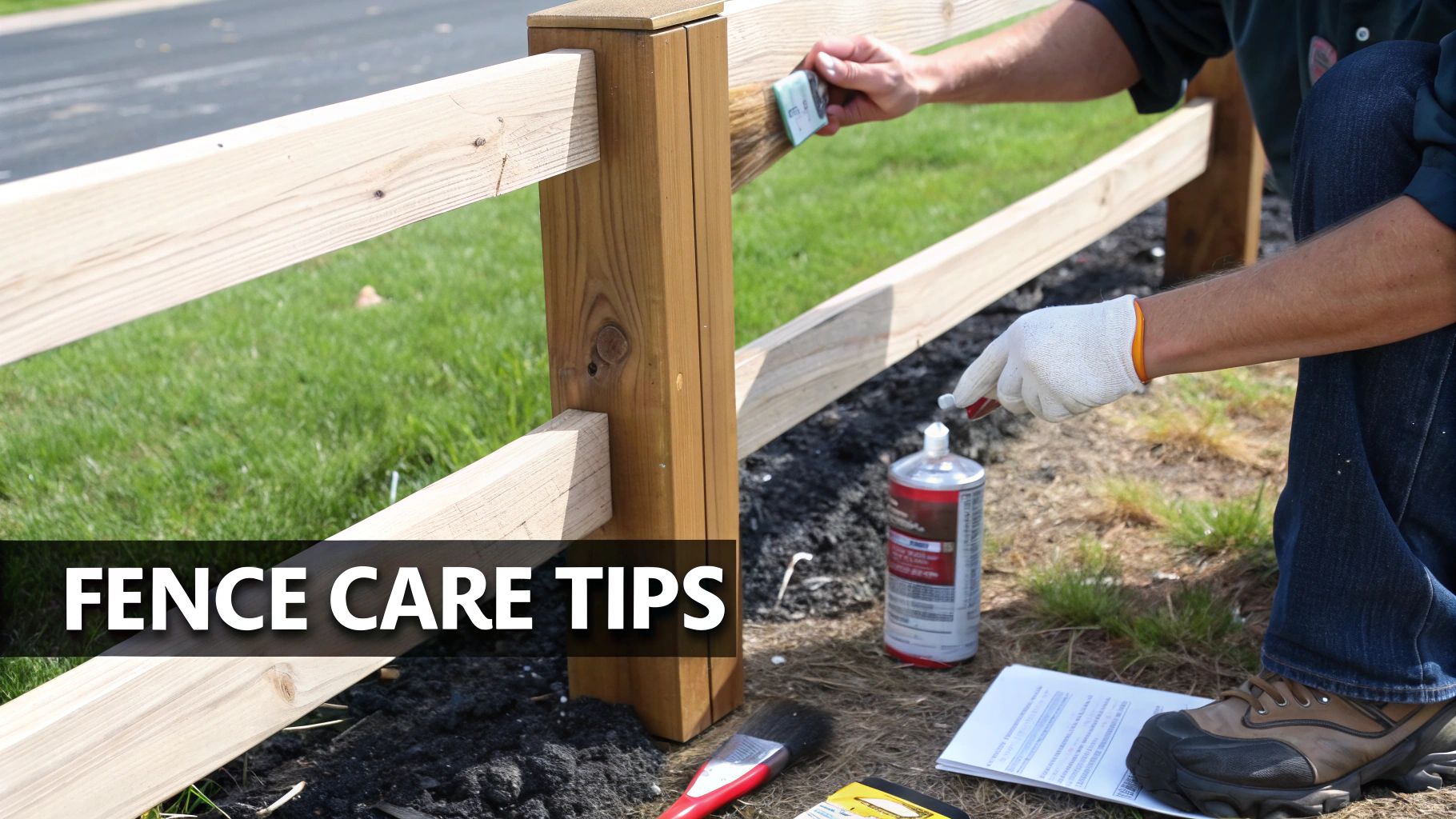
You have two practical options: let nature take its course and embrace the silvering, or apply a finish to preserve the wood's original colour. There’s no right or wrong answer; it’s about the look you want to achieve.
Embrace the Patina: If you love the silvery, weathered aesthetic, leave your fence completely unfinished. Cedar’s natural oils will do the work, protecting it from rot and insects.
Preserve the Colour: To maintain the "just installed" look, apply a protective finish every few years. This acts like sunscreen for the wood, shielding it from the UV rays that cause it to turn grey.
Staining vs. Sealing: What's the Difference?
If you decide to finish your fence, you'll choose between a stain and a sealant. Although often used interchangeably, they perform different tasks.
A sealant is a clear, protective topcoat. It creates a waterproof barrier on the wood's surface that blocks moisture and UV rays while letting the natural grain and colour show through.
A stain, on the other hand, contains pigment that soaks into the wood fibres to change the colour. Most quality stains also include a sealant, so you get both colour and protection in one application. For Ottawa's harsh freeze-thaw cycles, choose a high-quality, oil-based penetrating stain. It’s far less likely to peel and flake than surface-level coatings.
The most effective long-term maintenance strategy is to prevent moisture from soaking into the wood. While a good finish helps water bead off, nothing beats regular check-ups to catch small issues before they become big problems.
A Simple Inspection Routine
Perform a quick walk-around of your fence a couple of times a year to make a significant difference. The best times are in the spring, once the snow has melted, and again in the fall before winter.
Here's your checklist:
Check the Posts: After a windstorm or heavy snow, walk the fence line and give the posts a gentle push. They should feel solid. If you feel any wobble, it could indicate an issue with the footing.
Inspect the Rails: Scan the rails for any significant cracks or splits. While cedar is strong, a falling branch can cause damage. The good news is that replacing a single rail is a quick and inexpensive fix.
Clear Debris: Ensure leaves, soil, and mulch aren't piled against the base of your posts. Constant contact with damp organic material is the primary cause of wood decay.
To ensure your fence stands the test of time, it's crucial to understand how to prevent wood rot. Keeping the base of your posts clear and dry is your best line of defence. With these simple habits, your cedar fence will remain a highlight of your property for years.
Navigating Ottawa and Gatineau Fence Bylaws
Before you dig the first post hole, you must understand the local rules. Starting a fence installation without checking the bylaws in Ottawa or Gatineau can lead to costly mistakes and disputes with neighbours. These regulations aren't just red tape; they exist to ensure safety and maintain fairness between properties.
The good news? A split rail cedar fence is usually a straightforward project from a bylaw perspective. However, knowing the key rules is the first step to a smooth process. While specifics can differ, both cities regulate fence construction similarly.
Key Bylaw Considerations
Focus on two main rules: how high your fence can be and where you can put it. These regulations are designed to keep sightlines clear for traffic and ensure emergency access. For a typical residential property, here’s what you need to know.
Maximum Fence Height: In Ottawa, you can generally build a fence in your back or side yard up to 2.1 metres (7 feet) tall. In the front yard, the limit drops to 1.0 metre (3.3 feet) to ensure an unobstructed view down the street.
Property Line Setbacks: You can typically build your fence directly on your property line. However, it is critical to get a professional survey to confirm the exact location of that line. Building even a few centimetres over can create a significant legal problem.
Corner Lot Rules: If you are on a corner lot, stricter rules apply. Both Ottawa and Gatineau have a "sight triangle" bylaw, which requires you to keep your fence low near the intersection so drivers, cyclists, and pedestrians can see each other clearly.
The most important action you can take is to confirm your property lines. Never guess. A verbal agreement with a neighbour is not legally binding; an official survey is. Investing in one provides certainty and prevents future trouble.
Pool Enclosure Safety Codes
If you plan to use your fence to enclose a swimming pool, a standard split rail design alone is not compliant. Pool enclosure bylaws in both Ottawa and Gatineau are extremely strict to prevent tragic accidents, particularly with children.
A pool fence must be a non-climbable barrier, usually at least 1.5 metres (5 feet) high, with a self-closing, self-latching gate. The open design of a split rail fence does not meet this standard.
The solution is to adapt the design. By attaching a heavy-duty, black vinyl-coated wire mesh to the inside of the cedar frame, you create a secure, code-compliant barrier. This approach preserves the rustic feel of the split rail fence while making it completely safe for a pool area. The mesh is tough, hard to climb, and blends in well, so it doesn't detract from the cedar's natural beauty.
This is where hiring an experienced installer like FenceScape is a practical advantage. We are experts in local bylaws and pool codes, ensuring every detail is compliant from the start. We will handle the planning and any necessary permits, giving you peace of mind that your new fence is not just beautiful, but also perfectly safe and legal.
Answering Your Top Questions About Cedar Split Rail Fences
Even with a simple, classic fence style, it's smart to ask a few questions before committing. Here are straightforward answers to the most common queries we get from homeowners across Ottawa and Gatineau.
The most frequent question is, "How long will it actually last?" With a proper, professional installation, a cedar split rail fence should easily last 15 to 30 years, and sometimes even longer with minimal care. The longevity comes from the cedar itself—its natural oils provide a powerful defence against the rot and insects prevalent in our climate.
So, How Much Work Is It Really?
This leads to the next practical question: maintenance. Do you have to stain or seal it? No, it's not required. You can choose to let your cedar fence age naturally, and it will weather to a lovely, rustic silvery-grey over time without losing its strength.
However, if you want to maintain the warm, fresh-cut cedar colour, apply a good quality stain every few years. This action also adds another layer of protection against the elements. For cleaning, a quick wash once a year with a mild cleaner is all it takes to remove any grime or mildew.
Your most effective maintenance tactic is simple observation. After a big storm or heavy snowfall, walk the fence line. Check if any rails have come loose or if a post is leaning. Catching these small issues early will save you significant hassle later.
Will It Work for My Yard and My Dog?
Pet owners often ask if a split rail fence is enough to contain their dogs. For most larger dogs, a standard 3-rail fence is an effective barrier. If you have a smaller dog or want extra security, adding a welded wire mesh to the inside is a fantastic solution. It closes the gaps without spoiling the open, airy feel of the fence.
And what about hills and uneven ground? This is where split rail fences excel. Their design is incredibly forgiving on sloped or rolling landscapes. The rails and posts interlock in a way that allows the fence to follow the natural contour of your property, creating a seamless look without the major expense of levelling the land first.
Ready to bring the timeless beauty of a cedar split rail fence to your property? The team at FenceScape is here to help, from initial design to final installation. Contact us today for your free, no-obligation estimate and let’s build a fence that lasts. Learn more at https://www.fencescape.ca.
Comments