
Your Above Ground Swimming Pool Fence Guide to Safety and Style

An above ground pool fence is more than a decorative border; it's an active safety system for your home. Treat it as the most critical layer of protection against accidental drownings, especially for households with young children. This guide provides the actionable steps and insights needed to select, install, and maintain a fence that ensures your peace of mind.
Why a Pool Fence Is Your First Line of Defense
View your backyard pool as both a source of fun and a potential hazard that demands a proactive safety plan. An unprotected pool presents a constant risk. To mitigate this, your first step is to install a compliant above-ground swimming pool fence. This creates a deliberate and life-saving barrier between your family and the water.
Accidents happen in seconds. A brief distraction is all it takes for a curious child to encounter a life-threatening situation. Since drowning is silent and fast, prevention is the only effective strategy. Your fence acts as that primary defense, buying you precious time and stopping a tragedy before it can begin.
The Logic Behind Safety Regulations
California's strict pool safety laws are not designed to be a hassle; they are practical, life-saving measures based on preventing common accident scenarios. The state’s Swimming Pool Safety Act mandates a physical obstacle that a small child cannot bypass. Your task is to ensure your fence meets these specific, non-negotiable standards.
Actionable Tip: To comply with California law for any pool with water 18 inches deep or more, you must install a barrier that is at least 60 inches high. When building or inspecting your fence, use a tape measure to confirm the gaps between slats are no more than 4 inches wide, and the space between the bottom rail and the ground is 2 inches or less. These dimensions are designed to prevent a small child from squeezing through or under.
These measurements directly counter the ways a child might attempt to breach a barrier. While a pool fence is key, understanding how various barriers serve as the primary security layer is crucial. For instance, learning about automatic security gates as a first line of defense can offer a broader perspective on total property protection.
Ultimately, your goal isn't just to meet legal requirements, but to engineer a safe environment where your family can relax without worry.
A Real-World Guide to California's Pool Fence Laws
Navigating the legal code for an above-ground pool fence can seem complex. However, California's Swimming Pool Safety Act has one simple, actionable goal: prevent accidents by creating clear safety barriers. Think of these requirements as mandatory safety features for your backyard, similar to seatbelts in a car. The law specifies how a barrier must function to be effective.
Why Fence Height and Spacing Are So Specific
The first practical step is to ensure your fence height is correct. It must be at least 60 inches (five feet) tall, measured from the ground on the outside of the fence. This specific height is the result of extensive research into what physically prevents a small child from climbing over.
Next, focus on the spacing between vertical pickets. Measure to ensure they are no more than four inches apart. This is a critical action item, as it's narrow enough to stop a child from squeezing their body through. This rule eliminates a common and serious hazard.
As you can see below, a properly installed fence is the cornerstone of backyard safety, directly linking legal rules to the well-being of your family.
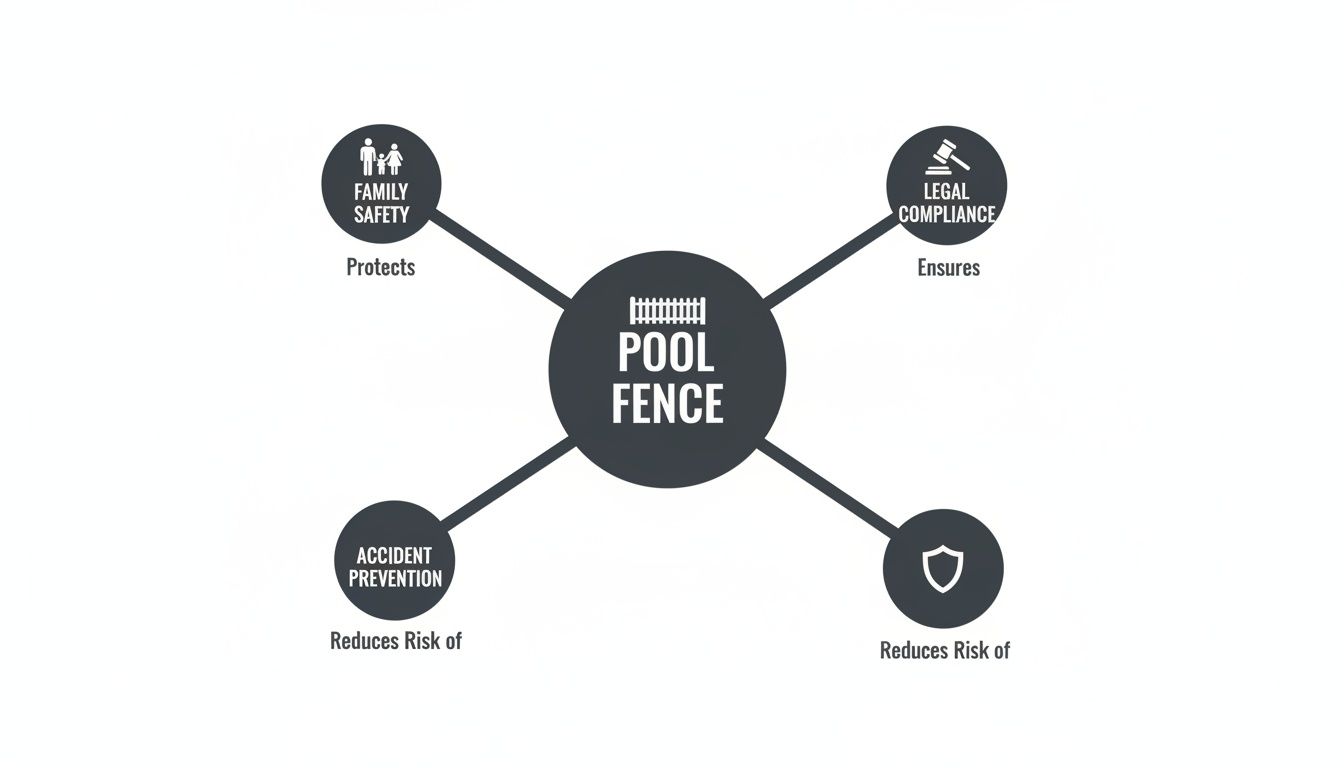
This demonstrates that following the code is not about avoiding a fine; it’s about actively creating a secure space for your family.
The Critical Role of Gates and Latches
The gate is the most critical component of your fence because it's the only moving part. Therefore, your action plan must include strict adherence to gate regulations. All pool gates must be self-closing and self-latching. Test this yourself: from any position, the gate must swing fully shut and lock securely without manual assistance.
The gate must also open outward, away from the pool. This is a crucial safety feature to verify. If a child pushes on an inward-swinging gate, their weight could force it open. An outward-swinging design makes this impossible, adding another essential layer of protection.
Actionable Tip: The gate latch is the final checkpoint. You must place it on the pool side of the gate, at least 54 inches from the ground, or use a certified shielded latch. This placement prevents a child from reaching over or through the gate to open it.
California’s rules for above-ground pools are built around these precise measurements to stop climbing and unauthorized entry. A fence must be at least 60 inches high, with vertical gaps no wider than 4 inches and a gap of no more than 2 inches between the ground and the bottom of the fence. Under the Pool Safety Act, these laws apply to any pool deeper than 18 inches and demand a complete enclosure that isolates the pool from the home. For more detail on material-specific rules, review California's vinyl pool fence regulations.
How It All Works Together
Each rule provides a specific, actionable layer of protection. Here is a quick checklist to ensure your fence is compliant and effective:
Height: Is it at least 60 inches from the outside ground? This stops climbing.
Spacing: Are vertical gaps 4 inches or less? This prevents squeezing through.
Gate Swing: Does it open outward, away from the pool? This prevents a child from pushing it open.
Self-Latching Gate: Does it close and lock automatically from any position? This ensures it's never left open by accident.
Meeting these standards is how you build a system where every component works together to protect the most vulnerable people in your life, giving you true peace of mind.
Choosing the Right Fence Material for Your Backyard
Selecting the right material for your above-ground pool fence requires balancing aesthetics, performance, maintenance, and budget. The best choice is a practical one that delivers solid safety and suits your lifestyle. The material you choose will define your backyard's look and upkeep routine for years.
Let's break down the most popular options with actionable insights on cost, durability, and maintenance to help you make a confident decision.
PVC Vinyl Fencing: The Low-Maintenance Champion
Choose this if: You want a "set it and forget it" solution that looks sharp without constant work. PVC vinyl is the practical choice for busy homeowners. It will not rot, warp, or require painting, freeing up your time for enjoying the pool.
It stands up well to moisture and pool chemicals. While the initial cost may be higher than wood, its longevity and near-zero maintenance offer a better long-term return on investment. If this aligns with your needs, explore the different PVC fence styles and options available.
Classic Wood Fencing: Natural Beauty and Versatility
Choose this if: You prioritize a natural aesthetic and want the flexibility to customize the color. Wood blends seamlessly into any landscape but requires a commitment to upkeep.
The key action with wood is proactive maintenance. It is vulnerable to rot and insects, especially in a damp pool environment. You must commit to a regular schedule of sealing or staining to protect your investment. While often affordable to install, be sure to factor the ongoing time and cost of maintenance into your decision.
Ornamental Iron: A Statement of Elegance and Strength
Choose this if: Your top priorities are maximum security and a high-end, classic look. Ornamental iron provides a formidable barrier without obstructing your view. Its strength is unmatched, offering a sense of permanence and elegance.
To maintain it, your primary task is rust prevention. Schedule periodic checks for chips or scratches in the protective coating and touch them up immediately to prevent corrosion. The cost is at the higher end, but it is a worthwhile investment for those seeking maximum durability and a premium aesthetic.
Modern Mesh Fencing: Safety-First Simplicity
Choose this if: Your primary goal is accident prevention on a budget. Removable mesh fencing is a highly practical and popular choice designed specifically for pool safety. The mesh fabric is difficult for children to climb, and its transparency provides a clear line of sight to the pool.
While it lacks the decorative flair of other materials, its core function is preventing accidents. Mesh systems are often more affordable and have the unique advantage of being removable for events or off-season storage. This makes it a go-to choice for families with young children.
To make an informed decision, use this chart to compare your options side-by-side.
Comparison of Above Ground Pool Fence Materials
This table provides an actionable breakdown of the key features, helping you weigh the pros and cons based on your specific needs and budget.
Material | Average Cost (Per Linear Foot) | Maintenance Level | Durability | Aesthetic Appeal |
|---|---|---|---|---|
PVC Vinyl | Moderate to High | Very Low | Excellent | Modern, Clean |
Wood | Low to Moderate | High | Good (with upkeep) | Classic, Natural |
Ornamental Iron | High | Low to Moderate | Excellent | Elegant, Secure |
Mesh | Low to Moderate | Very Low | Good | Functional, Minimalist |
Ultimately, the best material is the one that meets your practical needs for safety, style, maintenance, and budget. Take the time to compare these options to ensure you get a fence you'll be happy with for many summers to come.
DIY Installation vs. Hiring a Professional
After selecting your fence material, you face a critical decision: should you install it yourself or hire a professional? This choice is about more than just cost; for a pool fence, it's about ensuring absolute safety and compliance. Let's walk through the practical implications of each path so you can make a confident choice.
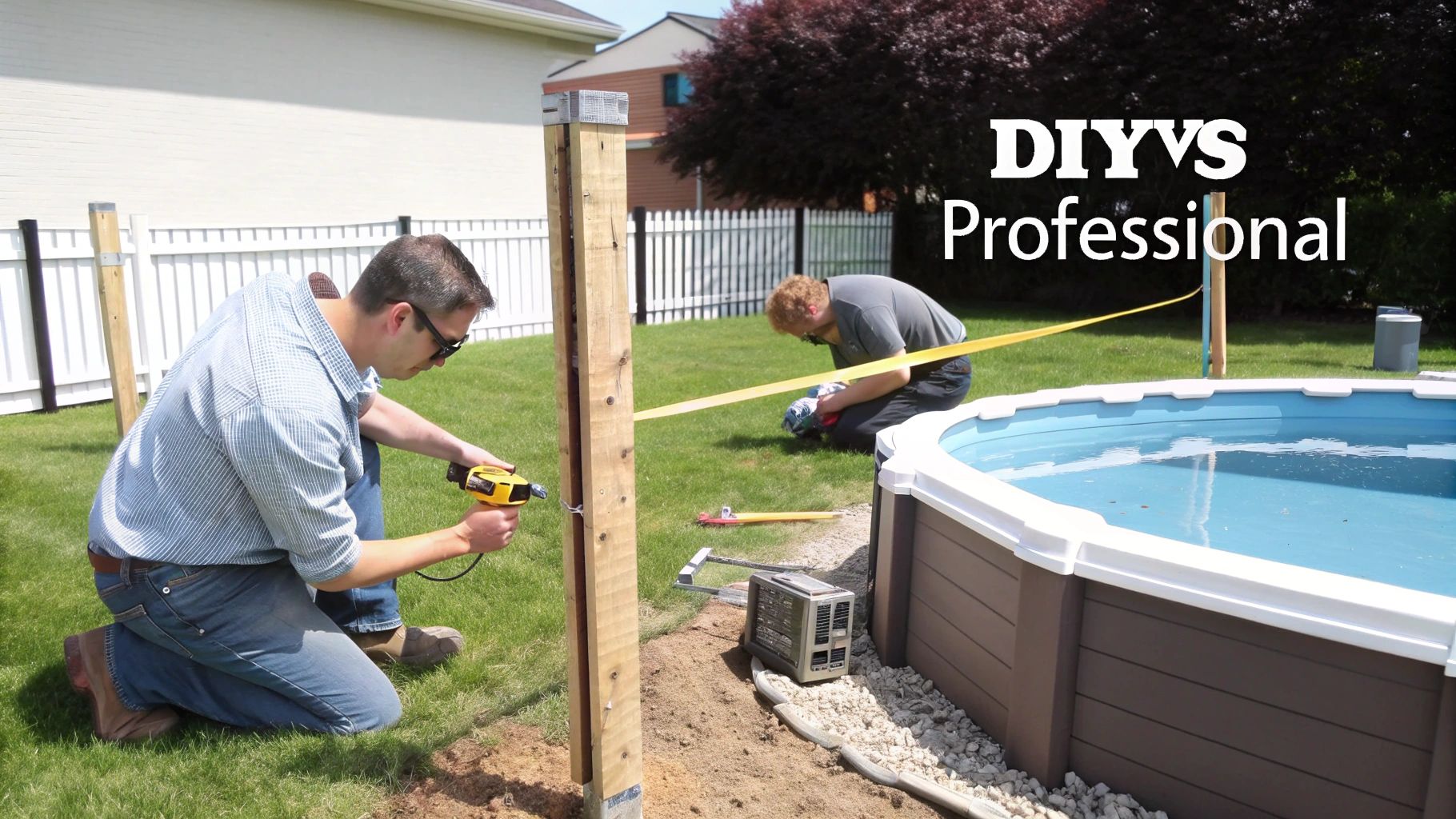
The Appeal and Risks of DIY Installation
The primary motivation for a DIY installation is cost savings on labor. If you are skilled with tools like a post-hole digger and a level, you can find the project rewarding.
However, a pool fence is a life-saving device where small errors have significant consequences. A gate that doesn't latch perfectly or a post that isn't set securely can lead to a failed inspection or, far worse, a safety failure.
Before starting a DIY project, honestly assess if you can overcome these common hurdles:
Mastering Local Codes: Can you confidently interpret and apply your local by-laws for latch height, picket spacing, and gate swing? A minor error could force a complete re-do.
Executing a Secure Installation: Do you have the skills and tools to dig proper footings and set every post perfectly plumb and stable? An unstable fence is an ineffective one.
Handling Unexpected Problems: What is your plan for hitting a buried utility line, dealing with rocky soil, or running out of a crucial piece of hardware on a Sunday?
A heartbreaking statistic from the U.S. Consumer Product Safety Commission highlights that 71% of drownings for children under 15 happen at a home pool. A secure, properly installed fence is your most critical line of defence.
The Value of Professional Installation
Hiring a professional team like FenceScape is an investment in certainty and peace of mind. You are paying for expertise, accountability, and a guarantee that the job will be done correctly the first time. Professionals know the local codes, carry the right insurance, and have the tools to handle any job site challenge.
A professional installation ensures your fence will meet every safety standard. They manage the permit process, guarantee their work, and provide warranties covering materials and labor. While the upfront cost is higher, it buys you the confidence that your pool area is genuinely safe. If you're considering premium materials, a professionally installed ornamental iron fence demonstrates the quality and security you get with an expert team.
Ultimately, your decision should weigh your budget against your skill, time, and the acceptable level of risk. For a project this critical, the peace of mind a professional provides is often the best investment you can make.
Essential Maintenance for Long-Term Pool Safety
Treat your above ground pool fence as a silent lifeguard that requires regular check-ups to remain effective. The key is to turn maintenance from a chore into a simple, life-saving habit. This ensures your fence provides reliable protection year after year.
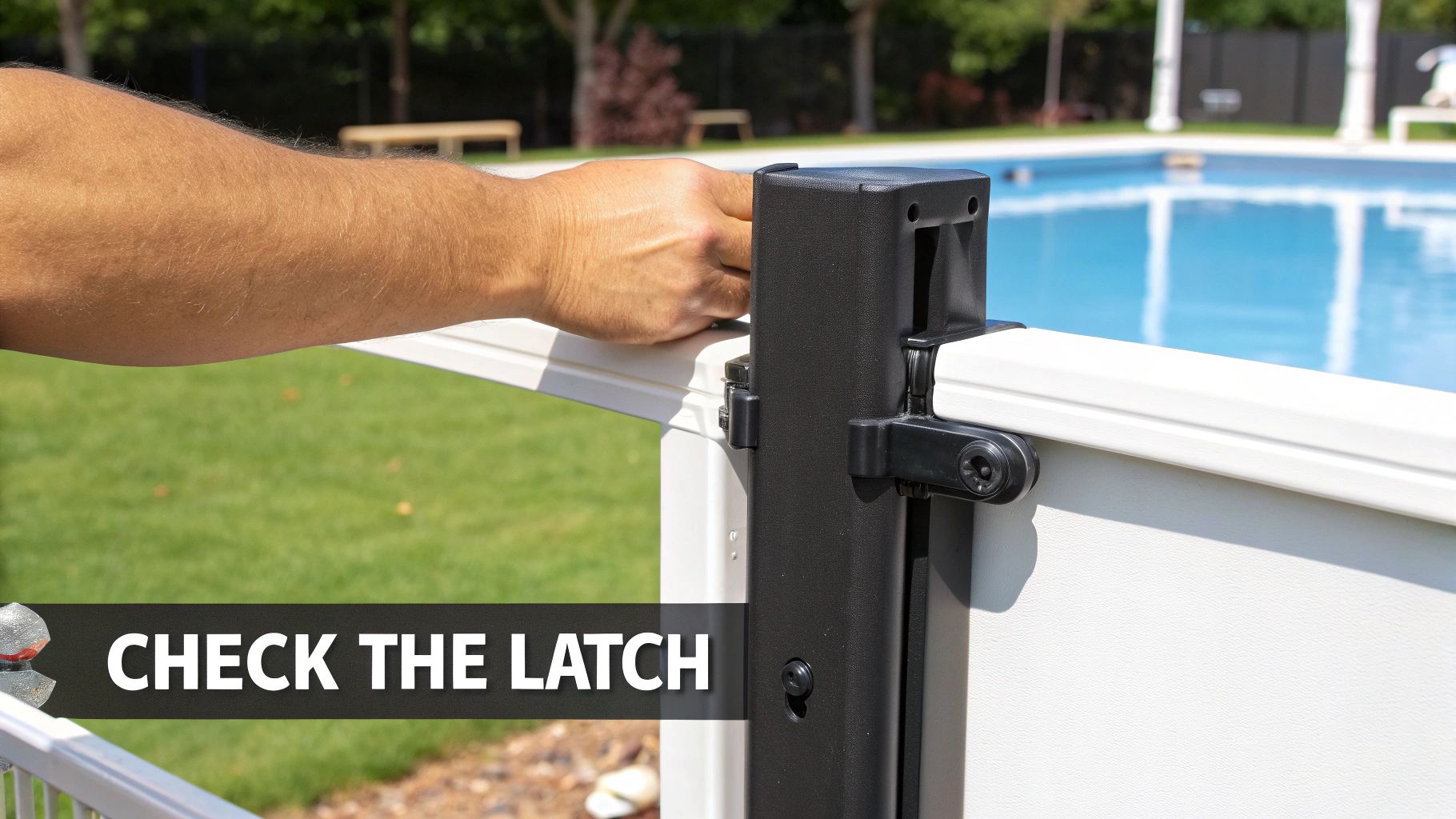
A quick visual scan each week during pool season is all it takes to catch small issues before they become serious safety risks. This simple routine provides invaluable peace of mind, confirming your first line of defense is solid and secure.
Your Seasonal Maintenance Checklist
Use this structured checklist to stay ahead of wear and tear, guaranteeing your fence's longevity and safety.
Wood Fences: Action item: Look for rot or insect damage at the base of posts and along bottom rails. Check for splintering wood or loose boards and repair or replace them immediately.
Vinyl (PVC) Fences: Action item: Inspect for cracks, especially after winter. Firmly shake the posts to ensure they are anchored securely. Check that panels are not warped.
Ornamental Iron Fences: Action item: Scan for any signs of rust, focusing on welds and hardware. If you find chipped paint, touch it up immediately to prevent corrosion.
Glass Panel Fences: Action item: Clean panels regularly and inspect for chips or cracks. To ensure proper care, learn about the needs of different types of glass railings and fences.
No matter the material, your top priority is the gate and latch. These moving parts experience the most use and are the most common points of failure. Make inspecting them your number one maintenance task.
The Life-Saving Gate Swing Test
Your gate is the most important component to maintain. If it fails, the entire fence is compromised. Make it a non-negotiable habit to perform a simple "swing test" at least once a month.
Open the gate to various positions—from a few inches to fully open—and release it. It must swing completely shut and latch securely every single time on its own. If it drags, hesitates, or fails to click shut, adjust the hinges or latch immediately.
A secure fence is just one part of a comprehensive safety plan. Follow these pool maintenance tips to ensure safety and compliance to keep your entire pool area safe for everyone.
Your Top Questions About Above-Ground Pool Fences
Planning your pool fence involves getting into the details. Answering these common questions will help you ensure your backyard is not just fun, but also safe and fully compliant with local rules. Use this section as your go-to guide to navigate common uncertainties and avoid costly mistakes.
Can My Pool's Wall Act as a Fence?
The short answer is no. This is a common misconception that can lead to a failed inspection.
Actionable Insight: In California, a pool barrier must be at least 60 inches high from the outside ground level and non-climbable. Most above-ground pool walls are not this tall. Furthermore, pool walls can have ladders, filters, or other features that can be used as handholds for climbing. The legally required and safest solution is a separate, non-climbable fence that completely encloses the pool area.
What Is the Most Affordable Compliant Fence?
For budget-conscious homeowners, mesh pool fencing is typically the most affordable option that meets all safety requirements. Its design is difficult for children to climb, and it provides a clear view of the pool.
Actionable Insight: When choosing a mesh fence, verify that it is specifically rated for pool safety and that its gate system is self-closing and self-latching per local code. Chain link is another low-cost option, but you will likely need to add privacy slats to reduce the mesh size to meet non-climbable standards, adding to the final cost and effort.
The statistics are sobering: research shows 71% of drowning deaths for children under 15 happen at a private home. A proper fence, no matter the material, is the single most important thing you can do to prevent a tragedy in your own backyard.
How Often Should I Inspect My Gate?
The gate is the most failure-prone part of your fence system.
Actionable Insight: Develop a routine. Give the gate a quick visual check every time you use the pool. Perform a thorough "swing test" once a month: open it to various degrees and ensure it swings fully shut and latches securely every time. At the start and end of each pool season, conduct a detailed inspection of all hardware, hinges, and the fence itself to catch wear and tear before it becomes a safety issue.
Do I Need a Permit for My Pool Fence?
Yes, in almost every jurisdiction in California, a building permit is required to install a pool fence.
Actionable Insight: Treat the permit process as a critical safety check, not red tape. It ensures your plan and final installation meet the strict state and local codes designed to save lives. If you hire a professional, they will handle the permit process. If you are doing a DIY installation, your first step—before digging—is to contact your local building department to secure the necessary permits. Skipping this step can lead to fines and a demolition order.
Ready to secure your pool with a fence that gives you total peace of mind? The team at FenceScape provides a complete service, handling everything from the design and permits to a perfect installation. Explore our fencing solutions and get your free estimate today.
Comments