
A Homeowner's Guide to Chain Link Fence Panels

If you need a straightforward way to set up a strong, secure barrier, chain link fence panels are an excellent choice. Think of them as pre-built, rigid sections of fencing that combine the classic durability of chain link with modern convenience. They are a practical solution for everything from backyard enclosures to commercial job sites, offering a direct alternative to installing a fence from a traditional roll.
Why Choose Chain Link Fence Panels?
When you hear "chain link," you might picture old, industrial-style fencing. But today's chain link fence panels are a significant upgrade, especially for property owners in Ottawa–Gatineau. Unlike the traditional method where mesh is stretched between posts, these panels are fully assembled, rigid structures. This design choice gives you immediate strength and a perfectly uniform look right out of the gate.
This pre-built structure is what makes them so practical. To take action, assess your property's needs: if you require immediate, uniform strength against physical pressure or harsh weather like heavy snow and wind, panels are your best bet. Because they're ready to install, the entire process is streamlined, whether you're putting up a permanent fence around your property or a temporary one around a construction site.
A Smart Blend of Durability and Value
The key benefit of chain link fence panels is how they balance longevity with cost. These aren't flimsy, temporary fixes; the materials are built to last for decades, giving you a solid return on your investment. Modern panels are specifically treated to handle Ottawa’s seasons, with coatings that fend off rust from rain, sleet, and even road salt.
To make an informed choice, consider these two main options:
Galvanized Panels: These are dipped in zinc, creating a tough, protective barrier against moisture and corrosion. Choose this for a cost-effective, long-lasting solution.
Vinyl-Coated Panels (PVC): This adds a coloured vinyl layer over the galvanized steel. Opt for this if you need superior rust protection and a more polished, aesthetic look.
This focus on durability is a critical purchasing factor. Steel-reinforced chain link is known for its 20–30 year life expectancy, which is why it still makes up about 25% of new residential fence installations. Its popularity isn't fading; it's a proven performer. You can dig deeper into fencing market trends and data if you're curious.
Ultimately, choosing chain link fence panels means you're getting a solution engineered for performance without a premium price tag. It's that blend of strength, all-weather resilience, and affordability that makes them such a reliable choice for securing your property.
Decoding the Anatomy of a Fence Panel
Before you choose a fence panel, you need to know what you’re buying. A chain link panel is a complete system where every part has a job. Understanding the components allows you to read a product description and know exactly how it will perform for your specific needs.
Focus on these three key terms: gauge, mesh size, and framework. They work together to define the panel's strength, its lifespan, and its suitability for your project, whether it's for a backyard garden or a high-security commercial lot.
This flowchart illustrates how the right components translate into tangible benefits for you.
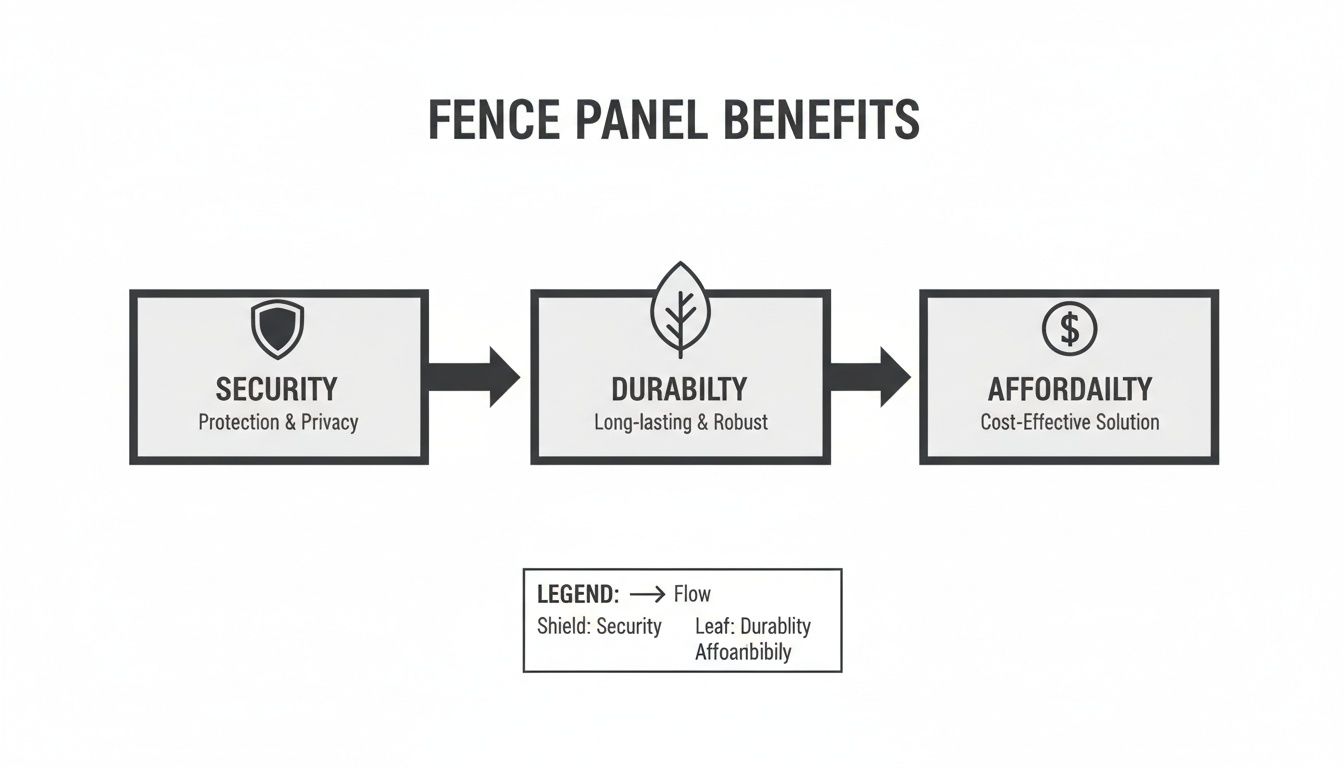
As you can see, the physical attributes of the panel directly lead to the security, durability, and affordability that property owners are looking for.
Understanding Wire Gauge and Strength
Let's start with the most important decision factor: the gauge. This is the thickness of the steel wire in the mesh. Remember this simple rule: a lower gauge number means a thicker, stronger wire. This detail has the biggest impact on your fence's toughness.
For a residential boundary, a lighter 11.5-gauge wire is often sufficient. However, if you need serious protection for a commercial site or to contain a large, strong pet, select a heavy-duty 9-gauge wire. It is significantly harder to cut, bend, or damage.
When you choose a lower gauge, you're investing in a more formidable barrier. The thicker wire not only resists impact better but also contributes significantly to the fence's overall lifespan, ensuring it stands strong for years.
This seemingly small difference in thickness is often what separates a fence that just outlines a space from one that truly secures it.
Mesh Size and Framework: The Supporting Cast
Next, evaluate the mesh size. This is the dimension of the diamond-shaped holes. For enhanced security, choose a smaller mesh, like 1.25 inches, which creates a tight pattern that is much harder to climb and adds rigidity. For general use, the standard 2-inch mesh provides a great balance of security and visibility for most homes and businesses.
Finally, inspect the framework—the vertical posts and horizontal rails that hold the panel together. This is the skeleton of your fence. The posts are the anchor, and their correct installation is non-negotiable. For actionable steps on this, our guide on how deep to set fence posts in Ottawa–Gatineau is a must-read. A solid framework ensures your panels stay straight and secure, especially through the harsh freeze-thaw cycles we get here in Ottawa.
Real-World Fence Panel Applications in Ottawa
Now that you know the components, let’s apply that knowledge. You’ve seen chain link fence panels all over Ottawa and Gatineau. Thinking about how they’re used in real-life scenarios is the best way to determine if they are the right fit for your property.
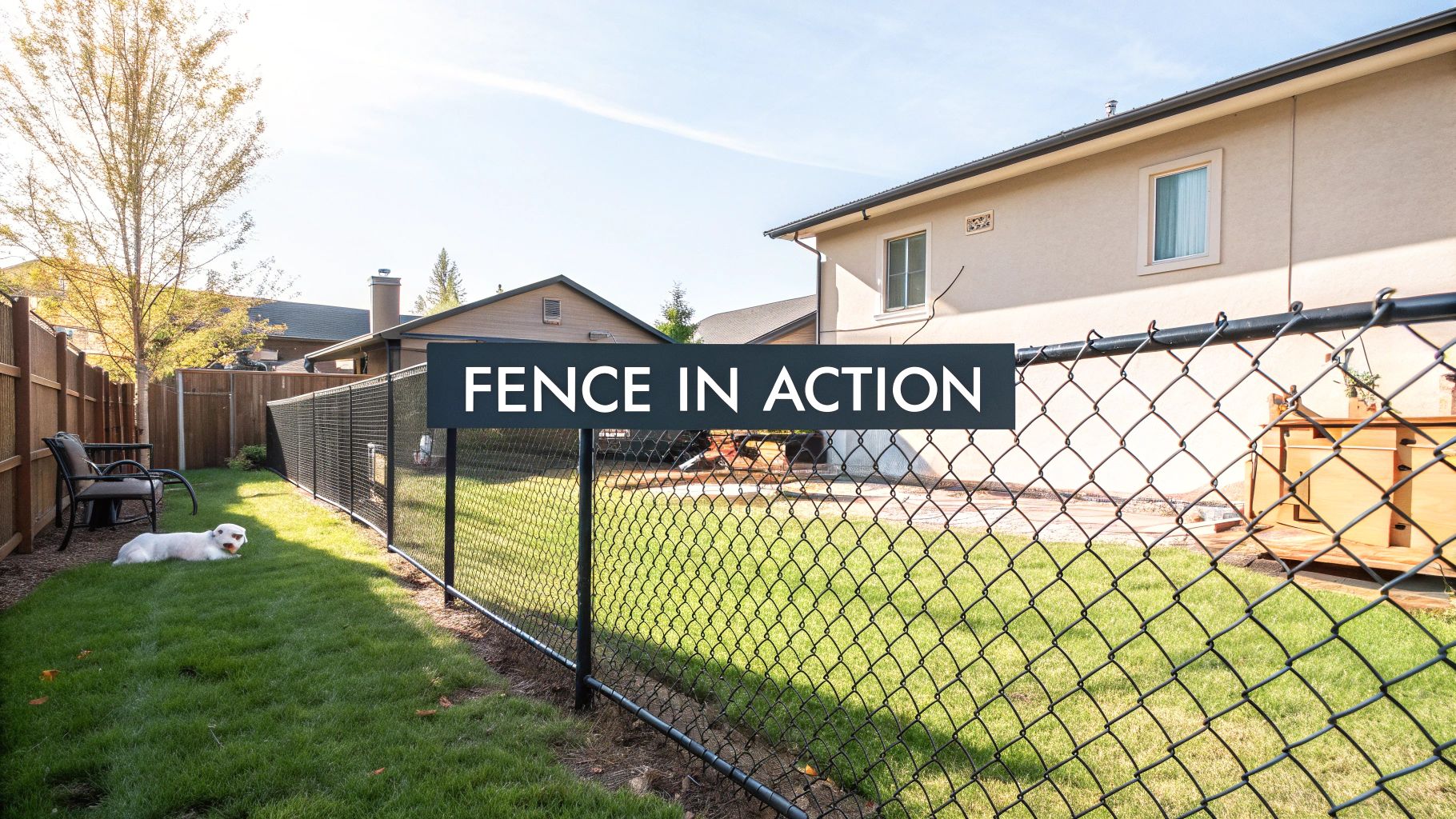
For residential use, the primary goals are safety and security. Panels are a practical tool for creating sturdy enclosures that protect your family and pets without sacrificing an open feel.
Backyard Boundaries: To create a secure space for kids or pets, install a 4- to 5-foot-high panel fence. The visibility allows you to keep an eye on activities while ensuring they can't wander into the street.
Pool Enclosures: To comply with Ottawa's strict pool bylaws, you need a non-climbable fence with a self-latching gate. Chain link panels are a cost-effective way to meet these safety codes while keeping your pool area feeling open.
Garden Protection: If you're tired of deer and rabbits eating your plants, a simple panel fence is an effective deterrent. Choose a height that your local pests cannot jump over.
The key action here is to match the panel's features to your goal. You get a strong physical barrier that meets safety requirements without making your yard feel like a fortress. It defines the space while keeping it connected to its surroundings.
Commercial and Temporary Fencing Solutions
In the commercial world, your priorities should shift to heavy-duty security, crowd control, and asset protection. The tough, modular design of chain link panels makes them ideal for these demanding situations. Use them to secure inventory lots, parking areas, and utility equipment.
Their most common commercial application is temporary fencing. For a construction site, deploy panels to keep the public safely away from hazards. For events at places like Lansdowne Park, use them to create clear pathways and manage crowd flow effectively.
As you plan your project, consider integrating fence line landscaping ideas to soften the appearance and blend the fence into your yard. Whether for a permanent home boundary or a temporary commercial project, these panels offer a practical and reliable fencing solution.
Navigating Local Ottawa and Gatineau Fencing Bylaws
Before starting any work, your first action must be to understand local regulations. Installing chain link fence panels requires you to follow the law to avoid fines, disputes, or a tear-down order. Skipping this step is a costly mistake.
Both the City of Ottawa and the Ville de Gatineau have specific fence bylaws that can vary by neighbourhood. These rules exist for public safety and community aesthetics. Familiarize yourself with them at the start to ensure your project goes smoothly.
Key Regulations to Know
While you must check the specific bylaws for your address, here are the core regulations you need to act on. These rules are designed to prevent safety hazards and property line disputes.
Your project checklist must include confirming these details:
Maximum Fence Height: For most residential backyards, the height limit is 2.1 metres (about 7 feet). In front yards, it's much stricter, usually capped at 1 metre (3.3 feet). Measure your planned height to ensure compliance.
Property Line Setbacks: You must know exactly where your property line is. The only way to be certain is to get a property survey. Do not guess. Building even a few inches onto a neighbour's land can lead to legal action.
Pool Enclosure Codes: If the fence is for a pool, specific rules apply. The fence must be a minimum height (typically 1.5 metres or 5 feet) and must have self-closing, self-latching gates. Verify these requirements before purchasing materials.
Following these rules isn’t just about avoiding fines. It’s about building a fence that adds value and security without creating future problems. A compliant fence is a smart, stress-free investment.
Why Professional Guidance Matters
Navigating municipal websites and legal documents can be frustrating. The most effective action you can take is to consult an experienced local contractor like FenceScape. Professionals know the bylaws for Ottawa and Gatineau inside and out, including any recent updates.
When you work with an expert, your project is planned correctly from day one. They will help you secure the right permits and ensure every detail—from fence height to gate latch type—is fully compliant. This expertise saves you time, prevents costly mistakes, and gives you peace of mind that your new fence is built right and built to last.
Planning Your Fence Installation Budget
Now, let's talk numbers. The first actionable step in any project is creating a realistic budget for your new fence. The final price for installing chain link fence panels is a combination of materials, labour, and any unique property challenges. Understanding these components is the best way to plan your spending and avoid surprises.
Your materials will be the largest part of your budget. Every choice you make, from the fence height to the wire thickness, directly impacts the bottom line. A taller 6-foot panel will cost more than a 4-foot one. Similarly, a heavy-duty 9-gauge wire requires a larger investment than a lighter 11.5-gauge option.
Breaking Down Material and Labour Costs
The protective coating you choose also affects the price. Standard galvanized panels are the most budget-friendly option and provide good rust prevention. If you upgrade to vinyl-coated panels, the price will be higher, but you are paying for enhanced durability and a cleaner, more modern aesthetic.
To build a complete budget, you must also factor in these items:
Gate Installation: A simple walk-through gate is cheaper than a wide double-drive gate designed for vehicles.
Land Preparation: If your yard is sloped or needs clearing, budget for additional labour costs to prepare the site for a proper installation.
Old Fence Removal: If you have an existing fence, include the cost of demolition and disposal in your labour estimate.
When you're putting together a budget for your chain link fence, it helps to think about all the different parts that add up to the final cost. It's a lot like understanding garage door cost, where the total investment depends on a variety of components and labour.
Realistic Cost Estimates for Ottawa-Gatineau
So, what should you budget for in the Ottawa-Gatineau region? As a baseline, expect a professionally installed chain link fence to cost between $30 to $60 per linear foot. A standard galvanized fence will be at the lower end, while a premium, black vinyl-coated fence with a thicker gauge wire will be at the higher end. For a much more detailed breakdown, use our Canada-specific cost guide for chain link fences to refine your estimate.
Costs also vary by location. For example, in Sacramento, California, a basic fence might cost $25 per linear foot, but that can jump to $55 for a fence with privacy slats. For a typical 200-foot property, that's a range of $5,000 to $11,000. This demonstrates why it is critical to get a quote based on local labour and material costs.
DIY Installation vs. Hiring a Professional
You've chosen your fence panels. Now you must decide: will you install it yourself or hire a professional? This is a critical decision point based on your skills, time, and budget. An honest assessment now will save you significant frustration later.
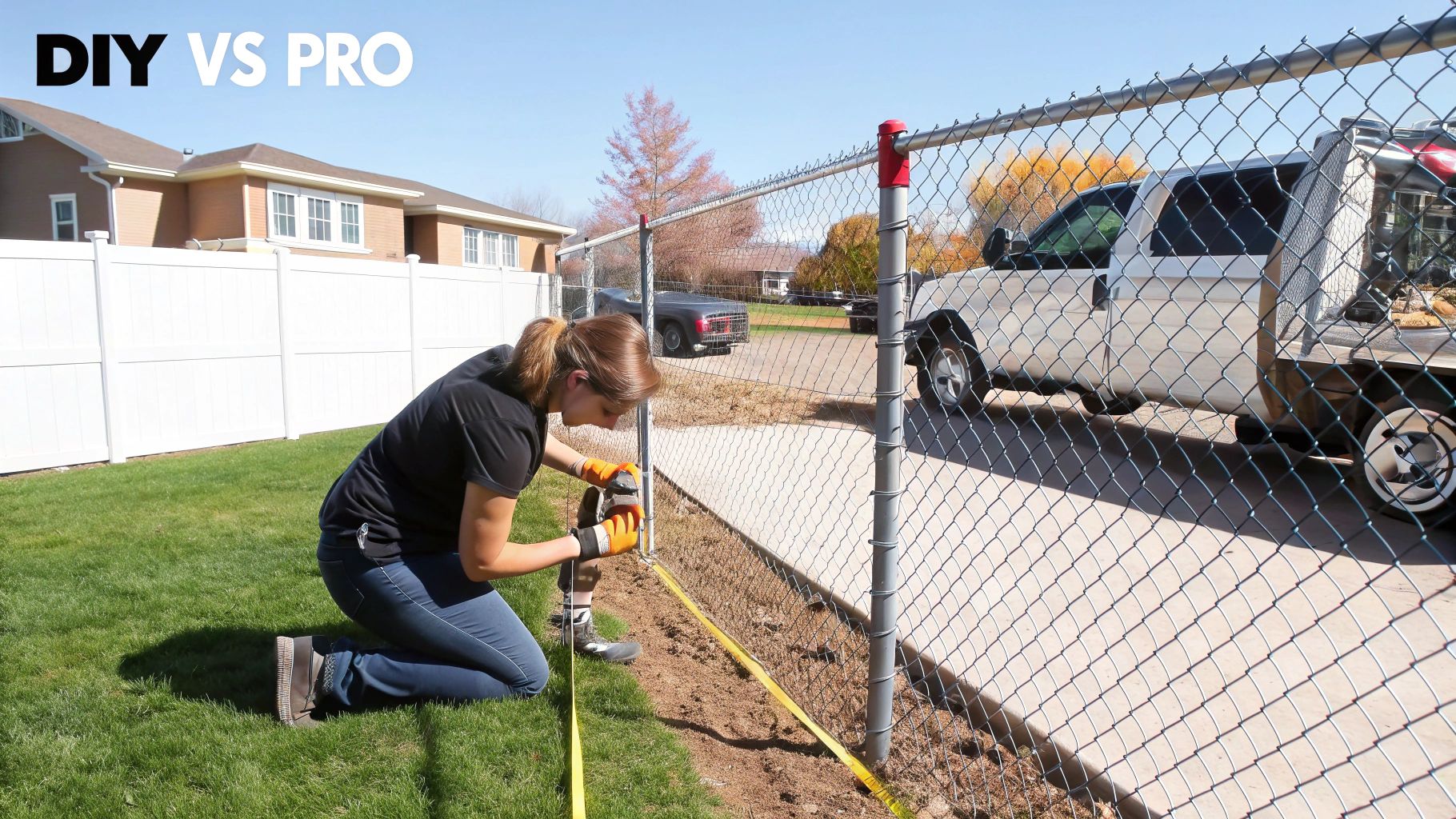
A DIY installation can be rewarding, offering pride in your work and savings on labour costs. However, be realistic: this is a physically demanding job that requires precision and the right equipment.
If you choose DIY, you are the project manager. You are responsible for measuring property lines, renting tools like a post-hole digger, and handling a fence stretcher. The most critical step in our region is digging post holes below the frost line—a depth of 48 inches in the Ottawa area. Failure to do this will result in frost heave, ruining your fence.
The Case for the Do-It-Yourself Approach
If you are handy, confident, and have a free weekend (or two), a DIY installation is achievable. Success depends on meticulous planning and understanding the full scope of the work before you begin.
Here is an actionable checklist for a DIY installation:
Property Survey: Get a survey to know exactly where your property lines are.
Utility Line Marking: Before digging, you must contact Ontario One Call or Info-Excavation in Quebec. This is a legal requirement.
Material Calculation: Accurately calculate the number of panels, posts, and fittings needed to avoid mid-project shortages.
Post Installation: This is the foundation. You must dig deep, set posts in concrete, and ensure each one is perfectly plumb and level.
For those ready for the challenge, our detailed guide on how to complete a chain link fence installation provides step-by-step instructions.
The DIY path gives you total control over the project's timeline and budget. While it demands significant physical effort, the satisfaction of building your own fence is a major motivator for many homeowners.
Why Hiring a Professional Pays Off
On the other hand, hiring a professional crew like FenceScape provides immediate peace of mind. An experienced team eliminates guesswork, performs the heavy labour, and delivers a flawless fence much faster than you could on your own.
Professionals bring a level of precision that comes from experience. They understand Ottawa–Gatineau's unique soil conditions, ensuring your posts are set securely. They work efficiently, often completing a residential installation in one or two days.
The most valuable benefit, however, is the warranty. A reputable company stands behind its work. If a post leans or a gate sags, you simply make a call. That guarantee of quality and long-term support is often worth the investment.
Your Top Questions About Chain Link Panels Answered
Making a final decision often comes down to a few last questions. To help you move forward, here are direct answers to the most common queries we hear from homeowners in Ottawa and Gatineau.
Use this section to resolve any final uncertainties about whether chain link panels are the right choice for you.
Can I Make My Chain Link Fence More Private?
Yes, you can. The most direct action is to install privacy slats. These are vinyl strips you weave into the mesh. They come in various colours, allowing you to match your home while blocking sightlines from the street.
For a natural solution, plant a hedge or climbing vines along the fence line. This takes time to mature but creates a beautiful, living privacy screen that softens the look of the steel.
How Long Will a Chain Link Fence Last in Ottawa's Climate?
Given our weather, durability is a primary concern. You can expect a properly installed, high-quality galvanized chain link fence to last 20 to 30 years. If you upgrade to a vinyl-coated version, you add another layer of protection against moisture and road salt, extending its lifespan even further.
Here is the most critical action for longevity: ensure the posts are installed correctly. In our climate, setting posts deep below the frost line is non-negotiable. It is the only way to prevent winter frost heave from damaging your fence line over time. A solid foundation is everything.
It’s also useful to know how location impacts price. For example, in Southern California, installation can cost $25–$30 per linear foot, making a 150-foot fence cost up to $4,500. You can see more on these regional fencing cost factors. This highlights why your best action is to get a specific quote for your project right here in Ottawa.
Ready to build a secure, long-lasting boundary for your property? The team at FenceScape is here to guide you with expert advice and professional installation using materials made for our climate. Request your free, no-obligation estimate today!
Comments