
A Homeowner's Guide to Wooden Fences Horizontal Designs

To achieve a clean, modern look that makes your outdoor space feel bigger and more stylish, a horizontal wooden fence is your best choice. The long, linear design makes a real architectural statement, giving your property an instant facelift that traditional vertical fences just can't match. This guide provides the actionable insights you need to choose, build, and maintain the perfect horizontal fence.
Why Horizontal Fences Are Redefining Ottawa Landscapes
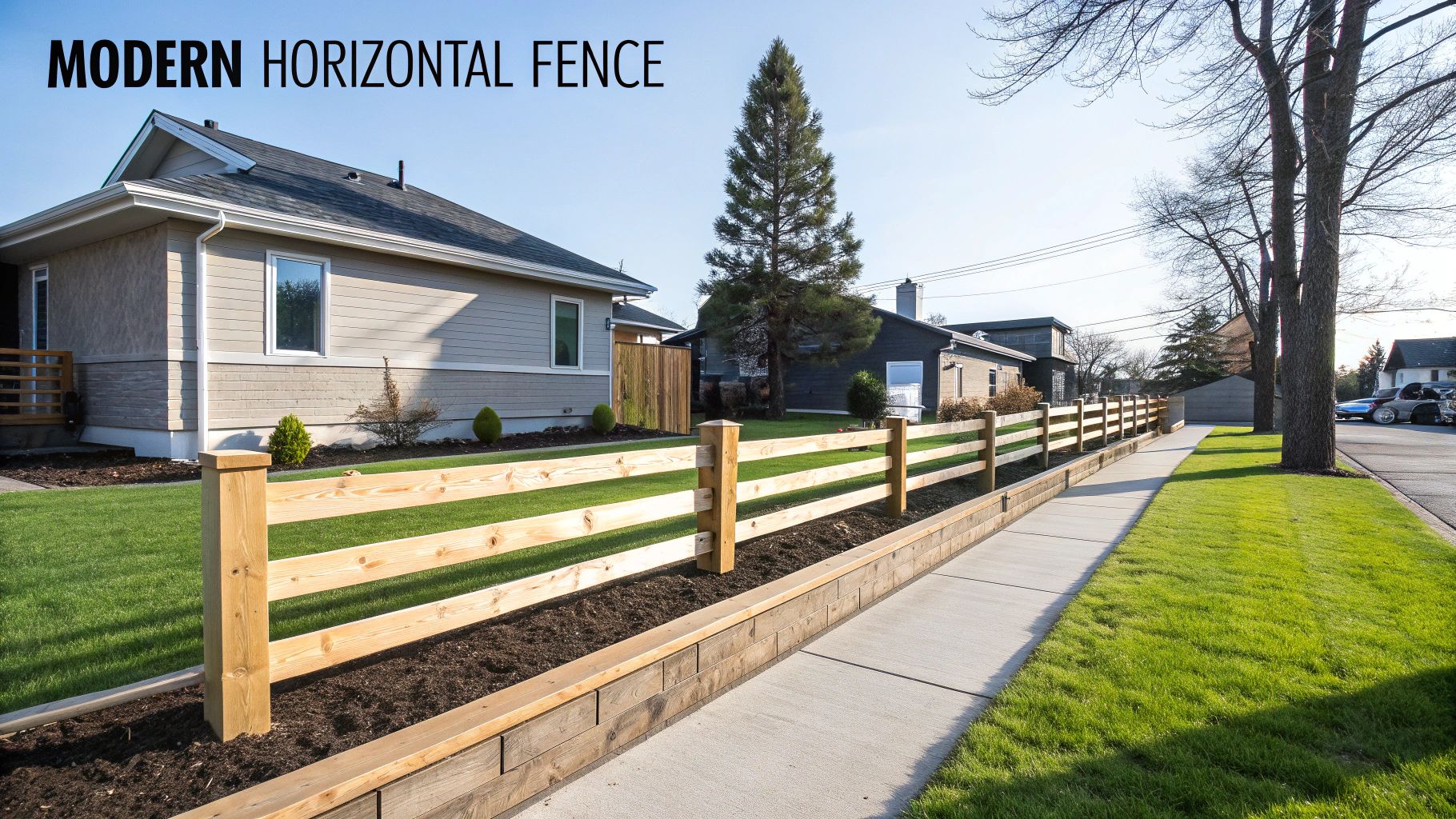
For years, the classic vertical picket fence was the default choice for marking property lines in Ottawa. While functional, it often acted as a simple barrier rather than a design element. The current trend shifts towards wooden fences horizontal designs to make a bold, stylish statement and actively enhance your landscape.
This isn't just about aesthetics; it's a strategic design choice. While vertical fences draw the eyes upward and can make a yard feel confined, horizontal lines create an illusion of width and depth.
You can use a classic interior design trick in your backyard: horizontal stripes make a room feel more spacious, and the same principle applies to your property. The long, clean lines of a horizontal fence guide the eye along the landscape, making your yard seem wider and more expansive. To implement this, ensure your fence lines are uninterrupted and run parallel to the ground to maximize the visual effect.
The Appeal of Modern Lines and Enhanced Curb Appeal
The core appeal of a horizontal fence is its sophisticated simplicity. It complements contemporary, mid-century modern, and transitional home styles by serving as a sleek backdrop for your landscaping. This minimalist approach adds significant curb appeal without being overwhelming.
Here are the key benefits you can expect:
Architectural Integration: The clean lines blend with modern home designs, creating a cohesive look from the curb to the backyard.
Visual Expansion: By drawing the eye outward, horizontal boards make your outdoor living space feel larger—a major benefit for any lot size.
A Backdrop for Nature: The simple, linear pattern provides an understated background that makes your greenery and landscape features the main attraction.
Actionable Insight: Treat your horizontal fence as a foundational piece of your landscape architecture. Use it to frame your property, direct a visitor's gaze, and establish a sophisticated tone before anyone steps through the gate.
A professionally installed horizontal fence is a direct investment in your property’s value and aesthetic. For more ideas, explore our guide to the top 10 styles of wood fences for Ottawa-Gatineau homes. Next, let's translate this vision into a strong, long-lasting reality.
Balancing Privacy and Style with Horizontal Boards
Building a horizontal wooden fence requires you to decide on the right balance between style and privacy. The gap between your boards is the primary control for adjusting both seclusion and the overall aesthetic of your fence. Think of it as adjusting window blinds—you have complete control over light, airflow, and visibility.
First, define your goal. Are you building a private backyard sanctuary? Or do you need a more decorative boundary that allows breeze and sunlight to pass through? Your answer will dictate every design decision, from board spacing to finishing touches. You can create a full-privacy wall for an urban oasis or an airy, open fence that complements a modern home.
Mastering Privacy with Board Spacing
The distance between horizontal boards is the most critical factor for privacy. A small adjustment in spacing can completely transform the look and function of your fence.
Here are your practical options:
Full Privacy (No Gaps): To achieve maximum seclusion, install boards edge-to-edge to create a solid wall. This is the ideal solution for properties close to neighbours or busy streets.
Shadowbox Style: For a compromise, install boards on alternating sides of the fence rails. This design appears solid when viewed head-on but allows for airflow and angled visibility.
Spaced Boards (Semi-Privacy): This is the most popular style for wooden fences horizontal. Leave intentional gaps—typically from a quarter-inch to a full inch—to achieve a contemporary, semi-private feel. This design provides a sense of enclosure while allowing sunlight to filter through.
When considering seclusion, homeowners often weigh various privacy solutions. A horizontal fence offers unique customizability. A simple gap of just 1 cm can be the perfect sweet spot, providing effective screening without sacrificing a modern, breezy aesthetic.
Adding Character with Design Details
Board spacing is your starting point. Use additional design elements to elevate your fence from a simple barrier to an architectural feature. These finishing touches should tie the fence into your home’s overall style.
Consider how board width impacts the design. Wide boards, such as those 6 inches across, create a bold, substantial look well-suited for modern homes. In contrast, narrower boards provide a more refined, delicate texture. For a unique look, create a dynamic pattern by mixing different board widths.
Actionable Insight: A horizontal fence is a canvas. Use details like a top cap or varied board widths as the brushstrokes that turn a standard installation into a custom piece of landscape art.
Other details that provide a professional finish include:
Top Caps and Trim: Add a flat "cap" board along the top edge for a clean, polished look. This isn't just aesthetic; it also protects the end grain of the fence boards from weather.
Staggered Joints: On long fence runs, you must join boards end-to-end. Stagger these joints so they don't all align on the same post. This avoids a visually distracting vertical line and creates a stronger, seamless look.
Custom Gates: A matching horizontal gate is essential for a cohesive design. Ensure your gate uses the same board style and spacing to make it feel like an intentional part of the overall structure.
By thoughtfully combining these elements, you can design a horizontal wooden fence that delivers privacy, security, and a standout style.
Choosing the Right Wood for Ottawa's Climate
Selecting the right material for your horizontal wooden fence is the most critical decision you'll make for its longevity. In the Ottawa–Gatineau region, wood must withstand dramatic temperature swings, heavy snow, and humid summers. Your choice directly impacts durability, maintenance requirements, and overall cost.
Choosing a wood unsuited for our climate will lead to warping, rotting, or insect damage, no matter how well it's built. Making the right choice now saves you significant money and effort later. We'll focus on the two best options for our area: pressure-treated lumber and Western Red Cedar. Understanding their strengths is key to building a fence that will last.
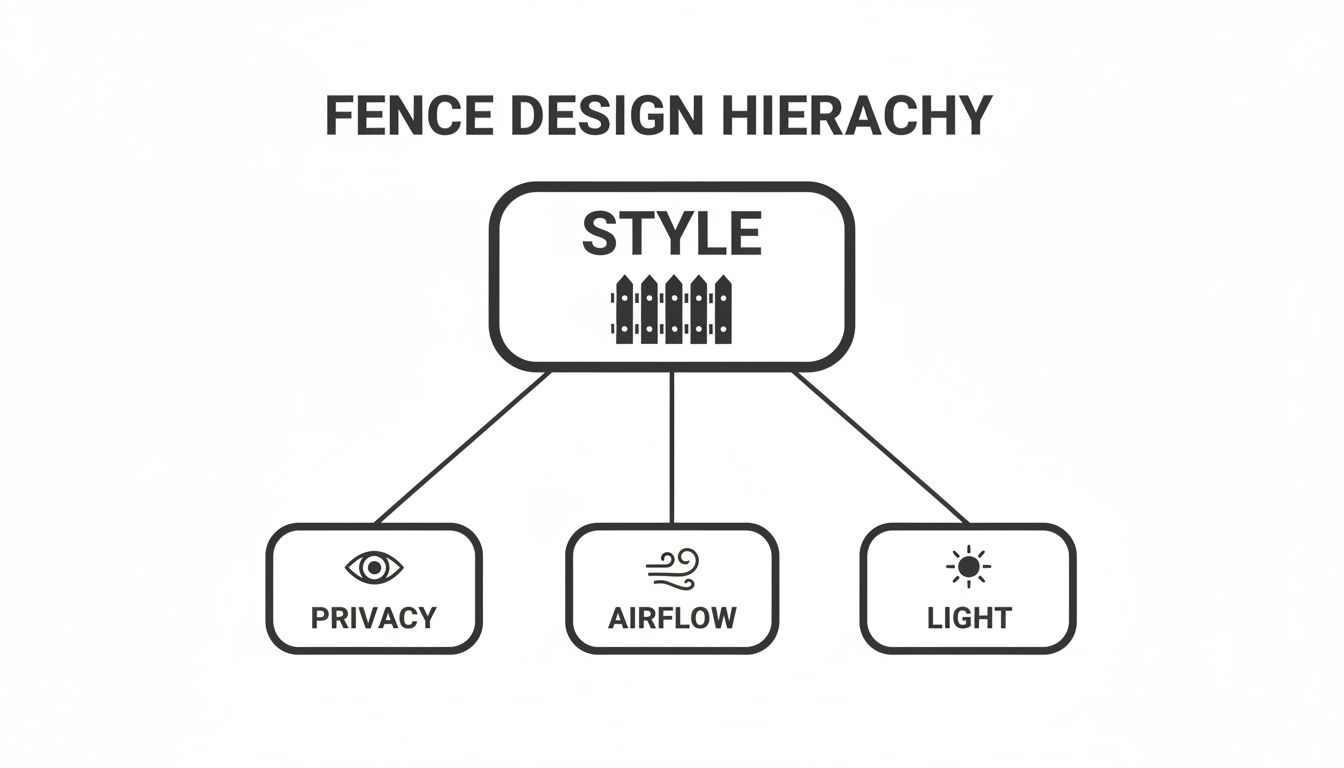
As this diagram shows, your design choices are interconnected. The wood you select and the spacing between boards directly affect your fence's core functions: Privacy, Airflow, and Light.
The Budget-Friendly Workhorse: Pressure-Treated Lumber
Pressure-treated (PT) wood is the practical choice for homeowners who need a durable fence without a premium price tag. Typically made from pine or spruce, it undergoes a chemical treatment to resist rot, decay, and insects. This process makes it tough enough for our local moisture and pests.
While it lacks the natural elegance of cedar, its reliability is hard to beat. When new, it often has a greenish or brownish tint that fades to grey over time if left unstained. The primary drawback is its tendency to warp, twist, and crack as it dries. This is a significant concern for horizontal wooden fences, where straight lines are essential to the aesthetic. To mitigate this, hand-select the straightest boards available and ensure proper installation techniques are used.
The Premium Natural Choice: Western Red Cedar
Western Red Cedar is the premium option, valued for its natural beauty and performance. Its rich, warm colours range from amber to reddish-brown. More importantly, cedar contains natural oils and preservatives that make it inherently resistant to rot, decay, and insects without chemical treatments.
This natural resilience makes cedar an excellent performer in Ottawa's climate. It is also "dimensionally stable," meaning it is far less likely to warp, shrink, or twist than pressure-treated wood. For a horizontal fence, this stability is a crucial advantage, as it ensures your boards remain straight and true over time.
Actionable Insight: Cedar is more than just a pretty wood; it’s a high-performance material. It costs more upfront, but its superior durability and low-maintenance nature often provide better long-term value.
Cedar vs. Pressure-Treated: A Head-to-Head Comparison
To make an informed decision, compare the key attributes of each material side-by-side. Both can build a beautiful fence, but their performance, cost, and maintenance needs vary significantly.
Use this table to weigh the factors most important to your project.
Feature | Western Red Cedar | Pressure-Treated Lumber |
|---|---|---|
Lifespan | 20-30 years with proper care | 15-20 years on average |
Durability | Naturally resistant to rot and insects; less prone to warping | Chemically treated to resist rot and insects; prone to warping and cracking |
Appearance | Rich, natural reddish-brown tones; a premium, high-end look | Greenish or brownish tint when new; a more functional look |
Maintenance | Needs staining/sealing to maintain its vibrant colour | Needs staining/sealing to prevent splitting and cracking |
Upfront Cost | Higher initial investment (Premium) | More affordable upfront (Budget-Friendly) |
Long-Term Value | Often a better long-term investment due to longer life and fewer repairs | Lower initial cost but may require more maintenance and earlier replacement |
This comparison highlights the core trade-off: balancing upfront cost with long-term performance and aesthetics.
For an even deeper analysis, you can learn more about the differences between cedar and pressure-treated fences in our complete guide. Your choice between the rugged affordability of pressure-treated wood and the natural beauty of cedar will set the foundation for your entire fence project.
The Secrets to a Strong and Straight Horizontal Fence
A beautiful horizontal fence is only as good as its underlying structure. To remain straight, it must be engineered to resist gravity and Ottawa's harsh freeze-thaw cycles. Proper construction techniques are what turn a simple boundary marker into a lasting architectural element.
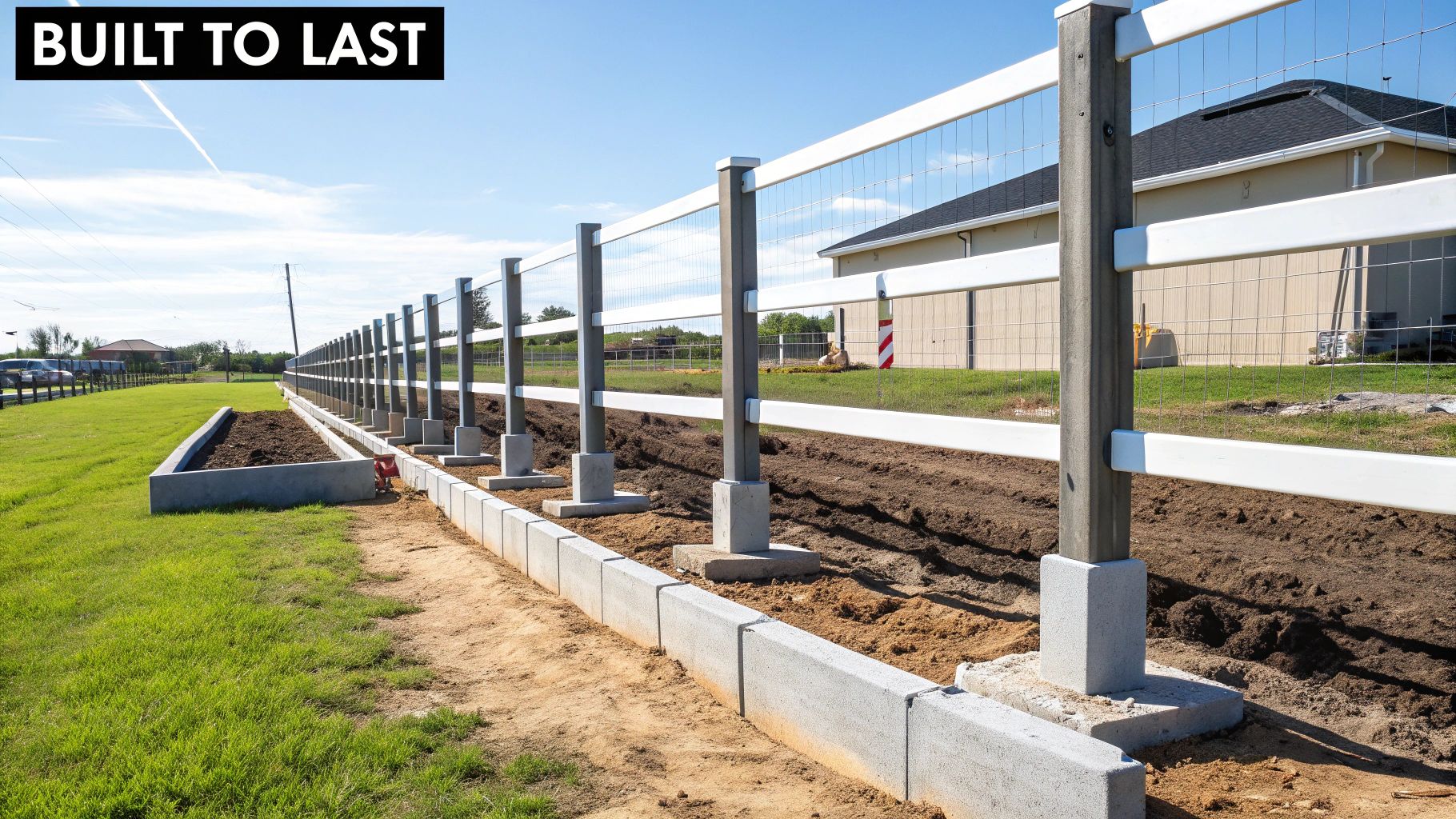
Think of your fence posts as the foundation of a house. A weak or shallow foundation will cause the entire structure to shift and fail. The same principle applies to your fence, making the proper setting of posts the single most critical step of the installation.
Building a Foundation Below the Frost Line
In the Ottawa–Gatineau region, the ground freezes deep, creating a powerful force called frost heave. Expanding moisture in the soil can push fence posts directly out of the ground, ruining a perfectly straight fence. This is why professional installation is not just a good idea—it's essential for longevity.
To prevent this, every post must be anchored in a concrete footing that extends below our regional frost line, which is 48 inches (1.2 metres) deep. By digging to this depth and filling the hole with concrete, you create an immovable anchor that frost cannot lift. This step separates a fence that lasts a few seasons from one that will stand strong for decades.
Preventing Sag with Smart Structural Support
For wooden fences horizontal designs, gravity is a constant enemy. The weight of long boards creates a downward pull that leads to sagging over time. You can counteract this with smart structural support, specifically the correct placement of vertical posts and horizontal rails.
A professional build incorporates these non-negotiable elements:
Correct Post Spacing: Set posts no more than 6 to 8 feet apart. Any wider, and you risk placing excessive strain on the horizontal boards, causing them to dip in the middle.
Sufficient Rail Support: A standard 6-foot-high horizontal fence requires at least three horizontal rails—top, middle, and bottom. This framework distributes the weight of the boards evenly and maintains alignment.
Staggered Joints: On long sections, boards must be joined end-to-end. Stagger these joints on different vertical supports to avoid creating a single weak seam, resulting in a stronger and cleaner look.
Actionable Insight: A well-built horizontal fence is an engineered system. Every component, from post depth to screw placement, must be intentionally designed to defy gravity and time.
To ensure your fence is stable, you must understand the logic behind these measurements. For a deeper dive, learn more about fence post spacing in our practical guide to see how professionals guarantee stability.
The Small Details That Make a Big Difference
Beyond the main structure, several small details are crucial for a flawless, long-lasting fence. Overlooking these can lead to premature failure and costly repairs.
One of the most common mistakes is using the wrong fasteners. Standard indoor screws will rust and corrode after one wet season, leaving ugly streaks and weakening the fence's connections. You must use corrosion-resistant fasteners, like hot-dipped galvanized or stainless steel screws, specifically rated for outdoor use with your chosen wood (cedar or pressure-treated).
Similarly, ensure every board is perfectly level and plumb. Professional installers use levels and string lines for every board, because even a small error at the bottom will become a glaring mistake at the top. This precision is what creates the crisp, clean lines that define a high-quality horizontal fence.
Breaking Down the Cost of a Horizontal Wooden Fence
Budgeting for a new fence involves understanding a few key variables. When you choose a horizontal wood fence, the final cost is a combination of materials, labour, and design choices, all of which can be adjusted to meet your budget. This breakdown will help you understand what goes into a quote and make confident decisions.
The final price is primarily determined by four factors: total length (linear footage), height, wood type, and custom design features. Each one influences material quantity and the time required for installation.
Key Factors That Drive the Price
The most significant cost factor is linear footage. A longer fence requires more materials and more installation time. If you double the length of your fence, you can expect the cost to nearly double, all other factors being equal.
Fence height is also critical. A standard 6-foot privacy fence requires more lumber and stronger posts than a decorative 4-foot fence. Taller fences also demand deeper post holes and additional reinforcement, which increases labour costs.
Here is a quick checklist of the main cost drivers:
Your Choice of Wood: Western Red Cedar is a premium material, while pressure-treated lumber is the more budget-conscious option. This single decision can significantly alter your project's total cost.
Design Complexity: A simple, clean design will always be more affordable than one with custom patterns, shadowbox details, or decorative top caps.
Gates and Hardware: Each gate requires a reinforced frame, hinges, a latch, and skilled labour to ensure it hangs and swings correctly, adding to the overall cost.
Actionable Insight: Think of your fence budget like ordering a pizza. The size (linear feet) and crust (wood type) determine the base price. Special toppings—like a custom design or extra gates—are add-ons that increase the final bill.
Regional costs can provide useful context. In California, for example, a standard 4-foot horizontal fence installation averages around $20.56 per linear foot, reflecting the premium woods needed to prevent warping in the sun.
Smart Ways to Manage Your Fence Investment
Building a quality fence doesn't have to break the bank. You can use practical strategies to reduce construction costs without sacrificing quality.
One of the most effective ways to save is through a neighbourhood group discount. At FenceScape, we frequently organize projects where several homeowners on the same street replace their fences together. This allows us to schedule crews more efficiently and purchase materials in bulk, and we pass those savings on to you.
Another option to consider is financing. Spreading the cost over manageable monthly payments can make a high-quality fence more immediately accessible. This allows you to get the durable, beautiful fence you want now without having to wait. Exploring these options helps you plan your project with financial clarity.
Protecting Your Investment with Proper Fence Maintenance
A horizontal wooden fence is a significant investment that requires regular care to maintain its appearance and structural integrity. Ottawa's weather—from intense summer sun to heavy winter snow—is tough on wood. Fortunately, a simple and consistent maintenance routine is all you need to protect your fence for years to come.
Without protection, wood will degrade. UV rays fade its colour and break down wood fibres, while moisture from rain and snow encourages rot, mould, and mildew. A proactive maintenance approach is the best way to shield your fence from this damage and avoid costly future repairs.
Your Annual Maintenance Checklist
Treat fence maintenance like an annual vehicle check-up—a little prevention goes a long way. Set aside a weekend each spring or fall to perform this simple inspection and cleaning routine, which is your best line of defence.
Follow this straightforward annual plan:
Thorough Cleaning: Use a pressure washer on its lowest setting or a garden hose with a stiff brush to gently scrub away dirt, grime, and any algae buildup. This prepares the surface for a fresh coat of sealant.
Detailed Inspection: Walk the entire fence line. Look closely for loose screws, cracked boards, or signs of rot. Pay special attention to areas near the ground where moisture collects.
Minor Repairs: Tighten any loose hardware and replace any badly warped or split boards immediately. Addressing small issues early prevents them from becoming major problems.
The Critical Role of Staining and Sealing
Cleaning is the first step, but staining or sealing provides the essential protection against weather. Think of it as applying both sunscreen and a raincoat to the wood. A quality stain or sealant penetrates the wood to block moisture, while its pigments shield the surface from damaging UV rays.
This protective layer is vital for both pressure-treated lumber and cedar, though the reapplication schedule differs.
Actionable Insight: Applying a fresh coat of stain or sealant is the single most effective action you can take to extend the life and preserve the colour of your horizontal wooden fence. It is a crucial layer of defence, not just a cosmetic touch-up.
For pressure-treated fences, allow the wood to dry for a few months after installation before applying the first coat. After that, plan to re-stain or reseal it every 2-3 years to maintain a strong protective barrier and prevent cracking.
Western Red Cedar contains natural protective oils, but they will degrade over time. To maintain its rich colour, apply a UV-inhibiting stain or sealant every 3-5 years. If you prefer, you can allow the cedar to weather naturally to a silvery-grey patina; it will remain rot-resistant. Following this simple schedule will keep your fence looking spectacular, season after season.
Your Top Horizontal Fence Questions Answered
We've covered design, materials, and installation. To finalize your plan, here are answers to the most common questions from homeowners in the Ottawa–Gatineau area. Use this as a final checklist to move forward with confidence.
Are Horizontal Wooden Fences More Expensive?
Yes, a horizontal fence typically costs more upfront than a standard vertical fence. This is due to two main factors. First, achieving a sleek, straight look requires higher-grade lumber that is less prone to sagging or warping across long horizontal spans.
Second, the installation process is more labour-intensive. Each board must be perfectly level and evenly spaced, demanding greater precision and time from the installation crew. However, most homeowners find the investment worthwhile due to the significant boost in curb appeal and property value.
How Long Will My Horizontal Fence Last?
A fence's lifespan depends on two factors: the wood you choose and the quality of the installation. A professionally built pressure-treated pine fence should last 15-20 years with regular maintenance.
If you upgrade to Western Red Cedar, which is naturally resistant to rot and insects, you can expect a lifespan of 20-30 years or more. The keys to longevity in our climate are setting posts in concrete below the frost line and applying a quality stain or sealant every few years.
Actionable Insight: The most durable fence is built on a solid foundation. Deep post footings are non-negotiable in Ottawa’s climate; they are the only effective defence against frost heave, which can destroy a well-built fence.
Do I Need a Building Permit in Ottawa?
In most cases, you do not need a building permit for a backyard fence in Ottawa or Gatineau, provided it is under 2.1 metres (approximately 7 feet) high.
However, there are important exceptions. Rules can differ for fences in front yards or on corner lots. Furthermore, fences surrounding swimming pools are subject to a separate and strict set of safety regulations that must be followed.
Your best course of action is to call your local municipal office to confirm the specific bylaws for your property before starting construction. When you work with an experienced installer like FenceScape, we handle all compliance and permit requirements for you.
Ready to transform your property with a stunning and durable horizontal wooden fence? The team at FenceScape is here to bring your vision to life with expert craftsmanship and premium materials designed for the Ottawa–Gatineau climate. Contact us today for a free, no-obligation estimate!
Comments