
A Homeowner's Guide to Pressure Treated Wood Fences

When you're looking for a fence in the Ottawa–Gatineau area, you need a practical solution that's tough, looks good, and won't break the bank. That's where a pressure-treated wood fence comes in. It’s a classic for a reason: it’s made from common lumber, like pine, that’s been given a special chemical treatment to fight off rot, bugs, and decay.
This treatment process is what makes it a go-to choice for our wild Canadian weather, giving you a solid, affordable fence that’s built to last.
What Makes Pressure-Treated Wood a Smart Choice
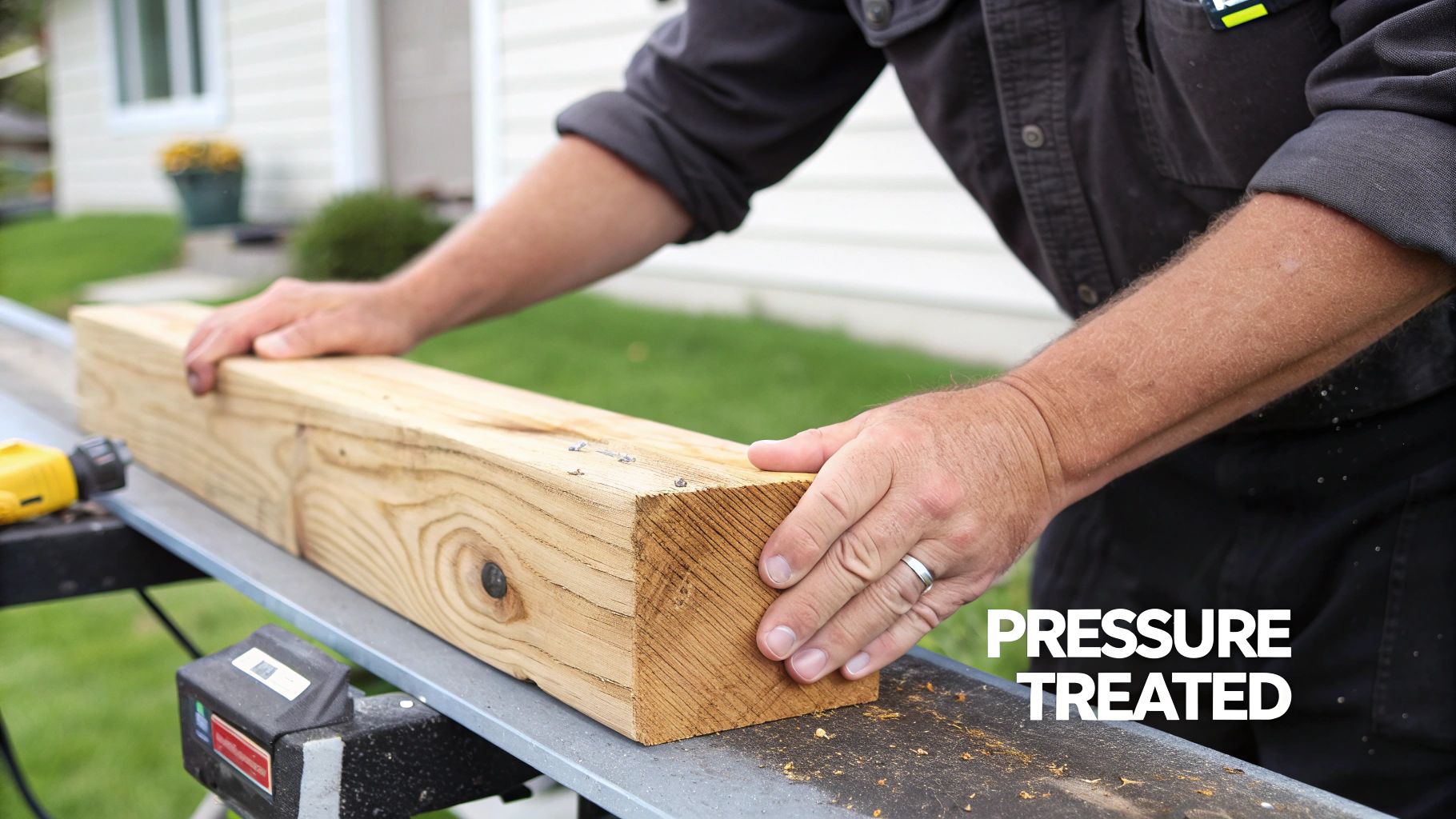
So, what exactly is "pressure treatment"? It's a process that turns standard lumber into a durable outdoor building material. We take regular wood, place it in a large, sealed tank, and a vacuum sucks all the air out of the wood's cells. Then, a preservative solution is forced deep into the wood's fibres under high pressure.
This isn't just a surface-level coating; the protective chemicals become part of the wood itself. The end result is a material engineered to fend off its biggest enemies: moisture, insects, and the fungi that cause wood to rot. It transforms a standard piece of lumber into a resilient barrier for your property.
Core Benefits for Ottawa Homeowners
For homeowners here, this scientific process translates into real-world, practical advantages. A fence built with pressure-treated wood is ready for everything from our humid summers to the punishing freeze-thaw cycles that define an Ottawa winter.
Exceptional Durability: The treatment is a game-changer against decay, especially where the fence posts meet the ground—the most vulnerable spot on any fence.
Insect Resistance: Those preservatives make the wood unappetizing to destructive pests like termites and carpenter ants, protecting your fence’s structural integrity.
Cost-Effectiveness: You get impressive, long-term performance without the premium price tag of materials like cedar or composite.
It’s this perfect mix of performance and value that keeps pressure-treated wood at the top of the list for so many residential fencing projects.
A Proven Material in Tough Climates
The resilience of pressure-treated wood isn't just a theory; it's proven in tough climates all over. For example, it’s a standard choice in places with wet winters and damp soil, where rot is a constant threat. In those areas, it often costs 15–30% less than cedar and has become the go-to material for fence posts that need to survive in the ground without failing.
This success in other challenging climates gives us confidence right here in Ottawa–Gatineau, where our fences face similar battles against moisture.
Ultimately, understanding how this treatment works helps explain why a pressure-treated wood fence is such a reliable and lasting choice for your home. To learn more about the material itself, check out our guide on what pressure-treated lumber is and its many uses.
How Long Will a Pressure-Treated Fence Really Last?
You’ll often hear that a pressure-treated wood fence can last anywhere from 20 to 40 years. That’s a huge range, and for good reason. The final number depends entirely on the quality of the wood, how well it was installed, and the maintenance you put in over the years.
Think of it less as a guarantee and more as a potential. With the right approach, you can definitely push your fence’s lifespan toward that higher 40-year mark.
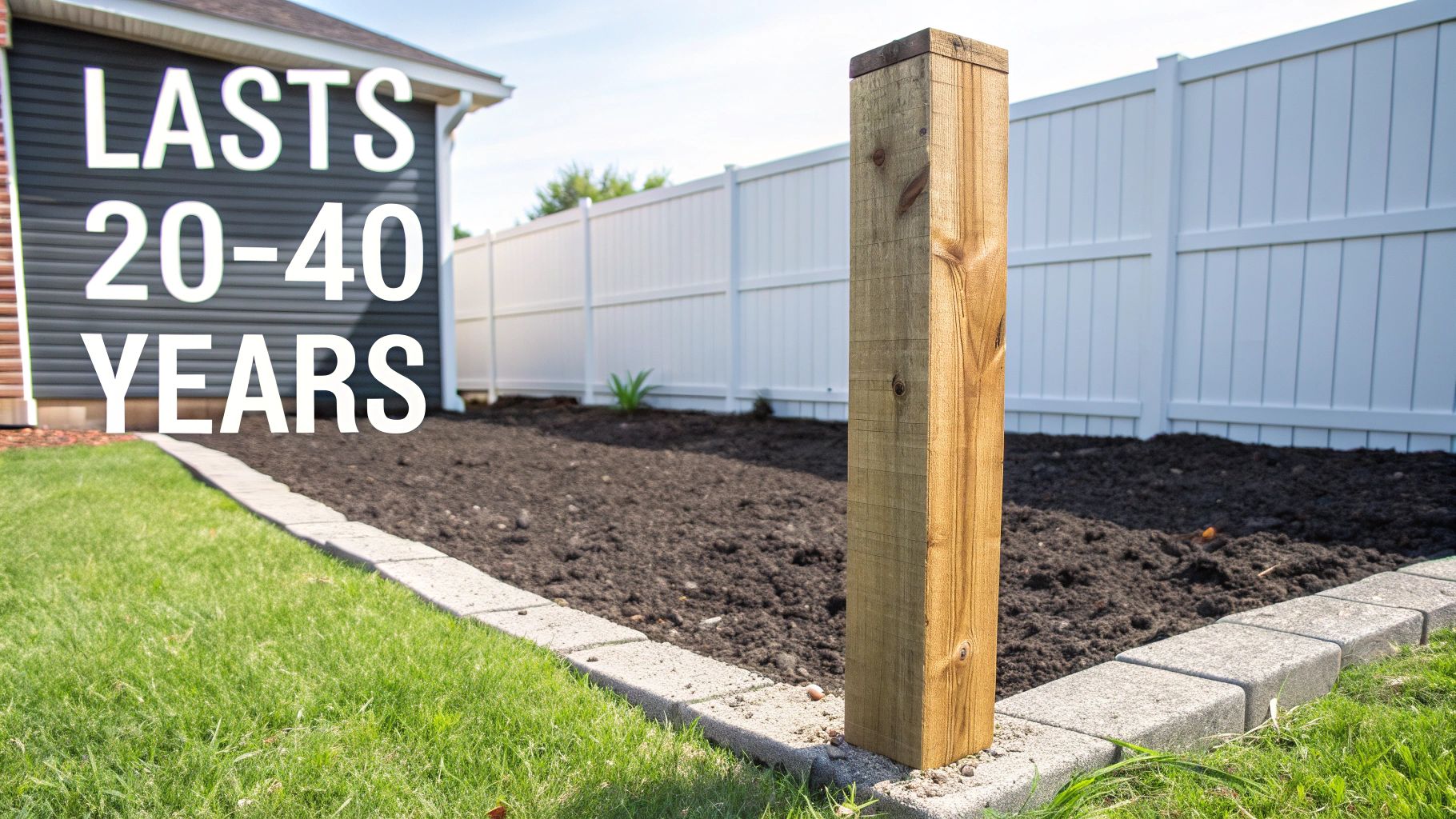
So, what's the secret to a long-lasting fence? It all starts at ground level. The single biggest mistake we see is using the wrong type of wood for the posts. This is where the fence is most vulnerable, constantly battling moisture and soil, and it's where understanding treatment ratings is non-negotiable.
Ground-Contact Ratings are Non-Negotiable
Not all pressure-treated lumber is the same. To make sure wood can stand up to the job it's meant for, the American Wood Protection Association (AWPA) created a rating system. For fence posts that go into the ground, there's only one rating you should accept: UC4A, which means it's rated for "Ground Contact, General Use."
What does UC4A actually mean? Simply put, wood with a UC4A rating has been saturated with a higher concentration of preservatives. This is what allows it to fight off the constant dampness and microbial attack that comes with being buried in the earth. Using anything less for your posts is just asking for premature rot and a failing fence.
On the other hand, the fence boards (pickets) and rails are typically rated UC3B. This means they're fine for above-ground use where they get wet but can also dry out. Insisting on UC4A-rated posts is the first and most critical step toward building a fence that lasts for decades. This is one of the biggest reasons professional installation matters—an expert won't cut corners on the foundation of your fence. If you're curious, you can learn more about how pressure treated wood is classified and see the industry standards for yourself.
Other Factors That Influence Fence Longevity
Getting the posts right is huge, but a few other things can make or break your fence's lifespan.
Professional Installation: It’s more than just digging holes. A pro installer ensures posts are set deep enough to get below the frost line—a must in Ottawa's climate. They also use materials like gravel at the base of the post to ensure water drains away, rather than pooling and causing rot.
Yard Drainage: Take a look at your property. If you have low spots where water tends to collect along the fence line, that constant moisture will shorten the life of your posts, even if they are properly treated.
Managing Warping: Wood is a natural material; it moves, swells, and shrinks with the weather. While pressure treatment makes it durable, it can still twist and warp. Proper installation techniques, like using quality fasteners and correct spacing, help minimize this natural tendency.
By paying attention to these details—from demanding UC4A posts to ensuring your yard has good drainage—you can steer your fence's lifespan from the low end of the estimate much closer to that 40-year potential. The result is a strong, straight fence that protects your property for years to come.
Budgeting for Your New Wood Fence Project
So, how much does a new pressure-treated wood fence actually cost? It’s the first question on everyone's mind, and it’s a crucial one for planning. As a starting point, you can generally budget between $40 to $70 per linear foot for a professionally installed fence in our area.
Think of that range as your baseline. It gives you a solid number to begin with, but several factors can nudge the final price up or down. A simple, straight fence on a flat lot will land on the lower end, while more complex projects will naturally cost more.
Key Factors That Shape Your Fence Cost
Getting an accurate quote means looking beyond just the length of your fence. The details are what really shape the final investment. Here are the big four that influence both material and labour costs:
Fence Height: This is a straightforward one. A taller six-foot privacy fence simply uses more wood and bigger posts than a four-foot decorative one, and that’s reflected in the price.
Style and Design: A basic "good neighbour" fence is one thing, but if you're looking at more intricate designs like shadowbox styles or adding a decorative lattice top, expect the cost to rise. These fences require more material and, just as importantly, more skilled labour to get right.
Terrain Complexity: Is your yard perfectly flat and clear? Or is it sloped, rocky, or full of mature trees? Working on difficult terrain takes significantly more time and effort, which adds to the installation cost.
Gates and Hardware: Gates aren't just an afterthought; they're custom-built entry points. The number of gates you need, how wide they are, and the quality of the hinges and latches you choose will all be factored into your final quote.
For those planning a project, tools like construction takeoff software can be a real asset in accurately estimating materials and labour, helping to keep the budget in check from the start.
The Value of Professional Installation
It can be tempting to DIY and focus only on the cost of lumber from the hardware store, but professional installation is a direct investment in the long-term health of your fence. It's not just about saving yourself a weekend of hard work; it’s about avoiding headaches and expensive fixes down the road.
A professional installer ensures every post is set correctly below the frost line. In the Ottawa–Gatineau climate, this is non-negotiable. It’s what stops your fence from heaving and shifting during our freeze-thaw cycles. Pros guarantee your fence is straight, strong, and built to last.
Ultimately, choosing a professional build means your fence will be a durable, attractive asset for years, not a problem waiting to happen. To dig deeper into the numbers, you can learn more about the price of a wood fence in our detailed guide.
DIY Installation vs Hiring a Professional
Deciding whether to build your own pressure-treated wood fence or bring in a pro is one of the biggest forks in the road for any homeowner. The DIY route seems tempting with its promise of saving money and the pride of a job well done. But it’s a serious commitment of time, sweat, and requires the right tools for the job.
On the other hand, hiring a professional team means a bigger cheque upfront, but it buys you expertise, speed, and a whole lot of peace of mind. It really comes down to being honest with yourself about your skills, how much time you really have, and the quality you're aiming for. A poorly built fence isn't just a curb appeal problem; it can start to lean, sag, or fail years before it should, completely wiping out those initial DIY savings.
The Do-It-Yourself Approach
Building your own fence can be incredibly satisfying, but it's definitely not a simple weekend project. You'll need more than just basic hand tools. We're talking about getting your hands on a post-hole digger or even a power auger, a good level, and a saw, not to mention the muscle to handle some pretty demanding work.
Getting the fundamentals right is everything. That means digging your post holes deep enough to get below the frost line—an absolutely critical step in the Ottawa–Gatineau area to prevent frost heave from wrecking your fence every winter. You also have to mix and pour concrete properly and measure everything with extreme care to keep your fence lines perfectly straight and level. This gets especially tricky if your yard has any slopes or bumps.
A classic DIY mistake is underestimating just how precise fence building needs to be. A post that's off by even a tiny bit can throw off the entire line, leaving you with a crooked, wobbly fence that's structurally compromised from the start.
If you're leaning towards the DIY path, it's smart to brush up on the basics of outdoor wood construction. For instance, guides that explain how to lay decking boards can offer some great transferable skills for working with treated lumber that you'll use on your fence.
Why Hire a Professional Fence Installer
Bringing in a professional contractor like FenceScape is about so much more than just skipping the hard labour. You're investing in a level of expertise that ensures your fence is built to last, looks fantastic, and genuinely adds value to your home.
Professionals bring some serious advantages to the job:
They Know the Rules: An expert is already up-to-date on Ottawa–Gatineau’s local building codes and property line bylaws, including the specific regulations for pool fences. This ensures your project is legal and compliant right from the get-go.
Better Materials: Contractors typically have access to better-quality materials that you might not find at the local big-box store, like the crucial UC4A ground-contact rated posts that are essential for a long-lasting fence.
Speed and Efficiency: A seasoned crew can knock out a fence installation in a couple of days, not a couple of weekends. This means less disruption to your yard and your life.
A Warranty You Can Count On: When a pro builds your fence, their work is backed by a warranty. This is your safety net, protecting your investment against any craftsmanship issues long after the crew has packed up.
For a more detailed look at choosing the right contractor, check out our homeowner's action plan for hiring Ottawa fence builders. At the end of the day, a professional's expertise ensures your fence isn't just put up—it's engineered to stand strong against our tough Canadian climate for years to come.
Keeping Your Fence in Top Shape: Smart Maintenance Tips
A pressure-treated wood fence isn't "no-maintenance," but it is "low-maintenance." With a few smart, proactive habits, you can protect your investment and keep your fence looking great for decades. The most important actions you can take involve letting the wood dry properly, cleaning it annually, and sealing it every few years.
The most critical step in fence care happens right at the beginning. Pressure-treated wood usually arrives from the lumber yard still damp from the treatment process. Actionable Tip: You must let it dry out completely before applying a stain or sealer. This can take anywhere from a few weeks to a few months. Rushing this step will trap moisture, leading to a peeling finish and poor protection.
How do you know when it's ready? Try the "sprinkle test." Flick a few drops of water onto a board. If the water beads up, it’s still too wet. If the water soaks in within a minute or two, you’re good to go.
Your Go-To Maintenance Checklist
Once the wood is seasoned, a simple annual routine is your best strategy. It’s a yearly health check-up that prevents small issues from becoming expensive repairs. The plan boils down to three key actions: cleaning, sealing, and inspecting.
Here’s your practical to-do list:
Give It an Annual Wash: Every spring, clean your fence with a pressure washer on a low setting or a garden hose with a soft-bristle brush. The goal is to remove the year's build-up of dirt, grime, and mildew that traps moisture against the wood.
Seal or Stain Every 2-3 Years: After the fence is clean and completely dry, apply a high-quality water-repellent sealer or a penetrating stain. This acts as armour against the weather, blocking UV rays that turn wood grey and preventing water from soaking in and causing rot.
Walk the Line: At least twice a year (spring and fall are ideal), take a slow walk along your fence line and actively look for signs of trouble.
This simple cycle—clean, seal, inspect—is the secret to maximizing the lifespan of your pressure-treated wood fence.
The whole point of maintenance isn't just about looks. It's about actively stopping decay in its tracks. A good sealer repels moisture, and a thorough inspection helps you spot things like a loose post or early rot before they compromise the whole structure.
What to Spot During Your Inspection
When you do your walk-along, be methodical. Here are specific things to look for:
Loose Fasteners: Check for nails or screws that are backing out. Actionable Tip: Hammer nails back in or tighten screws immediately to prevent boards from rattling, warping, or detaching.
Wobbly Posts: Grab the top of each post and give it a firm shake. If there's significant movement, it could signal rot below ground or a failing concrete footing that needs attention.
Ground Contact: Look for soil, mulch, or leaves piled against the bottom of the fence boards. Actionable Tip: Rake all debris away from the fence line. This is a critical step, as trapped moisture is the primary cause of rot and insect infestations at the base of a fence.
Comparing Wood Fencing Materials
Choosing the right material for your fence is a balance between your budget, desired look, and how much maintenance you’re willing to do. A pressure treated wood fence is a fantastic, versatile choice for most homeowners, but it helps to see how it stacks up against other popular options like cedar and modern composites. The "best" choice depends on your specific priorities.
Think of pressure-treated wood as the reliable workhorse of the fencing world. It gives you excellent protection against rot and insects at the most budget-friendly price point. Its widespread use is a testament to its trusted performance; the global market for treated wood was valued at USD 5.86 billion in 2023, largely driven by residential projects like fences and decks. For more details, you can read about the treated wood market's strong performance.
Pressure Treated Wood vs Cedar
Cedar is often seen as the premium natural wood choice due to its beautiful reddish tones and natural resistance to rot and insects. This premium quality comes with a higher price tag—expect to pay 30-50% more for cedar than for a pressure-treated pine fence.
While cedar doesn't require chemical treatments, it does need maintenance to preserve its appearance. To prevent it from fading to a silvery grey, you'll need to apply a sealer regularly. This maintenance schedule is very similar to what's required for pressure-treated wood, which also needs a quality stain or sealant to protect it from UV damage and moisture.
Pressure Treated Wood vs Composite Fencing
If "low-maintenance" is your top priority, then composite and PVC fencing are excellent options. Made from a mix of wood fibres and recycled plastic (composite) or all vinyl (PVC), their main advantage is that they won't rot, warp, or be targeted by insects.
This convenience comes at the highest initial cost, often two to three times more than a pressure-treated wood fence. The trade-off is the long-term savings in time and money on staining, sealing, and repairs. Aesthetically, composites can mimic the look of real wood, while PVC offers a clean, uniform appearance that suits modern homes. The decision comes down to investing more money upfront versus more time later.
Fencing Material Comparison for Ottawa Homeowners
To make the choice clearer, here’s a side-by-side comparison of how these materials perform in our climate.
Material | Initial Cost | Lifespan | Maintenance Level | Best For |
|---|---|---|---|---|
Pressure-Treated Wood | $ | 15-25 years | Medium | Homeowners seeking a classic look and the best value for their money. |
Cedar | $$ | 20-30 years | Medium | Those who want premium natural wood aesthetics and are willing to pay more. |
PVC/Composite | $$$ | 25-50+ years | Low | Anyone prioritizing minimal long-term maintenance over upfront cost. |
Ultimately, while pressure-treated wood remains the most popular choice for its blend of affordability and durability, cedar and composites offer compelling benefits depending on your priorities.
Your Top Questions About Wood Fences, Answered
Even after going through all the details, it’s completely normal to have a few more questions pop up before you're ready to commit. Let’s tackle some of the most common ones we hear from homeowners just like you.
How Long Should I Wait Before Staining My New Fence?
The short answer is: wait until the wood is fully dry. Pressure-treated lumber arrives from the supplier still damp from the chemical preservation process. If you rush to stain or seal it, you're just trapping that moisture inside, which guarantees a peeling, blotchy finish down the road.
A great little trick is the "sprinkle test." Just flick a few drops of water onto a fence board. If the water beads up on the surface, it's still too wet to absorb the stain properly. If the water soaks right in, you're good to go. Depending on the weather, this drying-out period can take anywhere from a few weeks to a couple of months.
Is This Wood Safe for My Kids, Pets, and Garden?
Absolutely. Modern pressure-treated wood is completely safe for use around your home. The industry phased out the old arsenic-based treatments years ago. Today's wood is treated with copper-based preservatives like ACQ (Alkaline Copper Quaternary), which are approved for residential applications and won't harm your family, pets, or garden beds.
Can Pressure-Treated Wood Still Rot Over Time?
While it’s incredibly rot-resistant, it's not invincible. The treatment works wonders, but constant, prolonged contact with moisture—especially at the base of the posts where they meet the ground—can eventually break the wood down.
Proper installation is your best defence here. We make sure posts are set in a gravel base to promote drainage and keep water from pooling. It's also a good idea to keep soil and soggy leaves from piling up against the fence bottom.
Why Do Some of My Fence Boards Look Warped or Twisted?
Wood is a natural product, and just like any natural material, it breathes. It expands when it's humid and contracts when it's dry. Some twisting or warping is just the wood settling in as it dries out after installation.
A professional installer knows how to work with the wood's nature, not against it. We use top-quality fasteners and specific framing techniques to secure the boards in a way that allows for this natural movement without compromising the fence's structure.
Ready to build a fence that can handle everything an Ottawa winter can throw at it? The team at FenceScape uses expert techniques and the best materials to make sure your investment is built to last. Get your free, no-obligation estimate today and let's get your project started.
Comments