
A Homeowner's Guide to Choosing the Best Types of Fencing

Selecting the right fence requires balancing privacy, security, style, and budget. The most common options—wood, PVC (vinyl), ornamental iron, and chain link—each serve distinct purposes. Your first step is to define your primary goal, as this will guide your material and design choices more effectively than any other factor.
Choosing the Right Fence for Your Home
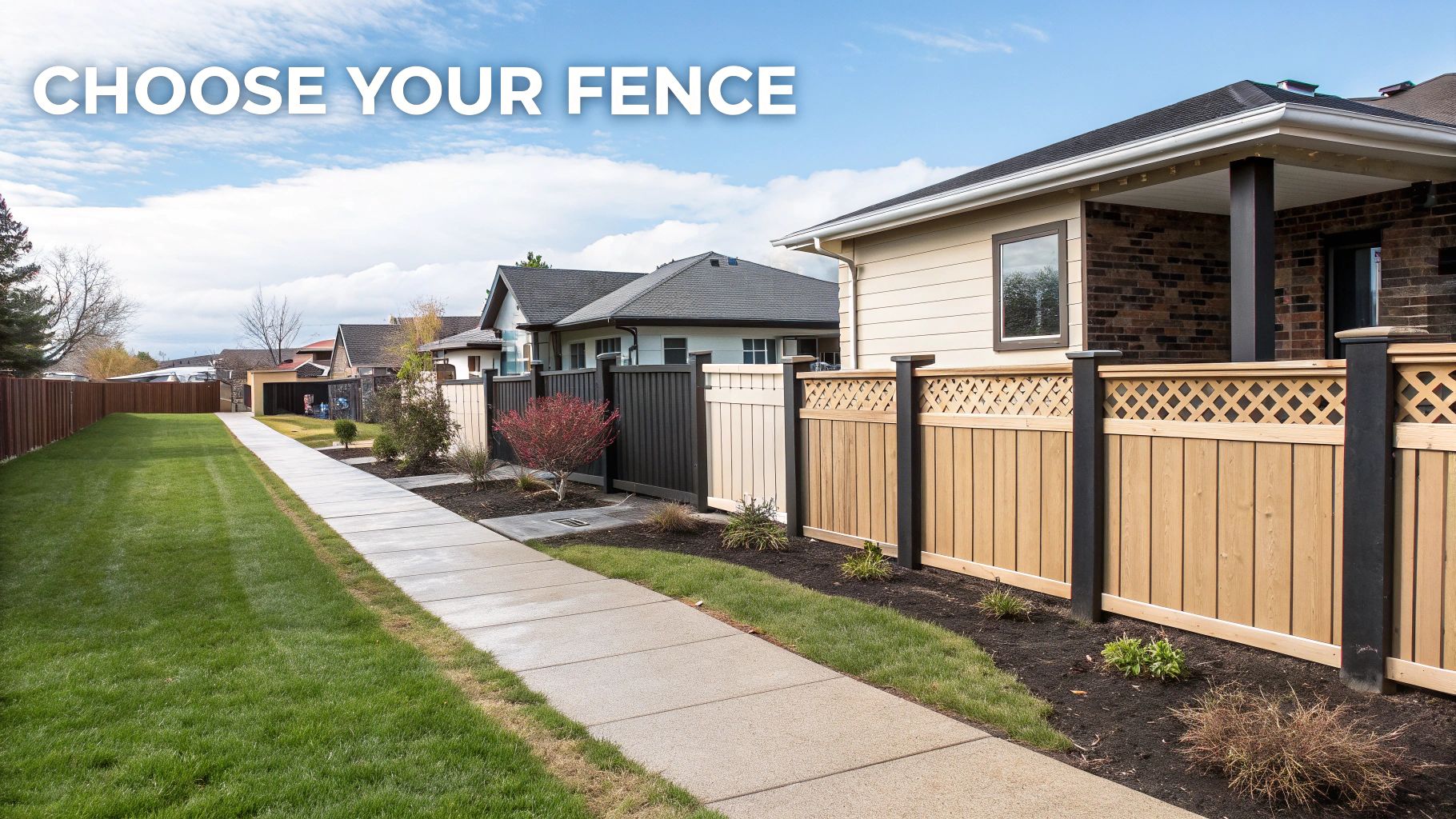
A fence is a significant investment that directly impacts your property's value, security, and curb appeal. It's more than a boundary marker; it's a functional extension of your home's architecture. For homeowners in the Ottawa–Gatineau area, the key is finding a fence that not only meets your needs but is also engineered to withstand our harsh seasonal shifts.
There is no single "best" fence. The right choice is the one that solves your specific problem. Think of it like buying a tool: you wouldn't use a hammer to turn a screw. Similarly, the ideal fence for poolside safety is completely different from one designed for front-yard curb appeal.
Aligning Fencing with Your Goals
Before you compare materials, define what you need your fence to achieve. This clarity simplifies every subsequent decision. A recent survey confirmed that the top two motivations for homeowners are creating privacy (65%) and ensuring the safety of children or pets (58%).
Determine your primary objective from the list below:
Create a Private Sanctuary: To shield your yard from neighbours or street view, you need a fence with solid, gap-free panels. Actionable choice: Prioritize wood or PVC privacy styles.
Ensure Safety and Security: To contain pets, protect children, or secure a pool, your focus must be on height, strength, and climb-resistance. Actionable choice: Look at ornamental iron, chain link, or tall privacy fences.
Boost Curb Appeal: To enhance your home's aesthetic and value, the fence must complement its architectural style. Actionable choice: Consider decorative wood designs or elegant ornamental iron.
Define Property Lines: To simply mark your boundary without obstructing views, a low-profile, cost-effective option is best. Actionable choice: A simple chain link or picket-style fence will suffice.
By first identifying your "why"—whether it's for privacy, security, or style—you transform the selection process from a confusing list of options into a clear path toward the perfect solution for your home.
Use this table as a quick reference to match materials to your goal.
Quick Comparison of Popular Fencing Types
This table provides a high-level overview to help you compare the primary fencing materials at a glance.
Fence Type | Primary Benefit | Best For | Maintenance Level |
|---|---|---|---|
Wood | Natural aesthetic & customizability | Privacy, curb appeal, defining boundaries | Moderate to High |
PVC (Vinyl) | Durability & minimal upkeep | Privacy, low-maintenance properties | Low |
Ornamental Iron | Elegance & security | Security, curb appeal, pool enclosures | Low |
Chain Link | Affordability & functionality | Security, pet containment, budget projects | Very Low |
Consider this your starting point. As we explore each material, you'll gain the specific insights needed to align your choice with your goals and lifestyle.
The Set-It-and-Forget-It Fence: Durability Meets Low Maintenance
If your goal is a great-looking fence without the recurring chore of maintenance, focus on materials like PVC and modern hybrids. These are the "set it and forget it" solutions engineered to handle the Ottawa–Gatineau climate's demanding freeze-thaw cycles and humid summers.
PVC or vinyl fencing is the top choice for homeowners prioritizing resilience. Unlike porous wood, high-quality PVC doesn't absorb moisture, making it naturally resistant to the rot, mould, and insect damage common in our region.
This durability extends to all seasons. A well-made vinyl fence contains UV inhibitors to prevent yellowing or brittleness from summer sun exposure. In winter, it retains enough flexibility to withstand deep freezes without cracking. This consistent, all-weather performance makes it one of the most reliable types of fencing you can install.
The Real-World Perks of a PVC Fence
Choosing PVC is a long-term strategy to save time and money. The primary advantage is the near-elimination of fence upkeep from your to-do list.
A vinyl fence never needs painting or staining. The colour is integral to the material, so scratches don't reveal a different colour underneath. To clean it, simply use a garden hose and, for stubborn grime, a mild soap solution.
When calculating cost, think in terms of total cost of ownership. While the initial investment for PVC may be higher than some wood options, it often becomes the more economical choice once you factor in the money and weekends you'll save on stains, sealers, and repairs over a 15 to 20-year lifespan.
Hybrid Fences: Getting the Best of Both Worlds
If you prefer the classic aesthetic of wood but demand modern durability, hybrid fencing offers a practical solution. This design combines the strengths of different materials to overcome the primary weakness of all-wood fences: rotting posts.
A typical hybrid fence features natural wood panels supported by galvanized steel posts. This gives you the warm, traditional appearance for the visible sections while anchoring the structure with a rot-proof steel foundation.
This combination provides actionable advantages:
Structural Integrity: Steel posts eliminate the risk of sagging and leaning caused by wood post decay.
Longer Lifespan: By protecting the structural core from rot and pests, the entire fence system lasts significantly longer.
Aesthetic Freedom: You get the natural charm and design flexibility of wood panels without compromising on foundational strength.
Your decision comes down to priorities. For maximum durability with minimal effort, a full PVC fence is the clear winner. For more detailed specifications, explore plastic and vinyl fence solutions in our detailed guide. If you're unwilling to sacrifice the look of wood, a hybrid fence is a smart, durable alternative.
3. The Timeless Charm of a Classic Wood Fence
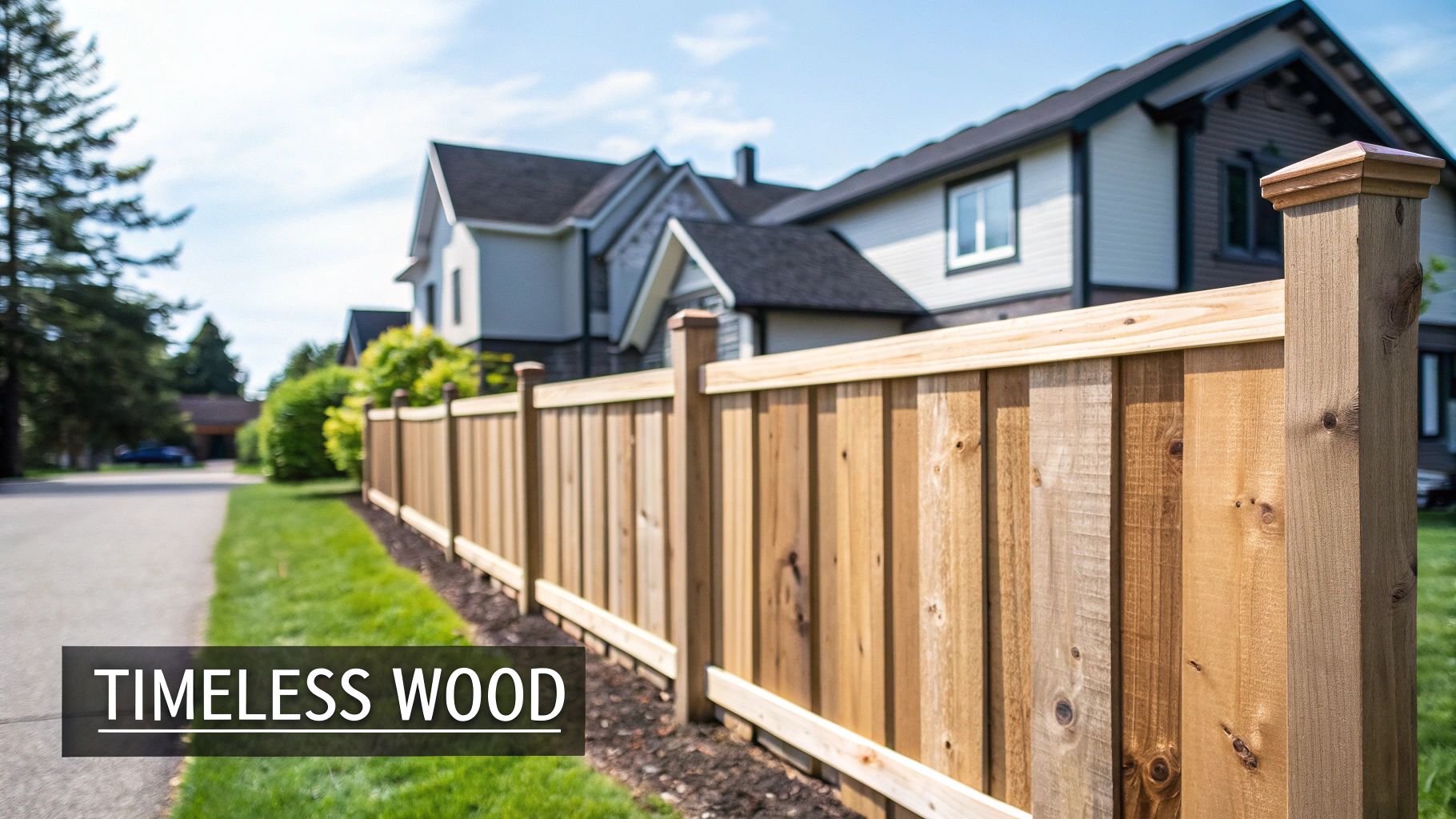
Despite modern alternatives, a real wood fence offers an unmatched natural warmth and aesthetic flexibility. From rustic to contemporary, wood can be adapted to complement any home style, making it a perennially popular choice.
Choosing the Right Wood for Our Climate
In the Ottawa–Gatineau region, fence materials must withstand extreme temperature swings, heavy snow loads, and summer humidity. Selecting the right lumber is the most critical decision to prevent premature rot, warping, and insect damage.
For our local climate, two types of wood offer the best performance:
Pressure-Treated (PT) Pine: This is the practical workhorse. PT lumber is chemically treated to resist rot and pests, offering a durable, budget-friendly solution built for longevity.
Western Red Cedar: This is the premium choice, prized for its rich colour and dimensional stability. Cedar contains natural oils that make it inherently resistant to decay and insects, providing a longer lifespan and a high-end aesthetic.
The Reality of Wood Fence Maintenance
A wood fence requires proactive care. The guiding principle is simple: preventative maintenance is always cheaper and easier than extensive repairs. Neglecting your fence doesn't save money; it guarantees a larger, more costly problem later.
The necessary maintenance is straightforward. Plan to seal or stain your fence every two to three years. This coating acts as a barrier against moisture and protects the wood from UV damage, which causes it to turn grey and brittle.
Treat staining your fence as a strategic investment in its lifespan, not a chore. A weekend of work every few years can add a decade or more to the life of your fence.
Finding a Style That Fits Your Home
The design of your wood fence is as important as the material. Wood's versatility allows you to achieve any goal, from complete privacy to a decorative border. To see detailed examples and weigh your options, compare top wood fence types for your yard.
Consider these popular styles based on your goal:
Privacy Fence: Use solid, interlocking panels to create a secluded backyard.
Picket Fence: A classic style ideal for defining front-yard boundaries without sacrificing curb appeal.
Shadowbox Fence: The "good neighbour" design looks identical from both sides and permits airflow while maintaining privacy.
Lattice-Top Fence: Combines a solid privacy base with a decorative lattice panel on top for an elegant finish.
Opting for wood means embracing its natural character and maintenance needs. With the right lumber and a consistent care schedule, a wood fence is a rewarding investment in both style and function.
Balancing Elegant Security with Practicality
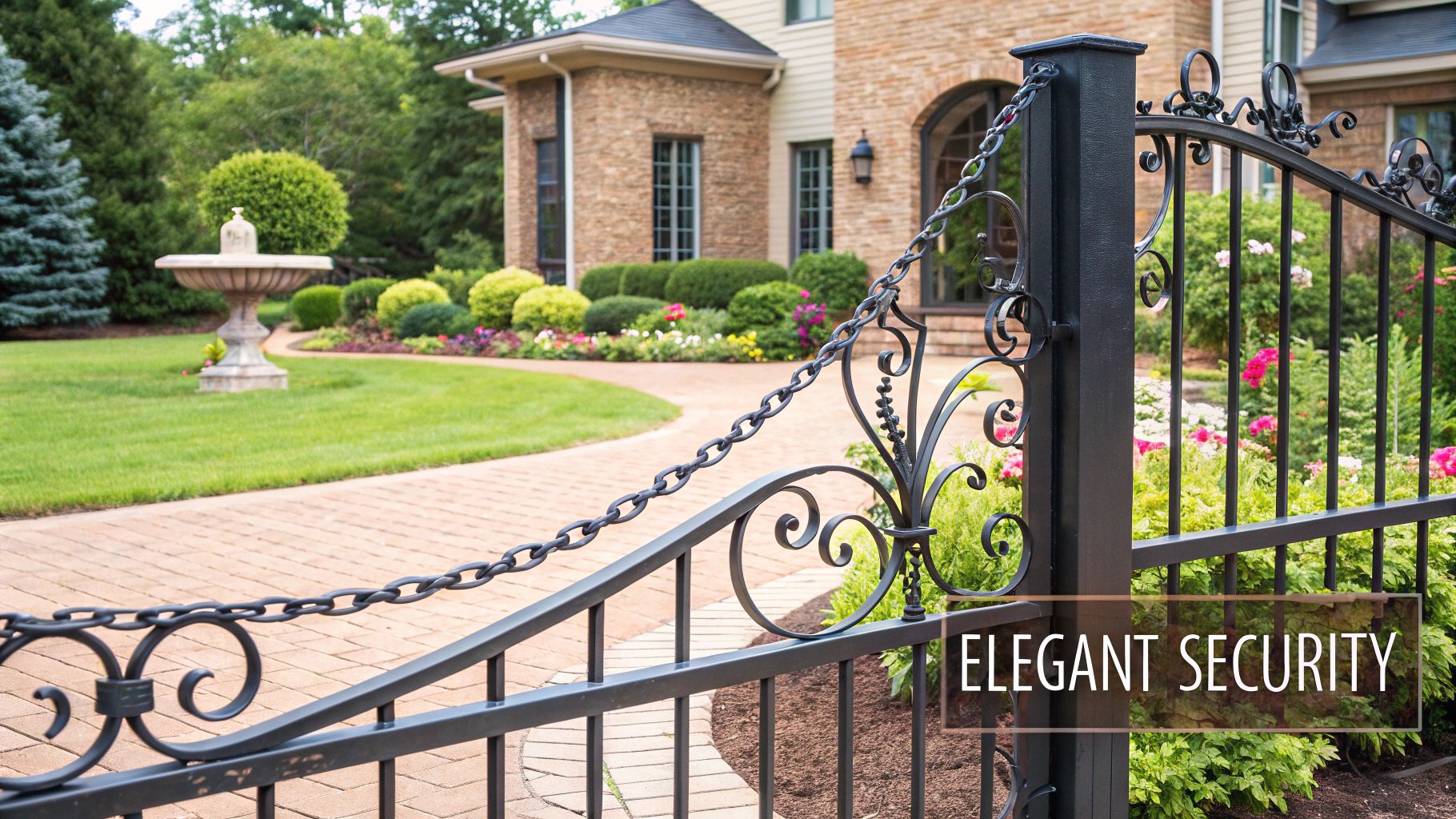
When security is your top priority, your decision will likely come down to two materials: ornamental iron and chain link. One offers classic elegance, while the other provides utilitarian function. Both are highly effective for securing a property, but they achieve this through different approaches to style, visibility, and cost.
Your choice should be based on matching the material's strengths to your specific application. Whether you need to secure a formal front yard or simply keep a large dog contained in the back, understanding the practical differences is key.
Ornamental Iron: The Statement of Strength and Style
An ornamental iron fence is an architectural feature, not just a barrier. It adds a sense of permanence and class that enhances property value. Its open design secures your boundary without sacrificing views, making it an excellent choice for front yards or properties where you want to maintain a sense of openness.
Forged from steel or aluminum, ornamental iron is a formidable security barrier that is extremely difficult to climb or cut. Modern versions also require minimal maintenance. High-quality powder-coated finishes create a durable shield against rust and corrosion, ensuring it withstands Ottawa's harsh winters and retains its elegant appearance for decades.
An ornamental iron fence is a direct investment in your home's curb appeal and security. Its timeless design complements nearly any architectural style, providing a beautiful and effective boundary.
For a comprehensive security strategy, pair a strong fence with modern access control system types to manage entry to your property.
Chain Link: Redefined for Modern Practicality
It's time to update the old image of industrial chain link. Today's options are versatile, incredibly durable, and can be aesthetically suited for residential properties.
The core advantage remains its combination of affordability and strength. A galvanized steel chain link fence is one of the most durable and long-lasting security solutions available, making it a practical choice for securing large perimeters or creating safe enclosures for pets.
The key innovation is coloured vinyl coatings. Available in black, brown, or green, these coatings help the fence blend into the landscape while adding an extra layer of rust protection. A black vinyl-coated chain link fence, for instance, becomes nearly invisible against a wooded backdrop, providing security without visual intrusion.
Comparing Security and Application
Use this table to decide which metal fence best suits your needs. For a more detailed breakdown, review our actionable guide to metal gates and fences for lasting style and security.
Feature | Ornamental Iron | Chain Link |
|---|---|---|
Primary Goal | Enhancing curb appeal and elegant security | Cost-effective and durable containment |
Best Use Case | Front yards, pool enclosures, formal properties | Backyards, dog runs, large perimeters |
Visual Impact | Open, sophisticated, and decorative | Utilitarian but can blend with coatings |
Material Cost | Higher initial investment | Highly affordable |
Security Level | High (difficult to climb or cut) | High (effective physical barrier) |
Ultimately, both materials are excellent security tools. Ornamental iron delivers an unmatched blend of strength and style, while modern chain link provides exceptional durability and value.
Pool Fences: Understanding the Lifesaving Rules
A pool fence is the single most critical safety feature for your backyard. It's a non-negotiable, always-active protection system. The alarming fact that 88% of child drowning incidents occur with adult supervision nearby underscores the necessity of a physical barrier that works 24/7.
For this reason, pool fencing is mandated by strict municipal bylaws in both Ottawa and Gatineau. These regulations are not suggestions; they are legally enforceable rules designed to prevent a child from getting through, over, or under the enclosure.
The Non-Negotiables: What Bylaw Officers Look For
Bylaws for pool enclosures are based on a few core safety principles. An inspector's checklist is designed to ensure there are no weak points in your fence system.
Here is what you must implement to be compliant:
Minimum Height: The fence must be at least 1.5 metres (5 feet) high to prevent climbing.
Self-Closing, Self-Latching Gates: Every gate must be equipped with hardware that automatically swings it shut and securely latches it from any position.
High, In-Reach Latches: The latch mechanism must be located on the pool side of the gate, at least 1.2 metres (4 feet) from the ground, to be out of a small child's reach.
No Gaps: The clearance between the bottom of the fence and the ground cannot exceed 10 cm (4 inches) to prevent a child from squeezing underneath.
Non-Climbable Surface: The exterior face of the fence must not have any horizontal rails or handholds that could be used as a ladder.
Treat your pool fence as an active safety device. Full compliance with every detail of your local bylaw—from fence height to gate latch type—is a non-negotiable responsibility to protect your family and community.
Choosing the Right Material for Your Pool Enclosure
While safety codes dictate the fence's structure, you can choose the material. The best options are those that meet all bylaw requirements while also resisting moisture and pool chemicals.
These materials are best suited for poolside applications:
Ornamental Iron (or Aluminum): A top choice due to its non-climbable vertical pickets and open design, which allows for clear supervision of the pool area.
PVC/Vinyl: An excellent option for privacy. It is completely waterproof, requires minimal maintenance, and will not rot or rust in the humid environment.
Chain Link: Modern, small-mesh chain link (often vinyl-coated) is a durable, cost-effective, and transparent solution that prevents climbing.
Wood can be used but requires diligent maintenance to prevent rot and warping from constant moisture exposure. Regardless of your choice, your installer must ensure the final product meets every single bylaw requirement.
A Practical Checklist for Your Fencing Project
The most effective way to choose the right fence is to answer a few direct questions. This checklist acts as your project brief, helping you define your needs and priorities before you get lost in material options.
Answering these questions will narrow your choices and guide you to the most logical solution for your property.
What Is Your Primary Goal?
First, determine the single most important job your fence needs to do. This will immediately filter your options.
Privacy: To block views and noise, your search should start and end with solid panel fences made of wood or PVC.
Security: To contain children or pets, focus on fence height, structural strength, and a secure gate.
Safety: For a pool enclosure, your only option is a fence that strictly adheres to local bylaws regarding height, gates, and climb-resistance.
Curb Appeal: To enhance your home's exterior, focus on decorative styles like ornamental iron or custom wood designs that complement your home's architecture.
This flowchart illustrates the essential safety requirements for any compliant pool fence.
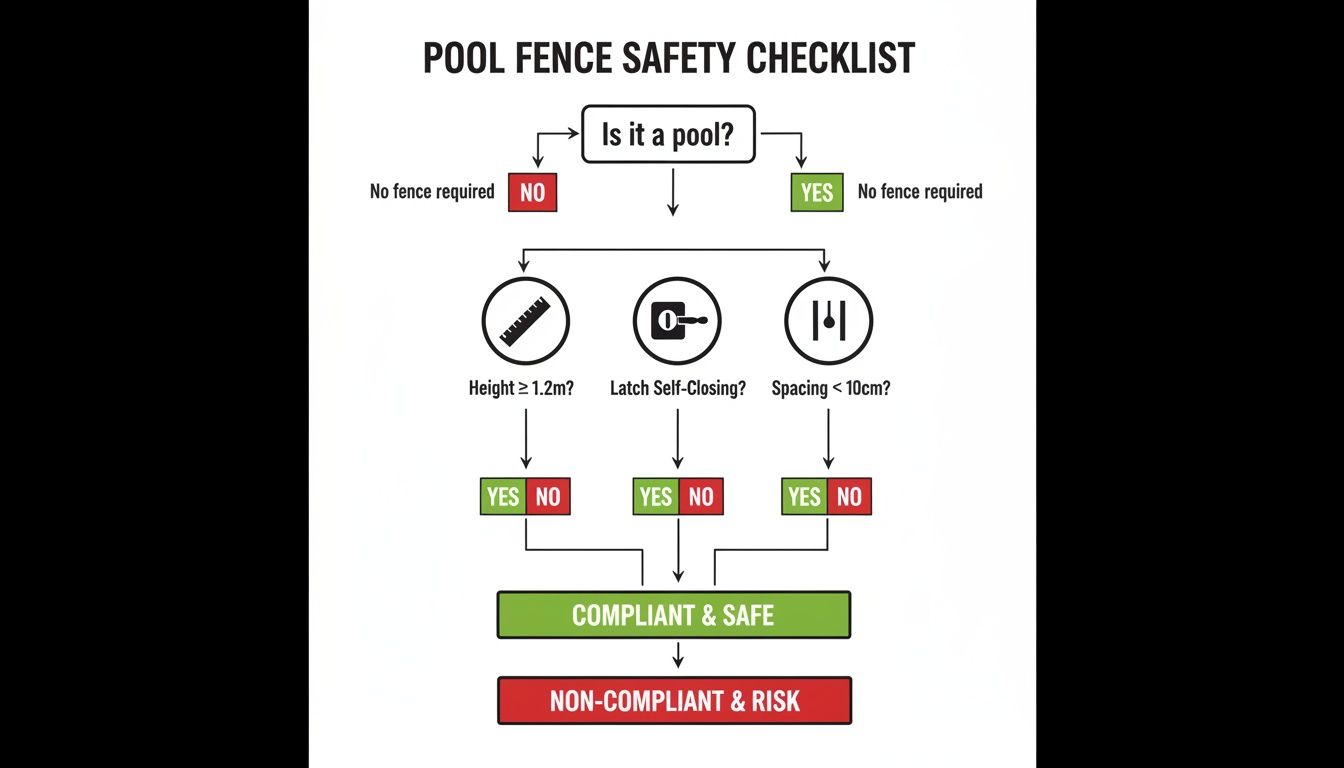
As shown, compliance is a system. The fence height, self-latching gate, and minimal ground clearance must all work together to create a secure enclosure.
What Is Your Realistic Budget?
Your budget determines which materials are viable. It's essential to consider both the initial installation cost and long-term maintenance expenses.
Your true investment is the total cost of ownership, which includes the upfront price plus all future maintenance, repairs, and potential replacement costs over the fence's life.
Ask yourself two questions to define your budget:
What is my upfront budget for materials and professional installation? This determines if premium materials like cedar or ornamental iron are feasible.
How much am I willing to spend on maintenance over the next 10 years? A low-maintenance PVC fence may cost more initially but could save you hundreds in staining and sealing costs compared to wood.
How Much Maintenance Are You Willing to Do?
Be honest about the time and effort you are prepared to invest in upkeep. Your answer to this lifestyle question will significantly impact your long-term satisfaction.
Low to No Maintenance: If you want a "set it and forget it" solution, focus on PVC/vinyl, ornamental iron, or chain link. These require little more than occasional washing.
Moderate Maintenance: If you appreciate the look of natural wood and are willing to perform upkeep every few years, a wood fence is an excellent option. It will require regular staining or sealing to protect it from Ottawa's weather.
By working through this checklist, you create a clear profile of your exact needs. This practical approach transforms a daunting list of options into a handful of choices perfectly suited to your home, budget, and lifestyle.
Bringing Your Fence Vision to Life: From Design to Installation
You've defined your goals and selected the right material; the final step is ensuring flawless execution. A professional installation is just as critical as the quality of the materials you've chosen. A poor installation will undermine even the most durable fence.
An experienced fencing contractor is a local expert who understands how to build for Ottawa's climate, navigates municipal building codes, and ensures your fence is structurally sound and built to last.
Finding the Right Fencing Contractor
A professional installer ensures your fence stands straight, your gates operate smoothly, and the structure is anchored deep enough to resist frost heave.
When vetting potential contractors, look for these signs of professionalism:
A Strong Local Portfolio: Request to see examples of their completed projects in the Ottawa area. A proven track record is the best evidence of quality.
Clear, Detailed Estimates: A professional quote itemizes all costs—materials, labour, permits, and debris removal—so you know exactly what you're paying for.
Knowledge of Local Bylaws: A competent contractor will be an expert on local codes, especially the non-negotiable requirements for pool enclosures.
Questions to Ask Before You Sign
Before hiring, ask direct questions to assess their expertise and process. A reliable partner will provide clear, confident answers.
If your design incorporates elements like stone pillars or brickwork, the project requires specialized masonry skills. For these integrated projects, it's crucial to find reputable masonry contractors with proven experience.
Choosing your installer is the final, most critical decision in your fencing journey. A great contractor doesn’t just build a fence; they provide peace of mind, ensuring your investment is secure and your property looks its best for decades.
This final stage is about execution. By partnering with a reputable team, you ensure every detail is handled professionally, protecting your investment and bringing your vision to life exactly as you imagined it.
Your perfect fence is just a conversation away. At FenceScape, we specialize in designing and installing high-quality fences that are built tough for the Ottawa–Gatineau climate. Book your free, no-obligation estimate today and let's build something great together.
Comments