
Your Guide to an Above Ground Fence for Pool Safety and Style
- Eric Lafleche
- Jan 20
- 11 min read
An above-ground pool fence is more than just a suggestion—it's a critical safety barrier required by most local bylaws. Its purpose is to completely seal off the pool area, preventing unsupervised access. While your pool's high walls might seem sufficient, a separate, non-climbable fence with a self-closing, self-latching gate is the non-negotiable standard for legal compliance and effective accident prevention. This guide provides the actionable steps to ensure your fence is safe, compliant, and stylish.
Why a Separate Fence Is Non-Negotiable
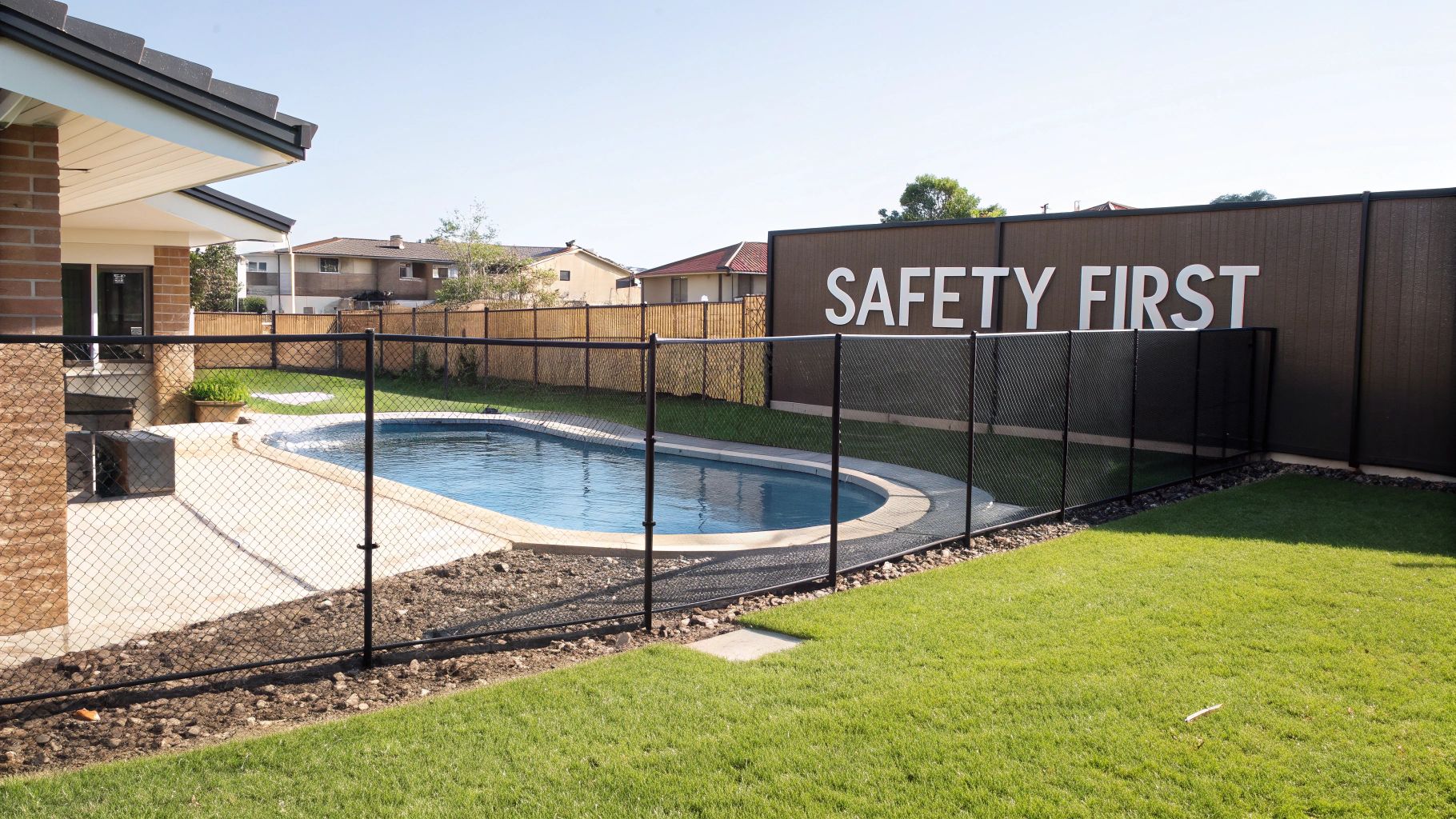
It’s a common mistake for new above-ground pool owners to assume the pool's high walls are a sufficient barrier. This creates a false sense of security. The reality is that local bylaws in Ottawa and Gatineau, which follow national safety standards, do not consider the pool structure itself a compliant enclosure.
The reason for this is accessibility. Pool ladders, pumps, filters, and even a nearby patio chair can quickly become a makeshift staircase for a curious child. Drowning is silent and can happen in seconds. Tragically, 71% of drowning deaths for children under 15 occur at a private residence, which underscores the need for a separate, purpose-built barrier.
More Than a Bylaw, It's Peace of Mind
Viewing a pool fence as merely a box to tick on a permit application misses its primary function: it's an active safety system. Think of it less as an expense and more as an investment in peace of mind for your family, pets, and neighbours. A proper fence creates a designated, secure zone that eliminates casual access.
This proactive step is about preventing "what if" scenarios. A child chasing a ball or a wandering pet doesn't see the pool wall as an impenetrable barrier; they see it as an obstacle to overcome. A dedicated fence removes that possibility entirely.
Actionable Tip: Implement multiple layers of protection. A compliant fence is your primary and most important layer. Supplement it with door alarms, a pool cover, and vigilant supervision to create a comprehensive safety net.
Turning a Requirement into an Asset
While safety is the top priority, a well-chosen fence can also enhance your backyard's aesthetics and boost property value. Modern fencing materials offer stylish designs that complement your landscaping and deck. An elegant ornamental iron or sleek PVC fence can frame your pool area, transforming it into a sophisticated backyard oasis.
By selecting a fence that meets safety codes while matching your personal style, you turn a legal necessity into a valuable asset. The right fence not only protects your loved ones but also beautifies your space, making your entire backyard safer and more enjoyable. To ensure your project is compliant from the start, review our actionable guide to pool safety fence requirements.
Getting to Grips with Ottawa and Gatineau Pool Bylaws
For homeowners in Ottawa or Gatineau, local bylaws can seem complex, but for pool safety, these rules are non-negotiable. They exist to prevent accidents. Adhering to these details from the beginning will save you from costly fines, rework, and the stress of a failed inspection.
The core of these regulations is creating a completely secure enclosure around your pool. This means your above ground fence for a pool is a legal requirement with specific standards you must meet.
The Numbers That Really Matter
While minor differences exist between the two cities, the core rules for pool fences in Ottawa and Gatineau are nearly identical. Here are the key measurements you must know before planning:
Minimum Fence Height: Your fence must stand at least 1.5 metres (about 5 feet) tall, measured from the ground on the outside of the enclosure. This height is specifically chosen to be difficult for a small child to climb.
Maximum Ground Clearance: The gap between the bottom of your fence and the ground cannot exceed 10 centimetres (4 inches). Any wider is a potential crawl space.
Vertical Slat Spacing: For fences with vertical pickets or bars, the space between them can be no more than 10 centimetres (4 inches).
An inspector will use a tape measure; being off by even a centimetre can result in a failed inspection.
Actionable Tip: Conduct a "climbability audit" around your proposed fenceline. Remove any object within one metre of the fence—like pumps, large planters, or sturdy tree branches—that could serve as a foothold. An inspector will consider these objects as effectively lowering the fence's height.
Why Your Gate is the Most Critical Safety Feature
Your pool gate is the single most important component of your safety system. As the only moving part, it's the most likely point of failure if not installed correctly. Bylaws in both Ottawa and Gatineau are very specific here.
Every gate providing access to the pool area must be:
Self-Closing: Equipped with spring-loaded hinges that automatically swing the gate shut after use.
Self-Latching: Outfitted with a latch that catches and secures the gate automatically as it closes, without manual intervention.
Latch Height: The latch must be on the inside of the gate, positioned at least 1.5 metres (5 feet) above the ground to keep it out of a child's reach.
These three features work together to ensure the gate is never left open by accident. These local rules are based on proven safety principles. For instance, studies from places like California have shown that strict standards, including 5-foot fences, can reduce drowning risks for young children by as much as 83%. You can learn more about California's rigorous pool fence laws at PoolGuardUSA.com.
Before buying materials, download the latest bylaws directly from the City of Ottawa or Ville de Gatineau websites. This is the only way to be 100% certain your plan is compliant.
Picking a Fence Material That Laughs at Canadian Winters
An Ottawa winter is harsh, particularly on outdoor structures. The constant freeze-thaw cycles, heavy snow, and strong winds will quickly expose any weakness in a fence. When choosing a material for your above-ground pool fence, you must consider long-term durability and maintenance, not just its appearance in summer.
Let's evaluate how these materials perform in our climate.
The Low-Maintenance Champions
If your goal is a "do it once and forget about it" solution, premium PVC is an excellent choice. Modern PVC is engineered with UV inhibitors to resist fading and is formulated to remain flexible in cold temperatures, preventing brittleness and cracking. It's the closest you'll get to a zero-maintenance fence, requiring only occasional washing.
Ornamental iron offers classic elegance and exceptional strength. Modern iron fences are treated with advanced coatings to prevent rust, making them a secure, long-lasting option. The open design provides an unobstructed view of the pool but offers minimal privacy.
Actionable Tip: Calculate the long-term cost. A lower upfront price might be appealing, but factor in the time and money required for maintenance over the next decade. Paying more initially for a low-maintenance material often saves you significantly in the long run.
The Timeless Appeal of Wood
A wood fence offers a classic aesthetic, and cedar is a superb choice for a pool enclosure. Its natural oils make it resistant to moisture and insects, a major advantage in a poolside environment. High-quality cedar can show 0% twist even after five years of exposure to Canadian weather, demonstrating its stability.
However, wood requires a commitment. To prevent weathering and rot, you must apply a fresh coat of stain or sealant every few years. If you are considering wood, our guide on cedar vs. pressure-treated fences provides a detailed comparison to help you decide.
Modern and Practical Alternatives
When function is the top priority, chain link is a no-nonsense, budget-friendly option. It is extremely durable and requires virtually no maintenance. While not the most stylish choice, its reliability for securing a pool area is undeniable.
For a sleek, contemporary look, glass fencing is unmatched. It provides a completely clear view of your pool—a significant safety feature—and looks stunning. The panels are made from tempered safety glass, making them much stronger than they appear and durable enough for winter. The main drawback is the need for frequent cleaning to avoid streaks.
No matter which material you choose, you must adhere to safety specifications. This infographic summarizes the key bylaw requirements for Ottawa-Gatineau.
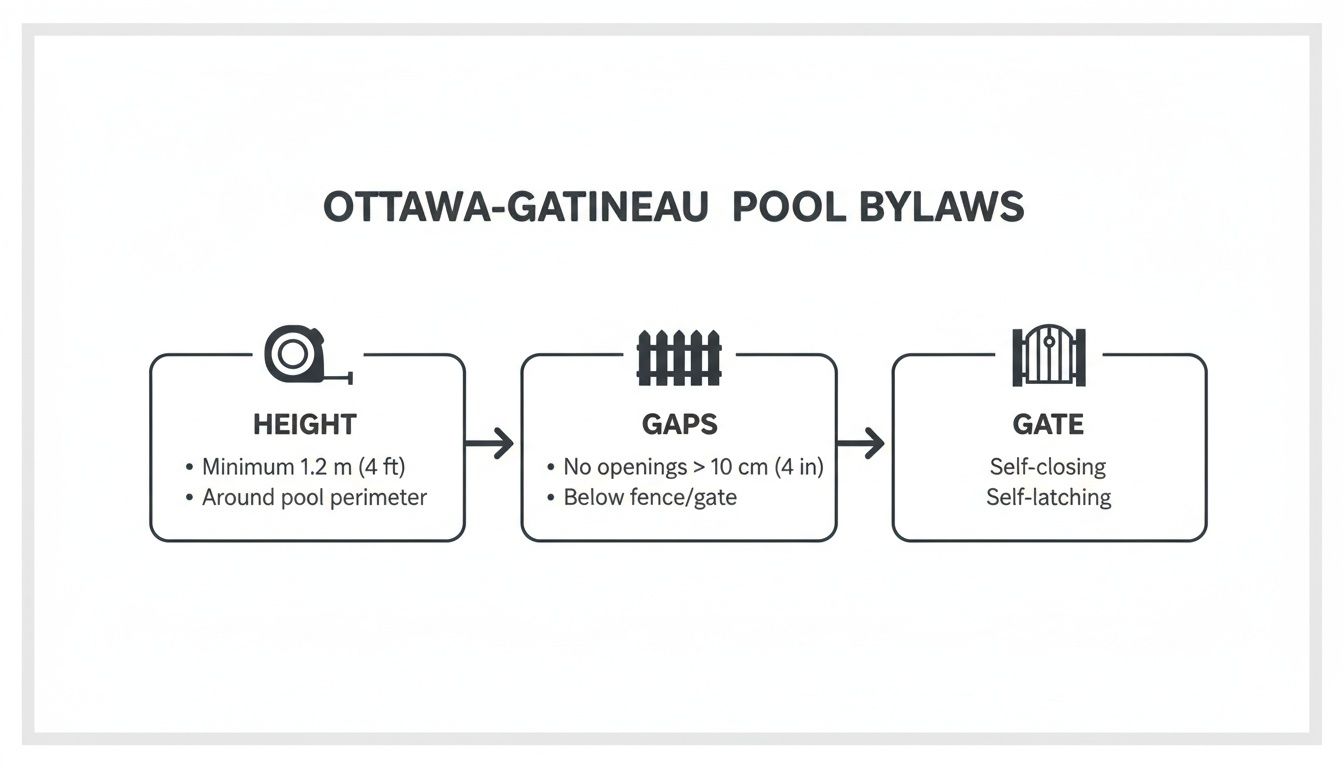
Treat these as your non-negotiables—the minimum height, maximum gap spacing, and self-closing, self-latching gate hardware are mandatory for every pool fence.
Above Ground Pool Fence Material Comparison
This table provides a quick comparison of the most common materials suitable for our local climate to help you make an informed decision.
Material | Upfront Cost | Maintenance Level | Durability in Winter | Best For |
|---|---|---|---|---|
Premium PVC | Mid to High | Very Low | Excellent; flexible in cold, resists cracking. | Homeowners wanting a durable, "set-it-and-forget-it" solution. |
Ornamental Iron | High | Low | Excellent; very strong, but check for rust-proof coatings. | Security and elegance with an unobstructed view. |
Cedar Wood | Mid to High | Medium to High | Good; naturally rot-resistant but requires sealing. | A natural, classic aesthetic with good privacy. |
Chain Link | Low | Very Low | Excellent; withstands snow load and impact well. | Budget-conscious owners focused purely on safety and security. |
Glass Panels | Very High | Medium | Good; tempered glass is strong but requires cleaning. | A modern, high-end look with maximum visibility. |
The best material balances your budget, aesthetic preferences, and willingness to perform upkeep. Given our harsh winters, prioritizing durability is always a wise investment.
Securing Your Fence The Right Way
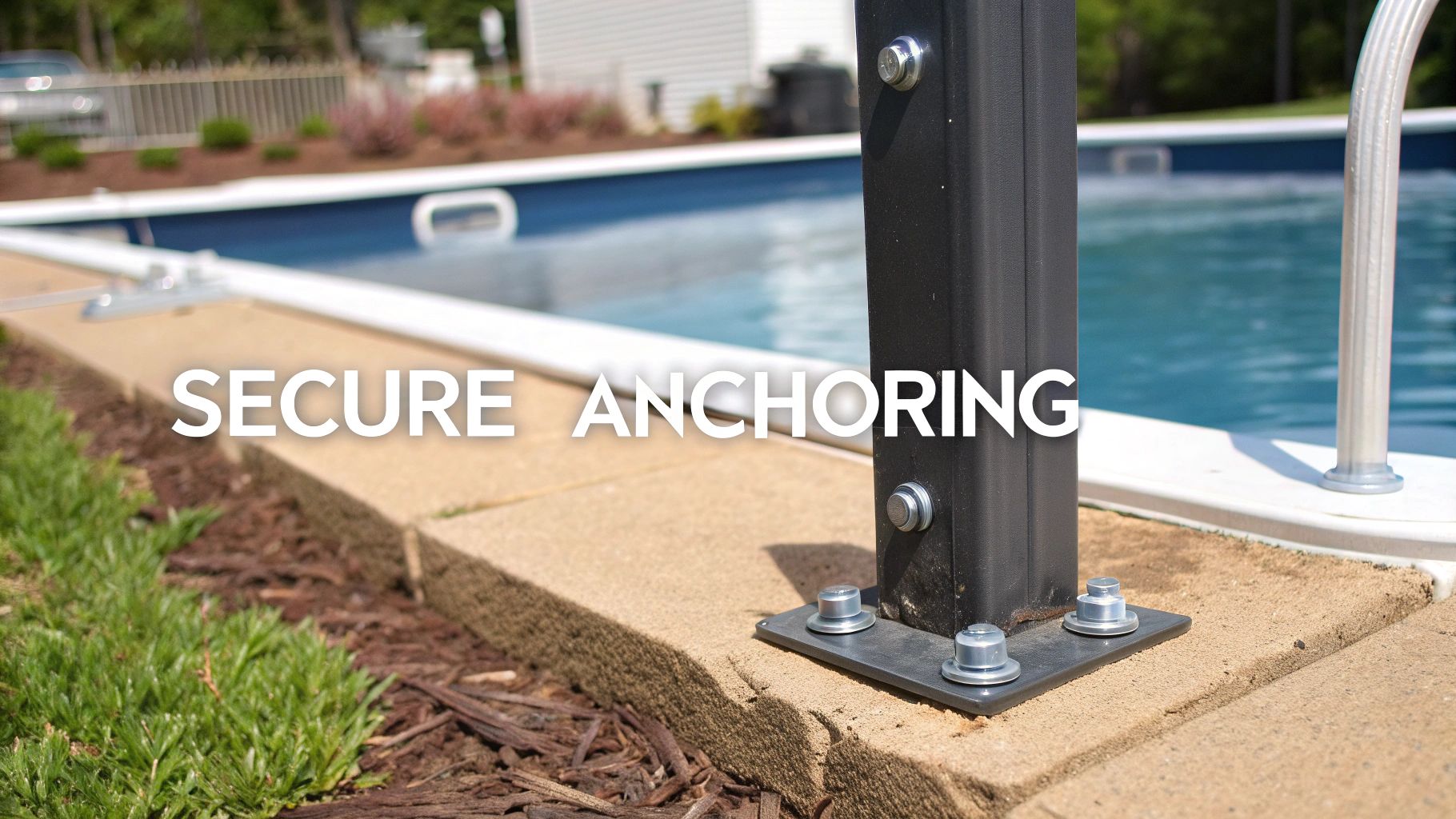
You can select the finest materials, but the method and location of anchoring your above ground fence for a pool are what ultimately ensure its safety. The entire fence structure relies on its connection points. A weak anchor renders even the strongest fence useless.
There are two primary methods for securing the fence: mounting it directly to the pool's frame or anchoring it into the surrounding ground or deck. Each method has specific requirements you must follow.
Mounting Directly to the Pool Structure
Attaching a fence directly to your pool's uprights can create a clean, integrated look. However, this is only a safe option if your pool was specifically engineered to handle the additional weight and lateral force from a fence.
Before considering this method, consult your pool manufacturer's manual. Drilling into the frame of a pool not designed for a fence will almost certainly void your warranty and could compromise the pool's structural integrity.
If your manufacturer approves this method, follow these steps:
Inspect the Uprights: Confirm the vertical supports are structural, not just decorative covers. Flimsy uprights are unsuitable for anchoring.
Use Specified Hardware: Always use the manufacturer-recommended mounting brackets. Do not substitute them with generic hardware.
Choose Stainless Steel: Whenever possible, use stainless steel hardware to prevent rust stains from dripping down your pool walls.
Anchoring to a Deck or the Ground
For most above-ground pools, the superior and more reliable choice is to secure the fence to a deck or directly into the ground. This creates an independent barrier that places no stress on the pool structure.
If installing on a deck, do not screw posts directly into the deck boards. You must bolt the fence posts through to the deck’s underlying joists or framing for a solid connection. If the joists do not align with your post locations, add blocking between them to create secure anchor points.
Actionable Tip: Test every post for stability before moving on. A wobbly post is a major safety hazard that can be pushed over by a child or strong wind. Take the extra time to ensure every post is rock-solid.
If you have no deck, you will set the posts in the ground. To build a fence that can withstand Ottawa's winters, you must dig post holes below the frost line and set each post in concrete. For a step-by-step guide on this critical process, read our article on cementing in fence posts the right way for a lasting build. This technique prevents frost heave, keeping your fence straight and secure for years.
Whether you mount to the pool, deck, or ground, proper anchoring is one task where cutting corners is never an option.
DIY Installation vs. Hiring a Professional
Should you install the pool fence yourself or hire professionals? This decision depends on your skills, budget, and available time.
A DIY approach can save money on labour, but it is a significant undertaking. A small mistake—a post that isn't perfectly plumb or a gate latch that's an inch too low—could lead to a failed inspection or, worse, an unsafe pool area.
This is more than just assembling panels. You are responsible for the entire project, from planning and permits to the final cleanup.
The DIY Project Checklist
If you're confident in your abilities, here is a practical checklist for your project plan.
Complete the Paperwork: Before purchasing materials, prepare and submit detailed plans to your local municipal office in Ottawa or Gatineau. This is a mandatory first step.
Locate Utilities: You must contact Ontario One Call or Info-Excavation in Quebec before you begin digging. They will mark any underground utility lines. Hitting a gas or electrical line is a dangerous and costly mistake.
Measure Everything (Twice): Carefully measure and stake out the entire fenceline. Precision is crucial to meet all local bylaw setbacks and height requirements.
Set the Posts: This is the most physically demanding and critical part of the installation. Posts must be set perfectly straight and anchored in concrete below the frost line to prevent winter heaving.
A common DIY error is incorrect gate installation. For example, some jurisdictions require self-closing, self-latching gates that open outward, with the latch positioned at least 54 inches high. Achieving this precision can be tricky.
Professional installers, like our teams at FenceScape, manage these details daily. We have even organized neighbourhood group discounts that can reduce costs by up to 20% for multi-home projects. We focus on meticulous site care to deliver a fence that will last 20+ years without issue.
What to Expect from a Professional Installer
Hiring an experienced contractor removes the guesswork and liability from your shoulders. A professional process should be transparent and result in a safe, compliant, and durable fence. It’s similar to understanding when to call a professional for home projects—sometimes, expertise is worth the investment.
A professional workflow should include these steps:
Initial Site Assessment: The contractor will visit your property to measure the space, assess the terrain, and discuss material options for your yard and budget.
A Clear, Detailed Quote: You should receive an itemized quote detailing all costs for materials, labour, and permit fees, with no hidden surprises.
Warranty Information: A reputable installer will provide a solid warranty covering both materials and workmanship—a significant advantage over a DIY project.
Final Walkthrough: Upon completion, the installer should walk the site with you to ensure you are satisfied with the work and demonstrate the gate's safety features.
Actionable Tip: When hiring a pro, ask for their experience with your specific municipality's inspectors. A contractor familiar with local bylaw enforcement knows exactly what inspectors look for, significantly increasing the likelihood of passing your inspection the first time.
Ultimately, the choice is a trade-off. DIY saves on labour but demands significant time and skill. Hiring a professional costs more upfront but provides peace of mind, a warranty, and a guaranteed result that meets all safety standards.
Answering Your Above-Ground Pool Fence Questions
Installing a new pool fence often raises several questions. Here are straightforward answers to some of the most common inquiries from homeowners.
How Much Does an Above Ground Pool Fence Cost in Ottawa?
The final cost varies based on the material, total length, and installation complexity.
As a general estimate, a basic chain link fence may cost $25 to $40 per linear foot, fully installed. Higher-end options like premium PVC or glass panels can range from $60 to over $150 per foot.
The only way to determine the exact cost is to get a detailed quote. A proper quote should itemize all costs for materials, labour, gate hardware, and permit fees, ensuring transparency and preventing unexpected expenses.
Actionable Tip: A professional estimate should function as a project plan. It should account for terrain, confirm material choices, and provide a clear financial roadmap to prevent budget overruns. Treat it as the blueprint for your project.
Do I Really Need a Permit for My Pool Fence?
Yes, almost certainly. In Ottawa and Gatineau, a building permit is mandatory for any new pool enclosure. This is not just bureaucracy; it's a critical safety measure. The permit process ensures your fence plan complies with all local safety bylaws before construction begins.
This step can save you from substantial fines or the costly requirement to tear down a non-compliant fence. Many professional installers can manage the permit application process for you, ensuring everything is filed correctly.
Can I Attach the Fence Directly to My Pool?
The answer depends entirely on your pool model. Some above-ground pools are specifically designed to support a fence system mounted directly onto their support uprights. However, attaching a fence to a pool not built for it can cause serious structural damage and will likely void your pool's warranty.
Always check your pool’s manual first. For the majority of homeowners, the safest and most reliable solution is a freestanding fence installed on the ground or deck surrounding the pool.
What Is the Best Way to Maintain My New Pool Fence?
Your maintenance routine will depend on the material you choose.
PVC and ornamental iron are low-maintenance options that typically only require occasional washing.
Wood fences (cedar or pressure-treated pine) need more attention. Plan to seal or stain them every two to three years to protect against moisture and sun damage.
Regardless of the material, make it a habit to regularly inspect your gate. The self-closing and self-latching hardware is your most critical safety feature, so ensure it is always functioning perfectly.
Ready to build a fence that's safe, stylish, and built to last? The team at FenceScape provides expert design and installation services across the Ottawa-Gatineau region. Get your free, no-obligation estimate today!