
Wrought Iron Fence Cost: Complete Guide for Ottawa–Gatineau

Standard ornamental steel fencing in Ottawa–Gatineau typically costs about C$80–C$180 per linear foot installed, while custom designs can reach C$150–C$280 per linear foot. A 100-foot residential run plus one gate commonly lands between C$10,000 and C$18,000 turnkey.
That's the number homeowners often need after they've started comparing quotes, sketched a property line, and realised the fence isn't just a row of panels. Height, gates, decorative fabrication, concrete footings, access, municipal rules, and future repainting can all change the final bill. A quote that looks reasonable per foot may no longer look reasonable once the installer measures a sloped yard, checks a corner-lot sightline, or learns that the fence will form part of a pool enclosure.
What a Realistic Wrought Iron Fence Budget Looks Like in Ottawa–Gatineau
A homeowner may start with a simple Ottawa plan: a decorative front-yard fence, one pedestrian gate, and a black finish. The budget changes once the site is measured. A local height restriction can limit the design, the gate may require reinforced posts, and an uneven grade can force stepped or individually fitted panels instead of a straight installation.
That makes wrought iron fence cost a project budget, not a lineal-foot calculation. Ontario guidance places installed wrought iron or aluminium fencing at about C$75–C$120 or more per linear foot, while broader Canadian estimates put wrought iron and aluminium around C$115–C$250 per linear foot. A Toronto-area guide reports homeowner projects from approximately C$4,200 to C$12,000 or more, depending on length and complexity, with an average historical project benchmark of about C$10,767. Use these figures for orientation only. Ottawa–Gatineau access, grade, design, municipal rules, and pool-enclosure requirements determine the actual quote. (Ontario fence installation cost guidance)
Where the money goes
Build the budget in four layers:
Fence panels and posts: Height, picket spacing, post dimensions, and the difference between tubular steel and genuinely forged work all affect the material allowance.
Installation: Concrete footings, layout, levelling, drilling, cutting, and gate alignment add labour. Rock, roots, narrow access, and slopes can increase site work.
Custom features: Scrolls, finials, curved sections, masonry columns, special spacing, and matching gates move the project beyond standard panel pricing.
Ownership costs: Coatings, repainting, rust treatment, hinge adjustment, and hardware replacement matter in a freeze-thaw climate. Include them before choosing a finish or design.
A Canadian pricing guide places standard wrought-iron-style or tubular-steel fencing around C$80–C$130 per linear foot for a 4-foot fence and C$100–C$180 for a 6-foot fence. Custom-fabricated wrought iron sits around C$95–C$180 per linear foot, while a 100-foot decorative run with one gate commonly totals C$10,000–C$18,000 turnkey. (Canadian fence cost estimator)
Practical rule: Require each contractor to list the material, finish, gate allowance, footing method, site work, permit-related assumptions, and exclusions. A per-foot price is incomplete unless those items are written down.
For a local comparison, review FenceScape's Ottawa–Gatineau fence cost guide, then treat its published range as a starting point for an on-site estimate. Confirm whether the quote includes compliance work and future maintenance, especially if the fence will form part of a pool enclosure.
Wrought Iron Fence Cost Breakdown by Installation Type
A homeowner comparing Ottawa or Gatineau quotes can receive very different prices for fences described as “wrought iron.” Confirm whether the proposal covers ornamental tubular steel or true custom wrought iron. Both can have a traditional black appearance, but their fabrication requirements differ. Standard panels use repeatable shapes, while custom work may involve individually made sections, hand-forged details, unusual dimensions, and more fitting on site.
Installed pricing reflects that distinction. Standard 1.5-metre spear-top fencing generally runs around C$80–C$140 per linear foot, custom designs around C$150–C$280, and true hand-forged wrought iron around C$150–C$400 or more per linear foot. Labour intensity usually drives the difference more than the quantity of metal. (Canadian wrought iron fencing tiers)
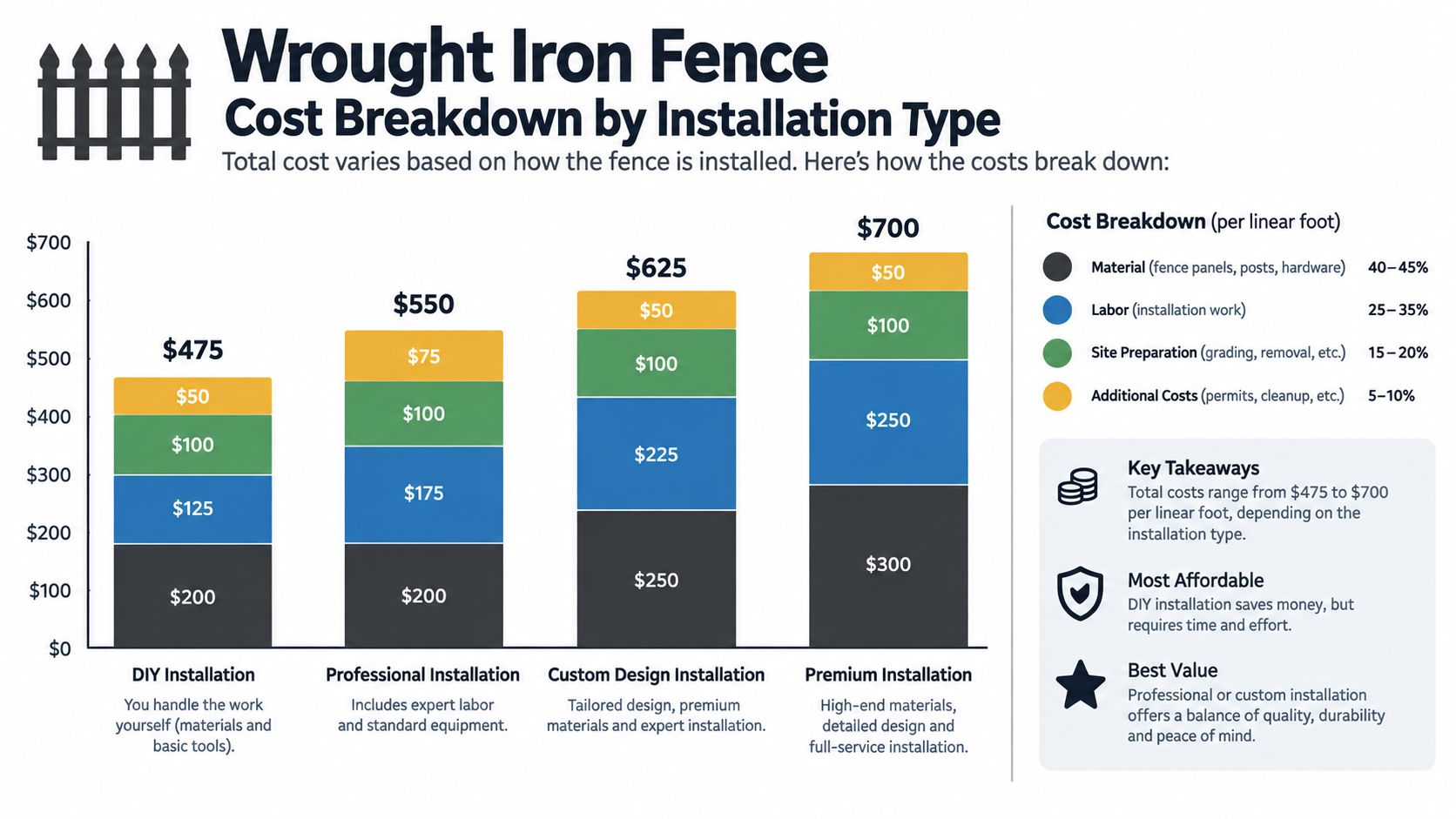
Four quote categories
Standard ornamental steel suits a long, fairly straight residential boundary. Factory-made panels keep fabrication predictable, while spear tops or simple pickets provide the traditional look without extensive metalwork. Choose this tier when curb appeal and clear property lines matter more than one-of-a-kind detailing.
Custom ornamental fencing costs more when panel widths must vary, an existing architectural feature needs matching, the fence follows a curve, or a specific pattern must be reproduced. Each departure from standard production adds measuring, drawing, fabrication, and fitting time. A simple-looking design can still require custom sections behind the scenes.
Estate gates and entrance features concentrate substantial cost in a small area. An estate gate may run around C$3,500–C$8,000, before elaborate masonry or automation. Accurate hinge alignment, reinforced posts, suitable latch hardware, and clearance for seasonal movement all affect the installation. Treat the gate as its own work package rather than assuming it is included in the fence rate.
True hand-forged work suits heritage properties and buyers who value artisan fabrication. Skilled labour and custom production explain the premium. For a standard perimeter, it is rarely a practical substitute when the visual difference will not matter.
For a broader comparison, review fence installation cost per foot, then match the published guidance against a quote that identifies the exact product tier. Require the contractor to state the panel type, fabrication method, gate allowance, footing assumptions, and exclusions. A prefabricated steel panel should not be priced or labelled as custom wrought iron without that clarification.
Common Add-Ons That Change Your Wrought Iron Fence Cost
The base fence often gets most of the attention because it's easy to price on a linear-foot basis. Add-ons are where homeowners discover whether a quote reflects the actual property. Two fences with the same length can require different posts, footings, coatings, gates, and preparation.
Add-on | Typical Price Impact | Best For |
|---|---|---|
Powder-coated finish | Raises the upfront finish allowance | Homeowners prioritising a consistent, durable appearance |
Anti-rust treatment | Adds a protective treatment allowance | Exposed metal in a wet, snowy, or high-maintenance location |
Decorative post caps and finials | Raises fabrication and fitting complexity | Front entrances and heritage-style homes |
Reinforced pedestrian gate | Increases post and hardware requirements | Frequent foot traffic and dependable latch operation |
Estate or driveway gate | Can become a major separate budget item | Wide vehicle access and formal entrances |
Upgraded concrete footings | Adds excavation and concrete work | Soft soil, tall sections, gates, or demanding site conditions |
Spend first on protection and structure
A premium finish only helps if the metal is prepared properly. Ask whether the coating system is factory-applied or completed after fabrication, how welds are treated, and how exposed post bases will be protected. Powder coating in Ottawa can help you compare finish choices, but the right option depends on the product and the installation environment.
Footings deserve similar attention. On a flat, accessible site with standard panels, conventional concrete installation may be adequate. A tall section, gate post, retaining wall, rocky ground, or frost-sensitive area may require a more involved method. Saving on concrete is a poor trade if posts shift and a gate begins dragging.
Gates change the economics
A pedestrian gate isn't just a short section of fence. It needs hinges, a latch, clearance, and posts that can carry repeated movement. Driveway gates add more weight and may require automation, power coordination, safety components, and additional adjustment.
Keep decorative details selective. A restrained pattern on the street-facing section can create the desired appearance, while simpler panels along a side boundary keep fabrication under control. The best savings usually come from reducing unnecessary custom work, not from choosing a weaker finish or undersized gate support.
How to Estimate Your Project Cost Step by Step
Start with the physical layout, not a catalogue photo. Walk the proposed fence line and mark every corner, opening, change in direction, slope, retaining wall, driveway, and pedestrian access point. A rough sketch is enough for the first budget, but the final quote should come from measured site conditions.
Build the estimate in six steps
Measure the fence line. Add the lengths of each straight run, then separate gate openings from fence sections. Don't measure only the front elevation if the project continues around a side yard.
Record height changes. Note where a front-yard section differs from a side or rear boundary. A taller fence needs different components and may fall into another pricing tier.
Choose the construction level. Mark each section as standard ornamental steel, custom ornamental fabrication, or true forged work. A mixed specification can control cost, especially when custom details are limited to the entrance.
Count and describe gates. List pedestrian gates, driveway gates, latch preferences, hinge requirements, and any automation. Gate posts and hardware should appear as separate quote lines.
Inspect the site. Look for slope, rock, tree roots, old concrete, narrow access, landscaping, and masonry. These conditions affect crew time and the equipment needed to install accurate footings.
Check compliance before ordering. Confirm municipal height, location, visibility, pool-enclosure, and setback requirements before fabrication. A redesign after panels are made is an avoidable expense.
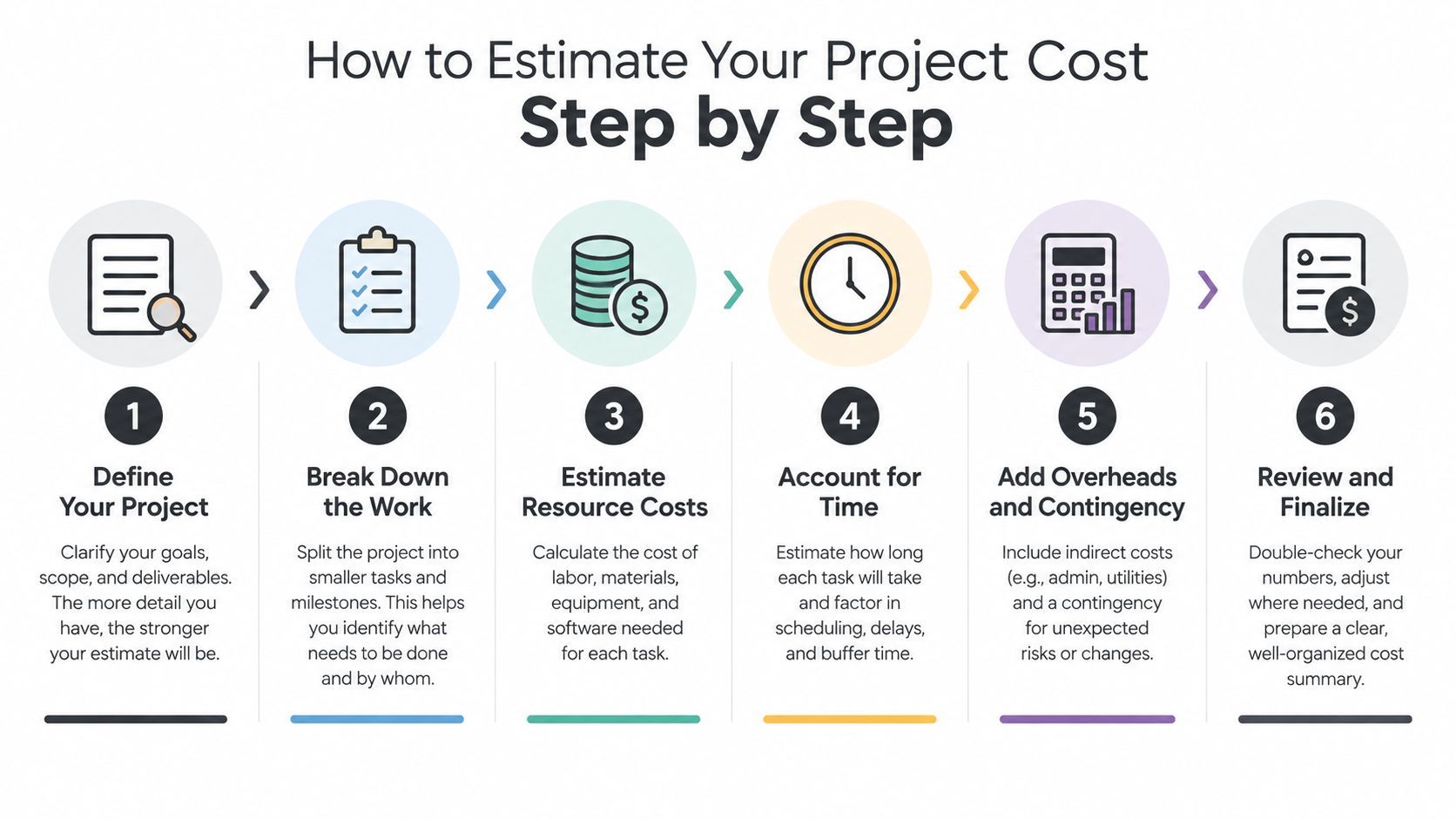
Turn measurements into a usable budget
Use the installed rate for the selected construction level, then add gates, unusual footing work, removal, grading, finishing upgrades, and any required approvals. Don't apply one rate to the entire property if the front entrance is custom but the side boundary uses standard panels.
Request a written quote that separates materials, fabrication, installation, gates, site preparation, finish, taxes, and exclusions. That format makes it easier to compare contractors because you can see whether one bid is cheaper or omits work another contractor included.
Ottawa and Gatineau Permit Rules That Affect Fence Budget
A standard residential fence in Ottawa usually does not need a building permit, but the exemption does not override municipal height or placement rules. A pool enclosure follows a separate process and requires its own permit. Confirm the address-specific requirements before ordering panels or gates through the Ottawa building permit FAQ.
Ottawa's published limits can change the design and its installed cost. Front-yard fences may be limited to 1 metre, while side- and rear-yard fences may reach 2.1 metres, subject to the applicable rules. Pricing a tall decorative perimeter before checking the street-facing section can lead to shorter panels, altered proportions, or a custom transition between areas. The same FAQ covers the relevant height guidance.
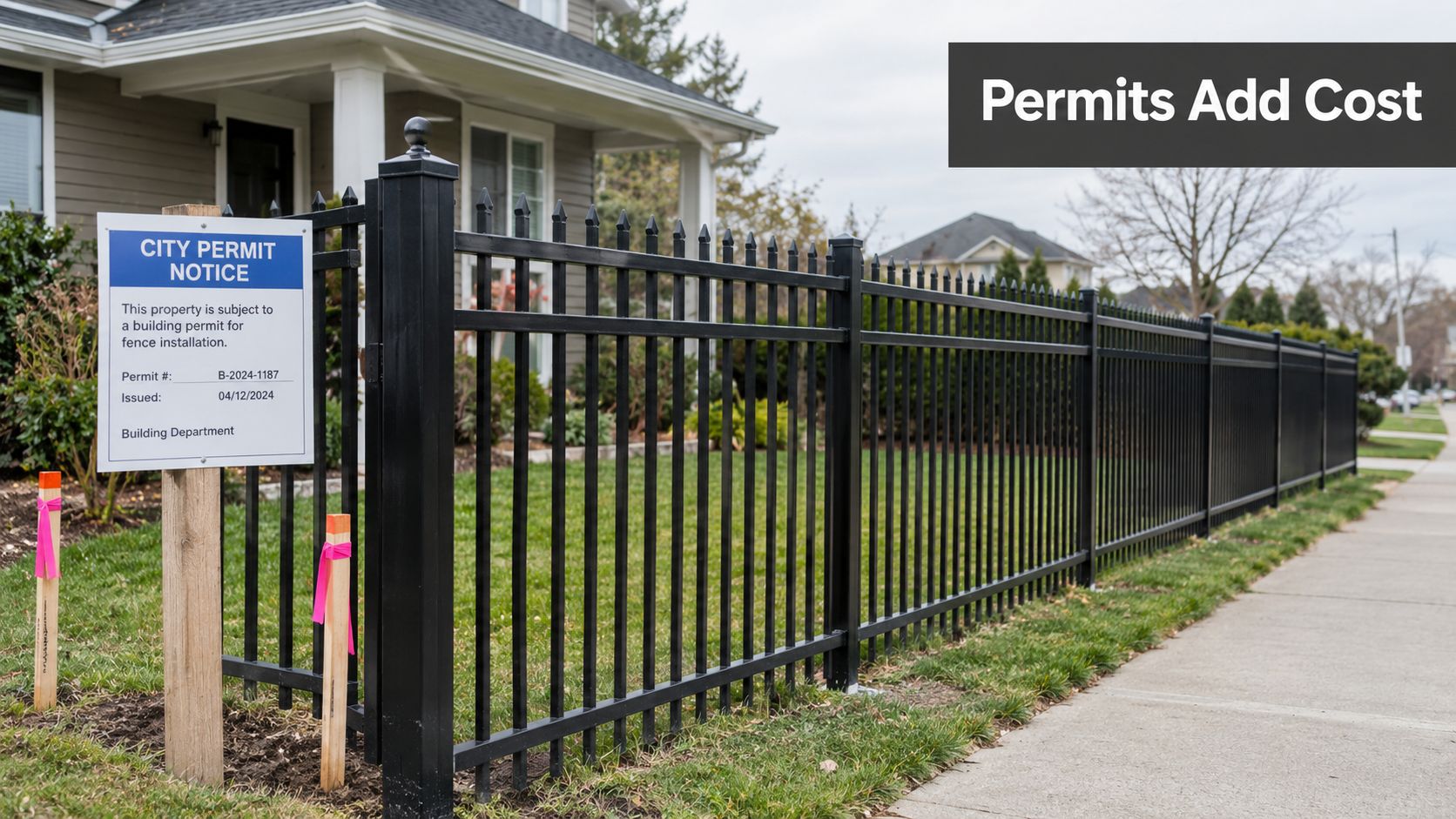
Situations that deserve an early check
Pool enclosures: Safety rules can affect height, gate swing, latch position, picket spacing, and the complete layout. Budget the enclosure as a regulated safety installation, not only as decorative metalwork.
Front and corner lots: Sightline rules may restrict height, placement, or solid-looking features near a driveway and street intersection. A design that works along the side yard may need a more open or lower section at the front.
Property lines and setbacks: Installing posts on an uncertain boundary can trigger a dispute and force expensive relocation. Confirm the line before excavation and fabrication.
Gatineau projects: Quebec requirements may differ from Ottawa's. Ask the municipality about permits, height, pool-enclosure rules, setbacks, and placement for the specific address rather than carrying an Ottawa assumption into the quote.
Verify compliance before settling the finished height and gate arrangement. Standard ornamental steel or wrought-iron-style fencing often sits in the C$80–C$180 per linear foot range, while custom work can reach C$150–C$280. A redesign caused by a height limit, pool requirement, or sightline issue can therefore affect a substantial part of the project budget. Include approval requirements and possible revisions in the written quote, not after fabrication begins.
Lifecycle Cost and Maintenance for Wrought Iron Fences in Canada
The installation invoice is only the starting point. Ottawa–Gatineau fences face moisture, snow, road salt, and repeated freeze-thaw cycles. Rust commonly begins at scratches, welds, cut edges, fasteners, and post bases. The coating, site conditions, and maintenance plan can therefore affect ownership cost as much as the design.
Canadian guidance commonly recommends repainting every 5–8 years to reduce rust risk. (Canadian fence maintenance guidance) Treat that interval as a planning guide, not a guarantee. A protected fence with an intact finish may need less work, while exposure to road salt or standing water can require earlier touch-ups.
Compare ownership choices honestly
A cheaper quote can lose its advantage if the finish needs frequent preparation or the design hides corrosion-prone areas. Ornamental details also have a trade-off. Forged scrolls, extra welds, joints, and concealed surfaces add places where moisture can remain, so decorative complexity may increase maintenance rather than reduce it.
Use a practical ownership routine:
Inspect regularly: Check welds, lower rails, post bases, hinges, and latch areas for chips or orange staining.
Clean deliberately: Remove dirt, salt residue, and trapped plant material before moisture sits against the metal.
Repair early: Sand and touch up small damaged areas before corrosion spreads beneath the finish.
Maintain gates: Adjust hinges and latches when movement changes. A dragging gate strains posts and hardware.
Plan repainting: Include the expected repainting cycle in the household budget from the start.
Ownership rule: Choose the fence whose material, finish, design, and maintenance demands match the time and money you will actually commit.
For a 15-to-20-year view, compare installation with repainting, corrosion repairs, gate hardware, and possible section replacement. Keep prefab ornamental steel separate from custom wrought iron when comparing lifecycle costs. Complex true wrought iron can reach C$150–C$400 or more per linear foot, so a lineal-foot quote alone does not show the eventual cost of ownership. Use the product type, finish specification, exposure to salt and moisture, and expected maintenance cycle to make the comparison.
Financing Options and Neighbourhood Group Savings
Premium fencing creates a cash-flow question as well as a design question. Ontario and Quebec homeowners can ask contractors about available financing and promotional programmes, then compare the total repayment cost with the price of paying directly. Look for the amount financed, interest or promotional conditions, payment schedule, and what happens if a promotional period ends.
Financing works best when the project is already clearly specified. Don't use monthly payments to make an undefined quote feel affordable. First settle the fence length, construction type, gates, finish, site work, compliance requirements, warranty terms, and taxes. Then compare financing offers against the written project total.
Group buying can reduce duplicated work
Neighbourhood coordination can help when several nearby properties need similar work. A contractor may be able to schedule adjacent installations efficiently, reduce repeated travel and mobilisation, and order compatible materials together. The discount isn't automatic, and each property still needs its own measurements, boundaries, gates, and site assessment.
A group arrangement works better when one organiser collects consistent information:
property address and contact details
approximate fence length
preferred material and finish
number and type of gates
access limitations
desired installation window
known pool or municipal requirements
Don't sacrifice individual specifications for a group rate. A townhouse end unit, a sloped lot, and an interior lot may not have comparable footing or access costs. Ask for separate written quotes with the group adjustment identified, rather than one blended figure that hides which homeowner pays for which work.
FenceScape offers financing for Ontario and Quebec customers and neighbourhood group discounts, subject to the programme and project details. Those options can help manage cash flow while keeping the fence specification consistent, but the written scope still matters more than the payment format.
Wrought Iron Fence Cost Decisions Checklist
A sound budget answers more than “What's the price per foot?” It identifies the product, the work, the rules, and the ownership obligations. Use the following checklist before accepting a quote.
Confirm the product
Construction: Is the fence tubular ornamental steel, aluminium, custom-fabricated steel, or true hand-forged wrought iron?
Dimensions: Are the height, post size, picket spacing, panel width, and gate openings written down?
Fabrication: Which portions are standard panels, and which are being made specifically for the property?
Finish: Does the quote include preparation, powder coating or paint, weld treatment, touch-up materials, and post-base protection?
Confirm the site
Measurement: Has the contractor measured every run, corner, slope, opening, and transition?
Footings: Does the quote explain the footing method and identify extra work for rock, roots, old concrete, or retaining walls?
Access: Can the crew reach the entire fence line without removing landscaping or using specialised equipment?
Removal: Are old fencing, concrete posts, brush, grading, and disposal included or excluded?
Confirm compliance and gates
Municipal rules: Have Ottawa or Gatineau height, placement, visibility, and setback requirements been checked?
Pool safety: If the fence encloses a pool, has the pool-enclosure permit and compliant gate hardware been addressed?
Gate operation: Are hinges, latches, clearances, reinforced posts, and automation specified separately?
Property line: Do you have enough boundary information to place the fence confidently?
Confirm the ownership plan
Maintenance: What cleaning, inspection, touch-up, and repainting work will the finish require?
Warranty: Which components are covered, for how long, and who handles adjustments after installation?
Long-term budget: Have you allowed for coating renewal, rust repair, and gate hardware over the fence's service life?
Payment: If financing or a neighbourhood discount applies, is the final project total clear before signing?
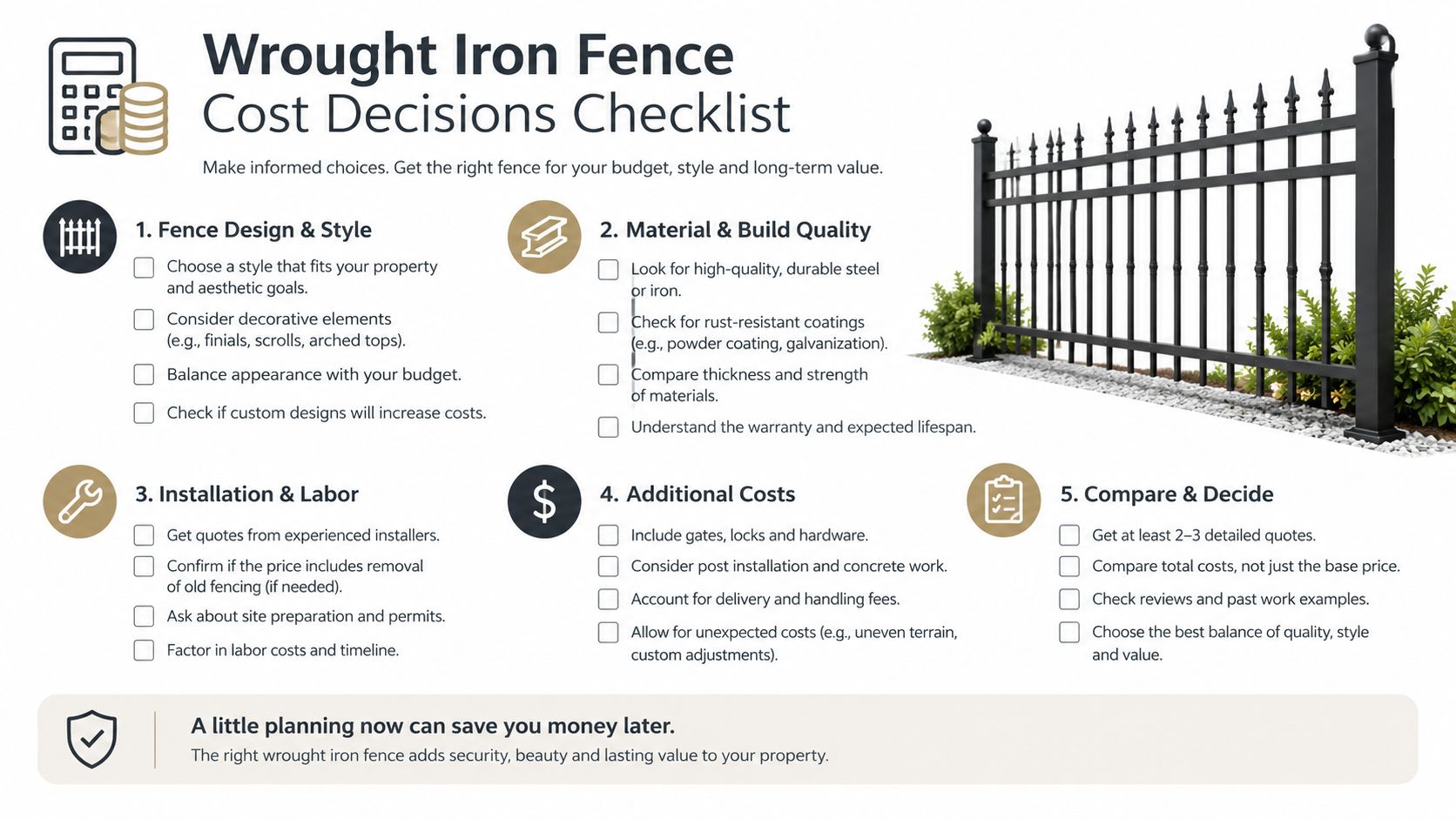
Get at least two detailed quotes using the same specifications, and don't compare a standard steel panel against custom forged work as though they're identical products. If you want a local team to measure the property, clarify compliance, price ornamental iron options, and provide a written scope, visit FenceScape to request an estimate for your Ottawa–Gatineau project. Their turnkey service covers planning, installation, and post-install support, with financing and neighbourhood options available for eligible projects.
Comments