
Metal Fence and Gates: A Practical Guide for Your Ottawa Home
- Eric Lafleche
- Jan 3
- 12 min read

When choosing a fence in Ottawa, you need a solution that withstands harsh weather and enhances your property. Metal fences and gates deliver a powerful combination of strength, security, and style that is difficult to match, making them a premium, long-term investment for any homeowner.
These fences are engineered to handle our Canadian winters, boosting your home’s curb appeal and adding measurable value along the way.
Why Metal Fencing Is a Smart Choice for Ottawa Homes
Selecting a fence in the Ottawa–Gatineau area is about more than just marking a property line. Your decision should focus on durability against heavy snow, freezing rain, and humid summer days.
A metal fence and gate system provides resilience that wood cannot. It won't warp or rot, standing strong against the elements year after year. This makes metal a practical, low-maintenance choice for any application, from securing a backyard pool to outlining a commercial lot.
How to Use Metal Fencing Effectively
Take a look at how metal fencing can solve common property challenges:
For Residential Security: Install a sturdy metal fence to create a formidable barrier that enhances security and curb appeal simultaneously.
For Pool Safety: To meet local bylaws, you must install a non-climbable, self-latching enclosure. Choose aluminum or steel to ensure compliance and safety.
For Commercial Durability: For business properties, a metal fence provides a professional look while protecting assets. To secure your perimeter effectively, explore the top commercial security gate solutions available.
Actionable Tip: Treat a metal fence as a permanent upgrade to your property, not just an expense. Its blend of timeless design and all-season performance delivers lasting value and makes it a smart investment for any Ottawa home.
If you're still comparing materials, use our complete guide to the best types of fences to evaluate your options in greater detail.
Choosing the Right Metal for Your Fence and Gate
Selecting the right material for your fence is the most critical decision you'll make, as it dictates its strength, lifespan, and appearance. For metal fences and gates, your primary choices are ornamental iron (typically steel) and aluminum. Each has distinct advantages, so your best choice depends on your specific goals for security, maintenance, and aesthetics.
Think of ornamental iron or steel as the heavyweight champion of fencing. It delivers maximum strength and security, making it the go-to for properties where durability is the top priority. Its weight serves as both a physical and visual deterrent.
In contrast, aluminum is the lightweight, modern contender. It is inherently rust-proof—a major benefit in Ottawa’s wet seasons and against corrosive road salt. Its lighter weight often simplifies installation, making it a preferred choice for pool enclosures or elegant garden perimeters.
This decision tree will help you determine which material aligns with your goals.
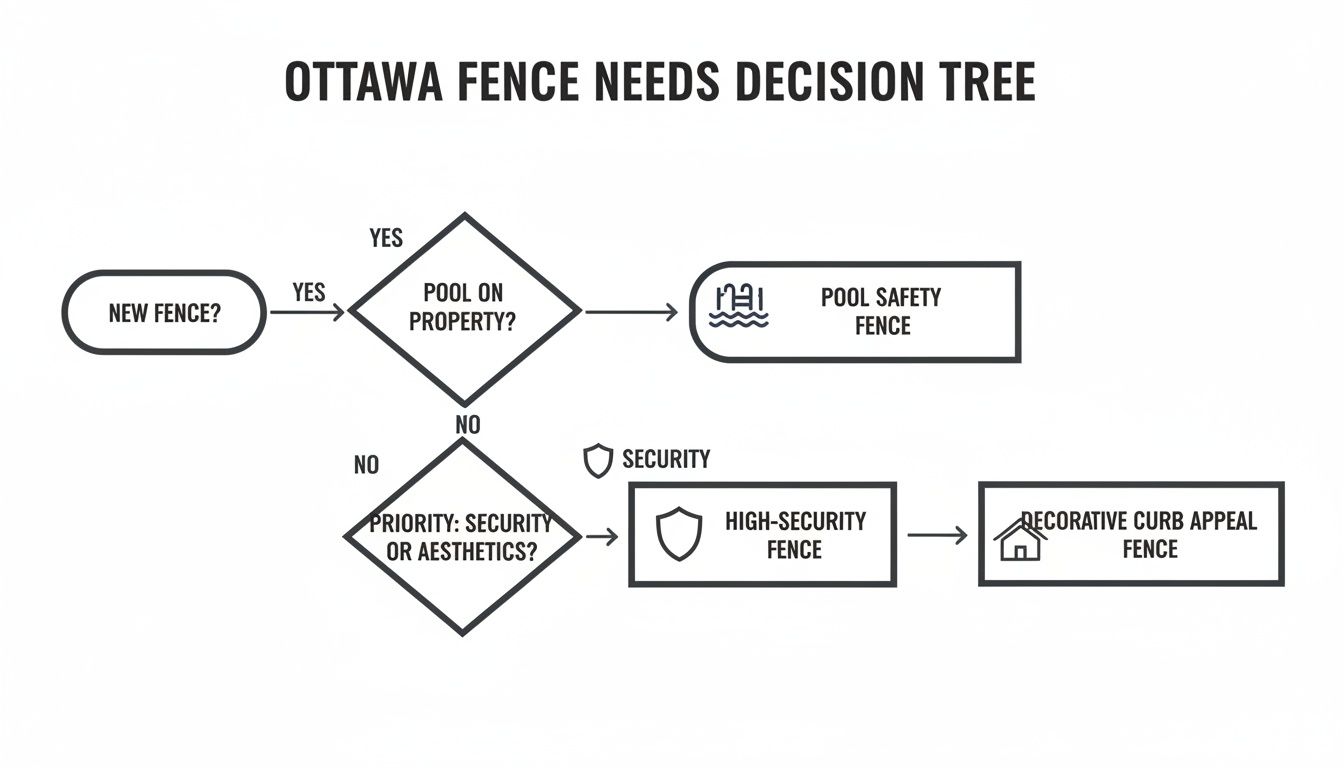
As the chart shows, if high security is your primary need, steel is the logical choice. If you require a rust-proof, low-maintenance fence for a poolside area, aluminum is the clear winner.
To simplify your decision further, here is a direct comparison of the most common metal fencing materials used in the Ottawa-Gatineau region.
Metal Fencing Materials at a Glance
Material | Best For | Durability | Maintenance | Typical Cost |
|---|---|---|---|---|
Ornamental Steel | Security, high-traffic areas, traditional aesthetic | Very High | Low to Moderate (depends on finish) | $$$ |
Aluminum | Pool enclosures, coastal areas, decorative uses | High | Very Low | $$ |
Wrought Iron | Custom, ornate designs, historic properties | Highest | High | $$$$ |
Galvanized Chain Link | Budget-friendly security, large perimeters | Moderate | Very Low | $ |
This table provides a high-level overview. Let's dig into the practical details of the two most popular options for residential and commercial properties.
Ornamental Iron and Steel: The Benchmark for Strength
When you need maximum resilience, choose steel. Ornamental iron and steel gates are extremely popular in the Ottawa-Gatineau region, accounting for approximately 28% of all fence installations. These fences, almost always powder-coated for rust resistance, are built to withstand temperatures as low as -30°C. This durability reduces replacement rates by 45% compared to wood over a 20-year period.
The only significant drawback is rust potential. Without a proper protective finish, iron and steel are vulnerable to our climate's harsh swings. For this reason, a quality factory finish is not an optional upgrade; it's a necessity.
Aluminum: The Lightweight and Low-Maintenance Choice
If you want a fence that lasts without requiring constant upkeep, aluminum is the superior option. It will not rust. This means you can eliminate scraping, sanding, or repainting to combat corrosion, making it a brilliant choice for properties near salted roads or for poolside fences exposed to constant moisture.
While not as physically imposing as steel, modern aluminum fencing is engineered for surprising strength, easily meeting safety and security codes for most residential and commercial buildings. When making your choice, remember that global economic factors, like the expansion of steel and aluminum tariffs, can impact material prices.
The Power of Protective Finishes
The long-term performance of any metal fence hinges on its finish. Think of it as a high-tech shield guarding your investment.
Powder Coating: This is not paint. It is an advanced process where a dry powder is electrostatically applied and baked onto the metal. The result is a thick, durable finish that is far more resistant to chipping, scratching, and fading.
Galvanization: Used primarily for steel and iron, this process involves dipping the metal in molten zinc. The zinc coating creates a powerful barrier against rust and dramatically extends the fence's lifespan.
Actionable Tip: Prioritize a high-quality factory finish (powder coating or galvanization) when selecting your metal fence. It is the single most important factor in ensuring it survives Ottawa’s freeze-thaw cycles and maintains its appearance for decades.
Understanding the True Cost of Your Fencing Project
When budgeting for a new metal fence, the price per linear foot is only a starting point. The final cost of a professional installation depends on several factors that shape your quote. Understanding these variables will help you make informed decisions that align with your budget and long-term property goals.
Think of it this way: the total distance of a road trip provides a baseline for fuel costs, but the final bill is determined by the route, vehicle type, and any premium stops. Your fence project is the same—key variables can significantly shift the total investment.
Key Factors That Shape Your Quote
A professional contractor assesses more than just your property line's length. On-site conditions and your design choices are what truly determine the final price.
Here is what to prepare for during a consultation:
Fence Height and Style: Taller fences require more material and deeper-set posts for support, increasing costs. Similarly, an intricate ornamental design will be a larger investment than a standard, functional style.
Challenging Terrain: A steep slope, rocky ground, or uneven landscape demands more labour, specialized equipment, and extra materials to ensure the fence is straight and secure.
Gate Complexity: A simple walk-through gate is the most budget-friendly option. Adding automatic openers, keypads, intercoms, or custom scrollwork will increase both material and installation costs.
Site Preparation: The quote must account for preliminary work, such as removing an old fence, clearing brush, or navigating around buried utility lines.
An Investment in Long-Term Value
While the initial cost is important, view a quality metal fence as a long-term asset, not a one-time expense. Unlike a wood fence that requires regular staining and eventual replacement, a properly installed metal fence is built to last for decades with minimal upkeep.
Actionable Tip: A well-built metal fence enhances property value, improves security, and boosts curb appeal for years. This lasting performance delivers a return on investment that outweighs the initial cost by saving you future time and money on repairs.
A practical way to manage costs is to collaborate with neighbours. We often coordinate installations for entire streets, which can lead to significant group savings. To see a detailed cost breakdown for a specific material, review our guide on the price of chain link fencing in Canada.
By considering these factors, you can budget confidently and select a fence that adds lasting value to your home.
What to Expect During the Installation Process
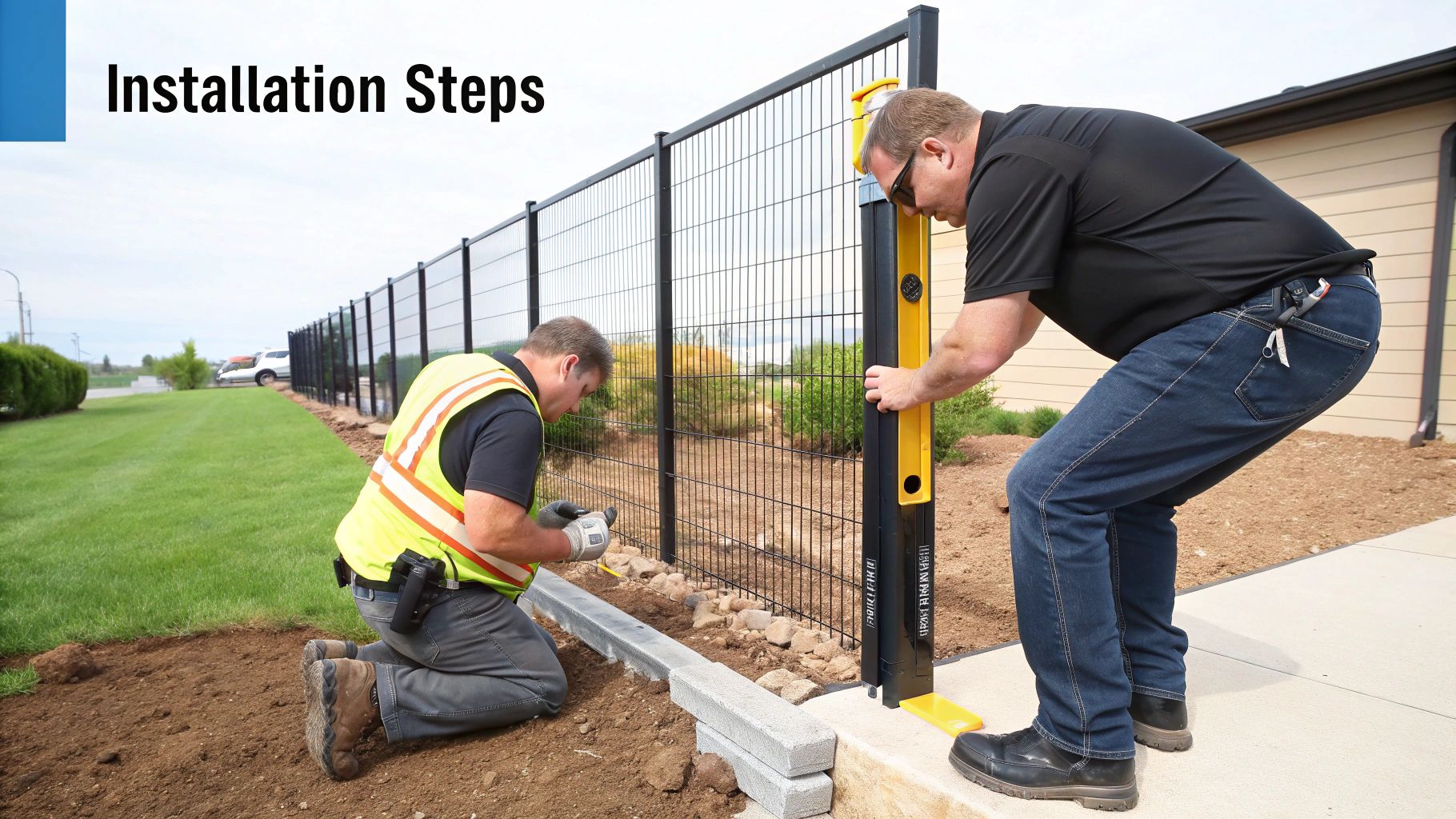
Understanding the installation process from start to finish demystifies the project and reduces stress. A professional installation is a meticulous process designed to ensure your metal fence and gates are perfectly aligned, structurally sound, and prepared for years of Ottawa weather.
From the initial planning to the final inspection, every step is deliberate. Knowing the project workflow allows you to prepare your property and feel confident in the process. It all begins with a detailed on-site plan to map every detail.
From Initial Layout to Final Cleanup
A quality fence installation follows a proven methodology. While every yard is unique, these core steps ensure a smooth and successful project.
Here is the typical project workflow:
Site Assessment and Layout: On day one, our crew leader will walk the property with you to confirm the final fence line and gate locations. We then mark everything with stakes and string lines to ensure precision.
Excavation and Post Setting: This is the most critical stage. We dig post holes deep enough to extend below the frost line, which is essential for preventing frost heave during Ottawa's winters. Each post is then set in concrete and made perfectly level.
Panel and Gate Installation: Once the concrete has cured, our team returns to install the fence panels and hang the gates. We meticulously check alignment to achieve a seamless, professional finish.
Final Inspection and Site Cleanup: We perform a final walkthrough with you to ensure your complete satisfaction. After your approval, our crew conducts a thorough cleanup, leaving your property tidy and your new fence looking fantastic.
Why Proper Footing Depth Is Non-Negotiable
In the Ottawa–Gatineau region, the ground is subject to constant freeze-thaw cycles. If fence posts are not set deep enough, frost heave will push them out of the ground, ruining the fence's alignment and structural integrity.
Actionable Tip: Ensure your contractor sets posts below the local frost line—typically 48 inches (122 cm) in our area. This is the only way to guarantee your metal fence remains straight and stable for decades. It is the foundation of a lasting installation.
Achieving proper footing depth requires experience and specialized equipment. For more technical details, review our guide on cementing in fence posts the right way.
The Advantage of In-House Crews
When selecting a fence company, ask who will perform the installation. We use our own dedicated, in-house crews rather than subcontractors. This model ensures greater accountability and consistent quality control.
Our team members are trained to our high standards, guaranteeing expert workmanship on every project. This direct oversight allows us to confidently stand behind every fence we build.
Navigating Local Bylaws and Safety Regulations
Installing a new fence requires adherence to local rules. In the Ottawa–Gatineau area, bylaws govern everything from fence height to specific safety features, especially for pools. Understanding these regulations upfront will help you avoid costly mistakes, project delays, and potential liability issues.
The regulations primarily focus on two areas: height limits for front and back yards, and strict safety requirements for pool enclosures. These are not mere suggestions; they are legal mandates designed to ensure safety for everyone. A code-compliant fence is a safe fence and your best tool for protecting your family and property.
Understanding Pool Enclosure Requirements
For swimming pools, safety is paramount. The Ontario Building Code enforces specific, non-negotiable rules for pool enclosures to prevent accidents. This involves building a completely secure perimeter, not just a simple fence.
Here are the mandatory requirements:
Minimum Height: Your fence must be at least 1.2 metres (4 feet) high to prevent a small child from climbing over it.
Non-Climbable Design: The fence cannot have horizontal rails or other features that could be used as a ladder. Pickets must be spaced closely enough to prevent anyone from squeezing through.
Self-Closing and Self-Latching Gates: Every gate must have hardware that automatically pulls it shut and latches it. The latch must be positioned high enough to be out of a small child’s reach.
Ontario's updated Pool Barrier Code now mandates that 90% of new enclosures must have self-closing metal gates. This is more than a regulatory requirement; for commercial properties, such an upgrade can increase property values by 12-18%, making a quality metal fence a smart financial decision. You can find more research on the impact of quality fence construction to support this.
Security Standards for Perimeter Fencing
Beyond pool safety, metal fences and gates are essential for general property security. While residential bylaws often focus on aesthetics, commercial sites require fences designed primarily for access control.
Actionable Tip: A well-designed security fence should be an active deterrent. Incorporate features like anti-climb tops, robust materials, and controlled access points to protect commercial assets and ensure tenant safety.
This is where you see features like anti-climb designs, where the top of the fence curves outward to make scaling it nearly impossible. For even tighter control, many property managers are turning to automated access systems like keypads or card readers. This not only controls who gets in but also creates a log of all entries and exits. It's in these heavy-duty security applications that professional-grade metal fencing really shines.
How to Choose the Right Fencing Contractor
Choosing the right material for your metal fence and gates is important, but selecting the right installation team is equally critical. A high-quality, long-lasting fence is the direct result of skilled craftsmanship. The contractor you hire will determine whether your investment stands the test of time or becomes a source of future problems.
When searching for a professional in Ottawa, look beyond the initial price. The real value lies in a contractor's experience, reputation, and proven installation process. A great contractor acts as a project partner, guiding you through material selection, explaining local bylaws, and ensuring the final product is built to withstand our climate. It all comes down to asking the right questions.
Vetting Potential Fencing Companies
Before collecting quotes, conduct some initial research to create a shortlist of reliable companies. This due diligence can save you from significant headaches later.
Here is your checklist for vetting a contractor:
Verify Their Insurance and WSIB: A reputable company must have full liability insurance and Workplace Safety and Insurance Board (WSIB) coverage. This is non-negotiable and protects you from liability for on-site accidents.
Review Their Portfolio: Examine their gallery of recent, local projects. Confirm they have experience installing the specific style of metal fence you want. A strong portfolio is direct proof of their capabilities.
Check Recent Testimonials: Look for reviews on independent platforms like Google or HomeStars to get an unbiased view. A consistent pattern of positive feedback is a strong indicator of reliability.
Actionable Tip: A contractor’s reputation is built one project at a time. Choose a company that is transparent about its credentials, proud of its work, and valued by past clients.
Key Questions to Ask During a Consultation
Once you schedule consultations, use this opportunity to ask questions that reveal a contractor's expertise and operational standards. Go beyond just the cost.
Here is a list of essential questions:
How do you prepare the ground for Ottawa's winters? The correct answer must include digging post holes below the frost line, which is at least 48 inches deep. Anything less is a major red flag.
Do you use in-house crews or subcontractors? Companies with their own teams typically offer better quality control and accountability.
What steps do you take to protect my landscaping during installation? A professional will have a clear plan to minimize damage to your lawn, gardens, and sprinkler systems, showing respect for your entire property.
What is your process for site cleanup after the job is done? They should commit to leaving your yard as clean as they found it, with no dirt piles, stray materials, or packaging left behind.
What kind of warranty do you offer on your workmanship and materials? A strong warranty demonstrates confidence in their work and the products they use. Ensure you understand what is covered.
Got Questions? We've Got Answers
Even with this guide, you may still have questions. Investing in a new fence is a significant decision that affects your home's security and aesthetics, so it's important to have all the facts.
Let's address the most common questions from Ottawa homeowners.
Will a Metal Fence Just Rust Away in Our Ottawa Winters?
No, not if it's a modern, high-quality fence. Today's metal fences are engineered with advanced protective finishes like powder coating or galvanization. These finishes act as a barrier against moisture, road salt, and our region's harsh freeze-thaw cycles.
When installed correctly, a modern metal fence is one of the most durable, low-maintenance options available, built to withstand a Canadian winter without issue.
How Does the Cost of Metal Stack Up Against a Wood Fence?
The initial investment for a metal fence is typically higher than for a standard wood fence. However, this only reflects part of the total cost of ownership. A wood fence requires regular staining, sealing, and repairs to prevent rot and warping—ongoing expenses of both time and money.
A quality metal fence can last two to three times longer than a wood fence with almost no upkeep. When you calculate the total cost over the fence's lifespan, metal is almost always the more economical choice.
Actionable Tip: Think of a metal fence as a one-time investment in a permanent solution. It boosts your home's value and security without the recurring maintenance costs and labour associated with other materials.
But Can I Actually Get Privacy With a Metal Fence?
Yes. While classic open-picket designs are popular, modern options are far more versatile. Many homeowners now opt for hybrid designs that combine a strong steel frame with wood or composite privacy panels, giving you the best of both worlds.
You can also choose solid metal panel designs for a complete visual barrier. Through custom fabrication, you can achieve the exact level of privacy you need without sacrificing the superior strength and longevity of metal.
Ready to invest in a fence that offers lasting beauty and performance? The team at FenceScape is here to help you design the perfect solution for your Ottawa–Gatineau property. Contact us today for a free, no-obligation estimate.
Comments