
Chain Link Types: Ottawa-Gatineau Fence Guide

You've probably reached the point where the old fence has made the decision for you. After an Ottawa winter, the mesh may be sagging, a gate post may have shifted, or the silver finish may look out of place beside an otherwise well-kept yard. The replacement quote then introduces a problem that sounds simple but isn't: chain link can mean several different combinations of fabric, coating, wire gauge, posts, rails, and privacy accessories.
The right choice depends on more than appearance. Ottawa-Gatineau freeze-thaw cycles, road salt, snow clearing, wind exposure, property use, and municipal rules all affect which chain link system is legal and sensible. The comparison below gives you the starting point.
Chain link type | Main advantage | Main limitation | Typical fit |
|---|---|---|---|
Galvanized steel | Practical, economical, corrosion-resistant zinc finish | Silver appearance may not suit every residential lot | Utility boundaries, commercial sites, budget-conscious projects |
Black vinyl-coated steel | Blends more easily with landscaping and residential surroundings | Higher upfront material cost and coating can be damaged by impact | Residential yards, pool areas, appearance-sensitive sites |
Green vinyl-coated steel | Softer visual integration with vegetation | Requires matching coated framework and careful specification | Landscaped residential and institutional properties |
Heavy-gauge chain link | Greater resistance to cutting, impact, and repeated use | More material cost and a stronger supporting structure | Security perimeters and commercial yards |
Chain link with slats or screens | Adds privacy and can reduce sightlines | Solid inserts increase wind load on posts and footings | Backyards, townhouse lots, service enclosures |
Understanding the Core Chain Link Types
A homeowner in Gatineau once described the problem clearly: the fence had survived the snow, but the system had not survived the way the property was used. The fabric was still present, yet the gate dragged, the corner had pulled out of alignment, and the lower mesh had taken repeated hits from winter equipment. Replacing only the visible mesh would have left the weak framework in place.
That's why “chain link” isn't a sufficient specification. A complete system has fabric, line posts, terminal posts, corner posts, rails, tension components, fittings, and gates. The fabric creates the barrier, but the framework carries tension and transfers wind, impact, and gate movement into the ground.
Ontario treats chain link as a formal infrastructure product, with separate construction and materials requirements. OPSS 772 covers installation, while OPSS 1541 covers components, and the provincial installation specification was revised in April 2023 and remains active in the 2026 posting. The Ontario chain-link installation specification also reflects the fact that systems are specified by dimensions and coating type, not sold as one universal product.
The parts that change the result
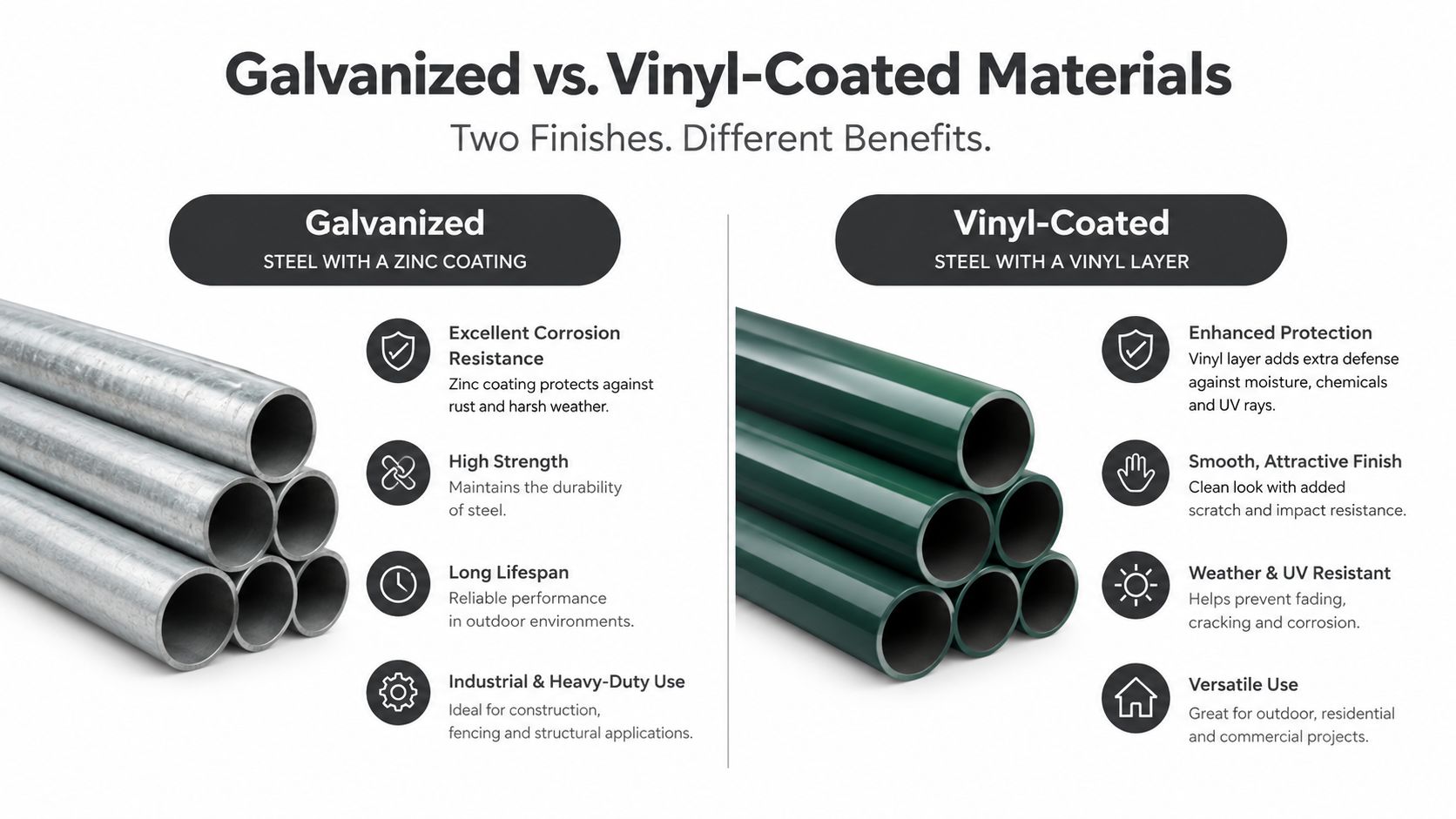
Galvanized fabric has a zinc coating over steel. Vinyl-coated fabric adds a coloured outer layer, normally over a galvanized steel core, but the posts, sleeves, and rails must also be matched when coated fabric is selected. A contractor who quotes black mesh with uncoated silver posts hasn't delivered the same visual or material system as a fully matched installation.
Fabric width matters as well. Ontario identifies common widths of 1,200 mm and 1,800 mm, so the height of the fence should be confirmed before the quote is accepted. A taller fence also changes the demands on posts, rails, bracing, and footings.
Practical rule: Ask for the fabric coating, core wire gauge, mesh size, post type, line-post spacing, and footing design in writing. “Heavy-duty chain link” by itself doesn't tell you enough.
Residential and commercial systems can look similar from the street while performing very differently. A backyard boundary may prioritise legal height, appearance, and safe gate operation. An equipment yard may prioritise resistance to impact, climbing, and cutting. Paying for commercial specifications on a simple residential boundary can waste money, while using light materials around a busy commercial lot usually creates maintenance problems.
Comparing Galvanized and Vinyl-Coated Materials
The coating is often the most visible decision, but it also affects how the fence handles moisture and damage. Galvanized chain link uses zinc to protect the steel, giving the familiar silver-grey finish. Vinyl-coated chain link adds a coloured polymer layer, usually black or green, to change the appearance and provide another barrier over the underlying wire.
For a commercial boundary where appearance is secondary, galvanized remains a sensible default. It's straightforward, widely available, and usually the lower-cost option. The finish also makes scratches easy to identify and repair. In an Ottawa-Gatineau setting, however, the fence may face more than ordinary rain. Road salt, wet snow, lawn chemicals, and repeated contact with snow-removal equipment can all damage or contaminate exposed surfaces.
Vinyl coating earns its premium when neighbourhood fit and visual softness matter. Black mesh tends to recede against trees, gardens, and shadows, while green can sit more gently beside planted areas. A residential owner may accept the higher initial cost because the fence looks less industrial from the yard and from the street.
Galvanized is not automatically inferior
A common mistake is to treat vinyl-coated mesh as a universally better version of galvanized chain link. It isn't. The practical question is whether the extra coating solves a real problem on your property.
Galvanized is often the better fit for:
Utility boundaries: The silver finish is acceptable where the fence's main job is containment or separation.
Commercial perimeters: Long runs can favour a practical, easily specified material when appearance isn't central.
Tight budgets: A lower initial specification can leave room for stronger gates, better footings, or site preparation.
Visible impact areas: Vinyl can be torn or cut by equipment, exposing the steel core. Galvanized damage is easier to inspect directly.
Vinyl-coated systems are often worth considering for:
Residential lots beside homes: Ottawa rules require chain link beside residential properties to be vinyl- or powder-coated, a requirement that can eliminate raw galvanized fabric from many installations.
Pool areas: A coloured, matched system can integrate more cleanly with the surrounding grounds.
Neighbourhood-facing fences: Black or green may be more acceptable than bright metallic mesh.
Sites exposed to salt and persistent moisture: The added outer layer provides another line of defence, provided the coating and framework are specified correctly.
The coating only works as a system. Ontario's component requirements call for galvanized steel framework and, when vinyl-coated fabric is used, matching vinyl-coated posts, post sleeves, and rails. The Ontario chain-link component standard distinguishes Type E electric resistance welded and Type F continuous welded framework, and requires hot-dip zinc coating on framework components.
Selecting Mesh Gauges and Framework Specifications
Two fences can share the same colour and height while offering very different security. The key variables are wire gauge, mesh opening, fabric width, post spacing, rail arrangement, and footing design. These aren't decorative details. They determine how easily someone can distort the mesh, climb the fence, push against it, or damage it with regular site activity.
Wire gauge runs counter to what many people expect. A lower AWG number represents thicker wire. The Canadian security-fencing guidance identifies a range from 14 AWG to 6 AWG, excluding the coating, with 6 AWG representing a substantially heavier wire than 14 AWG. Mesh size also changes the result, with the guidance identifying openings from 2 3/8 in. to 3/8 in. Smaller openings make the fabric more difficult to reach through and can be appropriate where security is more important than a light visual boundary.
Wire Gauge (AWG) | Mesh Size | Best Use Case |
|---|---|---|
14 AWG | Larger opening within the specified range | Basic containment where security demands are modest |
Mid-range gauge | Medium opening selected for the site | General residential or institutional boundaries |
6 AWG | Smaller opening within the specified range | High-security and heavy-use commercial perimeters |
The RCMP Canadian security-fencing guide identifies five selection variables, including wire gauge, mesh size, fabric width, and edge finish. It also recommends a minimum security-fence height of 2.4 m, though that recommendation doesn't override local zoning rules or a site-specific security design.
Framework is where cheap specifications show
Posts and rails keep the tensioned fabric in shape. Federal installation guidance sets line posts no more than 3.1 m apart, requires brace rails on fences 1.8 m and taller, and says footing design must follow the National Building Code of Canada. A companion steel-framework standard sets maximum line-post spacing at 3 m unless otherwise specified, so the final spacing should be confirmed against the chosen standard and project design in the quote.
The Canadian 2024 chain-link installation standard is useful when a proposal sounds vague. Ask whether the framework is Type E or Type F, whether components are hot-dip galvanized, how the line posts are spaced, and how corners, ends, and gates are reinforced.
For a homeowner comparing fabric options, chain link fence fabric specifications can help clarify the terminology before requesting prices.
The wire gauge doesn't operate alone. A heavy fabric on undersized posts can still fail at the framework. A properly selected mesh with weak gate posts can produce a sagging entrance. Match the fabric, posts, rails, hardware, and footings as one engineered system.
Integrating Privacy Slats and Wind Screens
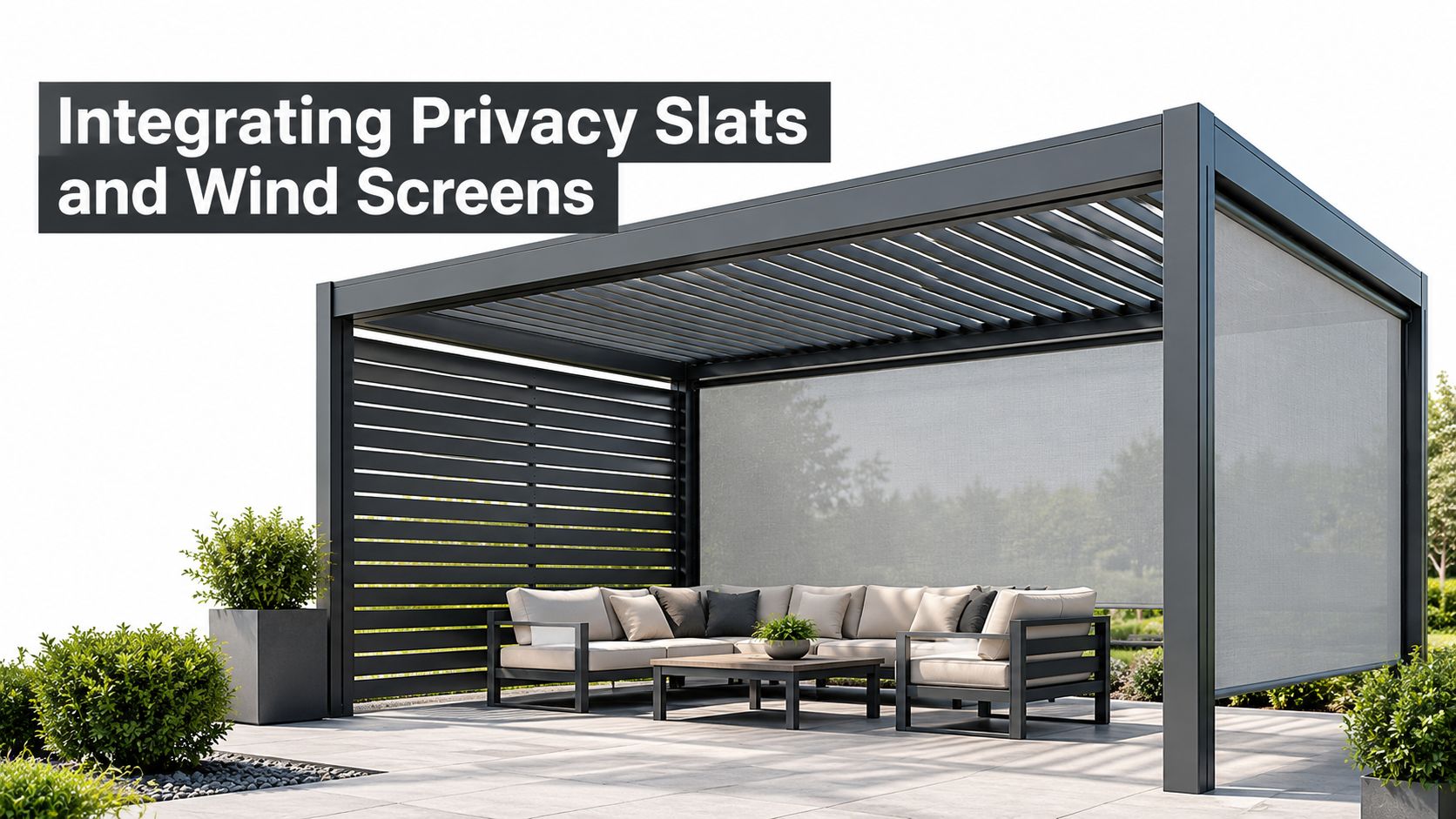
Chain link gives you containment without blocking the view. That's useful for many properties, but not for every backyard, pool area, or townhouse patio. Privacy slats and wind screens can change the character of the fence, yet they also change the load transferred to the posts.
Slats leave some airflow through the mesh, while a screen behaves more like a sail. During a Gatineau windstorm or a winter blizzard, a poorly anchored fence can rack, lean, or pull out of the ground if the added surface area exceeds what the original framework can handle.
Build the privacy upgrade around the existing structure
Start with an inspection rather than ordering inserts.
Check the posts first. Look for movement, corrosion, loose fittings, bent terminals, and concrete that has cracked or heaved.
Confirm the fabric and mesh. Slats must suit the opening and weave pattern. A damaged or loose fabric shouldn't be used as the base for a privacy conversion.
Evaluate wind exposure. An open yard on a corner lot needs a different approach from a sheltered garden boundary.
Reinforce before screening. The design may require stronger posts, closer spacing, better bracing, or new footings. Don't add a solid screen to a light fence and hope the ground holds.
Inspect after severe weather. Check gate alignment, post movement, tension, and screen damage after major wind or snow events.
HDPE slats are practical and available in several colours. Aluminium can provide a more rigid, finished appearance, while wood inserts can add warmth but demand closer attention to moisture, movement, and maintenance. None of these materials removes the need to calculate wind exposure.
Natural screening can reduce the temptation to turn the entire fence into a solid wall. For homeowners considering planting instead of full screening, this guide to non invasive screening plants is a useful starting point, especially where roots could affect hard surfaces or neighbouring planting beds.
For a detailed comparison of inserts, slats, and other approaches, review these chain link fence privacy options. The right choice balances sightline control with the strength of the existing fence, rather than treating privacy as a purely visual upgrade.
Navigating Ottawa-Gatineau Zoning and Climate Rules
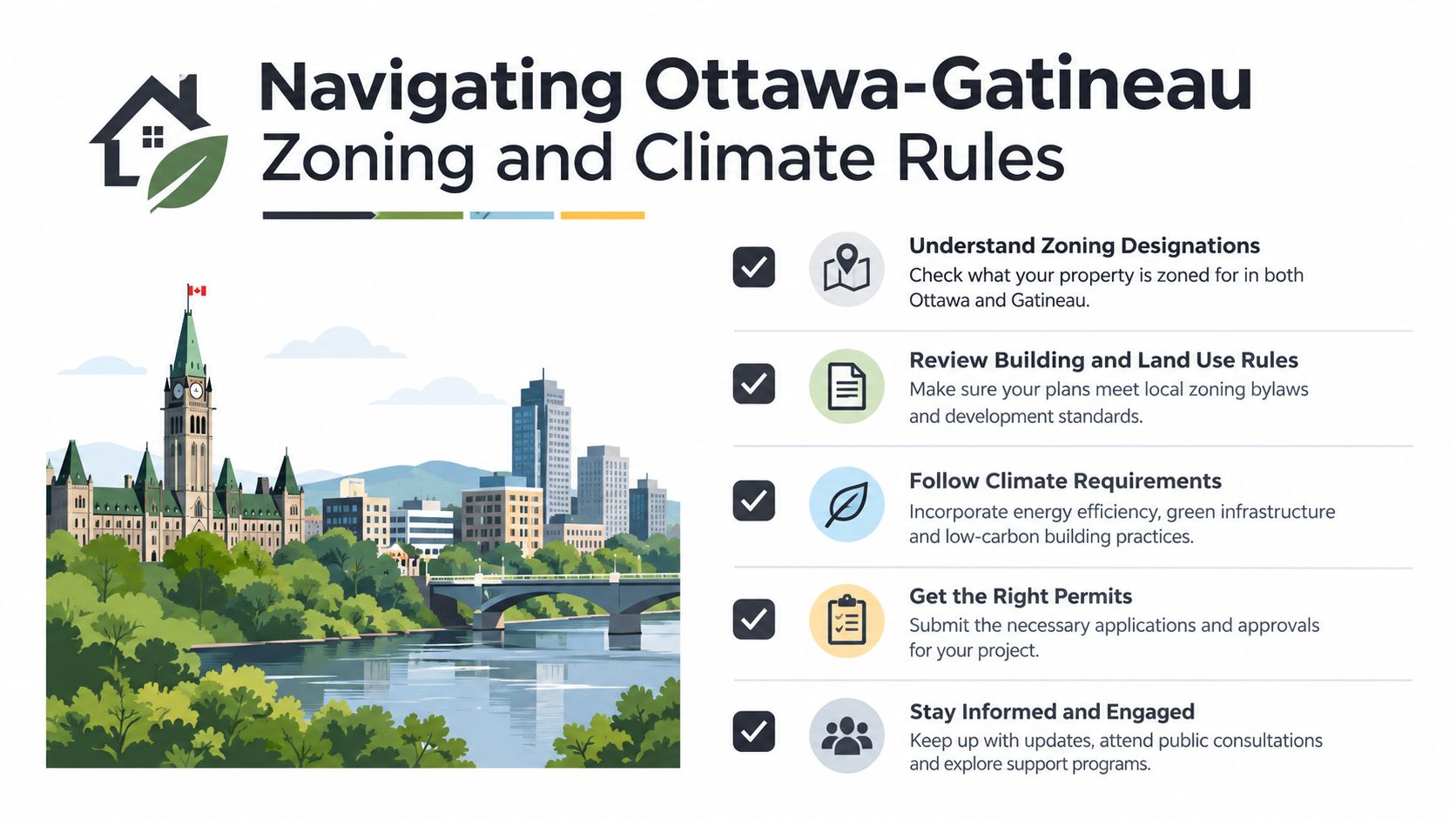
A fence can be physically sound and still be the wrong fence for the property. Many owners assume that a boundary on their land can be built to any height or finish. Ottawa's residential rules make that assumption risky, particularly near streets, driveways, intersections, and neighbouring homes.
Ottawa's land-use guidance allows a fence up to 1 m in a front yard and up to 213 cm in other yards. In two visibility triangles, the maximum height falls to 75 cm. Those triangles protect sightlines for drivers, pedestrians, and cyclists, so a tall privacy treatment near a driveway or corner can create a compliance problem even when the rest of the side or rear yard could support a taller fence.
Coating is a legal design choice
Chain link beside residential properties must be vinyl- or powder-coated under Ottawa's guidance. That means raw galvanized mesh may be unsuitable even when it would be technically durable and acceptable for a purely commercial boundary. The coating requirement can affect the mesh, posts, sleeves, and rails, so ask for a fully matched system rather than assuming coloured fabric alone meets the intent.
The Ottawa land-use guide should be checked before the layout is finalised. Confirm the yard classification, visibility triangles, relationship to the road, and whether neighbouring conditions affect the proposed location.
Gatineau properties require the same practical discipline, though the applicable municipal rules and approval process can differ. Don't transfer an Ottawa assumption across the river. Confirm the local requirements for the exact address, especially if the property is near a corner, a shared driveway, a public path, or a road allowance.
Climate still matters after approval
A compliant height doesn't guarantee a durable installation. Ottawa-Gatineau soils move through freeze-thaw cycles, snow-clearing equipment can strike lower fabric and posts, and spring runoff can expose poor drainage around footings. The Ottawa chain link fencing guidance is a useful local reference when you're preparing questions about layout, coating, gates, and site conditions.
Get the proposed height, coating, post locations, gate swing, and visibility triangles confirmed before installation. A small adjustment on paper is cheaper than rebuilding a finished fence.
Evaluating Lifecycle Costs and Durability
The cheapest chain link quote is rarely the cheapest ownership decision. Initial price matters, but so do coating damage, bent framework, loose gates, replacement fabric, and the labour required to correct a fence that was never designed for its site.
Galvanized steel often makes financial sense where the silver finish is acceptable and the property has ordinary exposure. Vinyl-coated chain link can justify its higher upfront cost where appearance is important or where the extra surface protection helps reduce exposure of the steel core. Neither coating protects a fence from careless installation, direct equipment impact, or a footing that moves every spring.
Where ownership costs accumulate
The most common hidden costs come from mismatched components:
A strong fabric on weak posts can leave you paying for an early framework replacement.
A coloured mesh with uncoated framework can create an uneven appearance and undermine the reason for choosing vinyl.
A privacy screen on an open-mesh design can increase wind stress beyond the original structure.
A poorly aligned gate can place repeated strain on hinges, latches, and the gate post.
Unprotected lower sections can suffer damage from snow blowers, trimmers, and road splash.
A heavier gauge isn't automatically economical. If the property only needs basic containment, paying for a security-grade fabric may divert money from drainage, gate hardware, or proper post installation. Conversely, a commercial equipment yard shouldn't be specified like a lightly used backyard just because both projects use diamond mesh.
The useful comparison isn't “galvanized versus vinyl” in isolation. Compare the complete installed system, the expected exposure, and the cost of correcting the wrong specification.
Ask every contractor to separate the quote into fabric, framework, gates, privacy accessories, removal, excavation, concrete, and site restoration. That makes it easier to see whether one proposal is cheaper because it uses a lighter component or because another proposal includes necessary work.
A durable fence also needs an owner's maintenance plan. Keep vegetation from trapping moisture against the mesh, rinse salt residue when practical, repair coating breaches before corrosion spreads, and address leaning posts while the correction is still local. Small repairs are easier when the original installation used identifiable, compatible components.
Situational Recommendations for Your Property
The best chain link type is the one that matches the property's legal limits, exposure, use, and appearance. Start with the lot, not the product catalogue. A homeowner beside a residential property may have fewer finish options than a commercial owner, while a commercial site may need stronger fabric and framework even when raw galvanized steel is acceptable.
For a residential backyard
Choose a vinyl- or powder-coated system where Ottawa's residential adjacency rule applies. Black is usually the quietest visual choice beside landscaping, while green can work where the fence sits directly against planting. Confirm the permitted height before selecting fabric width, particularly in a front yard or near a visibility triangle.
If privacy is needed, use slats or a screen only after checking the posts, rails, and footings. An open chain link fence may be the correct structural base, but it may need reinforcement before it carries a more solid treatment.
For a pool enclosure
Prioritise the applicable enclosure requirements, gate operation, self-closing hardware, and sightline conditions before choosing colour. The fence needs to remain stable through winter movement and operate reliably after snow and frost. A fully matched vinyl-coated system can provide a cleaner residential appearance, but coating alone doesn't make an installation compliant.
For a townhouse or multi-unit property
Use a repeatable specification across the lots. Consistent mesh, coating, posts, gate hardware, and privacy treatments simplify maintenance and prevent one unit from receiving a noticeably weaker system. Property managers should also identify snow-storage areas and service access before post locations are approved.
For a commercial or institutional perimeter
Begin with the threat and the use pattern. A low-security boundary may be well served by galvanized fabric and a practical framework. A site containing equipment, service vehicles, or controlled access may need a smaller mesh, heavier wire, stronger gate posts, closer line-post spacing, and the height recommended for security fencing, subject to zoning.

Put the specification in writing before comparing prices. State the coating, core wire gauge, mesh opening, fabric height, framework type, post spacing, rails, gates, privacy accessories, and footing approach. For Ottawa-Gatineau properties, also document the applicable height limits and visibility-triangle review. FenceScape designs and installs chain link systems, including residential and commercial mesh options and chain link with slats, so its team can be included when you're comparing complete proposals rather than fabric-only prices.
Arrange a site assessment with FenceScape to review chain link types, coating, mesh, framework, privacy options, and Ottawa-Gatineau requirements together. Ask for a written specification and installation plan that matches your property's use, exposure, and legal limits before you commit to a quote.
Comments