
Above Ground Pool Safety Fences: The Essential Guide for Your Backyard
- Eric Lafleche
- Dec 28, 2025
- 16 min read

Here's the thing about an above-ground pool safety fence: it's not just another piece of backyard decor. It's a purpose-built barrier designed to keep your pool off-limits to unsupervised kids and pets. For any homeowner in Ottawa, this isn't a "nice-to-have"—it's a non-negotiable layer of protection and a legal must-have.
Why Your Above-Ground Pool Needs a Dedicated Safety Fence
Turning your backyard pool from a constant source of worry into a secure spot for family fun all comes down to one thing: a proper safety fence. Sure, the pool itself is the star of the show on a hot summer day, but it also brings real risks. Drowning remains a leading cause of accidental death for young children, making an unprotected pool a serious hazard.
This guide provides an actionable roadmap for homeowners in the Ottawa-Gatineau area. We'll go beyond just ticking the boxes for bylaw compliance. We'll show you how to choose the right fence, install it correctly, and maintain it, making a smart investment in your family's safety and your home's value.
More Than Just High Walls
It’s a common mistake to think the high walls of an above-ground pool are enough to keep curious kids out. Your first action should be to walk around your pool and identify potential climbing aids. A removable ladder left in place, a nearby patio chair, or even the filter equipment can easily become a makeshift staircase. A dedicated above-ground pool safety fence is different; it creates a completely enclosed, secure zone right around the water.
This principle of isolation is what local bylaws are built on. By forcing everyone to use a specific entry point—usually a self-latching gate—you take back control over who goes near the water and when. It’s the single most effective, proactive step you can take to prevent a tragedy.
A pool fence isn’t just there to satisfy a bylaw. It’s about creating layers of protection that buy you precious, life-saving seconds in an emergency. Think of it as a silent guardian, on duty 24/7.
Key Benefits of a Properly Installed Pool Fence
Putting the right fence around your pool delivers more than just peace of mind; it brings real, tangible benefits that go well beyond basic safety. It’s a smart investment in both your property and your family.
Preventing Accidental Drownings: A compliant fence with a self-latching gate is your most effective tool to dramatically cut the risk of a child accessing the pool alone.
Ensuring Bylaw Compliance: To avoid fines or liability issues, your fence must meet every local requirement. Professional installation is the surest way to guarantee this.
Increasing Property Value: A safe, well-maintained pool area is a huge selling point. Show potential buyers you've invested in the property properly by having a compliant fence installed.
Defining Your Outdoor Space: Use your fence to frame your pool area, creating a distinct zone for fun and relaxation that improves your backyard's overall layout and feel.
Navigating Ottawa and Gatineau Pool Fencing Bylaws
Let's be honest, diving into local bylaws can feel like wading through legal jargon. But when it comes to pool safety, these rules aren't just red tape—they're a life-saving blueprint. The entire point is to prevent unsupervised access to the water, especially for kids. Your immediate task is to measure your current setup against these standards.
In both Ottawa and Gatineau, the regulations are designed around one simple idea: create an enclosure a small child can't easily climb over, squeeze under, or get through. It’s why professional installers are so obsessed with every single measurement. When an inspector comes by, they’re looking for any potential weak spot. Knowing what they're looking for helps you get it right the first time.
Core Bylaw Requirements for Pool Fences
While the exact wording might differ slightly from Ottawa to Gatineau, the core safety rules for above-ground pool fences are basically the same. Each one is there for a very real, very practical reason.
Minimum Fence Height: Grab a tape measure. Your fence must be at least 1.2 metres (4 feet) high from the ground up at every point.
Non-Climbable Surfaces: Inspect the exterior of your fence. It cannot have handholds or footholds. This means no chain-link with large openings or horizontal rails on the outside that a child could use as a ladder.
Limited Gaps: Check the space between the bottom of the fence and the ground. It cannot exceed 10 centimetres (about 4 inches). This is a critical step to stop a small child from squeezing underneath.
The legal rules for pool fencing are built around a single, sobering reality: it only takes seconds for a tragedy to happen. Every single rule, from the height of the fence to the type of gate latch, is a layer of protection designed to buy you those precious seconds.
This is a simple way to think about your pool's current safety status.

As you can see, if your pool isn't secured, the only path forward is to act now. It really puts the urgency of a compliant fence into perspective.
The Gate: Your Most Important Component
A fence is only as strong as its weakest link, and for a pool, that's almost always the gate. This is why the bylaws are so specific about gate hardware. Your immediate action item is to test your gate. It must be self-closing and self-latching.
This means it needs spring-loaded hinges that automatically pull it shut, and a latch that clicks securely into place all on its own. The latch itself has to be on the pool side of the gate and high enough that a small child can't reach it—measure to ensure it's at least 1.37 metres (54 inches) from the ground.
Real-World Impact of Compliance
These strict rules are backed by heartbreaking local data. In the Ottawa-Gatineau area, a report from 2022 showed that between 2018 and 2022, there were 12 reported near-drowning incidents involving kids under 5. A shocking 75% of those happened in backyards that didn't have a compliant fence. That means proper barriers could have potentially prevented 9 of those terrifying situations.
Getting these regulations right is everything. Our comprehensive Ottawa above-ground pool fence guide breaks down the details even further to help you plan your project with total confidence. Making sure every detail is correct from day one is the best way to create a backyard oasis that’s secure, enjoyable, and up to code.
Choosing The Best Fence Material For Your Pool
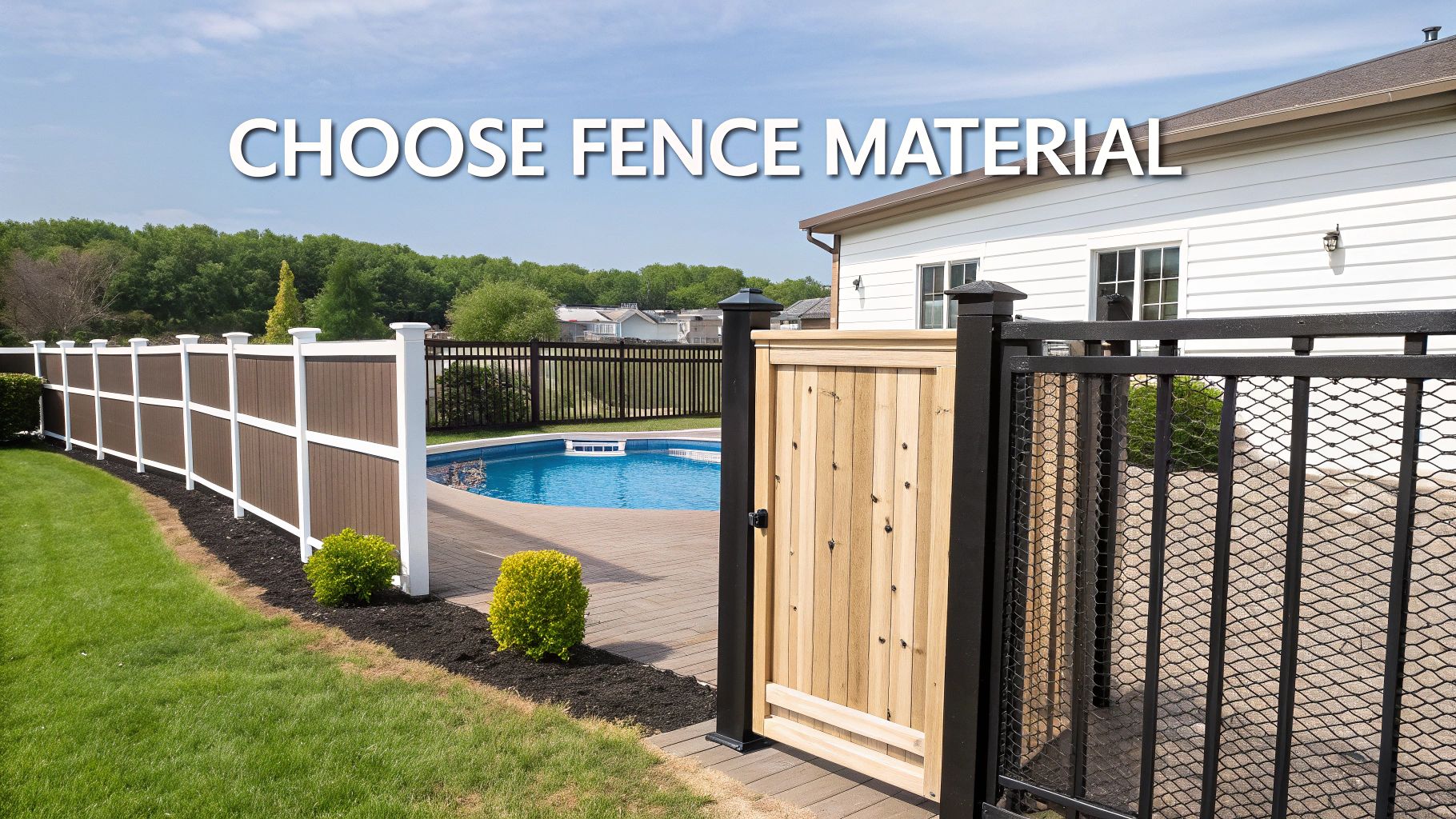
Picking the right material for your above ground pool safety fence goes way beyond just looks. Here in the Ottawa-Gatineau region, your choice has to be tough enough to handle heavy snow, freezing rain, and blazing summer sun—all while keeping your family safe. It’s a careful balancing act between durability, ongoing maintenance, your budget, and the style you want.
Think of it like choosing the right winter coat. A light jacket just won’t do the job in a blizzard. In the same way, a fence material that can't handle our climate will quickly weaken, ruining its appearance and, more critically, its ability to act as a reliable safety barrier.
Let’s walk through the most common and practical options out there. This will help you make a smart investment that not only protects your loved ones but also looks great in your backyard for years to come.
PVC And Vinyl: The Low-Maintenance Champion
If your goal is a 'set it and forget it' solution, then PVC (polyvinyl chloride) or vinyl fencing should be your top choice. This material is a true workhorse in our tough Canadian weather. It won't rot, warp, or get eaten by insects like wood can, and because the colour runs all the way through, you’ll never have to pick up a paintbrush or a can of stain.
To maintain it, simply spray it with a garden hose to wash away dirt. This incredible resistance to the elements makes it a fantastic long-term value, saving you a ton of time and money on upkeep. If you want to dive deeper, we have a complete guide to plastic and vinyl fence solutions you can check out.
Actionable Tip: When you’re shopping for a PVC fence, always ask about UV inhibitors. High-quality vinyl has this protection built right in, which stops the material from getting brittle or turning yellow after years of sun exposure.
Wood: The Timeless And Natural Choice
A wood fence offers a classic, natural look that blends seamlessly into almost any backyard setting. For the Ottawa area, your best options are pressure-treated lumber and cedar, prized for their built-in resistance to rot and insects. A well-built wood fence feels solid and provides fantastic privacy and security.
But that natural beauty requires a commitment. To keep it strong, plan to clean and seal or stain it every few years. Neglecting this maintenance risks warping, splintering, and rot, which can seriously weaken the fence's structure and compromise safety.
Interestingly, the thought process for choosing a fence material is a lot like picking out windows. This window material comparison guide touches on similar principles of weighing durability, maintenance needs, and climate suitability.
Ornamental Iron And Aluminum: The Elegant Guardian
To add elegance while keeping an open view of your pool area, choose an ornamental iron or aluminum fence. These materials deliver incredible strength and longevity without looking bulky. Aluminum is an especially smart pick for pools because it’s 100% rust-proof, a huge plus in a damp environment.
While they don't offer much privacy, their design makes them very difficult to climb, which is a massive safety win. The upfront cost is usually higher than wood or PVC, but their toughness and minimal maintenance—requiring just an occasional cleaning—can make them a more cost-effective choice in the long run.
Mesh Fencing: The Modern And Removable Option
Removable mesh fencing is a popular choice for families with young kids who might not need a permanent barrier down the road. It’s made from a tough, UV-resistant fabric stretched between strong poles, creating a barrier that's hard for little ones to climb while still letting you see the pool clearly.
The biggest selling point here is flexibility. You can often take these fences down and store them for the winter or for an adults-only pool party. However, you must verify that the specific system you choose meets all local bylaw requirements for height and gate hardware, as not all mesh systems are compliant.
To help you sort through these options, we've put together a simple comparison chart.
Above Ground Pool Fence Material Comparison
This table offers a side-by-side look at the most common pool fencing materials, breaking down how they perform right here in the Ottawa-Gatineau region.
Material | Durability in Canadian Climate | Maintenance Level | Average Cost | Key Safety Feature |
|---|---|---|---|---|
PVC / Vinyl | Excellent. Resists moisture, cold, and UV damage without warping or cracking. | Very Low | Moderate | Smooth, non-climbable surfaces and secure latching systems. |
Wood | Good, but requires proper treatment and regular sealing to prevent rot and warping. | High | Low to Moderate | Provides a solid, private barrier. Can be built to any height. |
Aluminum | Excellent. Completely rust-proof and unaffected by extreme temperatures. | Very Low | High | Difficult-to-climb narrow pickets and strong, self-closing gates. |
Mesh | Good. UV-resistant fabric and durable poles, but may need removal in heavy snow. | Low | Moderate to High | Non-climbable surface and see-through for easy supervision. |
Ultimately, the best material is the one that fits your lifestyle, budget, and our local climate. At FenceScape, our turnkey service guarantees compliance by using premium cedar and pressure-treated lumber proven to handle harsh -30°C winters. In fact, we’ve had zero failures across more than 150+ pool projects since 2019. This commitment to quality is crucial when you consider that while Transport Canada data shows 89 child drownings nationally each year, Ottawa's rate is lower than the national average, thanks in part to strong bylaws and quality installations.
DIY vs. Professional Fence Installation
So you’ve picked the perfect material for your above ground pool safety fence. Now comes the next big question: should you install it yourself or bring in a professional? While the DIY route might seem like a great way to save a few dollars, installing a pool fence is one of those projects where getting it right is non-negotiable. Precision isn't just about looks—it's directly tied to safety.
A successful installation involves a lot more than just connecting a few panels. It requires a solid grasp of Ottawa's specific environmental challenges and its strict bylaw requirements. Even a small misstep can compromise the entire fence and, more importantly, its ability to protect your family.
The Reality Check on DIY Installation
Taking on a fence installation yourself requires more than just a free weekend and a handful of tools. The job demands specific skills and knowledge to build a barrier that's secure, compliant, and built to last. Before you start, assess if you can realistically tackle these challenges.
For instance, digging post holes around here isn't a simple task. You have to dig below the frost line. If you don't, the winter frost heave will slowly push your posts out of the ground, leaving you with a crooked and unstable fence. A warped fence can create dangerous gaps or throw a gate out of alignment, making its safety features totally useless.
Then there's the gate—the single most critical piece. Calibrating a self-closing, self-latching gate to meet bylaw specs is a job of millimetres. It has to swing shut and lock securely from any position, every single time. This is often the most frustrating part of a DIY job, but it’s a safety standard you simply can't compromise on.
The Clear Advantages of Professional Installation
Hiring an experienced installer like FenceScape turns a potential headache into a smooth, worry-free process. You're not just paying for labour; you're paying for expertise, accountability, and a guaranteed result.
A professional crew shows up with specialized equipment and years of firsthand experience dealing with our local soil, tricky property grades, and municipal codes. They know exactly how to set a fence that’s perfectly straight, incredibly strong, and ready to stand up to decades of harsh Canadian weather.
Hiring a professional isn't an expense; it's an investment in certainty. You're paying for guaranteed bylaw compliance, access to commercial-grade materials, and the peace of mind that comes from knowing the job was done right the first time.
The numbers don't lie. Data from Ontario's Ministry of Municipal Affairs shows a massive 75% drop in above-ground pool drownings in the Ottawa-Gatineau area between 2019 and 2024. This huge improvement is directly linked to the enforcement of mandatory safety fences with features that professionals master, like self-closing gates and minimal clearance at the bottom. You can explore more about these crucial safety guidelines to see why that level of precision is so important.
What a Professional Installation Looks Like
To give you a better idea of the difference, here’s how a professional team handles a project from start to finish.
On-Site Consultation and Planning: A pro will assess your property for slopes or underground utilities and help you create a layout for maximum safety and curb appeal.
Permit Management: A seasoned contractor handles all the paperwork, ensuring the plan is fully compliant with Ottawa and Gatineau bylaws before work begins.
Precise Execution: The crew uses professional-grade equipment to dig post holes to the exact depth required and set them perfectly in concrete. Every post is plumb and every panel is perfectly aligned.
Gate and Hardware Installation: This is where their expertise really shines. They install and meticulously test the self-closing hinges and self-latching mechanisms to ensure they work flawlessly and meet all safety codes. For a closer look at the technical details, check out our homeowner's guide to above-ground pool safety fence installation.
Final Inspection and Cleanup: The job isn't done until the site is clean and they’ve walked you through the finished fence to ensure you’re 100% happy with the work.
In the end, this honest breakdown should help you decide which path makes the most sense for your skills, your timeline, and the ultimate goal of keeping your pool area completely secure.
Keeping Your Pool Fence in Top Shape for Lasting Safety
Your above ground pool safety fence isn't just a part of the landscape; it’s an active security system that’s on the job 24/7. Like any critical piece of equipment, it needs regular check-ups to do its job right. Proactive care is essential to protect your investment, maintain compliance, and ensure reliable safety for your family.
Think of it like routine vehicle maintenance. A few simple seasonal checks can catch small issues before they become serious safety risks, ensuring your fence remains your first line of defence against accidents.
Your Seasonal Fence Maintenance Checklist
A quick walk-around and inspection a few times a year is all you need to keep your fence in prime condition. Schedule a thorough check each spring after the thaw, with quick follow-ups in mid-summer and fall.
Here’s a simple, actionable checklist to get you started:
Check Every Post: Go around the entire fence and give each post a solid wiggle. Frost heave can loosen posts. A wobbly post is a weak link that needs immediate attention.
Inspect All Panels and Sections: Look closely for any signs of wear and tear, such as cracks in PVC, splintering on wood, rust on metal, or tears in mesh.
Examine All Hardware: Get hands-on with every screw, bolt, and bracket. Tighten anything that feels loose. Pay extra attention to the hardware connecting the panels to the posts.
This entire inspection takes less than 30 minutes, but it's one of the most powerful safety habits a pool owner can develop.
The Gate Is Your Number One Priority
The gate is easily the most used—and most critical—part of your pool fence. Its self-closing and self-latching features have to work perfectly, every single time. A gate that doesn't latch securely might as well not be there at all.
Your gate latch is the lock on your pool's front door. The "push test" is the simplest way to check it. Open the gate to different positions—from just a crack to wide open—and let it swing shut. It should close and latch securely on its own, with an audible click, every single time.
If the gate swings slowly or fails to latch, the tension on the self-closing hinges likely needs a quick adjustment. If the latch itself is out of alignment, that’s also often a simple fix.
Material-Specific Cleaning And Care
Different materials need different kinds of TLC to stay strong and look their best. Follow this material-specific routine to extend the life of your fence.
For PVC/Vinyl Fences: A gentle cleaning with a soft cloth, soap, and water is all it takes to get rid of dirt and mildew. This stops grime from building up and staining the material.
For Wood Fences: Keep an eye out for any rot or insect damage. Plan on cleaning and reapplying a fresh coat of weather-proofing sealant every 2-3 years to shield the wood from moisture and sun damage.
For Metal Fences: Check for rust, paying close attention to welds and joints. If you spot any, just lightly sand the area and touch it up with a rust-resistant paint to stop corrosion before it spreads.
By working these straightforward tasks into your seasonal routine, you can be confident that your above ground pool safety fence will remain a reliable guardian for your backyard oasis.
Your Next Steps to a Safer Pool
We've covered a lot of ground together, from navigating Ottawa’s specific bylaws to comparing different materials and weighing a DIY project against calling in the pros. You’re now equipped with the crucial knowledge needed to make a smart choice for your above ground pool safety fence. The only thing left to do is put that knowledge into action.
A professionally installed, compliant fence is the single most effective safety measure you can put in place for your pool. It’s a silent, always-on-duty lifeguard, providing a constant physical barrier that keeps curious kids and pets away from the water. This goes far beyond just ticking a box for a bylaw—it's about creating a backyard where you can truly relax.
Take Action for Peace of Mind
Moving forward with this isn't just about buying a fence. It's an investment in a secure backyard where your family can make amazing summer memories without a lingering worry in the back of your mind. Getting started is much simpler than most people think.
Investing in a professionally installed fence is an investment in certainty. It guarantees your pool area is not only compliant and beautiful but, most importantly, safe for everyone you care about.
The path to a safer pool begins with a simple chat. An expert can come out, take a look at your unique setup, and give you a straightforward, no-pressure plan that's right for your yard and your family.
Get Your Free, No-Obligation Estimate
Ready to take that final step? The team here at FenceScape is ready to help you secure your pool with a high-quality, professionally installed fence that meets every single Ottawa-Gatineau bylaw. We take care of everything—from the initial design and permit headaches to the final installation and site cleanup.
Protect your family and upgrade your backyard oasis. Contact FenceScape today to schedule your free, on-site estimate and let's make your pool a safer place for everyone. We can help you build the secure, stylish, and durable enclosure your home deserves.
Common Questions About Pool Fences
When you’re finalizing plans for an above ground pool safety fence, a few practical questions always come up. Getting straight answers is the best way to move forward feeling confident about your project. Here, we'll walk through the most common questions we hear from homeowners in Ottawa, tackling the real-world concerns about cost, installation, and bylaw rules.
How Much Does a Pool Fence Cost in Ottawa?
So, what's the bottom line? While every project is different, a realistic starting point for a pool fence in Ottawa is usually between $60 to $120 per linear foot. This range typically covers standard materials like PVC or pressure-treated wood.
Of course, that's just a ballpark figure. A few key things will shape your final quote:
Total Length: It's simple math—the more fence you need, the more it will cost in materials and labour.
Your Yard's Terrain: Is your property sloped or uneven? A flat, level yard is much easier to work with. Tricky terrain requires extra work and materials to make sure the fence is perfectly secure.
Number of Gates: Each self-latching gate is a crucial piece of safety hardware, and it adds to the overall project cost.
Does the Fence Attach Directly to the Pool?
This is a really common misconception, but the answer is no. For an above ground pool safety fence to be truly safe and meet local bylaws, it should never attach directly to the pool's structure. The proper, and safest, way to do it is with what’s called an "isolation fence."
An isolation fence creates a completely separate, enclosed area around your pool. This design is critical because it eliminates any climbable supports or direct access points from the pool deck. By making sure the entire pool area is secured behind a single entry point—the gate—you build a far more effective barrier against wandering kids and pets.
Think of an isolation fence like building a secure "room" for your pool. The only way in or out is through a controlled doorway (the gate), which is the safest setup you can have.
Can I Just Use My Existing Yard Fence?
Sometimes you can, but there are strict rules you have to follow. It's possible to use a property line fence as part of your pool enclosure, but that section of fence must meet every single bylaw requirement that a brand-new pool fence would. That means it has to be at least 1.2 metres (4 feet) high, have no handholds or footholds on the outside that a child could use to climb it, and the gap at the bottom can't be bigger than 10 cm.
If any part of your current fence doesn't meet these standards, you'll have to upgrade it or simply build a separate, compliant fence on the inside. Honestly, installing a new, dedicated fence is often the easier and more reliable way to guarantee you're fully compliant with the law.
What Is a Self-Closing and Self-Latching Gate?
A bylaw-compliant pool gate is much more than just a simple door; it's an active safety device. It relies on two mechanisms that work together automatically. First, self-closing hinges are spring-loaded, which means they pull the gate shut on their own from any position. This prevents it from ever being left ajar by accident.
At the same time, a self-latching mechanism—often a magnetic one—clicks into place the second the gate closes, locking it securely. Bylaws require the latch to be on the pool side of the gate, high enough that a small child can't reach it. This two-part system ensures the enclosure is always locked down.
Ready to secure your pool and get total peace of mind? The expert team at FenceScape provides professional, bylaw-compliant fence installations across the Ottawa–Gatineau region. Get your free, no-obligation estimate today and take the next step toward a safer backyard.
Comments