
A Homeowner's Guide to Above Ground Pool Safety Fence Installation

An above-ground pool brings endless summer fun, but it also brings a serious responsibility. To prevent accidents and keep your family safe, your most effective tool is a properly installed above-ground pool safety fence. It's a constant, reliable barrier that acts as your first line of defence against tragedy.
This guide provides actionable steps and practical advice to help you secure your pool area correctly, ensuring you build a fence that is both safe and compliant.
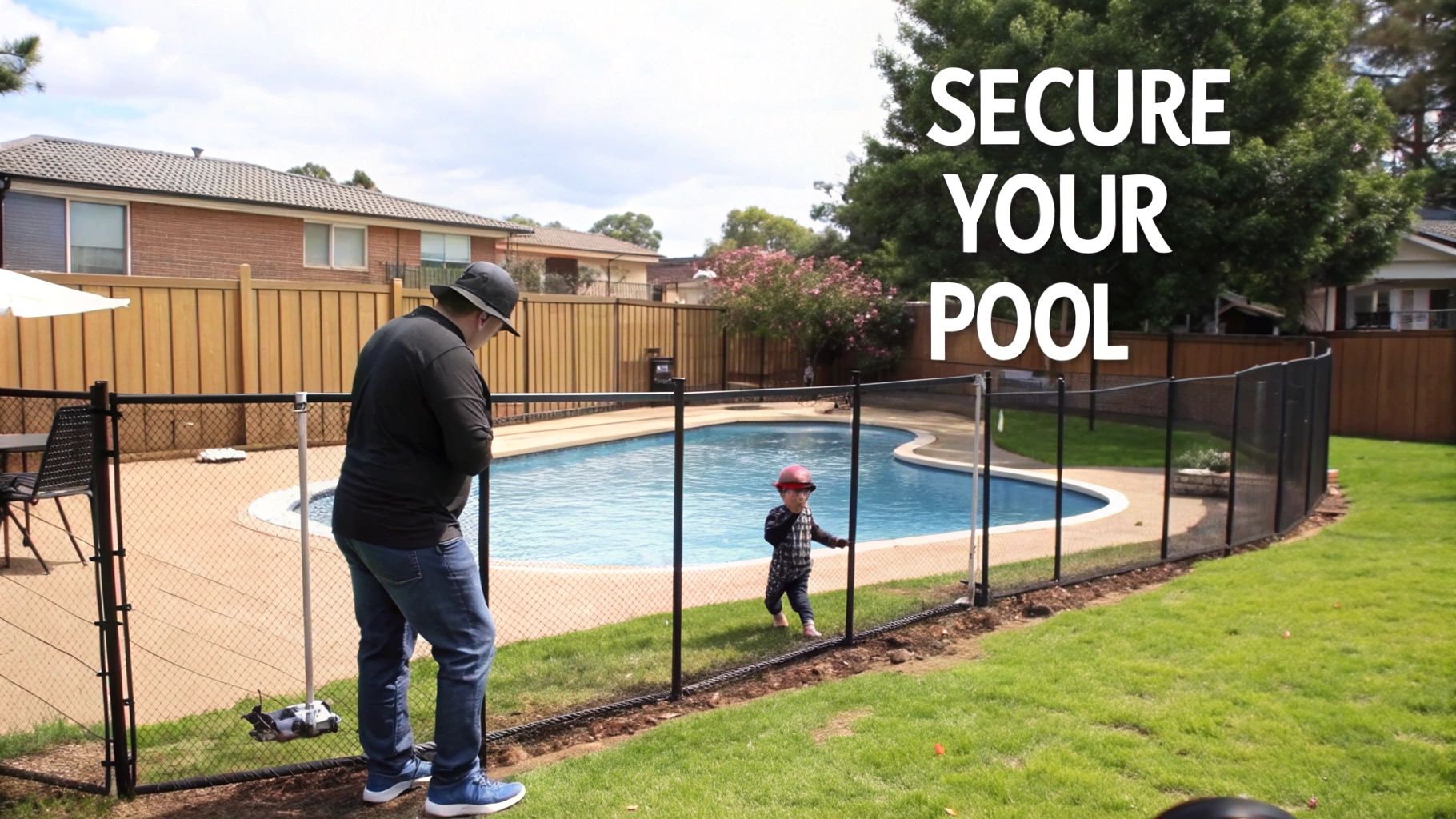
Why a Pool Fence Is Your Most Critical Safety Feature
Never assume the high walls of an above-ground pool are enough of a barrier. A curious child can easily use a ladder, a chair, or even a toy to climb over the edge. A dedicated isolation fence is the only reliable way to transform your pool from an open hazard into a secured zone. This isn't just about meeting a bylaw; it’s about implementing layers of protection that provide genuine peace of mind. A solid fence is the one safety measure that is always on guard.
Understanding the Legal Side of Things
Pool barrier rules are not suggestions—they are enforceable laws designed to prevent drownings. Ignoring them can lead to fines, liability, and devastating consequences.
For instance, most Ontario municipalities mandate that fences be at least 1.2 metres (4 feet) high, with no more than a 10-centimetre (4-inch) gap between vertical slats. The critical requirement is that the fence must completely isolate the pool from your home and yard, with no direct, uncontrolled access.
The Critical Role of Pool Gates
Your gate is the most important component of your fence. If it fails, the entire barrier is useless. To ensure compliance and safety, your gate must:
Open outward, away from the pool, to prevent a child from pushing it open.
Be self-closing, equipped with hinges that automatically swing it shut.
Have a self-latching mechanism that catches securely every single time.
The latch must be placed high on the inside of the gate, well out of a child's reach. For a detailed breakdown of gate hardware and placement, consult our practical guide for Ottawa homeowners on pool gates.
Understanding Your Local Pool Fence Laws and Regulations
Before you choose materials or start digging, your first actionable step is to confirm your local regulations. This is the most important part of the job. Getting this right from the start will save you from fines, project delays, or building an unsafe fence. These rules are your blueprint for a safe installation. Every municipality, whether you're in Ottawa or a surrounding town, has specific codes you must follow.
Your First Stop: The Local Building Department
Your first and most important call should be to your local municipal building department. Do not rely on a neighbour’s advice or an old online forum post, as regulations change. Go prepared with a list of questions to ensure you get all the critical details in one conversation.
Use this checklist when you call or visit:
What is the minimum required fence height? While 1.2 metres (4 feet) is common, some areas require 1.5 metres (5 feet).
What are the specific rules for gaps? Confirm the maximum allowable space under the fence and between pickets.
What are the exact gate requirements? Ask about rules for self-closing hinges, self-latching mechanisms, and latch height.
Do I need a building permit? (The answer is almost always yes.) Ask for the application forms and a list of required documents.
Are there setback requirements? This determines how far the fence must be from the pool, your property line, and other structures.
Pro Tip: Ask the municipal office for a printed copy or a PDF of the pool enclosure bylaws. Keep this document on hand. It serves as your official guide and can resolve any disputes with installers or inspectors.
Common Regulations You Can Expect
While local rules vary, most are built on the same core safety principles designed to address the most common risks.
For example, a common rule is that the gap between the bottom of the fence and the ground can be no more than 10 centimetres (4 inches), specifically to prevent a small child from squeezing underneath. The same logic dictates that the space between vertical pickets must also be too narrow for a child to pass through.
Gates receive significant attention in these codes. Regulations nearly always demand that the gate swings outward from the pool. The latch itself must typically be at least 1.5 metres (5 feet) off the ground, placing it well out of reach of small children.
These regulations are based on hard data. In California, updated pool safety laws were enacted after 160 children under five drowned in residential pools between 2010 and 2014, often due to inadequate fencing. The state now mandates enclosures that are at least 60 inches high with minimal ground clearance. You can discover more about these critical safety findings to understand why these rules are so critical for every pool owner.
Choosing the Right Fence Material for Your Backyard
Now that you know the rules, you can choose your above ground pool safety fence material. This decision impacts maintenance, long-term durability, and safety. Your choice should be a practical one that fits your climate, budget, and the amount of time you are willing to spend on upkeep. Let's review the most common options to help you make an informed decision.
Removable Mesh Fencing
Mesh fencing is a top choice for safety because its tightly woven panels are nearly impossible for a small child to climb—there are no handholds or footholds. Another key benefit is visibility; the transparent mesh allows for a clear line of sight to the pool from your house or patio, which is invaluable for supervision. However, its "removable" nature is its biggest weakness. The fence is only effective when it's fully installed. You must be disciplined about putting it back up every single time it's taken down.
The Durability of Vinyl Fencing
If you want a low-maintenance solution, vinyl (PVC) is a superb choice. It delivers a clean, modern look and will not rot, warp, or require repainting—a major advantage in a moist pool environment. A simple wash with soap and water is typically all that's needed to keep it looking new. Vinyl is also highly versatile, available in styles ranging from privacy panels to classic pickets. Its non-porous surface stands up exceptionally well to chlorinated water, which can degrade other materials.
Key Takeaway: For homeowners who want a "set it and forget it" fence, vinyl is a top contender. Its built-in resistance to moisture and pests, combined with minimal upkeep, offers excellent long-term value.
To see what's possible, review this actionable guide to plastic and vinyl fence solutions and decide if it's the right material for your backyard.
Classic Aluminum and Ornamental Iron
For a touch of elegance, it's hard to beat aluminum and ornamental iron. These fences provide a classic wrought-iron aesthetic without the rust—a critical feature for any poolside installation. Aluminum is lightweight yet strong and comes with a durable factory coating designed to withstand the elements for decades. Like mesh, these fences offer excellent visibility, allowing you to monitor the entire pool area while meeting safety code spacing for the pickets. The primary benefit is the almost complete lack of maintenance. Aluminum fencing will not rust, corrode, or fade, making it a smart long-term investment.
The Natural Appeal of Wood
Wood fencing offers a timeless, natural charm and can be customized with paint or stain to perfectly match your home and landscaping. When properly constructed, a wood fence is a sturdy and effective safety barrier. The downside is that wood requires the most maintenance. To prevent rot, warping, and insect damage—all of which are accelerated by the moist pool environment—it must be sealed or stained regularly. Be realistic about your willingness to commit to this ongoing upkeep.
Making Your Final Decision
To make your decision, you must balance four key factors: safety, aesthetics, maintenance, and budget. Each material offers a different combination of these elements.
This table provides a direct comparison of the most common materials.
Pool Fence Material Comparison
Material | Average Cost (Per Linear Foot) | Pros | Cons | Best For |
|---|---|---|---|---|
Mesh | $15 - $30 | Excellent visibility, climb-resistant, removable for flexibility. | Safety depends on consistent re-installation, can be damaged by sharp objects. | Families with young children who prioritize clear sightlines and flexibility. |
Vinyl (PVC) | $25 - $45 | Extremely low maintenance, durable, won't rot or warp, modern look. | Higher upfront cost than wood, can become brittle in extreme cold. | Homeowners seeking a hassle-free, modern fence that will last for decades. |
Aluminum | $40 - $60 | Elegant look, rust-proof, no maintenance, very durable. | Can be more expensive, offers less privacy than other options. | Those wanting a premium, classic aesthetic with zero long-term upkeep. |
Wood | $15 - $35 | Natural aesthetic, highly customizable, lower initial cost. | High maintenance (requires regular sealing/staining), susceptible to rot and warping. | DIY-savvy homeowners who love the traditional look and don't mind the upkeep. |
Think about your lifestyle. If you value your weekends, the low-maintenance appeal of vinyl or aluminum is likely worth the higher upfront cost. If you enjoy home projects and prefer the look of natural wood, the required upkeep might be a worthwhile trade-off. By carefully weighing these factors, you can select an above ground pool safety fence that keeps your family safe, complies with local laws, and suits your needs for years to come.
Your Installation Playbook: DIY or Professional?
You have your bylaws and have selected your material. Now it's time to build. This is where your planning turns into a protective barrier. The critical question is: who will perform the installation? Whether you plan to do it yourself or hire a professional, success depends on precision and attention to detail.
This diagram outlines the process from start to finish.
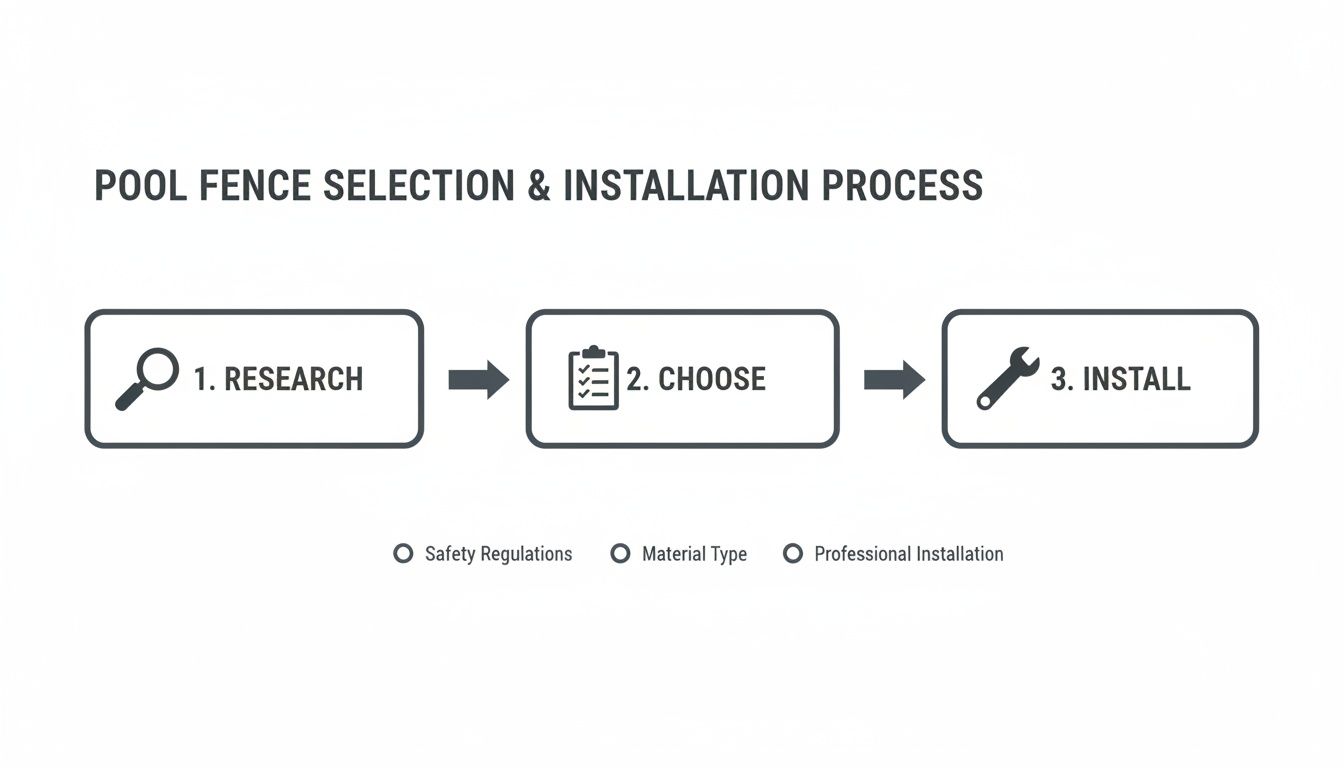
The flow is simple—Research, Choose, Install—but executing the final step correctly is what matters most.
The Do-It-Yourself Approach
A DIY installation can be a rewarding, cost-saving project, but it demands precision. There is no room for "close enough" when safety is the priority.
First, map out your fence line with stakes and string. Use this guide to mark the exact perimeter, confirming that you are meeting all local setback requirements from the pool and property lines. This visual plan helps you finalize post locations before you begin digging.
Setting the posts is the most critical and physically demanding task. The posts are the foundation of your fence. Each one must be perfectly plumb (vertically straight) and securely anchored in concrete to withstand force and weather. A single unstable post can compromise the entire fence. For step-by-step instructions, refer to our practical guide to cementing fence posts.
Hiring a Professional Installer
If you are short on time or lack the tools for a precise installation, hiring a professional is the smart choice. However, you must vet your installer carefully.
Start by getting detailed, written quotes from at least three different companies. A reputable installer will provide an itemized estimate for all labour and materials. Be cautious of any quote that is significantly lower than the others, as it may indicate subpar materials or inexperienced labour.
Before signing a contract, verify the following:
Liability Insurance: This protects your property from accidental damage during installation.
WSIB Coverage: This ensures the workers are covered, protecting you from liability if an injury occurs on your property.
A professional company will provide this documentation without hesitation.
Red Flag Warning: Avoid any installer who demands a large cash deposit, cannot provide proof of insurance, or seems unfamiliar with your local pool fence bylaws. These are signs of a contractor who may cut corners, leaving you with an unsafe or non-compliant fence.
The Gate: Your Most Important Moving Part
Regardless of who installs your fence, the gate requires the most attention. As the only moving part, it is the most common point of failure. A gate that does not close and latch perfectly every time makes the entire fence useless.
Ensure your gate meets these three non-negotiable standards:
It must swing outward, away from the pool.
It must be self-closing, using spring-loaded hinges or a hydraulic closer.
It must have a self-latching mechanism that clicks securely into place automatically.
Test the gate repeatedly. Open it slightly and let go. Open it fully and let go. It must close and latch firmly from every position. The latch itself should be installed at the height mandated by your local bylaw—typically at least 60 inches from the ground—to keep it out of a child's reach.
The importance of a proper installation cannot be overstated. California data shows that compliant fencing—with a 60-inch height, minimal gaps, and self-closing gates with high latches—drastically reduces child drowning risk. However, one study found that 81% of drownings in Los Angeles County occurred in regulated pools, highlighting that diligent installation and ongoing maintenance are just as critical as the regulations themselves.
Long-Term Fence Maintenance and Safety Checks
Installing your above ground pool safety fence is a major accomplishment, but your responsibility doesn't end there. Your fence is an active safety system, and its effectiveness depends on its condition. Daily exposure to weather and use can turn a minor issue into a dangerous weakness. A simple, consistent maintenance routine is the only way to ensure your fence provides reliable protection year after year.
Creating Your Seasonal Inspection Checklist
Integrate a quick fence inspection into your seasonal yard work. A thorough check in the spring when you open the pool, another mid-summer, and a final review before closing for winter will help you catch most problems early.
Use this practical checklist to guide your inspection:
Structure and Stability: Walk the fence line and firmly shake every post. It should feel solid in the ground. A wobbly post indicates a problem with the footing and weakens the entire section.
Panels and Pickets: Inspect the fence material up close. On a mesh fence, look for rips, tears, or sagging. On aluminum, vinyl, or wood fences, check for loose pickets, cracks, or damage that could create a gap wider than the legal limit.
Hardware and Connections: Examine all screws, bolts, and brackets. Look for rust or corrosion, which can weaken connections. Tighten any loose hardware immediately.
Ground Clearance: Measure the gap between the bottom of the fence and the ground. Soil erosion can create a space large enough for a child to squeeze under. Fill any gaps that exceed the bylaw limit.
Material-Specific Maintenance Tips
Tailor your inspection to your fence material to address its specific vulnerabilities.
For Mesh FencesTension is key. The mesh fabric must be taut, with no sagging. Ensure the poles are straight and the locking mechanisms between sections are secure and functioning correctly.
For Vinyl (PVC) FencesWhile low-maintenance, vinyl can become brittle in extreme cold. Inspect for cracks after winter. Clean off any mildew that builds up in shady areas to maintain the integrity of the material.
For Aluminum FencesAluminum won't rust, but its steel hardware can. Pay close attention to the screws and bolts connecting the pickets and rails. Inspect the powder coating for deep scratches that expose the raw metal underneath and touch them up to prevent cosmetic issues.
Pro Tip: A sagging gate is usually caused by loose or worn hinges. Often, tightening the hinge screws will fix the problem. If the hinges are worn out, replace them—it is a simple, inexpensive repair that restores the gate’s critical self-closing function.
The All-Important Gate Check
Your gate is the most-used part of your fence and requires frequent checks. Make it a habit to test it at least once a month while the pool is in use.
Perform this simple three-part test:
The Self-Closing Test: Open the gate to various positions (slightly open, halfway, fully open) and let go. It must swing completely shut on its own every time.
The Self-Latching Test: Listen for the "click" of the latch as the gate closes. It must engage securely without any assistance.
The Shake Test: After the gate latches, stand outside and give it a firm shake. It must not pop open. If it does, the latch needs immediate adjustment or replacement.
A gate that fails any of these tests renders your fence unsafe. Prioritize fixing it before allowing anyone to use the pool.
Common Questions About Pool Fence Installation
Even with careful planning, questions can arise during a critical project like a pool fence installation. Here are clear, actionable answers to some of the most common questions homeowners ask.
Can I Install a Fence Directly on My Pool's Structure?
While some kits are designed for this, it is highly discouraged and often violates local bylaws. A fence attached directly to the pool does not create a true isolation zone; a child could still climb the pool ladder or wall to get over it. The only safe and compliant method is to install an independent perimeter fence on the ground around the pool. This creates a secure barrier that completely separates the pool area from the rest of your yard.
How Far From the Pool Should the Fence Be?
The ideal distance is a balance between safety and usability. A good rule of thumb is to place the fence 2 to 4 feet from the water's edge. This is close enough to prevent the creation of an unsupervised play area between the fence and the pool, but it still provides enough space for you to walk around the perimeter for cleaning and maintenance. Always confirm your local municipality's specific setback requirements before you finalize your layout.
A Pro Tip: Your fence must also enclose all pool equipment, including the pump, filter, and heater, as these can be used as climbing aids. Ensure you leave enough space within the enclosure to access this equipment for servicing.
What Is the Hardest Part of a DIY Pool Fence Installation?
For a DIY project, the two most critical tasks are setting the posts and hanging the gate. If you get these wrong, the entire fence is compromised. The posts are the foundation; they must be perfectly plumb and solidly anchored in concrete to prevent sagging and instability. The gate, however, is the single most important safety component. It must swing outward, self-close from any position, and latch securely every single time. A gate that fails these requirements defeats the purpose of the fence.
Are Removable Mesh Fences a Safe Option?
Yes, a high-quality removable mesh fence, when properly installed, is an excellent safety barrier. The tight mesh is incredibly difficult for a small child to climb, and it offers superior visibility into the pool area. However, their safety depends entirely on them being in place. If the fence is taken down for a party and not immediately put back up, it offers zero protection. For disciplined families who will always re-install the fence, it is a great choice. If you prefer constant, passive protection, a permanent fence is a more reliable option.
Ready to ensure your pool is safe and secure with a professionally installed fence? The experts at FenceScape can help you navigate local bylaws and choose the perfect material for your backyard. Get your free, no-obligation estimate today and enjoy peace of mind all summer long.
Comments