
A Practical Guide to Building a Privacy Fence on Deck

Adding a privacy fence on your deck is a great way to create a secluded backyard oasis. But to ensure your fence is safe, durable, and looks great, you need a solid plan. Following a clear, step-by-step process from the start is the key to a successful project.
Laying the Groundwork for Your Deck Fence
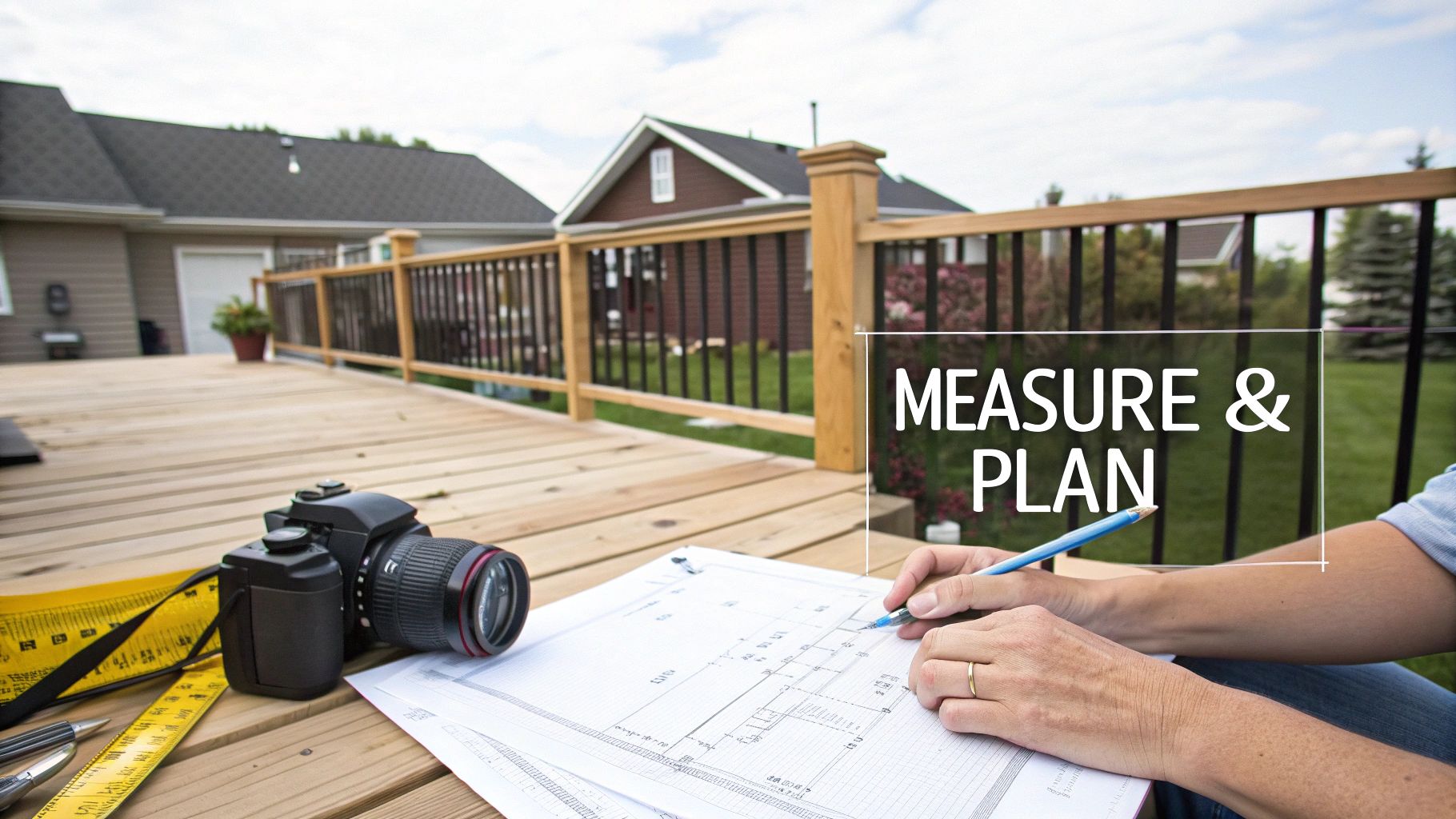
Before you touch a single tool, you need to define your goals and confirm your deck can handle the project. These initial steps will shape every decision you make.
First, determine your specific privacy needs. Are you blocking the view from a neighbour's second-story window, or do you simply want to define a cozy seating area? A tall, solid fence might be necessary for the former, while a shorter, decorative screen could be perfect for the latter. Knowing this helps you choose the right height and design.
Can Your Deck Handle the Load?
Next, perform a structural reality check. A privacy fence acts like a sail, catching wind and placing significant stress on your deck. A weak structure can lead to serious damage during a storm.
Here's a quick inspection checklist to assess your deck's strength:
Inspect Joists and Beams: Get underneath your deck and look for any signs of rot, splitting, or sagging in the frame. These core components must be in excellent condition.
Check Post Connections: Examine how the deck posts are anchored to their footings. Ensure everything is firm and secure.
Examine the Ledger Board: Verify that the board connecting the deck to your house is properly bolted and flashed to prevent water damage and rot.
Actionable Tip: Never screw fence posts directly into deck boards. For a secure fence, posts must be bolted to the deck's substructure (the joists and beams). This is the only way to create a connection strong enough to withstand wind forces.
Measure Twice, Build Once
With a clear goal and a confirmed sound structure, it's time to measure. Create a simple bird's-eye-view sketch of your deck and add accurate dimensions.
On your sketch, mark the exact placement for each fence post. This step helps you calculate material needs accurately and visualize the final layout. Proper post placement is critical for secure anchoring. To understand the principles of solid anchoring, our guide on how deep a fence post should be provides valuable insight, even though your posts will be mounted on the deck frame.
Navigating Ottawa's Building Codes
This is a mandatory step: you must check local building codes. In Ottawa, specific regulations govern decks and fences to ensure safety. Ignoring these rules can result in fines or a tear-down order.
The City of Ottawa provides clear guidelines on its website about when a building permit is required. Take the time to review them.
The need for a permit is often determined by your deck's height and size. Remember, every municipality has its own rules. For instance, some jurisdictions mandate that any deck over 30 inches high must have a guardrail of at least 42 inches. Always confirm your local requirements before starting construction.
Choosing Materials That Fit Your Style and Budget
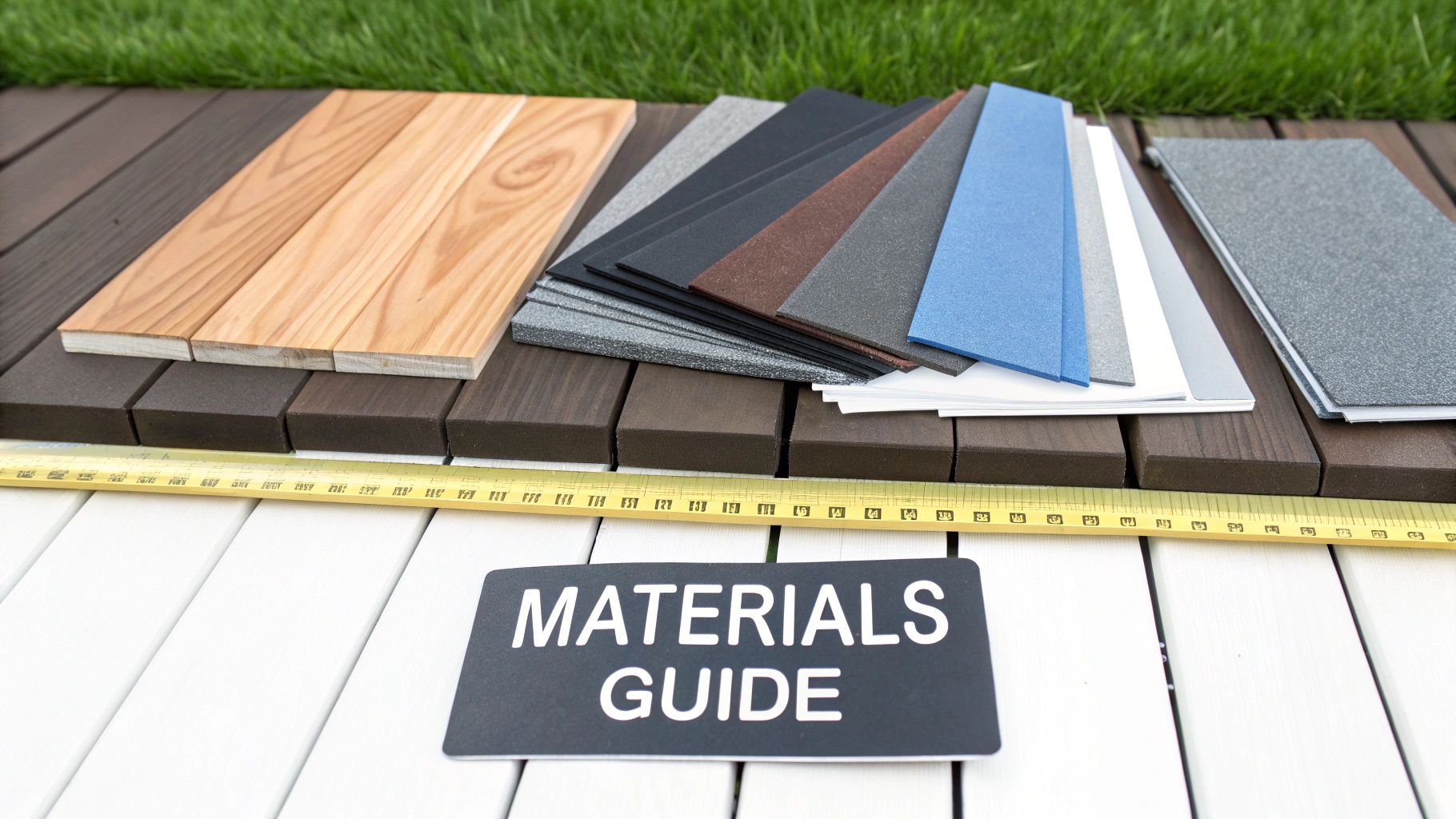
The material you select for your privacy fence on deck will define its appearance, durability, maintenance needs, and cost. Your goal is to find the right balance between your desired aesthetic, your budget, and the amount of upkeep you are willing to perform.
Let's break down the most practical options for the Ottawa climate.
The Timeless Choice: Wood
Wood offers a classic, natural look that can be easily customized with paint or stain.
Here are the two best wood choices for our region:
Pressure-Treated (PT) Lumber: This is the most cost-effective option. It's chemically treated to resist rot and insects. To maintain its integrity, you must stain or seal it every 2-3 years to protect it from cracking and warping during our freeze-thaw cycles.
Cedar: A premium wood, cedar contains natural oils that provide inherent resistance to moisture and pests. It has a rich colour that can be preserved with sealant or allowed to weather to a silver-grey. While it costs more upfront, its durability and beauty are significant advantages.
Regardless of your choice, remember that wood is a natural material that expands and contracts. Consistent maintenance is essential for its longevity.
Low-Maintenance Modern Alternatives
If you prefer to avoid regular staining, several modern materials offer excellent durability with minimal upkeep. They have a higher initial cost but save you time and money on long-term maintenance.
Vinyl (PVC)Vinyl is extremely popular due to its toughness and near-zero maintenance. It doesn't rot, warp, or fade, and cleaning is as simple as spraying it with a hose. It provides a clean, uniform look suitable for many home styles.
Actionable Tip: Hollow vinyl posts require an internal support structure. A wood or metal insert must be placed inside the vinyl sleeve and then securely bolted to the deck's frame to provide the necessary strength against wind.
CompositeComposite fencing, made from a blend of wood fibres and recycled plastic, offers the look of wood without the high maintenance. It is engineered to resist fading, staining, and mould, making it an ideal choice for a moist deck environment.
Sleek and Contemporary Designs
For a modern or minimalist aesthetic, metal and glass are excellent choices. They provide privacy while creating an open, airy feel.
AluminumLightweight yet strong, aluminum is a top-tier material that is 100% rust-proof. It can be configured with horizontal slats or panels for privacy. Its powder-coated finish is exceptionally durable and requires virtually no maintenance.
Hybrid and Glass OptionsMixing materials allows for a custom design. A popular combination is using wood posts with inset panels of a different material. For example, panels of satin obscure glass offer complete privacy while allowing soft, diffused light to pass through, creating a bright and sophisticated space.
Use this table to compare your material options at a glance.
Comparing Deck Privacy Fence Materials
Material | Average Cost (Per Linear Foot) | Pros | Cons | Best For |
|---|---|---|---|---|
Pressure-Treated Wood | $40 - $75 | Most affordable, easy to customize with stain/paint, classic look. | Requires regular maintenance (sealing every 2-3 years), can warp or crack over time. | Budget-conscious homeowners who don't mind seasonal upkeep. |
Cedar Wood | $60 - $110 | Naturally resistant to rot and insects, beautiful colour, ages gracefully. | Higher upfront cost than PT, requires sealing to maintain its original colour. | Those wanting a natural, premium wood aesthetic with less chemical treatment. |
Vinyl (PVC) | $70 - $125 | Extremely low maintenance, won't rot or fade, easy to clean, various styles. | Higher initial cost, can become brittle in extreme cold, less "natural" look. | Homeowners prioritizing a "set it and forget it" solution with a clean, modern look. |
Composite | $80 - $150 | Looks like wood with minimal upkeep, resistant to stains and mould, eco-friendly. | Can be more expensive than wood or vinyl, some brands can look artificial. | Blending the look of wood with the durability of modern materials. |
Aluminum & Glass | $120 - $250+ | Sleek modern look, extremely durable, no rust, zero maintenance. | Highest cost, can be less private depending on the design (e.g., slats vs. full panels). | Modern homes where a high-end, maintenance-free, and stylish finish is key. |
The best material is one that aligns with your home's style, your maintenance commitment, and your long-term budget.
Understanding Ottawa's Building Codes and Permits
Navigating local regulations is a critical, non-negotiable part of your project. Taking the time to understand the City of Ottawa’s building codes will prevent costly fines, project delays, and potential tear-down orders.
These rules exist for safety. A tall fence on an elevated deck creates significant wind load. Local by-laws ensure your structure is engineered to handle these forces safely.
So, Do You Need a Building Permit?
For a deck privacy fence in Ottawa, the need for a permit generally depends on two factors: the height of the fence and the height of your deck.
While a ground-level fence under 2.0 metres (about 6 feet 6 inches) typically doesn't need a permit, the rules change when you build on a deck.
Here are the key triggers for a permit in Ottawa:
Decks over 60 cm (24 inches) high: If your deck is more than two feet above the ground, it required a permit for its initial construction. Adding a tall privacy fence is a major structural alteration and will almost certainly require a new permit or an amendment.
Fences acting as guardrails: Any fence on the edge of a deck higher than 60 cm must also function as a safety guardrail. This means it must meet strict code requirements for strength, spacing, and connections.
Actionable Insight: City inspectors view a tall privacy fence on an existing deck as a single, integrated system. This entire system—fence and deck—must comply with current safety codes, not just the new addition.
Key By-Laws and Rules to Keep on Your Radar
Beyond the permit itself, you must adhere to specific by-laws that govern fence construction.
Height limits are a common regulation. For context, many jurisdictions, like those covered in these fence laws in California, cap backyard fences at six feet to balance privacy and community aesthetics.
In Ottawa, focus on these specific rules:
Maximum Height: The height of a fence on a deck is often tied to guardrail regulations, which may have different limits than the standard 2.0-metre rule for ground-level fences.
Setbacks: Be aware of the minimum required distance from your property line, especially if your deck is close to your neighbour's lot.
Structural Integrity: The building code has explicit requirements for anchoring posts. Simply screwing posts to deck boards will fail inspection. Your design must show how wind loads are transferred to the deck's substructure. Taller or heavier fences may require professional plans or an engineer's stamp.
Choosing Your Installation Method: DIY or Professional
With your materials selected, you now face a crucial decision: will you build the fence yourself or hire a professional? The answer depends on your skills, your budget, and the complexity of the project. This choice directly impacts the safety and longevity of your fence.
The DIY Approach: A Rewarding Challenge
For those with construction experience, a DIY deck fence can be a satisfying project that saves money on labour. However, this path requires careful planning, the right tools, and a clear understanding of structural forces like wind load.
Success hinges on one critical step: secure post attachment.
The #1 DIY Mistake: Never attach fence posts by screwing them into the deck surface. The first major storm will rip them out. This is the most common and dangerous error.
To do it correctly, you must anchor posts directly to the deck's frame. Use heavy-duty post mounts and bolt them through the deck boards directly into the joists. This method transfers the wind load safely into the deck's foundation. Whether you are building a fence or learning how to build retaining walls the right way, a strong foundation is paramount.
Here is what a proper DIY installation involves:
Structural Reinforcement: Add blocking (short pieces of lumber) between deck joists where each post will be mounted to create a solid anchor point.
Precision and Patience: Ensure every post is perfectly plumb (vertically straight) and aligned. This is essential for a professional look and structural integrity.
Specialized Tools: You may need to rent or purchase tools like an impact driver, a heavy-duty drill, and a post level.
Hiring a Professional: The Path to Peace of Mind
While DIY can save money, hiring an experienced contractor provides expertise and ensures the job is done correctly and safely the first time. Professionals understand Ottawa's building codes, can solve unexpected structural issues, and have the right equipment to work efficiently.
A professional handles every stage of the project, from securing permits to final cleanup.
This flowchart illustrates the systematic approach a professional takes, ensuring all height and design regulations are met before a permit is even filed.
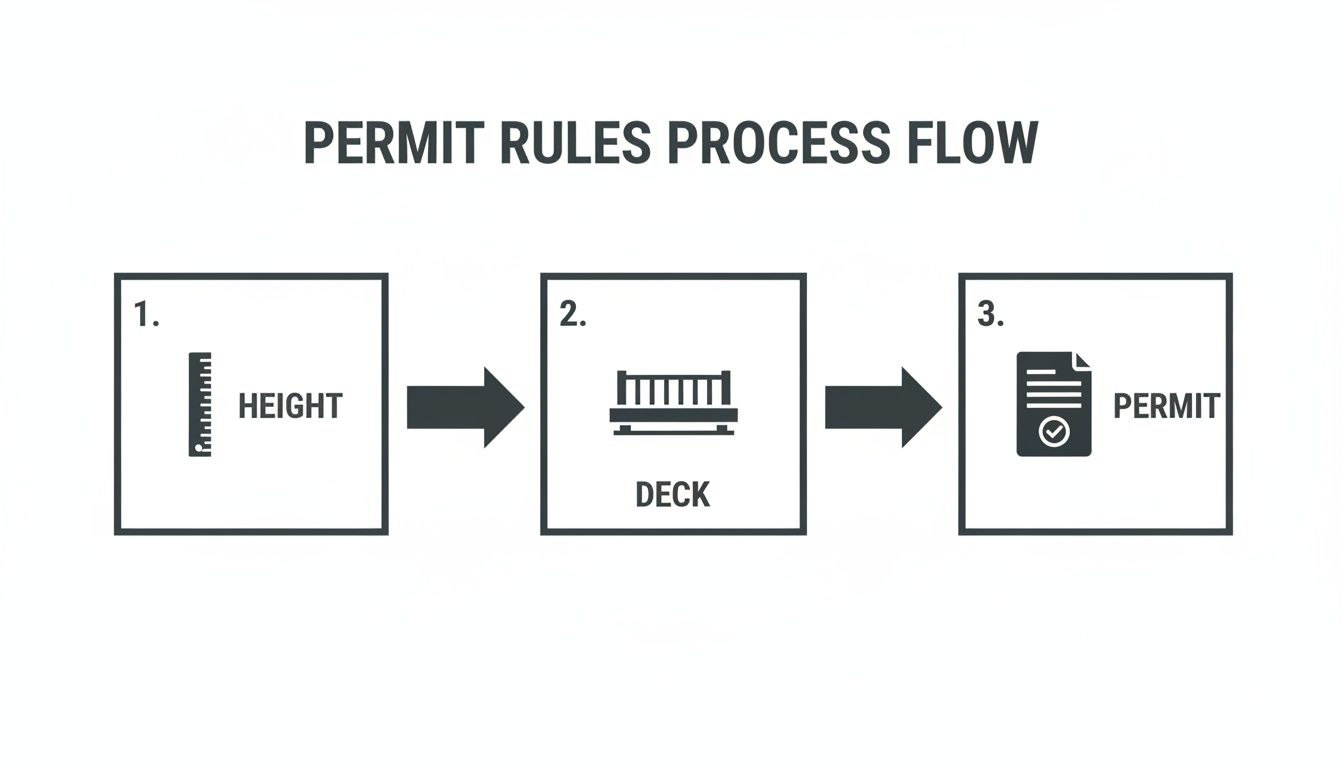
This process guarantees your project is built to code and will pass inspection.
Vetting Your Contractor: How to Find a True Expert
Not all contractors are the same. To protect your investment, you must vet potential hires thoroughly. A true expert will be transparent, knowledgeable, and professional.
Here are five essential questions to ask every contractor:
Are you licensed and insured in Ottawa? Ask for proof of liability insurance and WSIB coverage to protect yourself.
Can you provide a portfolio and local references? A reputable company will be proud to share past projects and connect you with satisfied clients.
How will you attach the posts to my deck? This is the key technical question. Their answer must include through-bolting, structural post mounts, and reinforcing joists. If they mention screwing into deck boards, move on.
Will you handle the building permit application? An experienced local contractor should manage this process for you.
What is included in your quote? Demand a detailed, itemized quote covering materials, labour, permit fees, and waste disposal. Avoid vague, one-line estimates.
For a small, simple privacy screen, DIY can be a great option. For a tall privacy fence on an elevated deck, hiring a professional is the smarter, safer investment.
Budgeting Your Project and Planning for Maintenance
A clear financial plan is essential for a stress-free project. To create an effective budget, you must account for all upfront costs of your privacy fence on deck, from materials to potential fees.
Equally important is planning for long-term maintenance. Your fence will endure Ottawa's harsh weather, and a proactive maintenance strategy is the only way to protect your investment and ensure it remains strong and beautiful for years to come.
Breaking Down the Upfront Investment
Your total cost will include materials, labour (if applicable), and other expenses.
Material costs vary significantly, with pressure-treated wood being the most budget-friendly and composites or aluminum being premium choices. Our guide to wood fence pricing provides more detail on wood costs. Professional installation in the Ottawa area typically adds 40-60% to the material cost, but it includes expertise, efficiency, and a guarantee of proper construction.
Factor these potential extra costs into your budget:
Permit Fees: Account for the City of Ottawa's application fee if your project requires a permit.
Tool Rentals: If you are doing it yourself, you may need to rent equipment like an impact driver.
Waste Disposal: Budget for a disposal bin if you are removing old railings or have significant construction debris.
Structural Reinforcement: Your deck may require extra blocking between joists to support the fence posts, adding minor material and labour costs.
This sample budget for a 24-foot project provides a realistic starting point for your own planning.
Estimated Project Cost Breakdown (24 Linear Feet)
Expense Item | DIY Cost Estimate (CAD) | Professional Install Cost Estimate (CAD) |
|---|---|---|
Materials (Panels, Posts, Hardware) | $900 - $2,500 | $900 - $2,500 |
Labour | N/A | $1,200 - $2,000 |
Tools & Supplies (DIY Only) | $150 - $300 | N/A |
Permit & Disposal Fees | $100 - $250 | $100 - $250 |
Estimated Total | $1,150 - $3,050 | $2,200 - $4,750 |
Your final cost will depend on your chosen materials and your deck's specific requirements.
A Long-Term Maintenance Blueprint
Your work isn't finished once the fence is built. A proactive maintenance plan is crucial for preserving your fence through Ottawa's climate extremes. Your maintenance tasks will depend on your chosen material.
For Wood Fences (Cedar and Pressure-Treated)
Wood requires the most care. Your goal is to protect it from moisture and UV damage.
Plan to stain or seal your wood fence every 2-3 years. This protective layer prevents water from soaking in, which causes rot and cracking during freeze-thaw cycles. Before applying a new coat, thoroughly clean the fence with a deck cleaner to ensure proper adhesion.
Actionable Tip: Perform a "splash test" each spring. Flick water onto the wood. If it beads up, your sealant is working. If it soaks in and darkens the wood, it's time to re-seal.
For Vinyl and Composite Fences
One of the greatest benefits of vinyl and composite is their low maintenance. No staining or sealing is required.
Your maintenance routine is simple:
Annual Cleaning: Wash the fence with a soft brush, soap, and water to remove dirt and mildew. A pressure washer on a low setting can be used, but keep a safe distance to avoid damaging the surface.
Spot Checks: After severe weather, inspect the fence for any cracks, scuffs, or damage that may need repair.
The Annual Safety Inspection Checklist
Regardless of the material, perform a safety inspection every year. The connections between your fence and deck are under constant stress from wind and use.
Use this three-point checklist every spring:
Check Fasteners: Ensure all bolts and screws securing the posts to the deck frame are tight.
Test Post Stability: Firmly shake each post. There should be no significant wobble. If a post is loose, tighten the hardware immediately.
Inspect Panel Integrity: Look for cracked boards, loose panels, or any damage that could become a safety hazard.
Catching minor issues early prevents them from becoming major structural problems.
Your Top Deck Privacy Fence Questions Answered
When planning a deck privacy fence, many questions arise. As a long-time deck and fence builder in the Ottawa area, I've answered them all. Here are the most common questions to help you plan with confidence.
Answering these questions upfront is the key to a smooth and successful project.
Can I Just Screw a Fence Post Straight Onto My Deck Boards?
The answer is an emphatic no. This is the single most dangerous mistake you can make. Deck boards are only an inch thick and are not designed to handle the lateral force—known as wind load—that a privacy fence creates.
A fence acts like a sail. To manage the force of the wind, posts must be anchored directly to the deck's frame (the joists and beams). The correct method is to use heavy-duty post mounts that are through-bolted into this solid structure. This transfers the load safely down to the deck’s foundation.
How High Can I Actually Build a Fence on My Deck?
In Ottawa, this is a nuanced question. A ground-level fence can typically be up to 2.0 metres (about 6.5 feet) high without a permit. However, the rules change for a fence built on an elevated deck.
If your deck is over 60 cm (24 inches) high, your fence must also function as a legal guardrail, which means it must meet specific structural safety codes. While the height is still measured from the deck surface, guardrail requirements often set the practical height limit. Building higher will require a permit and likely an engineer's approval to verify its safety against wind load. Always confirm with the City of Ottawa's building department before finalizing your design.
Understanding the "Sail Effect"A six-foot solid fence on an elevated deck catches a tremendous amount of wind. The higher the fence, the greater the force on the post connections. This is why proper anchoring is a critical safety requirement, not just a recommendation.
Does a Taller Fence Automatically Mean Better Privacy?
Not necessarily. While a very tall fence can block a view, it can also create a closed-in, claustrophobic feeling, cutting off sunlight and air circulation. The goal is to achieve effective privacy, not just build a bigger wall.
First, identify the specific sightlines you want to block.
Direct view from a neighbour’s window? A single, strategically placed privacy screen may be all you need.
General privacy from an adjacent yard? A semi-private design with horizontal slats can provide seclusion without feeling oppressive.
Consider creative solutions. A pergola with a privacy screen on one side, or a row of tall planters, can be just as effective. A well-designed five-foot fence often provides ample privacy while maintaining an open, inviting atmosphere.
Ready to turn your deck into the private retreat you've been dreaming of? At FenceScape, our team knows exactly what it takes to build a beautiful, durable privacy fence on a deck in the Ottawa–Gatineau region. We handle it all—from design and permits to a professional installation that's safe, compliant, and built to last.
Comments