
A Homeowner's Guide to Privacy Fence for Decks in Ottawa

Picture this: you step out onto your deck, coffee in hand, and settle into your own private sanctuary. No prying eyes from next door, just a peaceful space shielded from the outside world. That’s the magic of a well-designed privacy fence for your deck. It's not just a barrier; it's what turns an exposed platform into an intimate outdoor living room.
Creating Your Private Deck Oasis in Ottawa
A deck privacy fence isn't the same as the one running along your property line. Instead of just marking territory in the grass, it’s built right into your deck's structure, becoming a key architectural feature that defines the space. Its main job, of course, is to create that sense of seclusion, but the benefits go so much deeper.
A thoughtfully planned privacy fence for a deck brings a trio of major wins to your backyard. We're not just talking about blocking a view; we're talking about crafting an entire atmosphere of comfort, safety, and style.
More Than Just a Barrier
The most obvious perk is privacy. A solid or semi-private screen shields your space from neighbouring properties, second-story windows, or public paths. This means you can host a dinner party, read a book, or just kick back without feeling like you're on stage. As more of us look to make the most of our outdoor areas, this is becoming a top priority.
Beyond that sense of seclusion, these fences add a critical layer of safety, especially for decks that are high off the ground. A sturdy fence doubles as a secure railing, preventing accidental tumbles and keeping kids and pets safely contained. Aesthetically, the right design can seriously boost your home's curb appeal, giving your backyard a polished, finished look.
A well-executed deck fence does more than just create privacy—it carves out a functional, safe, and beautiful outdoor room. It’s an investment that pays dividends in both lifestyle and property value.
Before you start digging holes or buying materials, take these actionable steps to ensure your project is a success. Careful planning at this stage ensures your new fence not only meets your needs but also stands up to whatever an Ottawa winter can throw at it.
To help you get started, we've put together a quick summary of the most important considerations to evaluate before you begin.
Key Factors for Your Deck Privacy Fence Project
Consideration | Why It Matters | Key Question to Ask |
|---|---|---|
Material Selection | The material defines the fence's appearance, ongoing maintenance needs, and how long it will last. | Do I prefer the natural look of wood, the easy upkeep of PVC, or a modern metal/glass design? |
Structural Integrity | A poorly mounted fence is a safety hazard. It must withstand wind, weather, and time. | Will the fence be attached directly to the deck frame, or will it require its own concrete footings for support? |
Local By-Laws | Ottawa has specific rules about fence height, setbacks, and pool enclosures that must be followed. | What are the municipal height restrictions for my property, and do I need a permit for this project? |
Thinking through these points from the outset will save you headaches down the road and lead to a much better final result.
The desire for functional, stylish outdoor privacy is a trend we're seeing across North America. In California, for example, taller privacy fences are booming in popularity. Demand for legally permitted 6-foot fences has shot up by 35% since 2023. These designs don't just block sightlines; they also help reduce noise and have been shown to boost a home's resale value by 12-15%. For more inspiration on creating your own secluded space, you can explore these patio privacy ideas.
Choosing the Best Materials for Your Deck Fence
Picking the right material for your deck's privacy fence is the most critical decision you'll make. This choice dictates performance, longevity, and how much time you'll spend on maintenance. Here in Ottawa, with our wild swings from humid summers to frigid, snowy winters, that choice is even more important.
What works for your neighbour’s deck might be wrong for yours. The right choice comes down to balancing your budget, preferred style, and how much weekend time you're willing to commit to upkeep. Here’s a breakdown of the most common options to help you choose with confidence.
Low-Maintenance Champion: PVC (Vinyl)
If your goal is to "set it and forget it," PVC (vinyl) is your undisputed champion. Modern vinyl fencing is engineered to be incredibly tough. It won't rot, warp, splinter, or get eaten by insects. Better yet, the colour runs all the way through the material, meaning you will never have to paint or stain it.
The biggest win here is the almost non-existent upkeep. A quick wash with soap and water is all it takes to keep a PVC fence looking brand new for years. While you might pay more upfront compared to a basic wood fence, it often pays for itself by saving you the recurring cost and hassle of stains, sealers, and repairs down the road.
Pros: Extremely low maintenance, shrugs off moisture and pests, and comes in a wide range of colours and styles.
Cons: Higher initial cost than some wood options, and you have fewer options for custom finishes.
The Timeless Appeal of Wood
There's a reason wood is the classic choice. It has a natural warmth and authentic beauty that other materials can only try to imitate. When it comes to a privacy fence for decks in the Ottawa area, the two heavy hitters are Pressure-Treated Lumber and Cedar.
Pressure-Treated (PT) wood is the reliable, budget-friendly workhorse. It’s been chemically treated to stand up to rot and insects, making it a solid, durable option. The catch? It needs consistent care. To prevent it from cracking, splintering, and turning grey, you must stain or seal it every couple of years.
Cedar, on the other hand, is the premium pick. It contains natural oils that make it inherently resistant to decay and bugs. It’s also more dimensionally stable, meaning it’s far less likely to twist or warp than PT wood. You can let it weather naturally to a beautiful silver-grey or stain it to keep that rich, reddish hue alive. For a closer look, we've put together a detailed comparison to help you choose between cedar and pressure-treated fences for your home.
The trade-off with wood is straightforward: you get unmatched natural beauty, but you have to commit to regular maintenance. A well-cared-for cedar fence can last upwards of 20-25 years, but a neglected one won't see anywhere near that.
To get a lasting finish on wood, start with a clean slate. A practical resource for this is a good guide on pressure washing techniques for outdoor surfaces, which will help you prep the wood perfectly before the first coat of stain goes on.
This diagram helps visualize how your material choice impacts the core goals of any deck project: privacy, safety, and style.
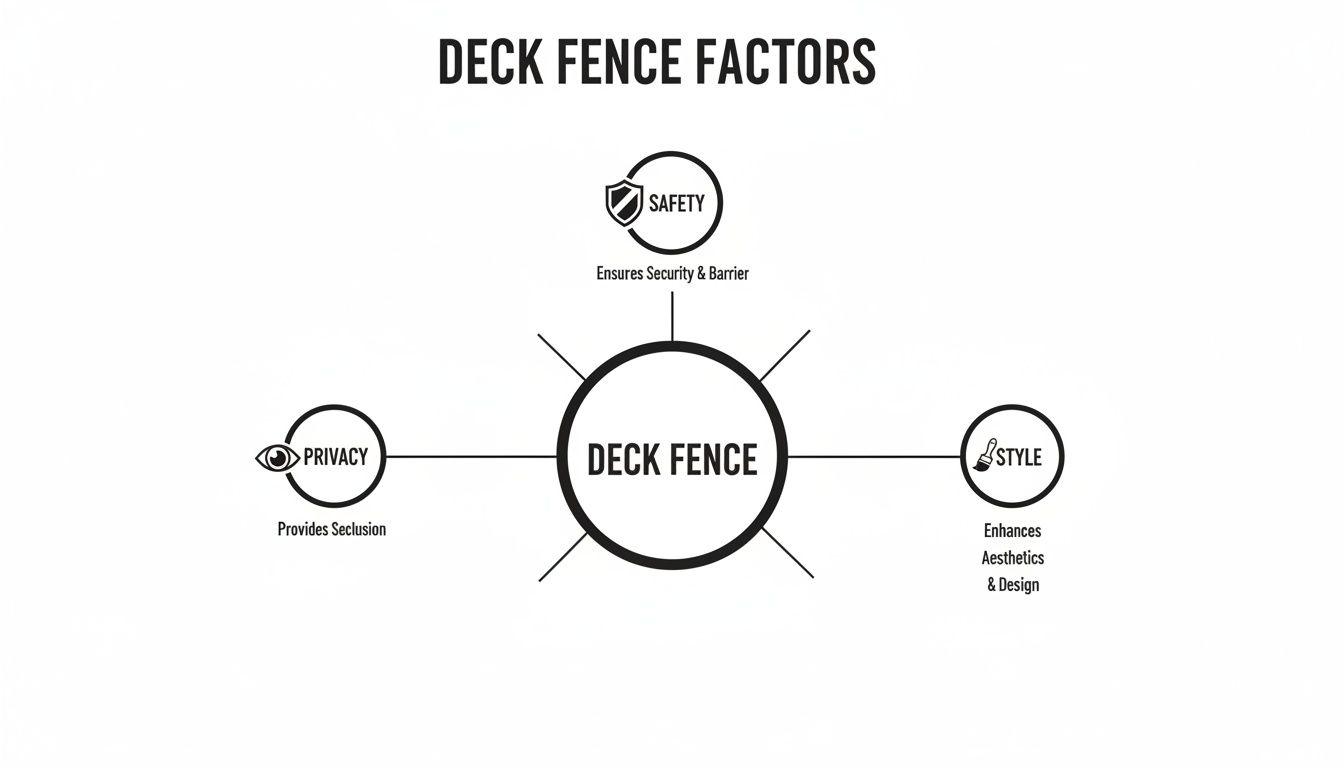
As you can see, the final decision is a blend of practical needs and what you find beautiful, with each material striking a different balance.
The Best of Both Worlds: Hybrid Fencing
For rock-solid strength and easy-care appeal in one package, consider a hybrid fence. These systems typically use a tough, galvanized steel frame for the posts and rails, then fill the gaps with panels made from either PVC or a wood-plastic composite.
The result is exceptional strength and a very long lifespan. The steel skeleton provides a rigid structure that won't sag or twist over time—a common problem with other fence types. Meanwhile, the composite or PVC panels deliver low-maintenance benefits, freeing you from a summer spent with a paintbrush in hand. This makes a hybrid system a fantastic long-term investment for a truly bulletproof privacy fence for decks.
Sleek and Modern: Metal and Glass
For a clean, contemporary look that preserves light and views, you can't beat metal and glass. Aluminum is a go-to for the framework because it's light, strong, and won't ever rust, which is a huge plus in our climate.
The panels are made from tempered safety glass, creating a secure barrier that feels wide open. They're perfect for enclosing a pool or for decks that overlook a gorgeous view you don't want to block. While they offer zero visual privacy, they are top-of-the-line for safety and style. Your main considerations should be the higher upfront cost and the need for regular cleaning to keep the glass looking sharp.
Harmonizing Your Fence with Deck and Pool Designs
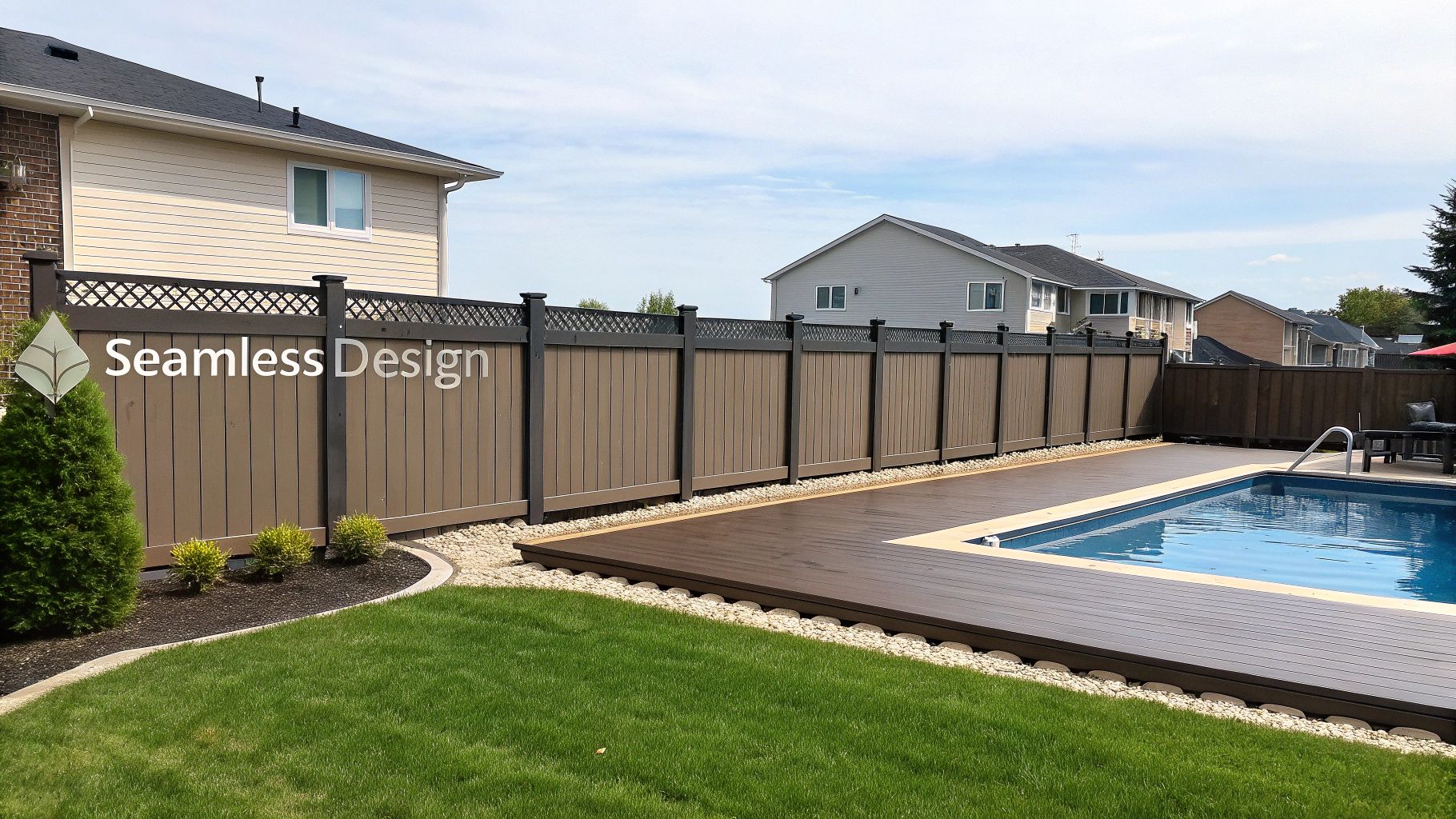
A great privacy fence for a deck shouldn't feel like an afterthought. It needs to look like it was always part of the plan—a natural extension of your home’s character. To achieve this seamless integration, focus on smart design and material choices.
Think of your home's exterior, your deck, and your garden as a single canvas. Your fence is one of the biggest elements you'll add, so its colour, texture, and style can either tie everything together beautifully or create a jarring mismatch. Your mission is to create a unified outdoor space that feels deliberate and thoughtfully designed.
Matching Materials for a Cohesive Look
The most direct path to a unified look is to echo the materials and colours you already have. When you get it right, the fence blends into the scenery instead of screaming for attention.
Here are a few actionable tips for coordination:
Complement Your Siding: If your home has warm-toned siding, a natural cedar fence will pick up on that warmth beautifully. For houses with cooler grey or blue tones, a sharp white or grey PVC fence can create a crisp, modern feel.
Echo Your Deck: This is a classic move. Matching your fence to your decking creates an incredibly polished look. For instance, if you have a composite deck, a hybrid fence with a steel frame and matching composite boards looks fantastic.
Tie in Trim Colours: Use your home’s trim colour as an accent. A fence that matches your main siding colour but has post caps painted the same colour as your window trim is a small detail that makes a huge difference.
By aligning your fence with these existing elements, you create a visual flow that makes your entire property feel more put-together. It elevates the fence from a simple barrier to a genuine architectural feature.
Design Principles for a Seamless Transition
Beyond materials, the style of your fence is critical. A rustic split-rail fence would look completely out of place next to an ultra-modern home, just as a stark metal fence might clash with a cozy cottage.
Creating visual harmony is about balance. The fence should complement, not compete with, your home and deck. This means considering scale, style, and sightlines to ensure the new structure enhances the existing space.
To achieve this, focus on creating visual continuity. If your deck railing has vertical balusters, a fence with vertical boards carries that pattern across the yard. If your home has strong horizontal lines, a horizontal board fence reinforces that modern aesthetic. For more inspiration, you can explore the various wooden fence styles trending in Ottawa to find a design that perfectly suits your property.
Integrating Fences with Pools and Patios
When a pool is in the mix, things get more complex. In Ottawa, pool enclosures are governed by strict safety by-laws. These rules dictate everything from fence height and gate latching mechanisms to the spacing between pickets, all designed to prevent accidental access.
But safety requirements don't mean you have to sacrifice style. You can absolutely meet the code without making your pool area look like a fortress.
Stylish and Safe Pool Fence Solutions:
Glass Panels: For an unobstructed view of the pool, nothing beats tempered glass. Framed with aluminum or PVC, these panels provide a secure barrier that feels open and airy, easily meeting safety codes while adding a touch of luxury.
Decorative Metal: Ornamental iron or aluminum fences offer top-notch security with a dose of elegance. Their slim profiles give you excellent visibility, so you can always keep an eye on the pool area.
Hybrid Designs: Use different fence styles for different jobs. Install a solid wood or PVC privacy fence for decks and along property lines facing neighbours, then switch to an open-style aluminum or glass fence right around the pool. This gives you privacy where it counts and visibility where it's critical for safety.
This blended approach lets you create a backyard that’s safe, private, and visually stunning all at once. It’s proof that you never have to choose between aesthetics and security.
Ensuring a Safe and Secure Deck Fence Installation
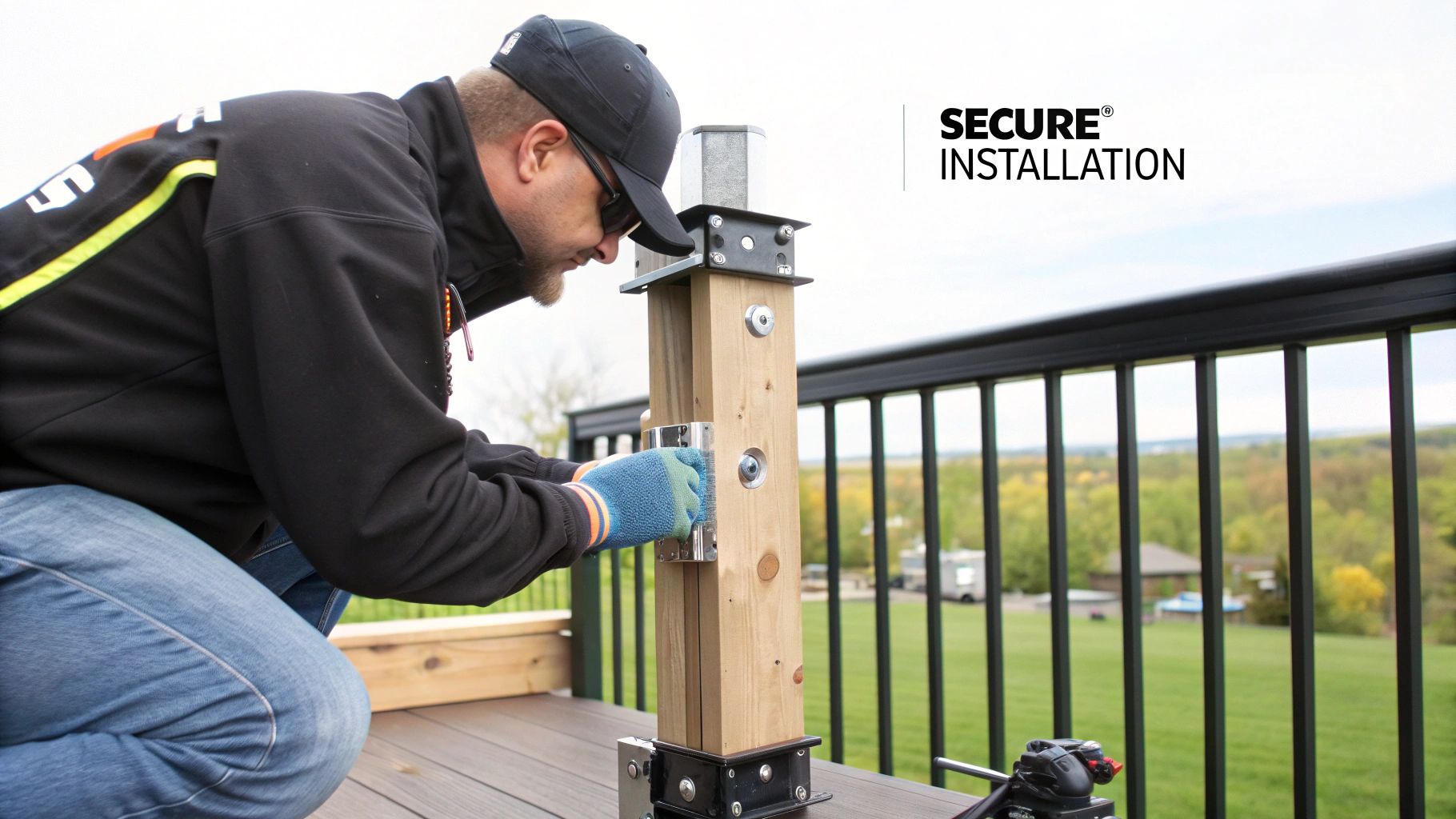
A wobbly or leaning fence isn't just an eyesore; it's a serious safety hazard. When you're adding a privacy fence for decks, especially one that’s raised off the ground, structural integrity isn't just a goal—it's everything. A proper installation is the only way to guarantee your fence will stand straight and strong through years of Ottawa's heavy snow and gusting winds.
A solid privacy fence acts like a sail. Those panels catch a lot of wind, creating a powerful force known as wind load. This puts tremendous stress on the fence posts and whatever they're attached to. If that connection isn't rock-solid, that force can lead to loosened hardware, leaning posts, or worse, a complete failure.
Mounting Methods: The Foundation of a Sturdy Fence
The secret to a fence that lasts is how the posts are anchored. For a deck fence, there are two primary methods, and the right choice depends on your deck's design and height.
Mounting to Deck Joists: This technique involves bolting the fence posts directly to the deck's underlying frame—the joists. We use specialized hardware and add extra blocking between the joists to create a rigid connection that transfers the wind load safely into the deck's structure. This approach often works well for lower decks with shorter fences.
Setting Posts in Concrete Footings: For taller fences or higher elevated decks, this is the gold standard. Here, we dig holes into the ground beside the deck and set the posts in concrete. This creates a foundation for the fence that's completely independent of the deck, giving you the absolute best stability against wind and frost heave.
A professional assessment is vital to determine the correct mounting method. An incorrectly secured fence can compromise not only its own stability but also the structural integrity of your entire deck.
Here in Canada, digging below the frost line is a critical part of the job. You can learn more about this crucial step in our guide to frost depth in Ontario, which explains exactly why it’s so important for preventing your posts from shifting during our freeze-thaw cycles.
Why Professional Installation Is a Safety Imperative
Securing a heavy privacy fence to a raised structure isn't a simple weekend project; it requires an understanding of structural principles. A professional installer like FenceScape doesn't just bolt up some posts. We analyze your deck's existing frame, calculate the potential wind loads it will face, and use specific hardware and reinforcement techniques to ensure a safe, durable build that lasts.
This expertise is becoming more important than ever. The industry is seeing a clear trend toward stronger, safer installations, with a forecasted 19% rise in demand for wind-resistant panels. We're also seeing that 27% of residential fencing permits in 2025 are projected to be for deck privacy upgrades. On the legal side, upcoming changes like California's 2026 update capping retention at 5% for private contracts point to a growing focus on quality and accountability.
Ultimately, investing in a professional installation for your deck's privacy fence is an investment in your peace of mind. It ensures your beautiful new addition is not only a private backyard oasis but also a secure and lasting feature of your home.
Navigating Ottawa By-Laws and Permit Requirements
Building a beautiful privacy fence is exciting, but nothing stops momentum faster than running into a problem with local regulations. Getting a handle on the City of Ottawa’s by-laws right from the start is your ticket to a smooth, stress-free installation.
This isn’t about trying to find loopholes. It’s about making sure your new fence is safe, fully compliant, and won’t create headaches with neighbours or city inspectors down the road. A few key rules cover most fence projects, and knowing them upfront saves you from making costly mistakes.
Understanding Fence Height Restrictions
The first question everyone asks is, "How high can I actually build my fence?" In Ottawa, the answer depends on where the fence is on your property.
Backyard Fences: For most residential backyards, the maximum height you can build to is 2.13 metres (7 feet). This is usually more than enough to create an effective privacy screen for your deck.
Front and Side Yard Fences: For any yard that faces a street, fences are typically capped at just 1.0 metre (3.3 feet) to ensure clear sightlines for drivers and pedestrians.
It’s critical to know which "yard" your deck fence falls into. Corner lots, for example, can be tricky since they might have two "frontages," which impacts your height limits. A quick review of the city’s zoning by-law will give you the clarity you need to design your privacy fence for decks with confidence.
Permits and Property Line Setbacks
What about permits? The good news is that for a standard deck fence that follows the height rules, you usually don't need one. But there's a huge exception for homeowners with a swimming pool.
If your fence acts as part of a pool enclosure, a permit is almost always mandatory. Ottawa has a separate, very strict pool enclosure by-law that dictates height, gate design, and self-latching mechanisms to prevent accidents.
While you can technically build right up to your property line, it's often smarter to build slightly inside it. This simple step helps you sidestep any potential disagreements with your neighbours and guarantees that every part of your fence—including the concrete footings underground—is firmly on your land.
The Most Important Phone Call You'll Make
Before a single shovel of dirt is turned for your post holes, you absolutely must contact Ontario One Call. This free service locates and marks all the underground utility lines on your property, like gas, electrical, and internet cables.
Accidentally hitting one of these lines is incredibly dangerous and can lead to major service outages and a shockingly expensive repair bill. The rule is simple: call or click before you dig. It's a non-negotiable step that protects you, your property, and your entire neighbourhood. Getting familiar with these local rules from the get-go sets your project up for success.
Budgeting for Your Deck Fence: What to Expect
Let's talk numbers. Budgeting for a new deck fence is about knowing exactly what you're paying for. A clear financial plan from the get-go means no hidden surprises, just the perfect fence for your home and your wallet.
The final price tag breaks down into two main parts: materials and labour. Material costs are usually priced by the linear foot, and the range is wide. Classic pressure-treated wood is your most budget-friendly starting point, while high-end options like hybrid fencing or sleek glass panels will naturally cost more.
Key Factors That Affect the Final Price
Beyond the material, a few key variables can swing the final quote one way or another. Knowing what they are helps you understand your project's costs.
Fence Height & Design Complexity: Taller fences need more material and beefier structural support, which adds to the cost. The same goes for custom designs—if you want unique patterns or decorative accents, expect that to be reflected in both the material and labour expenses.
Access to Your Yard: If our crew can't get equipment to your backyard easily, tricky site access can add to the installation time, which in turn affects labour costs.
Existing Structures: If we need to tear down and haul away an old fence or clear out obstructions along the fence line, that removal work will be included in the project budget.
Having a handle on these details means you can have a much more productive conversation about your project and see precisely how your investment is being put to work.
Smart Ways to Get More for Your Money
Getting a fantastic fence isn't just about the upfront cost—it's about smart, long-term value. One of the best ways to bring the price down without cutting corners on quality is by teaming up.
Actionable Tip: Coordinate your fence installation with your neighbours. When our crew can tackle multiple fences in one go, we save significantly on logistics and time. We pass those savings directly to you and your neighbours with a group discount.
Not only does this approach lower the cost for everyone, but it also creates a beautiful, cohesive look for the whole street. It's a win-win that makes the entire process smoother and more affordable.
We also know that a new fence is a big decision for your home. To help make it happen, FenceScape offers flexible financing options. These plans let you break up the cost into manageable monthly payments, so you can get the deck privacy you want now without breaking the bank. Our aim is to give you total financial clarity, letting you plan with confidence and get a fence that you'll love for years to come.
Common Questions About Deck Privacy Fences
As you finalize your plans, a few practical questions are bound to come up. Here are the clear, straightforward answers to the most common queries we get from homeowners, so you can move forward with your project feeling confident.
Can I Install a Privacy Fence Directly on My Deck?
This is a common question, but mounting a full-height privacy fence for decks right onto the surface boards is a recipe for trouble. A strong gust of wind can turn that fence into a giant sail, putting immense stress on your decking and potentially causing serious damage.
The secure way to do it is by anchoring the fence posts directly to the deck’s hidden framework—the joists—using specialized hardware and extra reinforcement. For taller fences or high decks, the best practice is to set the posts in concrete footings just outside the deck. This creates an independent foundation that’s unshakably stable.
How Tall Can My Deck Privacy Fence Be in Ottawa?
For most backyards in Ottawa, you can build your fence up to a maximum height of 2.13 metres (7 feet). That’s usually more than enough to create the private, cozy feeling you're after.
However, the rules can differ for corner lots or properties with unusual zoning. If the fence is also acting as a pool enclosure, it must meet the specific height and self-latching gate requirements in the pool by-law. It’s always a good idea to double-check the specific rules for your property before you lock in a design.
What Is the Best Low-Maintenance Material for Ottawa Winters?
If you want to avoid yearly staining and repairs, PVC (vinyl) is your best bet. It’s built to handle our brutal freeze-thaw cycles without cracking, rotting, or losing its colour.
Caring for PVC is simple—a quick wash with soap and water is usually all it needs to look fantastic again. Hybrid fences, which pair a tough steel frame with PVC or composite panels, are another fantastic choice for our climate. They offer incredible durability and very little upkeep, making them a smart long-term investment.
The secret to low maintenance in Ottawa is choosing a material that's non-porous and won't flinch at extreme temperatures. PVC and hybrid systems are designed for exactly that, ensuring your fence stays looking great for years with next to no effort.
Do I Need a Permit for a Deck Fence in Ottawa?
For a standard fence, you typically won't need a building permit in Ottawa, provided you stick to the height limits in the local zoning by-law.
The main exception is a pool enclosure. If your fence is part of a system to secure a swimming pool, a permit is almost certainly required. Since regulations can change, a final check with the City of Ottawa’s Building Code Services before you start digging is always a wise move.
Ready to create the private deck oasis you've always wanted? The team at FenceScape is here to help you navigate every step, from design and material selection to professional installation that’s built to last. For a free, no-obligation estimate and expert advice tailored to your Ottawa home, visit us online today.
Building a high privacy screen directly onto deck framing usually requires extra blocking to handle strong wind loads. A neighbor built solid panels without reinforcing the posts, and the whole railing started wobbling after one bad storm. When planning custom screens, I always recommend checking framing guides, or you can visit website galleries from general contractors to see how they anchor structural privacy walls properly