
A Homeowner's Guide to Metal Fences and Gates in Ottawa

Choosing the right fence for your property isn't just a practical decision; it's a statement that impacts curb appeal, daily function, and your sense of security. For homeowners in the Ottawa–Gatineau region, selecting the right material is critical. Our harsh weather demands durability, which is precisely where metal fences and gates excel. They offer a powerful combination of strength, security, and classic style, making them a smart long-term investment.
Why Metal Fencing Is a Smart Investment for Ottawa Homes
Installing a metal fence is about adding a permanent, value-boosting feature to your property. While wood rots and vinyl becomes brittle in our deep freezes, metal stands up to heavy snow loads and summer humidity. This inherent durability translates directly into fewer repair bills and less maintenance for you.
Beyond longevity, the strength of metal provides tangible security. A well-built steel or iron fence is a formidable deterrent, offering a level of protection that softer materials cannot match. You don't have to sacrifice aesthetics for this strength; the clean, defined lines of a modern metal fence can elevate the look of any home, from a century-old classic to a new build.
Finding the Right Fit for Your Property
The term "metal fence" covers a few key options: aluminum, steel, and ornamental iron. Each has distinct advantages. Your ideal choice depends on what you prioritize most—whether that's near-zero maintenance, top-tier security, or pure decorative elegance.
Actionable Tip: Before you start shopping, define your top one or two priorities. Is it "install and forget," "maximum security," or "unique curb appeal"? Knowing this will immediately narrow your material choices and simplify your decision.
To get you started, let's break down the most popular options.
Metal Fence Types at a Glance
This quick comparison table will help you identify which material aligns best with your project goals and budget.
Metal Type | Best For | Maintenance Level | Typical Cost |
|---|---|---|---|
Aluminum | Pools, humid areas, and low-maintenance longevity. | Very Low | Moderate |
Steel | High-security needs and maximum durability. | Low to Moderate | Moderate to High |
Ornamental Iron | Unmatched elegance and custom architectural designs. | Moderate to High | High |
Each of these metals serves a specific purpose. Let's dive into the practical details to help you choose the right one.
Choosing the Right Metal for Your Fence and Gate
Making the right material choice is the most critical step in your fencing project. This decision dictates not just the look, but the long-term performance and maintenance requirements. Are you looking for a set-it-and-forget-it solution? Is maximum security your primary goal? Or are you aiming for a show-stopping design that becomes a central feature of your home's exterior?
The three primary materials are aluminum, steel, and ornamental iron. Understanding their practical strengths and weaknesses is the key to selecting a fence you'll be happy with for decades.
Aluminum: The Low-Maintenance Champion
If you want a fence that looks great without demanding constant upkeep, choose aluminum. Its greatest asset is its natural resistance to rust—a massive advantage in Ottawa's wet springs and snowy winters. Aluminum will not corrode, no matter how much moisture it's exposed to.
This rust-proof quality makes aluminum the go-to choice for pool enclosures. It handles constant splashing and humidity effortlessly, keeping your pool area safe and looking sharp. It's also lightweight, which can simplify installation and reduce long-term strain on fence posts. While not as heavy as steel, modern aluminum fencing is more than strong enough for most residential security needs. Its durable powder-coated finishes come in a huge range of colours and require only an occasional wash to look new.
Steel: The Guardian of Your Property
When security is your top priority, steel is the definitive choice. It is significantly heavier and stronger than aluminum, creating a truly formidable barrier. For homeowners seeking maximum peace of mind, the impact resistance of a steel fence provides a superior level of protection.
Because of its strength, steel can span longer distances between posts, offering a cleaner, more open view without compromising toughness. To withstand our climate, modern steel fencing is galvanized (coated in protective zinc) and then powder-coated. This dual-layer protection is crucial for fighting off rust from road salt and freeze-thaw cycles.
This flowchart helps you choose a material based on your primary goal.
As you can see, if ultimate security is what you're after, steel is the way to go. If your goal is a beautiful fence with minimal upkeep, aluminum is the smart choice.
Ornamental Iron: The Architectural Statement
To create a truly unique and elegant boundary, nothing surpasses ornamental iron. As the heaviest and most malleable of the metals, it allows skilled artisans to craft breathtaking custom designs. This means you can incorporate intricate scrollwork, unique geometric patterns, and personal details that are impossible to replicate with aluminum or steel.
An ornamental iron fence is more than a boundary; it's a handcrafted piece of art that elevates your entire property. Its substantial weight and classic elegance convey a sense of permanence and luxury that’s perfect for heritage homes or anyone wanting to make a bold statement. Exploring the possibilities of custom ornamental iron designs will show you just how transformative this material can be.
This level of craftsmanship requires more care. While modern iron is treated with protective coatings, it will need periodic inspections and touch-ups to prevent rust, especially in our climate. For those willing to perform this maintenance, the reward is a timeless, stunning look that's second to none.
Detailed Comparison of Fencing Metals
Use this side-by-side breakdown to make a final decision on which material best suits your needs.
Feature | Aluminum | Steel | Ornamental Iron |
|---|---|---|---|
Rust Resistance | Excellent – Naturally rust-proof. Ideal for pools and wet climates. | Good – Galvanized and powder-coated for protection, but vulnerable if scratched. | Fair – Requires the most maintenance to prevent rust, especially at welds. |
Strength & Security | Good – Strong enough for most residential needs. | Excellent – Heavier and more impact-resistant for high-security applications. | Excellent – Extremely heavy and strong, offering a powerful deterrent. |
Maintenance | Minimal – Requires only occasional cleaning. "Set it and forget it." | Low – May need touch-ups on scratches to prevent rust. | Moderate – Needs regular inspections and repainting to maintain its integrity. |
Weight | Lightweight – Easiest to install and less strain on posts. | Heavy – More difficult to install, but adds to its formidable nature. | Very Heavy – Requires robust installation and reinforced posts. |
Customization | Limited – Best for standard panel and picket styles. | Moderate – Can be customized, but less intricate than iron. | Excellent – The best choice for truly bespoke, artistic designs. |
Best For | Pool enclosures, coastal areas, homeowners prioritizing low maintenance. | High-security needs, commercial properties, long, open fence lines. | Heritage homes, grand entrances, and achieving a unique, high-end look. |
By weighing the easy-care benefits of aluminum against the raw strength of steel and the unmatched beauty of iron, you can select the perfect material to protect and enhance your Ottawa home.
Choosing the Right Gate Style and Automation for Your Home
Your gate is more than an entry point; it’s the first interaction visitors have with your home. Your choice between a classic swing gate and a modern sliding gate will fundamentally shape your property's access and daily use. Adding automation to your metal fences and gates elevates convenience and security to a new level. Let's examine the practical mechanics of each option.
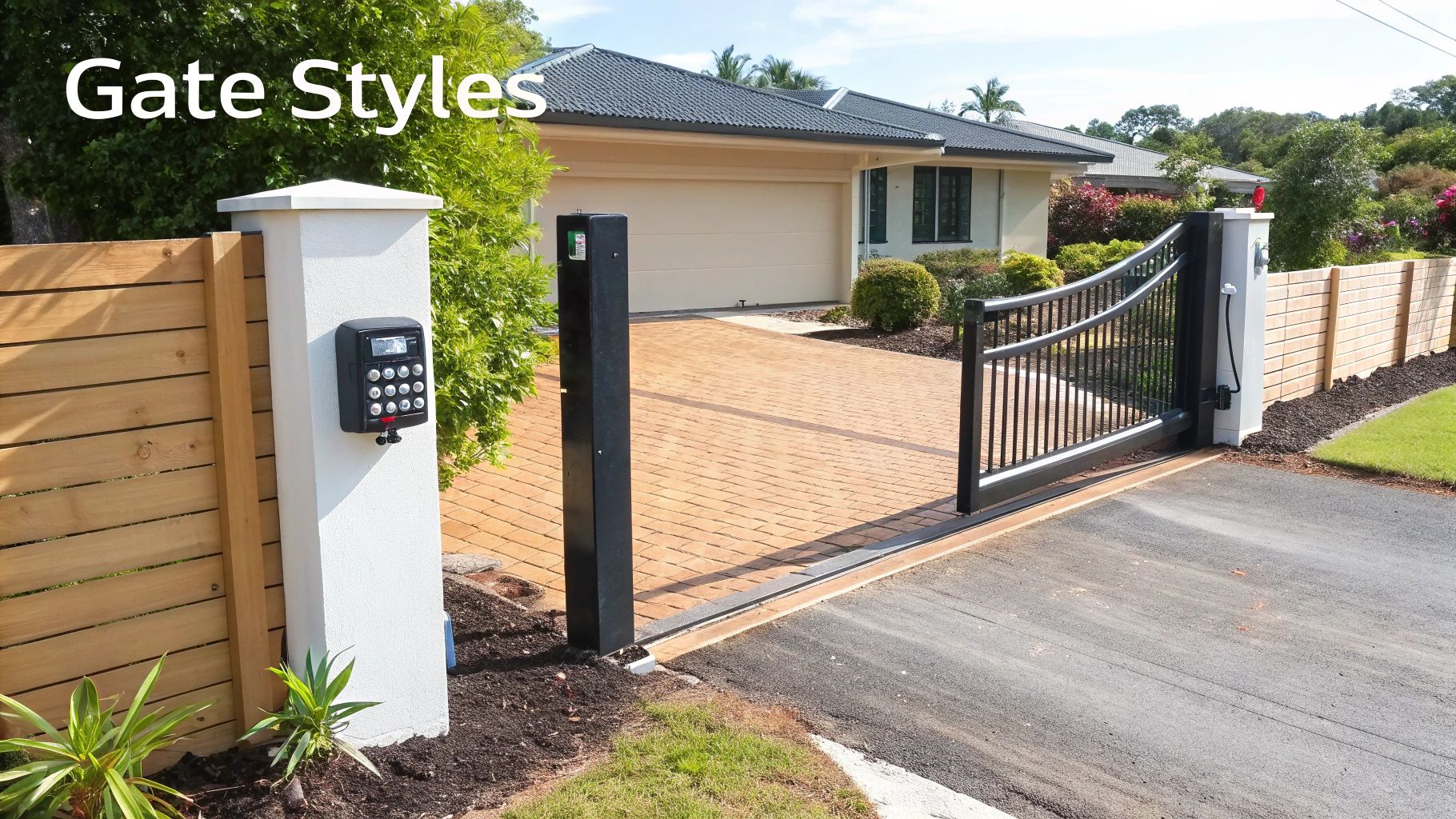
Swing Gates: The Timeless Choice
Swing gates operate like traditional doors, pivoting on hinges mounted to sturdy posts. This style creates a grand, welcoming entrance, especially in a double-gate configuration.
The most important consideration is space. A swing gate requires a clear, level arc to open fully, so your driveway must be long enough to accommodate its swing without hitting a parked vehicle. Their simpler mechanics often lead to a more straightforward installation.
Single Swing Gates: A practical, cost-effective solution for pedestrian walkways or narrower driveways.
Double Swing Gates: Ideal for wider driveways, they create an elegant, symmetrical entrance and require less swing-in depth per gate leaf than a single large gate.
Sliding Gates: The Space-Saving Solution
If your driveway is short or slopes upward toward your home, a swing gate is impractical. This is where a sliding gate becomes the ideal solution. It glides horizontally on a track, tucking neatly behind the adjacent fence line.
This design is the ultimate space-saver, requiring almost no driveway depth to operate. All you need is a clear run along your fence that’s at least the width of the gate itself, making it perfect for tighter urban lots or properties with challenging landscaping. The robust track system also enhances security, as it is much harder to force open than a swing gate.
Actionable Tip: Measure your driveway. If the distance from the gate line to where you park your car is less than the width of your planned gate opening, a sliding gate is your most practical option.
Upgrading with Automation and Access Control
Automating your gate transforms it into a smart entry system. No more getting out of your car in a downpour or an Ottawa snowstorm—simply press a button to enter. This convenience is a true game-changer for daily life.
Modern gate motors are reliable, quiet, and secure, with built-in safety sensors to prevent closure on a person, pet, or vehicle. To help you choose the right control method, our actionable guide to automatic gates for driveways in Ottawa covers all the options.
Here are the most popular access control methods to consider:
Remote Controls: The classic solution. Keep one in each car for simple, reliable access.
Keypad Entry: Grant access to family, friends, or service providers with a secure code—no physical keys required.
Intercom Systems: A significant security upgrade. Speak with (and see, with video models) visitors before granting entry.
Smartphone Apps: The ultimate in modern control. Open your gate from anywhere, grant temporary access, and check its status in real-time.
For those interested in smart home integration, this guide on smart garage door opener installation offers useful insights into the setup and functionality you can expect. Pairing the right gate style with the right automation creates an entrance that is seamless, secure, and perfectly tailored to your home.
Budgeting for Your Metal Fence Installation
To accurately budget for your new metal fences and gates, you need to understand the key factors that contribute to the final cost. A clear breakdown of these elements will prevent surprises and help you make a confident investment. The final price is a combination of your material choice, project scale, and the specific conditions of your property.
Core Factors Driving Your Project Cost
The two biggest drivers of your budget are the type of metal you choose and the total size of the project. As discussed, aluminum, steel, and ornamental iron have different price points based on raw material costs and manufacturing complexity.
Next is the project's scale. The total linear footage is a primary factor, but fence height is just as important. A six-foot privacy fence will require significantly more material and labour than a decorative four-foot one.
Here are the main variables that will influence your quote:
Material Choice: Ornamental iron is the premium option, followed by steel. Aluminum is often the most budget-friendly, yet highly durable, choice.
Total Length and Height: A larger perimeter and taller fence will increase costs for both materials and installation time.
Design Complexity: A simple, flat-top fence costs less than a custom design featuring scrollwork, decorative post caps, or arched sections.
Number and Style of Gates: Each gate is a separate component. An automated sliding gate, for example, is a more significant investment than a simple manual walk-through gate.
Understanding Installation and Site-Specific Costs
Beyond materials, the condition of your property directly impacts the labour portion of your quote. Installing a fence on a flat, clear lawn is a different task than navigating a sloped yard with rocky soil.
Installers must account for anything that complicates the job. Digging post holes in the rocky soil common in the Ottawa area requires more time and specialized equipment than working in soft dirt. Site access also matters; if the crew cannot easily transport equipment and materials to the fence line, it can add to the labour hours.
Actionable Tip: Before getting a quote, walk your proposed fence line. Note any slopes, large rocks, tree roots, or access issues. Mentioning these to your installer upfront will lead to a more accurate initial estimate.
Consider these common on-site factors that can affect the final cost:
Terrain and Soil Conditions: Sloped ground requires special installation techniques like "racking" or "stepping." Rocky soil will increase the labour required for digging post holes.
Site Accessibility: Tight spaces or backyard obstacles can slow down the movement of materials and equipment, increasing installation time.
Removal of an Old Fence: If an existing fence must be dismantled and hauled away, this service will be included in the project cost.
Permit Fees: While most fences under two metres in Ottawa don't require a permit, pool enclosures always do. These permits have associated fees from the city.
Realistic Budget Ranges in Ottawa
To set a practical starting point, here are general cost expectations for professionally installed metal fences and gates in the Ottawa area. These "all-in" estimates include both materials and labour. Your project's specific details will determine the final price.
A standard aluminum fence is often the most accessible option, making it very popular. Galvanized steel typically costs more due to its heavier weight and greater strength. At the high end, a custom ornamental iron fence represents the largest investment, reflecting the bespoke craftsmanship and heavy-duty materials involved. Knowing these tiers will help you have a more productive conversation with your installer and make a choice that aligns with your budget.
A Practical Maintenance Plan for Your Metal Fence
To ensure your metal fence lasts for decades in Ottawa's harsh climate, you need a simple, proactive maintenance plan. Our heavy snow, freeze-thaw cycles, and road salt can take a toll on any outdoor structure. This isn't about difficult labour; it's about a seasonal routine of care that catches small issues before they become major problems.
A Seasonal Care Plan for Iron and Steel
The primary goal for maintaining wrought iron and steel fences is preventing rust by keeping their protective coatings intact. Moisture should never touch the raw metal.
A twice-a-year inspection is your most effective tool. Conduct one in the spring after the snow melts and another in the fall before winter returns. Focus on joints, welds, and the base of each post—areas where water can collect. If you find any chips, scratches, or early signs of rust, address them immediately.
Step 1 Clean the Area: Lightly sand the spot to remove any loose rust and create a surface the new paint can adhere to.
Step 2 Apply a Primer: Cover the bare metal with a rust-inhibiting primer to seal it from air and moisture.
Step 3 Touch-Up Paint: Finish with a high-quality exterior metal paint that matches your fence colour.
Keeping Aluminum Looking Brand New
Since aluminum doesn't rust, maintenance is much simpler. Your main task is to protect the powder-coated finish that provides its colour and durability.
An annual cleaning is typically all that's needed. Wash the fence with mild soap and water, using a soft cloth to remove dirt and grime. Rinse with a garden hose. Avoid harsh chemical cleaners or abrasive scrubbers, as these can damage the protective coating.
Actionable Tip: Treat your fence's finish like your car's paint. A simple wash removes abrasive grime that can dull the finish over time, preserving its factory-fresh look for years. This is a simple step to protect your investment.
Practical Adjustments for Ottawa’s Climate
Beyond cleaning, our seasons demand a few specific checks. Incorporating preventive maintenance into your routine is key to long-term durability.
Ottawa's freeze-thaw cycle can cause ground heave, which may misalign gate hinges and latches. If your gate sticks or fails to latch properly in the spring, it likely just needs a simple hinge adjustment. Also, be strategic with snow removal. Avoid piling heavy, salt-laden snow directly against the fence. The weight can stress the posts, and the salt can accelerate corrosion on iron and steel. Leaving a small air gap makes a significant difference.
Balancing Curb Appeal with Pool and Property Safety
A metal fence must perform two jobs: act as a critical safety barrier and serve as a major architectural feature. The key is to find the perfect balance where beautiful design meets non-negotiable safety standards. Metal fences and gates are uniquely suited for this, offering the versatility to achieve both.
First, select a style that complements your home's architecture. For a modern house, a sleek steel or aluminum fence with clean horizontal lines can feel like a natural extension of the design. For a traditional or heritage home, the timeless elegance of ornamental iron with classic finials is a perfect match. The fence should look like an intentional part of your landscape design.
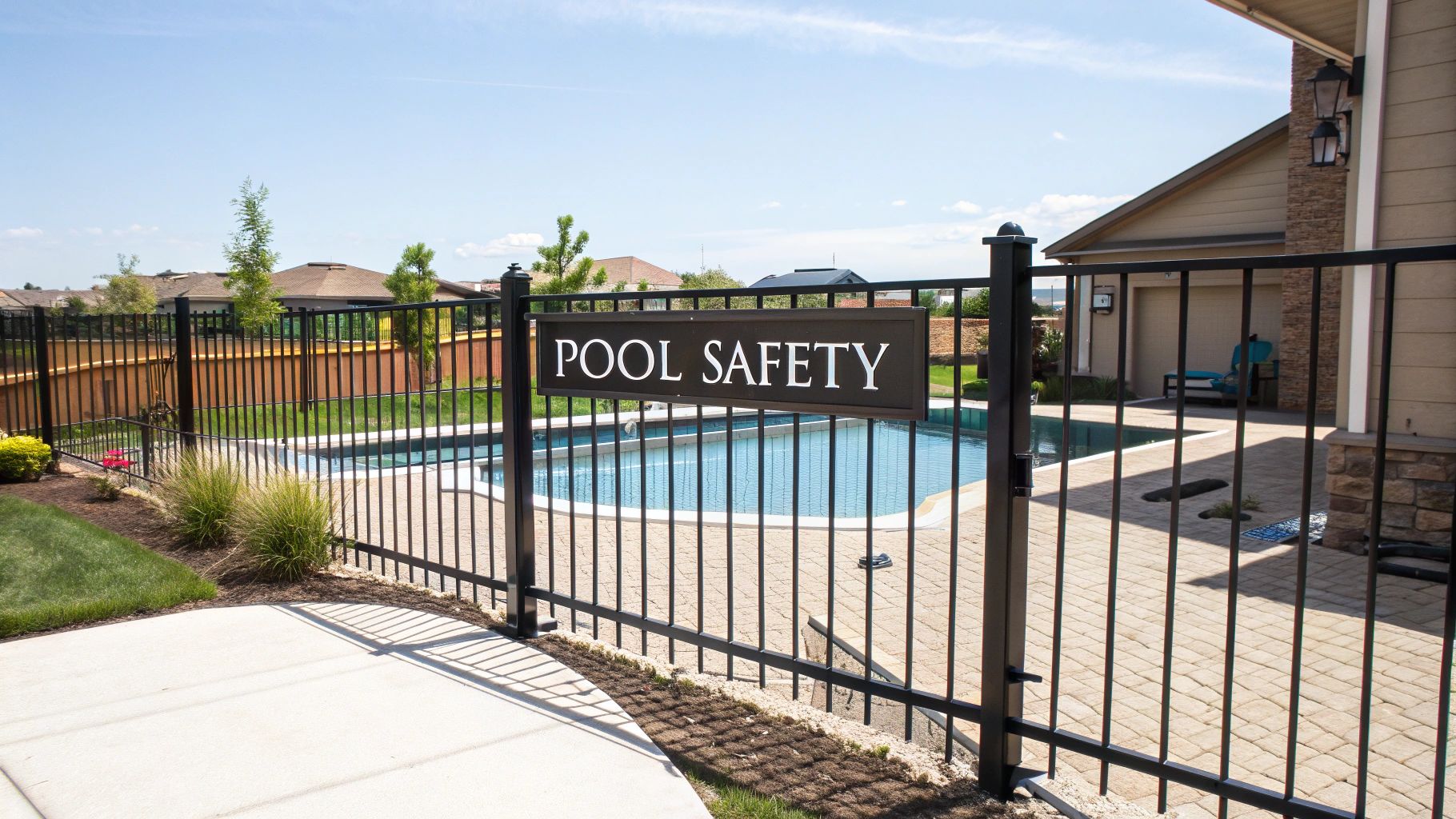
Navigating Ottawa's Pool Enclosure By-Laws
While aesthetics are important, pool safety is mandatory. The City of Ottawa has strict by-laws for pool enclosures to prevent tragic accidents. These are legal requirements for any pool deeper than 600 mm (24 inches).
A compliant pool fence is an essential layer of protection for children and pets. Understanding and adhering to these rules is the most critical part of planning a safe backyard.
Metal fencing is an excellent choice for pool enclosures because its rigid structure and design flexibility make it easy to meet these rules without sacrificing style.
Here are the core requirements you must follow:
Minimum Height: The fence must be at least 1.5 metres (5 feet) tall, measured from the ground on the outside of the enclosure.
Picket Spacing: The gap between vertical pickets cannot exceed 10 cm (4 inches) to prevent small children from passing through.
Climb Resistance: The fence design must not have any horizontal rails on the outside that could be used as a ladder.
Gate Requirements: Every gate must also be at least 1.5 metres high and equipped with a self-closing and self-latching device. The latch must be on the pool side of the gate, out of a child's reach.
Ensuring your design meets every requirement is crucial for passing inspection. For more details, consult our practical guide to pool gates for Ottawa homeowners. By blending thoughtful design with strict safety compliance, you can create a beautiful metal fence that provides true peace of mind.
Answering Your Top Metal Fence & Gate Questions
It's natural to have questions when planning a major home improvement project. Here are clear, actionable answers to the most common questions we receive from Ottawa homeowners.
Which Metal Fence Holds Up Best in an Ottawa Winter?
Your two best options for our harsh winters are powder-coated aluminum and galvanized steel. Aluminum is the worry-free choice, as it is naturally rust-proof and unaffected by moisture from snow and ice.
Modern galvanized steel with a quality powder-coat finish is also extremely durable, creating a tough barrier against road salt and freeze-thaw cycles. While beautiful, ornamental iron is the most high-maintenance option in our climate and will require diligent upkeep to prevent rust.
How Long Does a Metal Fence Installation Usually Take?
A typical residential backyard fence installation usually takes 2 to 4 days. A significant portion of this time is dedicated to allowing the concrete footings for the posts to cure properly, which is essential for the long-term stability of your fence. Factors like custom gate fabrication, difficult terrain, or extensive site preparation can extend this timeline. We always provide a clear project schedule before work begins.
Actionable Insight: The curing time for the posts is the most critical phase of installation. Rushing this step can compromise the fence's strength and longevity. Patience here ensures a durable, long-lasting result.
Do I Need a Permit to Build a Fence in Ottawa?
In most cases, you do not need a building permit for a fence in Ottawa if it is under 2 metres (6 feet 7 inches) high. However, you must still comply with local by-laws regarding placement, particularly on corner lots where sightlines for drivers cannot be obstructed.
The major exception is pool fences. Any fence enclosing a pool always requires a permit under the city's Pool Enclosure By-law to ensure it meets all safety codes. Working with an experienced installer who knows these regulations is the best way to ensure compliance.
How Do You Install a Metal Fence on a Sloped Yard?
Metal fences are perfectly suited for sloped properties. We use two primary installation techniques to ensure a secure and professional look.
Stepping: We install each fence panel slightly lower than the previous one, creating a clean stair-step effect that follows the contour of the land.
Racking: Certain fence panels are designed to "rack," meaning the pickets remain vertical while the rails angle to run parallel with the slope. This creates a smoother, more continuous line.
An experienced installer will assess your property's grade and recommend the best method to create a fence that is both secure and aesthetically pleasing.
Ready to transform your property with a fence that combines strength, style, and lasting value? The team at FenceScape specializes in designing and installing premium metal fences and gates built to withstand the Ottawa climate. Contact us today for a free, no-obligation estimate and let's build the perfect boundary for your home.
Comments