
A Homeowner's Actionable Guide to Chain Link Fence Slats

Chain link fence slats are inserts you weave through your fence mesh to instantly add privacy and a clean, finished look. This guide provides the practical steps and actionable insights you need to transform a see-through barrier into a more private and attractive enclosure for your property.
From See-Through Fence to Private Oasis
A standard chain link fence defines your property line, but it offers zero privacy, leaving your backyard open to neighbours and passersby. Fence slats are the most direct, budget-friendly upgrade to fix this. These weather-resistant strips slide directly into the diamond-shaped gaps in the mesh, immediately creating a sense of seclusion.
More Than Just Privacy
Beyond blocking the view, adding slats delivers several practical benefits. They can introduce colour, act as a windscreen to reduce gusts, and even help muffle ambient neighbourhood noise. It’s a significant boost to your property's curb appeal without the cost of a full fence replacement.
This guide provides the actionable steps you need to complete this project successfully. You will learn how to:
Select the Right Material: Choose the best slat material to withstand Canadian weather and meet your privacy goals.
Measure for Compatibility: Get the correct measurements for your specific fence to ensure a perfect fit and avoid costly mistakes.
Decide on Installation: Determine whether a DIY approach or a professional installation is the right path for you.
Your Action Plan: Use this guide as a checklist to gain the practical know-how to transform your fence. Your goal is a private, secure space where you can relax and enjoy your home.
Finding the Right Style for Your Home
Before you buy, explore various fence designs to visualize the final look. Seeing different styles will help you decide if you want the total seclusion of solid-colour slats or the softer, greener look of a hedge-style slat. This will help you customize the fence to perfectly match your home’s aesthetic.
Choosing the Right Fence Slat Material
Choosing the right slat material is the most critical decision you'll make. This choice directly impacts the final look, durability, budget, and long-term maintenance. Not all chain link fence slats are created equal; your local climate, desired aesthetic, and budget will determine the best fit for your project.
Let's break down the most common materials to help you make an informed decision.
PVC and Vinyl Slats: The Popular Choice
Polyvinyl chloride (PVC) is the most common material for residential projects because it's budget-friendly and its flexibility makes installation straightforward. Modern PVC slats include UV inhibitors to fight sun damage, preventing the material from becoming brittle and the colour from fading.
If you need a reliable, easy-to-install solution, PVC is a solid choice. For a deeper dive into material specifics, our guide on plastic and vinyl fence solutions offers more detail. The demand for these materials is growing; many fencing companies saw a 10–25% year-over-year increase in slat orders from 2020 to 2023, largely driven by new municipal bylaws requiring privacy screening.
Aluminum Slats: The Durable Contender
If durability and security are your top priorities, choose aluminum slats. Unlike flexible PVC, aluminum slats are rigid and stronger, creating a more formidable barrier. This makes them an excellent choice for commercial properties or homes where security is a primary concern.
Aluminum is also rust-proof, making it ideal for damp Canadian climates and harsh winters. While the upfront cost is higher than PVC, their longer lifespan makes them a smart long-term investment.
Actionable Tip: Choose PVC for a cost-effective, colourful, and easy DIY privacy solution. For maximum durability, enhanced security, and a sleek, modern look that will last for decades, invest in aluminum.
Decorative Slats for a Unique Look
To add personality and curb appeal, consider decorative slats. The most popular option is HedgeLink, which weaves in artificial foliage to mimic the look of a natural hedge. This provides excellent privacy while adding a green backdrop to your yard, giving you a beautiful hedge appearance without the watering, trimming, or years of waiting for growth.
Fence Slat Material Comparison
Use this table to quickly compare materials and make your choice.
Material | Key Features | Best For | Average Lifespan |
|---|---|---|---|
PVC / Vinyl | Flexible, colourful, UV-resistant, and affordable. | Most residential yards, budget-conscious projects, and DIY installations. | 10–15 years |
Aluminum | Rigid, rust-proof, highly durable, and secure. | Commercial properties, high-security areas, and modern aesthetics. | 20+ years |
HedgeLink | Natural green appearance, high privacy, and low maintenance. | Homeowners wanting a natural look without the upkeep of real plants. | 8–12 years |
Your task is to balance your immediate needs with your long-term goals. By understanding what each material offers, you can confidently select the one that will turn your chain link fence into a functional and attractive asset.
How to Select Your Ideal Privacy Level
Adding slats is about controlling the view into your yard. Privacy isn't an all-or-nothing feature; it's a spectrum. Your first step is to decide exactly how much privacy you need.
A slat's privacy level is measured as a percentage, typically ranging from 75% to 98% coverage. To make this practical, think of slats like window blinds.
A 75% privacy slat is like angled blinds. It blocks the view from a distance but allows someone close to the fence to see through the gaps. Choose this level if your goal is to discourage casual glances while maintaining airflow and light.
A 90% privacy slat is like nearly closed blinds. The visual barrier is solid, obscuring all but faint outlines of movement. This is the sweet spot for many homeowners, providing significant seclusion without creating the feeling of a solid wall.
Achieving Maximum Privacy with Smart Designs
The jump from 75% to 95% coverage comes down to slat engineering. While standard flat slats work well, high-privacy options are designed to eliminate gaps.
Winged Slats: These slats have flexible, serrated "wings" on the sides. As you insert them, the wings expand to cover the small triangular gaps left by standard slats. This feature alone can boost privacy into the 90-95% range.
Bottom-Locking Slats: This design uses a horizontal locking channel woven into the bottom of the fence. Each slat snaps into this channel, ensuring perfect alignment and preventing them from rattling or being pushed up. This creates a more uniform, opaque barrier.
These small design details are what transform a chain link fence into a true visual shield.
Actionable Insight: Don't assume all slats provide the same coverage. To get maximum privacy, choose slats engineered to close gaps. Look for features like "winged" or "bottom-locking" designs, as they are purpose-built to give you a better barrier against prying eyes.
Privacy, Security, and Peace of Mind
A high-privacy fence also enhances security. A fence that people cannot see through acts as a psychological deterrent, removing the opportunity for a trespasser to survey your yard. This makes your home a less attractive target and gives you genuine peace of mind, turning your backyard from a fishbowl into a private sanctuary. To see how slats fit into a broader strategy, you can explore various privacy solutions and their effectiveness.
Wind Resistance and Regional Demands
The demand for higher privacy isn't just about seclusion. Environmental factors also play a role. In areas prone to high winds or wildfires, there's a growing demand for heavier, more wind-resistant slats. Market research projects the chain link fence slat market to grow at a CAGR of about 5.0% into the 2030s, with manufacturers reporting increased demand for slats with higher wind load ratings. You can learn more about the market trends for chain link fence slats.
To choose your privacy level, you must balance your need for seclusion against factors like airflow, natural light, and budget. By understanding how the percentages and designs work, you can confidently select the right slats for your outdoor space.
The Pre-Purchase Measurement Guide
Ordering the wrong size slats is a frustrating and preventable mistake. Before you buy, you must take three critical measurements: diamond mesh size, wire gauge, and fence height. Follow this checklist to get it right the first time and order your chain link fence slats with complete confidence.
Measuring Diamond Mesh Size
The most common error is mismatching the slat width to the fence's diamond size. A slat designed for a 2-inch diamond will not fit a 2 1/4-inch one. This tiny quarter-inch difference will determine whether your project is a success or a failure.
Here’s the correct way to measure:
Take a tape measure.
Find any two parallel wires forming one side of a diamond.
Measure the distance from the inside edge of one wire to the inside edge of the other.
Most residential fences use either 2-inch or 2 1/4-inch mesh. You must measure your own fence to be certain.
Checking the Wire Gauge
Wire gauge refers to the thickness of the wire. While less critical than mesh size, it can affect the slat fit. Thicker wire (which has a lower gauge number) can make the opening slightly smaller, creating a tight fit for some slats.
Actionable Tip: You don't need special tools. A visual check is usually sufficient. If your fence wire appears unusually thick, like what you might see at an industrial site, confirm that your chosen slats are compatible with lower-gauge (thicker) wire before purchasing.
Once you have your measurements, you can visualize how different slat designs affect privacy.
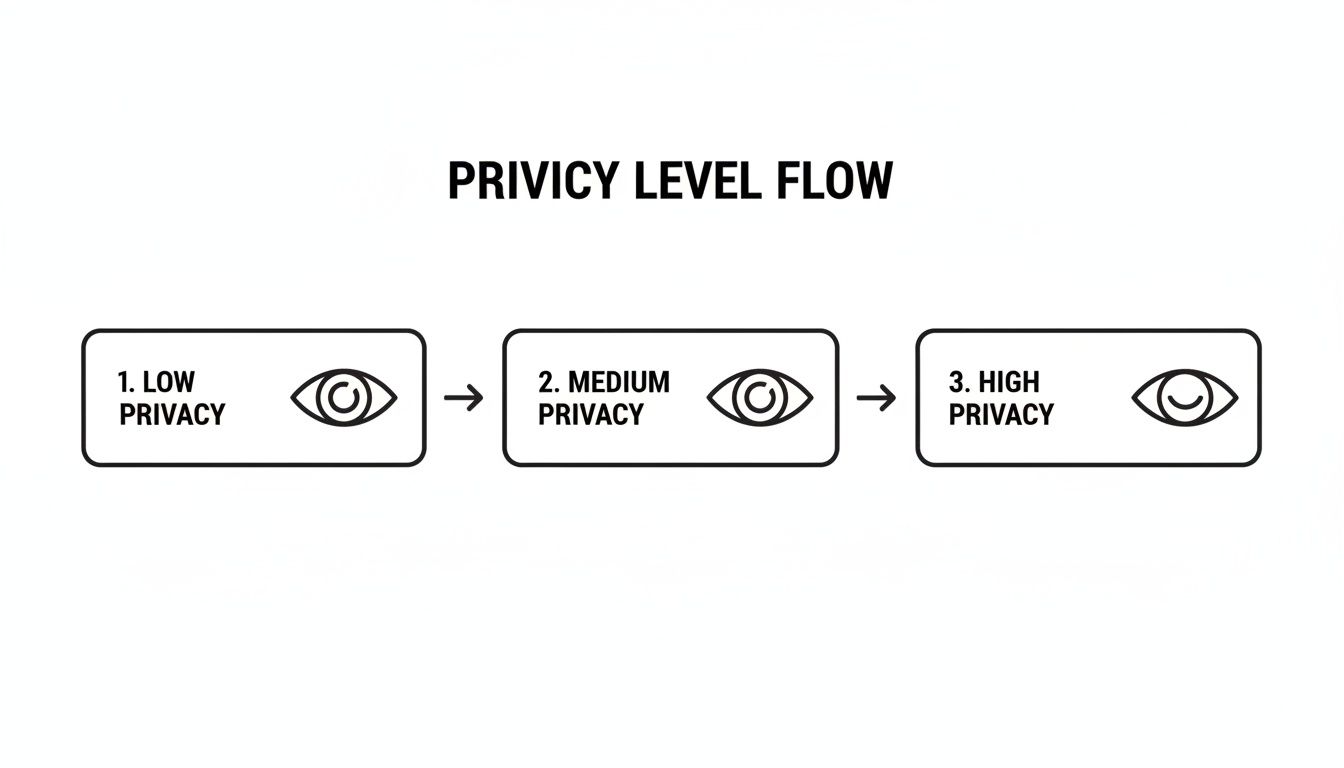
As shown, slats engineered to cover more of the mesh provide the highest level of privacy.
Calculating Height and Total Length
Finally, measure the fence height and total length. Slats are sold for standard fence heights like 4, 5, or 6 feet. Measure your fence from the bottom of the chain link fabric to the top. Slats are typically manufactured slightly shorter than the fence height so they don't stick out.
To determine the total length, measure the linear feet of each fence section you plan to cover and add them together. Crucial step: Order 5-10% extra material. This buffer will cover any miscuts, damaged slats, or future repairs. Getting the quantity right is as important as setting the posts correctly; our practical guide to fence post spacing explains the fundamentals of fence structure.
With these precise measurements, you are ready to order the correct product on your first attempt.
DIY Installation vs Hiring a Professional
After selecting your chain link fence slats, you must decide: will you install them yourself or hire a professional? The right choice depends on your skills, time, and budget. This decision involves balancing the cost savings of a DIY project against the guaranteed quality of professional installation.
Tackling the Job Yourself
Installing fence slats is one of the more accessible home improvement projects. If you have patience and are comfortable with repetitive tasks, you can achieve a professional-looking result over a weekend.
The process is simple: start at one end and weave each slat vertically through the diamond mesh. Most slats are designed for a snug fit, so the job is more about rhythm and consistency than technical skill.
Your required tool list is short:
Utility Knife: For trimming slats if necessary (most are pre-cut).
Tape Measure: To ensure consistent alignment.
Rubber Mallet: To gently tap stubborn slats into place without damage.
Work Gloves: Essential for protecting your hands from the sharp wire mesh.
Your DIY Action Plan: The key to a professional finish is consistency. It's easy to accidentally skip a diamond or misalign the weaving pattern. To avoid a wavy, uneven look, work slowly, double-check your pattern every few slats, and stay focused.
When to Hire a Professional
While DIY is achievable, hiring an experienced crew offers significant advantages. A professional, like our team at FenceScape, provides a hands-off, worry-free experience and guarantees a flawless result.
Professionals work with a speed and efficiency that is difficult for a homeowner to match. A skilled team can complete in hours what might take a DIYer an entire weekend. They can also troubleshoot unexpected issues like a bent top rail, a damaged post, or a tricky corner. Their expertise ensures a uniform finish with perfectly straight lines. For context on the entire fence-building process, review our step-by-step guide to chain link fence installation.
Making the Final Decision
Use this checklist to determine the right path for your situation.
Consideration | Choose DIY If... | Choose a Professional If... |
|---|---|---|
Budget | Your primary goal is to save money by investing your own time. | You value a perfect, guaranteed result and are willing to pay for expertise. |
Time | You have a free weekend and enjoy hands-on home improvement projects. | Your schedule is busy, and you want the job done quickly and without hassle. |
Skill & Confidence | You are patient, detail-oriented, and comfortable with repetitive physical tasks. | You are concerned about making mistakes and prefer to rely on an expert. |
Fence Condition | Your chain link fence is in excellent condition, with no bent or damaged sections. | Your fence has existing issues that could complicate the installation. |
Whether you install them yourself or hire a team, the result is a more private, attractive, and secure property. By evaluating these factors, you can confidently choose the approach that ensures you get the beautiful, functional fence you want.
Got Questions About Fence Slats? We’ve Got Answers.
Even after covering the basics, you may still have questions about chain link fence slats. Getting clear, practical answers will help you make a confident decision. Here are our answers to the most common questions from homeowners.
Will Fence Slats Damage My Chain Link Fence?
The short answer is no, provided your fence is structurally sound before you begin. The concern that slats will turn your fence into a sail during a storm is valid, but preventable.
Actionable Step: Before installing slats, inspect your fence. Ensure all posts are solid in the ground and the chain link mesh is taut. A wobbly fence is already a problem; adding slats will only increase the strain on it. If your fence is not secure, have it repaired first.
For areas with consistently high winds, choose slats with a lower privacy percentage or a "vented" design. These styles allow more air to pass through, reducing the wind load on your fence structure.
How Do I Clean and Maintain My Fence Slats?
Modern PVC and aluminum slats are incredibly low-maintenance and built for Canadian weather. Follow these simple steps to keep them looking new.
For routine cleaning: Use a garden hose to spray down the slats a few times per year. This is usually enough to remove surface dust and pollen.
For stubborn grime: If you see dirt or mildew buildup, use a soft-bristled brush and a bucket of mild, soapy water. Rinse thoroughly afterward. Crucially, avoid harsh chemical cleaners and high-pressure washers, as these can scratch the material or strip away its protective UV coating.
Maintenance Plan: Treat it like washing your car. A gentle, periodic cleaning is all it takes. Because most slats are non-porous, dirt sits on the surface and is easily removed.
With minimal effort, your slatted fence will look clean and sharp for years to come.
Ready to transform your fence into a private and beautiful boundary? The experts at FenceScape are here to help you choose and install the perfect chain link fence slats for your property. Visit us at https://www.fencescape.ca to get a free estimate and see how we can enhance your outdoor space.
Hi 88 khi tôi tìm hiểu cách tổ chức nội dung trên trang, điều tôi quan tâm trước tiên là khả năng phân biệt các khu vực mà không phải mở từng mục để kiểm tra. Tôi lần lượt xem danh mục thể thao, casino trực tiếp, nổ hũ, bắn cá, game bài và xổ số để đối chiếu tên gọi với nội dung được giới thiệu. Mỗi nhóm có đặc điểm riêng nên cách phân chia cần đủ rõ, tránh khiến những lựa chọn khác nhau bị hiểu thành cùng một loại. Tôi cũng chú ý vị trí menu và tiêu đề khi chuyển từ trang này sang trang khác, bởi đây là những dấu hiệu giúp xác định mình…
https://wqxx89.info/ khiến tôi chú ý đến hành trình tìm hiểu các danh mục trò chơi khi nhu cầu thay đổi liên tục. Tôi thử bắt đầu từ thể thao, sau đó chuyển sang Casino và game bài trước khi mở nổ hũ, bắn cá cùng xổ số. Trong mỗi bước, tôi tập trung quan sát cách đặt tên, phân chia nội dung và bố trí đường dẫn trở về danh sách chính. Nếu các nhóm được nhận diện rõ ràng, người dùng sẽ dễ hiểu mình đang xem loại nội dung nào mà không cần ghi nhớ quá nhiều thao tác. Tôi tiếp tục tìm những phần hướng dẫn sử dụng và thông tin khuyến mãi để xem chúng có được…
Ngô Thiện Phát chú trọng phần báo giá với cách tiếp cận dựa trên nhiều yếu tố thay vì chỉ đưa ra một mức chung. Bảng giá tham khảo được chia theo các nhóm như sắt, đồng, nhôm, inox, máy móc cũ và phế liệu điện tử. Mỗi loại có khoảng giá riêng để thuận tiện cho việc hình dung giá trị ban đầu của vật liệu. Bên cạnh đó, nội dung cũng chỉ ra rằng chất lượng, số lượng, chủng loại và vị trí thu gom có thể ảnh hưởng đến mức giá cụ thể. Biểu mẫu báo giá cho phép cung cấp loại phế liệu, khối lượng ước tính, đơn vị đo, địa điểm và số điện thoại liên…
H19 được tôi xem xét qua khả năng theo dõi trạng thái của các thao tác tài khoản. Tôi bắt đầu bằng việc quan sát những khu vực liên quan đến giao dịch, sau đó chú ý cách website hiển thị thông tin trước và sau khi thực hiện một bước. Điều quan trọng với tôi là người dùng có nhận biết được thao tác đang xử lý, đã hoàn thành hay cần kiểm tra lại hay không. Một giao diện thiếu trạng thái rõ ràng dễ tạo cảm giác không chắc chắn. Tôi cũng quan sát cách thông tin lịch sử được sắp xếp để việc đối chiếu trở nên đơn giản hơn. Với góc nhìn khả năng truyền đạt…
https://tr88sa.com/ gợi cho tôi đánh giá bắn cá từ chính cách người chơi chuyển mục tiêu trong màn chơi. Tôi mở phòng cơ bản để quan sát bố cục trước, sau đó mới thử các tính năng hỗ trợ khi lượng cá xuất hiện dày hơn. Khi chế độ khóa mục tiêu được sử dụng để theo một con cá lớn, còn tự động ngắm giúp duy trì hướng bắn, tôi nhận ra cách tính năng được đặt đúng ngữ cảnh quan trọng hơn việc chỉ liệt kê chúng. Chuyển sang phòng chuyên nghiệp, tôi tiếp tục xem các mức công suất súng có dễ điều chỉnh hay không. Cấu trúc rõ giúp việc thay đổi chiến thuật diễn ra tự…