
Pool Enclosure Ideas: 8 Designs for Ottawa Homes in 2026

A Barrhaven backyard in late April can look ready for summer while still feeling unfinished. The pool cover is off, the deck is damp, and neighbours can see straight into the water. That scene explains most pool enclosure decisions in Ottawa and Gatineau: meeting safety rules, controlling privacy, and surviving freeze-thaw cycles. The eight pool enclosure ideas below balance those priorities in different ways, with practical checkpoints for compliance, maintenance, winter performance, and installation.
Before choosing a material, check the rules that apply to your property. Ottawa's pool-enclosure requirements have changed through successive by-laws, including the replacement of By-law No. 2001-259 by By-law No. 2013-39 on March 1, 2013, followed later by the current Pool Enclosure By-law 2020. The city treats the enclosure as a regulated safety feature, not an optional landscaping upgrade. Its guidance requires openings through or beneath the barrier to be too small for a 100 mm, or 4-inch, sphere to pass through. You can also use this pool deck cleaning guide before inspecting the finished area.
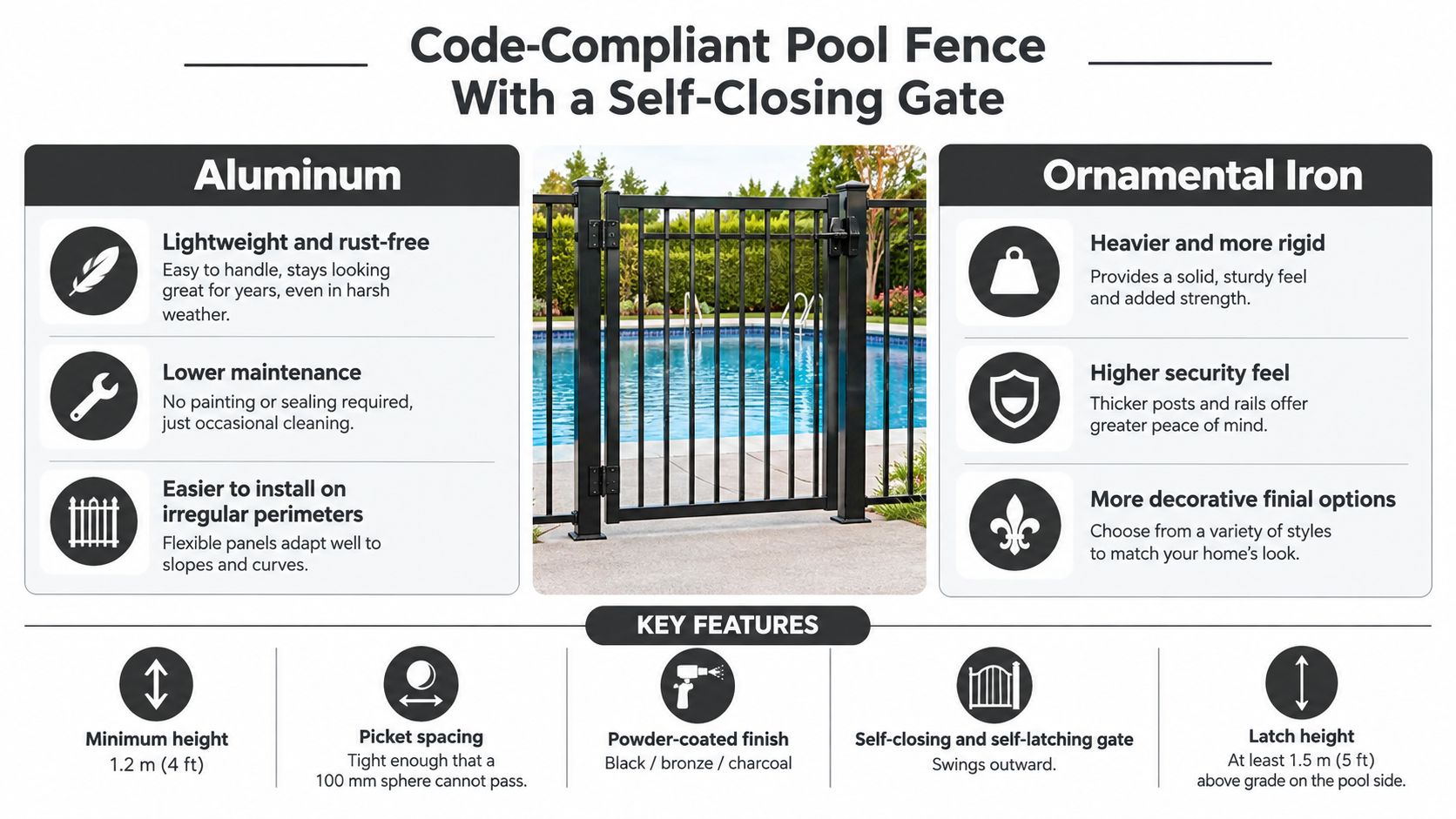
1. Code-Compliant Aluminum or Ornamental Iron Pool Fence With a Self-Closing Gate
Powder-coated aluminum or steel pickets remain a practical starting point for many Ottawa and Gatineau properties. The open design keeps sightlines clear, which helps adults supervise the pool, while the barrier separates the water from the rest of the yard. It also avoids the heavy visual effect of a solid privacy wall.
A Barrhaven homeowner might use a black aluminum fence around the pool deck and connect it to existing wood privacy fencing at the side boundaries. In Gatineau, a double-gate arrangement can provide a wider equipment entrance and a separate pedestrian gate for daily use. Those layouts work well only when the entire perimeter, including connections to the house and adjacent fences, is reviewed as one enclosure.
Ottawa's actionable benchmark is a minimum 1.5 m, or 5 ft, enclosure height, with openings and bottom clearance small enough to stop a 100 mm, or 4-inch, sphere. Gates must self-close and self-latch, with the locking device at least 1.35 m, or 4 ft 5 in, above the enclosure bottom. These requirements are set out in the city's pool-enclosure brochure.
Installation details that matter
Confirm the required setback from the water before fixing posts. The site plan may call for the fence line to sit at least 1.2 m from the water's edge, but the applicable municipal requirement should control the final layout. Use galvanized or stainless fasteners, and sleeve posts in concrete so water and salt do not attack the steel at ground level.
Test the gate after installation. Check closing speed, latch engagement, hinge alignment, and lock access. A second latch height or lockable mechanism can add control when young children visit, but it must not interfere with required operation.
Practical rule: Don't treat an existing yard fence as automatically compliant. Ottawa requires a pool-enclosure permit even when a property already has a fence, and the existing barrier still needs review.
Safety compliance: Strong when height, spacing, setback, gate action, and permit documentation are verified.
Privacy: Low to moderate unless paired with a separate privacy fence or planting.
Winter durability: High with properly set posts and corrosion-resistant hardware.
Maintenance load: Low. Inspect fasteners, hinges, latch operation, and coating damage each season.
2. Frameless Tempered Glass Pool Fence With Bottom-Mounted Spigots
Glass suits a modern Ottawa home where the owner wants the garden and pool to remain visually connected. Bottom-mounted stainless steel spigots or a channel system hold the panels without large intermediate posts. The result is a clean barrier around the water, but it demands accurate engineering and regular cleaning.
A Westboro rear yard with a plunge pool can use frameless glass to preserve a garden view. A Gatineau townhouse courtyard may place the panels on a concrete curb, giving the barrier a defined base while maintaining sightlines into a compact space. Glass also works well where a bulky frame would make the yard feel smaller.
Use a documented tempered or laminated glass specification. Standard annealed glass isn't suitable for a barrier. The installer should confirm that the spigots or channel system match the glass thickness and expected local wind conditions. Ask for the glass rating and fastener specifications so they can be included in the permit file.
For a closer look at material and layout options, review FenceScape's glass fencing range.
Keep the base clean and dry
Drainage at the bottom matters more than many homeowners expect. Standing water, soil, and leaves can collect around spigots or against the lower edge of the panels. That makes cleaning harder and can leave mineral staining on the glass.
Use a squeegee and non-abrasive cleaner regularly. Hard-water marks are easier to prevent than remove, particularly around a pool where splash and evaporation leave deposits. Avoid abrasive pads that can damage the surface or dull hardware.
Glass gives you the clearest view, but it doesn't remove the need for a code review. Panel spacing, bottom clearance, gate hardware, and the complete perimeter still determine whether the system performs as a pool enclosure.
Safety compliance: Viable when the glass, spacing, height, gate, and support system are documented against the local rules.
Privacy: Low. Frosted or patterned treatments can improve privacy, but they change the open visual effect.
Winter durability: High when the support system, drainage, and concrete base are properly designed.
Maintenance load: Moderate. The structure is durable, but glass requires frequent cleaning to stay clear.
This short installation video shows how barrier layout and gate placement affect the finished result.
3. PVC Pool Fence With Steel-Reinforced Posts for Chlorine-Resistant Durability
PVC is a sensible choice when the homeowner wants a solid or semi-private appearance without painting, staining, or rust. The stronger version uses a steel core inside each post. That reinforcement helps the fence stay straight under wind, gate use, and winter movement.
A Kanata family might choose white PVC panels around the pool and rely on steel-reinforced posts to keep the line stable after heavy snowfall. On a Gatineau property, tan panels can define the pool perimeter while matching a more private panel along the side yard. The material provides more visual separation than open pickets, but it can make a small yard feel more enclosed.
Set the posts in concrete below the frost line to reduce heaving. Leave the manufacturer's required expansion allowance at panel joints because PVC moves with temperature. A rigid installation with no room for movement can buckle or pull at connections during seasonal changes.
Don't overlook the hardware
PVC doesn't rot or rust, but the gate still depends on hinges, latches, and fasteners. Use stainless hardware where possible, especially in an area exposed to chlorine, humidity, and regular splash. Confirm that the gate self-closes and self-latches after the panels and posts are fully installed.
Keep the product codes and panel colour in writing. If a section is damaged later, matching a discontinued profile or colour can be difficult. This is also where pool-edge details matter. A durable fence works best with a properly drained deck and coping system, such as the outdoor options described in this pool coping tile guide.
Safety compliance: Strong when the panel openings, height, gate, and spacing meet the municipal requirements.
Privacy: Moderate to high, depending on panel profile and height.
Winter durability: High with steel-reinforced posts and frost-conscious installation.
Maintenance load: Low. Wash the panels, inspect the gate, and check for movement at joints.
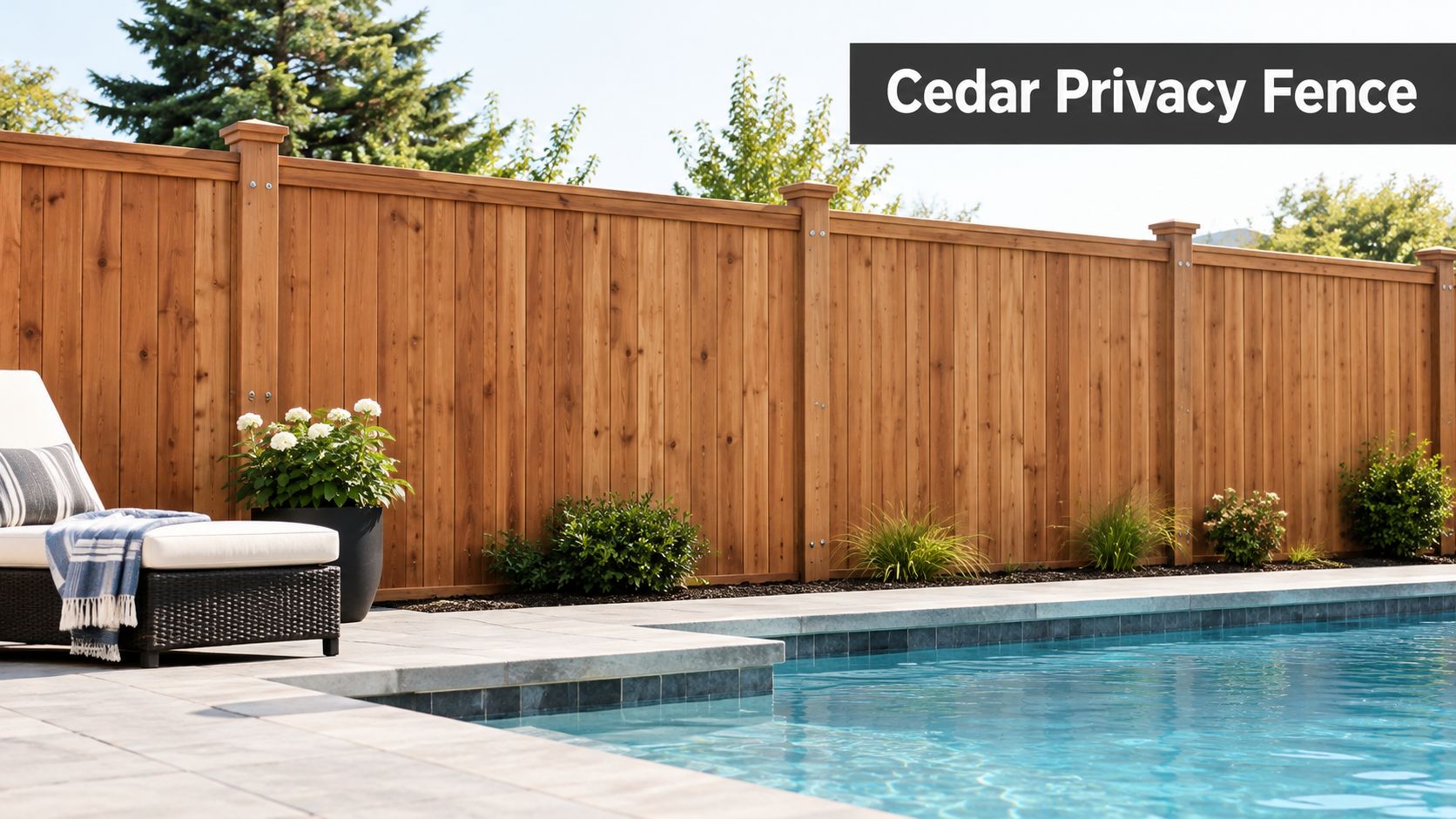
4. Cedar Privacy Pool Enclosure With Chlorine-Safe Construction Details
Cedar gives a pool area a warmer, more natural appearance than metal, glass, or white vinyl. A solid or board-on-board layout blocks views from neighbours and the street. That makes it useful for a Manotick yard screening a pool and hot tub, or a rural Gatineau property where a farmhouse-style finish suits the surrounding greenery.
The trade-off is moisture management. Cedar may resist rot better than many untreated woods, but it still absorbs water and reacts to poor drainage. Pool splash, irrigation, snow accumulation, and limited airflow can shorten the life of the boards and posts.
Keep the wood at least 1.2 m from the water's edge where the applicable layout requires that separation. Use a pool-safe sealer compatible with chlorine exposure, and specify stainless or hot-dipped galvanized fasteners. Cedar tannins can stain around unsuitable fasteners, leaving dark marks that appear soon after installation.
Build for drainage and inspection
Use ground-contact-rated posts, or set the posts in concrete with a gravel drainage base. Keep soil and mulch from building up against the bottom boards. Trim vegetation away from the fence so air can circulate and wet surfaces can dry.
Privacy design can't override pool rules. The enclosure still needs compliant height, opening sizes, gate hardware, and access control. A board pattern that looks secure may fail if the bottom gap is too large or nearby landscaping creates a foothold.
For material ideas and wood fence applications, see FenceScape's wood fencing options.
Safety compliance: Moderate until the board spacing, height, gate, and surrounding features are checked.
Privacy: High.
Winter durability: Moderate to high with correct posts, drainage, sealing, and maintenance.
Maintenance load: High. Expect periodic washing, inspection, and resealing.
5. Chain Link or Mesh Pool Safety Fence for Budget and Fast Installation
A black vinyl-coated chain-link or welded-mesh fence gives you a practical barrier without blocking supervision. It suits multi-family properties, cottage rentals, and pool areas where fast installation matters more than a premium finish. A Gatineau complex might use black chain link around a shared pool with lockable gates, while a seasonal rental could use removable mesh panels during the operating period.
The open structure makes it easy to see the water from the home and yard. It also exposes the pool area to neighbours, so it won't solve a privacy problem by itself. Adding a separate screen or planting plan can improve privacy, but those additions must stay clear of the barrier and must not create climbing aids.
Specify the mesh before ordering
Confirm the mesh opening and height against the applicable by-law. A fence can look dense and still have openings that fail the required test. The Ottawa guidance requires openings through or beneath the barrier to prevent a 100 mm, or 4-inch, sphere from passing through. The same principle applies to mesh, gates, and connections.
Use tension wire along the top and bottom rails to limit movement. Set terminal posts in concrete and brace gate posts so daily use doesn't loosen the line. Choose black or dark-green vinyl coating if you want the fence to recede visually.
For a residential or commercial chain-link layout, review FenceScape's chain-link fencing options.
The cheapest pool barrier is the one that stays stable, closes reliably, and remains intact. A loose gate or stretched mesh can turn a compliant installation into a maintenance problem.
Safety compliance: Strong when mesh openings, height, gate hardware, and anchoring are verified.
Privacy: Low.
Winter durability: Moderate to high. Posts and gate frames need proper bracing and concrete support.
Maintenance load: Low to moderate. Inspect mesh tension, ties, posts, and gates.
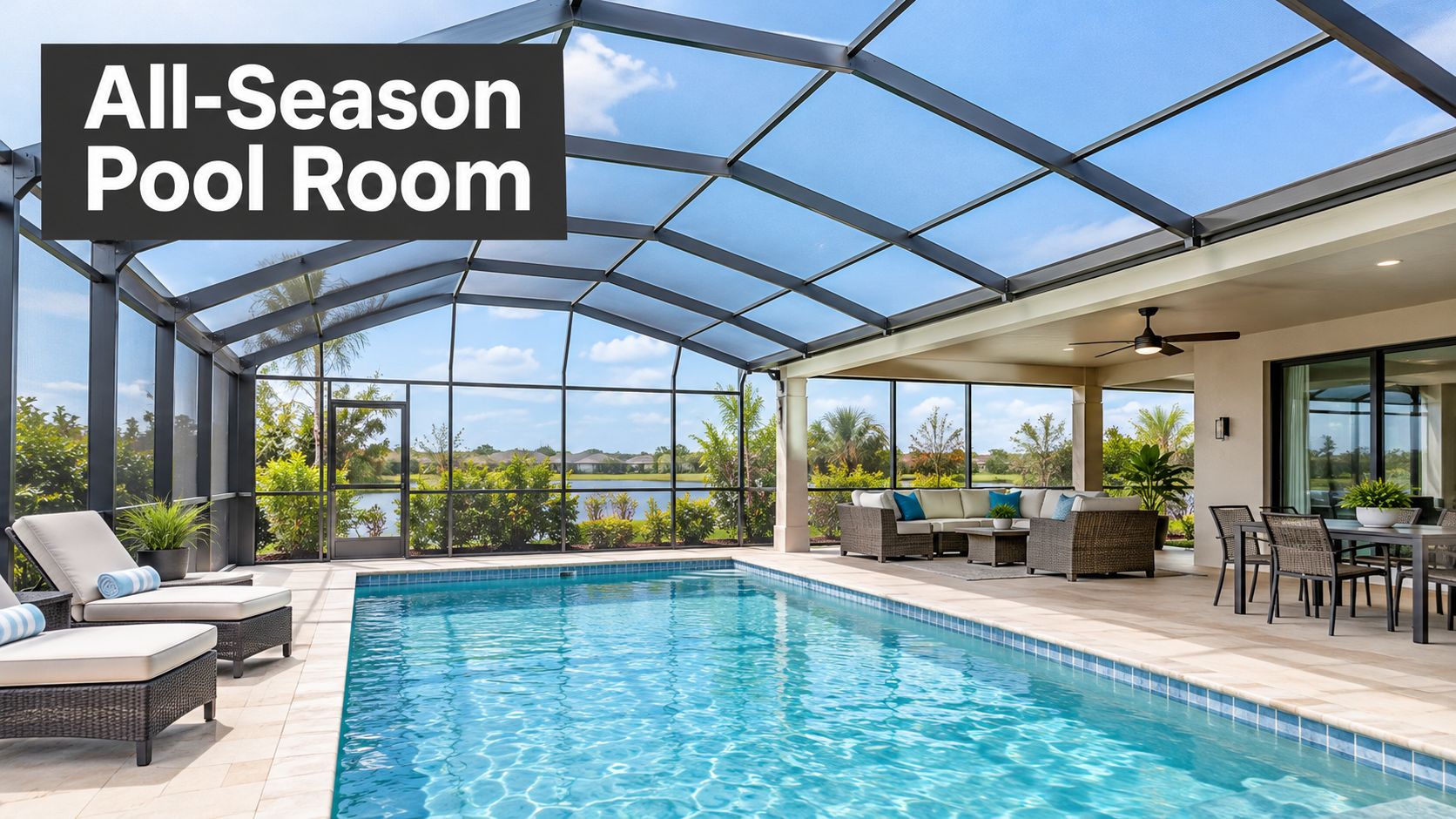
6. Screen Enclosure or Aluminum-Framed Pool Room for Extended Seasons
A screen enclosure changes the pool area into a defined outdoor room. It can keep out leaves, insects, and wind while preserving airflow. In Ottawa and Gatineau, an aluminum-framed structure can also make spring and fall use more comfortable, especially when combined with a heat pump or solar setup.
A Stittsville property might place the pool and dining area under one screen structure. A Gatineau homeowner could use a polycarbonate roof to reduce heat loss during cooler parts of the season. The roof and wall system may provide more comfort than a simple fence, but it introduces building, structural, ventilation, and snow-load questions.
Confirm the required structural loads with the building department. Roof snow, wind exposure, attachment points, drainage, and the relationship to the house all need review. A screen room that looks light still carries loads through its posts, anchors, and roof framing.
Treat the structure as a room
Ventilation at the top and sides helps reduce condensation and mildew. Choose fine screen mesh for insects and a heavier gauge where pets may push against the panels. Include self-closing doors so the structure continues to function as a controlled pool barrier.
Inspect anchor points, screens, fasteners, and door hardware after winter. A torn panel or misaligned door can affect both comfort and safety. Furniture also needs placement control. Benches, storage boxes, and planters shouldn't sit beside the barrier where they can help a child climb.
Safety compliance: Moderate to high, depending on door design, barrier geometry, and permit review.
Privacy: Moderate. Screen density and roof design affect visibility from outside.
Winter durability: Moderate to high when engineered for local loads and maintained after winter.
Maintenance load: Moderate to high. Screens, seals, anchors, drainage, and ventilation all need attention.
7. Fence and Hedge Combination for a Natural Pool Privacy Screen
A hedge can soften a pool fence, but it shouldn't replace the regulated barrier. The fence supplies the controlled separation. The planting adds privacy, shade, and a garden feel that metal or vinyl alone may not provide.
A Kanata homeowner might install an aluminum pool fence with emerald cedar planted behind it. A Gatineau property could pair a vinyl barrier with a low-growing hedge along the pool edge. These arrangements suit suburban yards where a solid wall would feel too heavy, but the plants need careful placement.
Keep plants at least 1 m from the fence line to preserve access and reduce the chance that branches or trunks become climbing aids. Choose non-invasive species that tolerate wind and pool-area conditions. Root barriers can help protect concrete decks and pool structures, particularly where mature planting could disturb hardscape.
Design the hedge around the gate
Irrigation should not direct heavy chlorine-laden splash toward the plants. Trim the hedge so it doesn't block the gate latch, cover the lower fence, or create a ladder effect. Dense planting can also reduce visibility from the house, which may make supervision harder even while it improves privacy.
Lighting deserves coordination here. A recessed lighting installation can improve visibility around the gate and deck, but fixtures, cables, and controls must stay clear of the barrier and shouldn't create footholds or access points.
Safety compliance: Strong only when the fence remains the primary barrier and plants stay outside the controlled clearance zone.
Privacy: High after the hedge matures.
Winter durability: Moderate. The fence can be durable while plants may suffer from snow, salt, wind, or seasonal damage.
Maintenance load: High. Watering, pruning, clearance checks, and gate access require regular work.
8. Removable Mesh Safety Fence for DIY Installers and Seasonal Pools
Removable mesh fencing gives homeowners flexibility around a seasonal or temporary pool. Modular posts and panels can be removed without a permanent trench, which appeals to rental properties, cottage owners, and DIY installers. An Orleans homeowner with a seasonal above-ground pool might use removable panels during summer and store them when the yard returns to another use.
A cottage rental in the Gatineau Hills could use a removable system to separate guests from the pool area during occupancy. The system is practical, but “removable” doesn't mean optional. When the pool is in use, the barrier needs to be complete, stable, and maintained.
Check with the municipality before buying. Temporary barriers may not be accepted under every local pool by-law. Ottawa requires an enclosure permit for privately owned outdoor pools, including properties that already have a yard fence, so a temporary plan still needs local confirmation. The city's official pool-enclosure guidance explains the regulated role of the enclosure and its opening requirements.
Stability is the main risk
Use weighted bases or stake anchors suited to the surface and wind exposure. Secure the gate with a pool-side latch that self-closes and self-latches when required. Keep every panel in place during the season and inspect the system weekly for loose sections, damaged mesh, or shifted posts.
Store panels indoors through winter to extend their service life. DIY buyers should purchase a complete kit with compatible posts, mesh, gate hardware, anchors, and instructions. Mixing components from different systems can create gaps, weak connections, or a gate that doesn't align.
Safety compliance: Variable. It depends on municipal acceptance, complete installation, opening sizes, height, anchoring, and gate hardware.
Privacy: Low to moderate.
Winter durability: Low while installed outdoors, but storage reduces exposure.
Maintenance load: Moderate to high during the swimming season, with frequent inspections and seasonal setup.
8-Option Pool Enclosure Comparison
Option | 🔄 Implementation complexity | ⚡ Resource requirements (cost & maintenance) | ⭐ Expected outcomes (safety & quality) | 📊 Ideal use cases | 💡 Key advantages / tips |
|---|---|---|---|---|---|
Code‑Compliant Aluminum or Ornamental Iron Pool Fence With a Self‑Closing Gate | Medium, standard fence install with code-specific engineering | Moderate upfront cost; low ongoing maintenance (powder‑coat aluminium best) | ⭐⭐⭐⭐, high code compliance and durable safety barrier | Residential pools needing clear sightlines or irregular perimeters | Durable and low‑maintenance; confirm local bylaw heights and use galvanized/stainless fasteners |
Frameless Tempered Glass Pool Fence With Bottom‑Mounted Spigots | High, precise fabrication, certified spigots/channels and solid base required | High cost per metre; low corrosion but requires frequent cleaning | ⭐⭐⭐⭐⭐, premium visibility, modern aesthetic, strong barrier when specified | High‑end homes where unobstructed views and curb appeal matter | Specify tempered/laminated glass and certified hardware; plan base drainage and regular squeegee cleaning |
PVC Pool Fence With Steel‑Reinforced Posts for Chlorine‑Resistant Durability | Medium, similar to vinyl installs but needs reinforced posts and concrete footings | Moderate cost; very low maintenance if quality panels used | ⭐⭐⭐⭐, long‑lasting, chlorine‑resistant and uniform appearance | Owners wanting low‑maintenance, durable fencing near pools and humid conditions | Use steel‑reinforced posts and set below frost line; allow expansion gaps and use stainless hardware |
Cedar Privacy Pool Enclosure With Chlorine‑Safe Construction Details | Medium–High, carpentry plus drainage and corrosion‑resistant details | Moderate to high lifecycle cost due to periodic sealing/staining | ⭐⭐⭐, excellent privacy and natural look but higher upkeep | Properties prioritizing privacy, natural aesthetics, or cottage style | Use stainless or hot‑dipped fasteners, keep wood clear of splash, and plan ventilation/drainage |
Chain Link or Mesh Pool Safety Fence for Budget and Fast Installation | Low, simple panel or roll‑out installation | Low capital cost; durable and vandal‑resistant | ⭐⭐⭐, functional and fast but less aesthetic for residential settings | Commercial, multi‑family, seasonal or rental pools where cost and speed matter | Confirm mesh opening size with bylaw and add tension wire/top bracing to reduce climbability |
Screen Enclosure or Aluminum‑Framed Pool Room for Extended Seasons | High, engineered framing, roof options, and permit considerations | High upfront cost; moderate maintenance (screens, ventilation) | ⭐⭐⭐⭐, extends season, insect protection, adds usable space | Owners seeking all‑season use, insect control, or an outdoor room addition | Verify structural snow loads, design ventilation to limit condensation, include self‑closing doors |
Fence and Hedge Combination for a Natural Pool Privacy Screen | Medium, coordinates fencing install with planting and irrigation | Moderate cost (fence + planting); ongoing landscape maintenance | ⭐⭐⭐, increased privacy and softer landscape integration over time | Homeowners wanting a natural, garden‑integrated privacy solution | Plant hedge outside fence line, choose hardy non‑invasive species, and install root barriers |
Removable Mesh Safety Fence for DIY Installers and Seasonal Pools | Low, modular, tool‑light DIY or rental install | Low cost; seasonal storage and occasional replacement parts | ⭐⭐, offers temporary compliance and portability but less permanence/stability | Seasonal pools, short‑term rentals, DIY installers needing flexibility | Check municipal acceptance of temporary barriers, use weighted bases or anchors and inspect weekly |
Match the Enclosure to Your Priorities Before You Buy
Start by writing down your three essential priorities. First, identify the height, opening, setback, gate, and permit rules set by your municipality. Second, decide how much privacy you need from neighbours and whether you still need clear sightlines from the house. Third, be honest about how much winter exposure the structure must survive and how much seasonal maintenance you're willing to perform.
Ottawa's pool-safety evidence supports treating the enclosure as a safety-critical system rather than a decorative fence. Statistics Canada reported 23,048 residential inground swimming-pool permits in 2021, compared with 11,945 in 2018, an increase of approximately 92.9% over that period. From January through April 2024, Canadian municipalities issued 2,719 such permits. The same Statistics Canada water-safety resource records 308 accidental drowning and submersion deaths in Canada in 2022. It also identifies backyard pools as responsible for 30% of drowning deaths among children aged five and under, with children aged one to four representing 42% of backyard-pool fatalities in the cited period. Only 16% of recorded home-pool fences met applicable municipal by-law standards in that evidence.
Those figures explain why appearance alone isn't enough. A beautiful glass panel, cedar wall, or hedge can still fail if the gate doesn't latch, the lower gap is too large, or furniture provides a climbing route. Canada's pool construction activity also means more homeowners are making these decisions without necessarily understanding how a pool barrier differs from an ordinary yard fence.
Ask your installer for a written compliance check and product specifications before work begins. The package should identify the proposed height, spacing, bottom clearance, gate hardware, post installation, relationship to the house, and permit responsibilities. Book the final inspection before the first swim of the season, not after a problem appears.
FenceScape designs and installs PVC, hybrid, wood, ornamental iron, chain-link, and glass pool enclosures across Ottawa and Gatineau. A site review can match the right system to the pool's layout, privacy needs, winter exposure, gate position, and maintenance expectations. The right pool enclosure idea is the one that remains safe and usable after the deck dries, the first heavy snowfall arrives, and the fence has been used every day.
FenceScape provides permit-aware pool enclosure planning, material selection, compliant gate installation, and post-install support across Ottawa–Gatineau. Visit FenceScape to arrange a site review and compare a practical enclosure system for your pool, property, and winter conditions.
Comments