
A Homeowner's Guide to Pressure Treated 6 x 6 Posts

When you're building a fence, deck, or any other structure that needs to stand up to the elements, the pressure-treated 6 x 6 post is your workhorse. Think of it as the bedrock for any serious outdoor project, especially here in Ottawa where the weather throws a bit of everything at us. It's a hefty piece of lumber that’s been chemically fortified to fight off rot, insects, and decay, making it the perfect choice for posts that go directly into the ground.
What Exactly Is a Pressure-Treated 6 x 6?
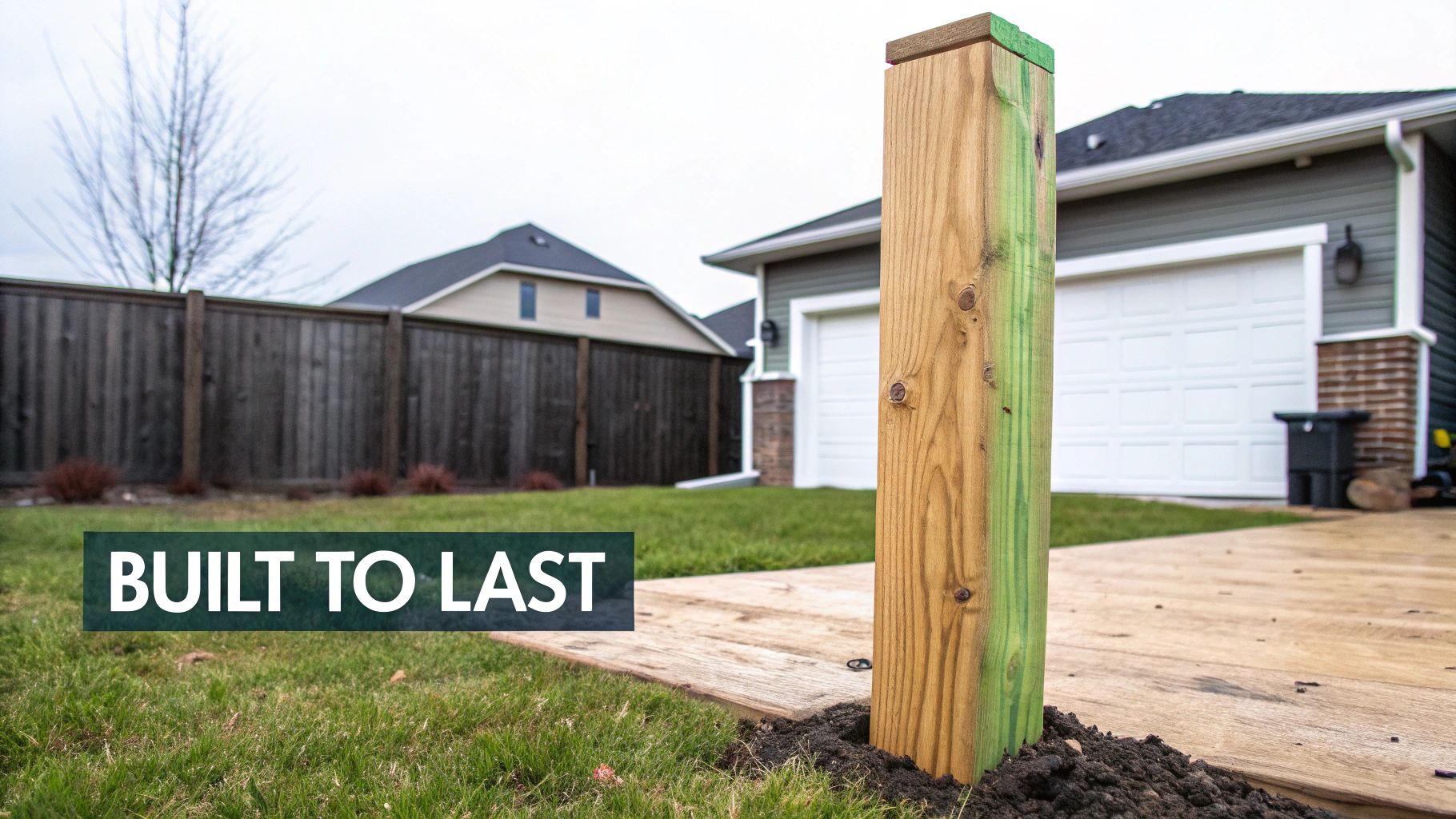
If you're planning any outdoor build in the Ottawa–Gatineau area, you’ve undoubtedly heard the term "pressure-treated 6 x 6." It’s the gold standard for a reason—it’s built to survive our wet springs, humid summers, and the punishing freeze-thaw cycles of winter. But what does that really mean for your project?
The pressure-treatment process gives a regular piece of wood a set of armour. Standard lumber, usually spruce or pine, is loaded into a large, sealed tank. First, a powerful vacuum sucks all the air out of the wood’s tiny pores. Then, a preservative solution is pumped in and forced deep into the wood fibres under immense pressure.
This isn't just a surface coating; the treatment penetrates right to the core. This process transforms a standard piece of lumber into a rugged, resilient material that can shrug off the moisture and pests that would make untreated wood crumble in a few short years.
Decoding the Dimensions: What 6 x 6 Really Means
Here’s a classic "gotcha" for anyone new to buying lumber. A "pressure-treated 6 x 6" doesn't actually measure 6 inches by 6 inches. That's its nominal size, which is what the lumber is called before it's dried and planed smooth at the mill.
When you take a tape measure to it, you'll find the actual dimensions are closer to 5.5 inches by 5.5 inches.
Actionable Insight: Always, always plan your project using the actual 5.5" x 5.5" measurement. This is crucial for buying the right post caps, brackets, and other hardware. Using the nominal 6" x 6" size for your calculations is a surefire way to end up with parts that don’t fit and a lot of frustration.
Why This Lumber Is a Local Favourite
For any project that needs serious structural support and will be buried in the ground, the 6 x 6 is the undisputed champion in our region. To build a structure that lasts, select it for these key reasons:
Superior Strength: That thick 5.5" x 5.5" profile gives it incredible stability against the powerful winds we get in Ottawa, making it the go-to for tall privacy fences or for hanging heavy, solid gates.
Longevity in Wet Conditions: The chemical treatment is specifically designed to stop rot in its tracks, even when the post is sitting in damp soil that freezes and thaws all winter long.
Cost-Effectiveness: When you weigh its performance against the cost, it’s tough to beat. It offers decades of reliable service for a much lower upfront investment than alternatives like cedar, steel, or concrete posts.
Getting a handle on these basics is the first step toward building something you can be proud of for years to come. For a deeper dive, you can learn more about what pressure-treated lumber is and how it's engineered to perform outdoors. Armed with that knowledge, you can choose your materials with confidence and build it right the first time.
Choosing the Right Lumber Grade for Ottawa's Climate
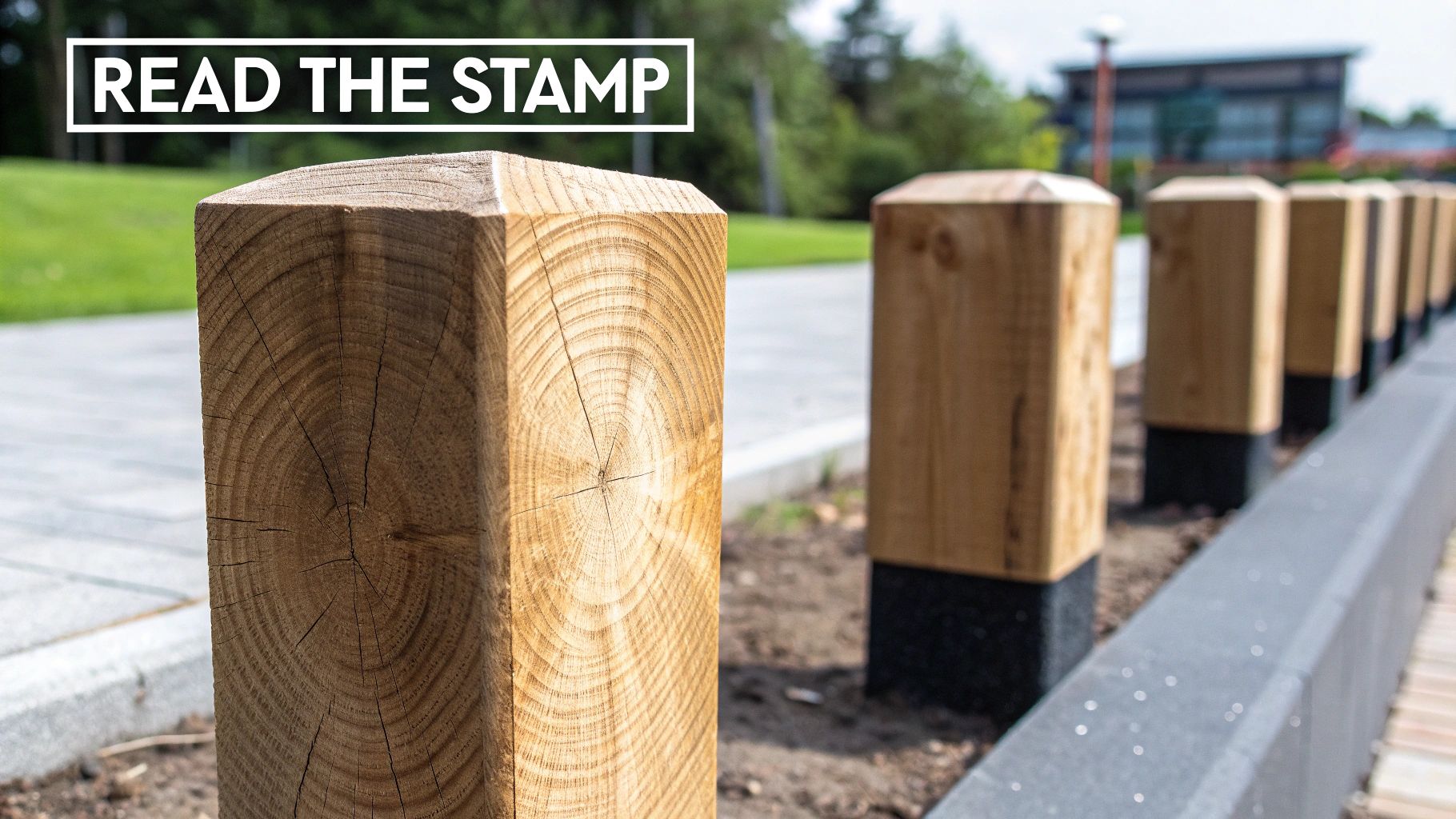
It’s easy to think all pressure-treated 6x6s are the same, but that’s a costly mistake. The ink stamp you see on the end of the lumber isn't just for the store's inventory—it's your guide to its strength and purpose. Learning to read that stamp is probably the most important thing you can do to build a fence or deck in Ottawa-Gatineau that actually lasts.
When you look at a post, you'll find a tag or stamp with all its vital stats. For any project where a post will be buried, one piece of information trumps all others: its use-case rating. This tells you exactly where that piece of wood is designed to live.
Above Ground vs. Ground Contact
Getting this part right is absolutely non-negotiable for a project that stands the test of time.
Above Ground (UC3B): This lumber is treated to fend off moisture and rot, but it’s strictly for parts of a structure that don't touch the soil. Think of it for deck boards, railings, or elevated joists—anything with good air circulation around it. Using an "Above Ground" rated post for a fence is just asking for it to rot out in a few years.
Ground Contact (UC4A): This is the one you need. This is the only acceptable choice for fence posts. "Ground Contact" lumber is saturated with a much higher concentration of preservatives, arming it for the constant battle against moisture, soil microbes, and our region’s brutal freeze-thaw cycles.
For any 6x6 post you plan to bury for a fence in Ottawa, you must insist on a "Ground Contact" rating. Choosing anything less is like sending a soldier into battle without armour. It simply won't survive the fight against our wet, heavy soil.
This rating is all about the preservative retention level—a fancy term for how much protective chemical is forced deep into the wood. The higher the retention number, the tougher the post. For our area, look for a retention level of 0.40; it’s a reliable standard for ground-contact posts that can handle our conditions.
In the Ottawa-Gatineau region, where the seasons throw everything at our outdoor structures, a properly rated 6x6 is the foundation of a lasting project. Timbers rated at 0.40 for ground contact have a proven track record here. In fact, when installed correctly, these posts can last up to 40 years before decay becomes a serious issue. You can dig deeper into the durability of these treated timbers to see how they perform in tough climates like ours.
What is Incised Lumber?
You might also see the word "incised" on the lumber tag. This is a good thing. Incised lumber has a series of small slits cut into its surface before it goes into the pressure chamber.
These small cuts act as channels, helping the chemical preservatives penetrate much deeper into the wood, especially for dense species like Douglas Fir. For our climate, with its damp springs and humid summers, that extra penetration is another layer of defence.
So, when you're at the lumber yard, aim for the trifecta: a 6x6 post that is "Ground Contact" rated, incised, and has a 0.40 retention level. That's how you get true peace of mind.
Here is a quick reference guide to help you choose the right grade of 6x6 lumber based on its intended use in our specific climate.
Pressure Treated Lumber Grades for Ottawa-Gatineau Projects
Lumber Grade | Best Use Case | Why It Matters in Our Region |
|---|---|---|
Above Ground (UC3B) | Decking, railings, joists, beams, and fence boards. | Perfect for any component that is off the ground and can dry out. Not for burial. |
Ground Contact (UC4A) | All fence posts, deck posts set in the ground, and landscape timbers. | This is the minimum for anything touching soil. It’s built to resist the constant dampness and freeze-thaw cycles that cause rot. |
Incised Ground Contact | Any post buried in heavy, clay-like soil or areas with poor drainage. | The incisions ensure deeper preservative penetration, offering maximum protection in the constantly wet conditions common in our region. |
Choosing the right grade from the start saves you the headache and expense of replacing rotted posts down the line. Always double-check that stamp before you buy.
Why 6x6 Posts Are the Gold Standard for Fences
When you're planning a fence, it's easy to look at a 4x4 post and think, "that's probably good enough." And for a short, decorative picket fence, you might be right. But for any fence with real height or heft—especially here in the Ottawa Valley—a pressure treated 6 x 6 isn't just an upgrade. It’s the only real choice. The difference in raw strength and stability is the single biggest factor in whether your fence stays straight and true for a few years or for a few decades.
Think of it this way: you wouldn’t build a two-storey house on a foundation poured for a garden shed. A 4x4 post just doesn't have the sheer mass to fight back against the forces a tall fence endures, especially during one of our notorious windstorms or when trying to support a heavy gate.
Standing Up to Wind and Warping
The biggest win for a 6x6 post is how well it resists bending and twisting under pressure. A standard 6-foot privacy fence is basically a giant sail catching the wind. The beefier 5.5" x 5.5" profile of a 6x6 gives you a much stronger anchor, transferring all that force down into the ground where it belongs.
That extra bulk is also your best defence against the warping and twisting that can make a fence built with smaller posts look terrible over time. Constant wind, combined with our seasonal freeze-thaw cycles, will inevitably cause a 4x4 to bow and twist. Before you know it, your fence line is wavy and weak. The sheer size of a pressure treated 6 x 6 provides the structural backbone to keep everything straight and solid.
The Power to Hold Up Heavy Loads
This structural muscle isn't just for fighting the wind. If you're planning on hanging a wide driveway gate or a heavy, solid-wood privacy gate, a 6x6 is non-negotiable. A 4x4 will sag almost immediately under that kind of constant weight, leaving your gate dragging on the ground and becoming a nightmare to open and close.
Use a pressure-treated 6x6 post for these critical applications:
For 8-Foot Fences: The taller the fence, the bigger the sail. A 6x6 post is absolutely mandatory to keep an 8-foot fence from leaning or blowing over.
For Heavy Gates: A 6x6 acts as a rock-solid hinge post, easily carrying the load without flexing or pulling out of plumb.
For Corners and Ends: These are the most critical points in your fence line, bearing all the tension. Using a 6x6 here provides an unshakable anchor for the entire structure.
This isn't just a residential trend. Pressure-treated 6x6 lumber is now the go-to for commercial security fencing across Ottawa-Gatineau, where strength is paramount. Local businesses install over 15,000 metres of this type of fencing every year. For critical infrastructure, suppliers often push for marine-grade variants, which boast 50% greater resistance to moisture and can last over 30 years—double the lifespan of standard grades. You can get a better sense of these high-performance treated timbers and their applications in tougher environments.
In short, choosing a 6x6 post is the best insurance policy you can buy for your fence. It’s a direct investment in long-term stability that ensures your fence will remain a straight, secure, and valuable part of your property for years, not just seasons.
Comparing Post Materials: Cedar, Steel, and Concrete
While the pressure-treated 6x6 is a fantastic all-around workhorse, it's not the only game in town for your fence foundation. Choosing the right post really comes down to balancing your budget, the look you're after, and how much time you want to spend on upkeep down the road. Let's see how the trusty 6x6 stacks up against its main competitors: cedar, steel, and concrete.
This quick guide can help you narrow down which material might be the best fit for your specific project.
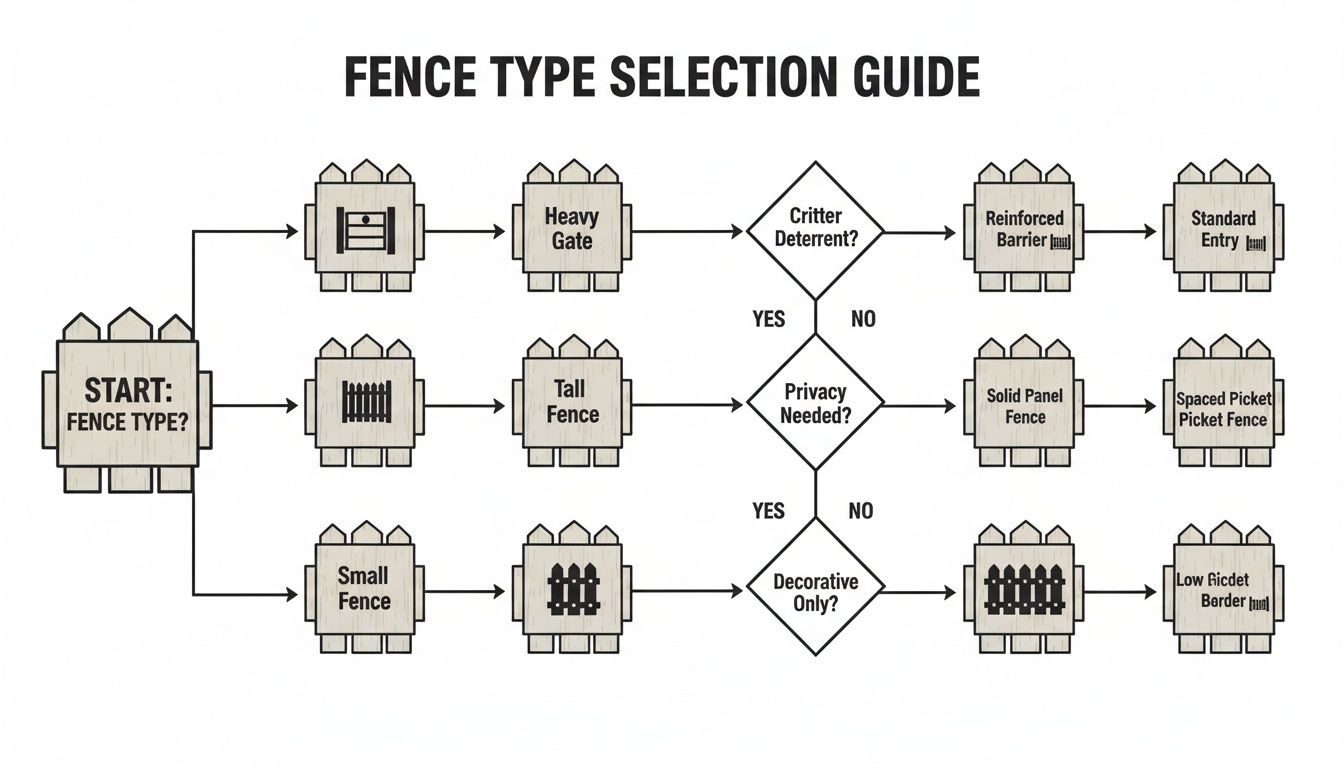
When you're dealing with heavy-duty stuff like massive gates or extra-tall fences, the sheer structural integrity of steel or a pressure-treated 6x6 is almost always the most sensible choice.
Cedar Posts: Natural Beauty at a Price
Cedar is gorgeous. It brings a warm, rich colour and natural charm that instantly elevates a property. Plus, it's naturally resistant to rot and insects, making it a premium choice for fence boards and other parts of the fence that stay above ground.
But when you bury a cedar post in the damp soil we have here in Ottawa, it’s a different story. Its natural defences just aren't enough, and its lifespan is significantly shorter than pressure-treated lumber. You're looking at 15-20 years before rot wins, compared to the 25-40 years you’d get from a properly installed ground-contact 6x6.
On top of that, cedar costs more upfront and demands consistent sealing or staining to keep its beautiful colour from fading to grey. For a deeper dive into this matchup, our guide on cedar vs. pressure-treated fences breaks it all down.
Steel Posts: Unbeatable Strength with a Modern Vibe
For pure, brute-force strength and longevity, steel posts are in a league of their own. They are completely immune to rot and insects and can easily last 50 years or more. If you’re installing an enormous custom gate or need a high-security commercial fence, steel is the ultimate solution.
Those benefits come with some major trade-offs, though. Steel is the most expensive option by a wide margin, and its sleek, industrial look might not complement every home’s style. Installation is also more involved, usually requiring special brackets to attach wooden fence panels.
Concrete Posts: The Industrial Powerhouse
Like steel, concrete posts offer incredible durability and are totally immune to rot and pests. You’ll often see them in agricultural or industrial settings where function is the only thing that matters.
For homeowners, however, they're rarely a practical choice. They are incredibly heavy, which makes installation a difficult, labour-intensive job. Aesthetically, their utilitarian look just doesn't fit in most backyards, and figuring out how to attach fence rails can be a real headache.
The Bottom Line: While you have options, the pressure-treated 6x6 really hits the sweet spot for most residential and light commercial projects in the Ottawa–Gatineau region. It delivers an unbeatable balance of strength, longevity, and affordability.
To help you visualize the trade-offs, here’s a side-by-side look at the most common fence post materials. This should make it easier to decide what’s truly best for your project, budget, and long-term goals.
Fence Post Material Comparison
Material | Average Lifespan (Ottawa) | Upfront Cost | Maintenance Needs | Best For |
|---|---|---|---|---|
Pressure-Treated Wood | 25-40 years | Moderate | Low; stain/sealant optional | All-around strength, privacy fences, gates |
Cedar Wood | 15-20 years (in ground) | High | High; requires regular sealing | Aesthetic appeal, fence boards (not posts) |
Steel | 50+ years | Very High | Very Low | Maximum strength, heavy gates, modern look |
Concrete | 50+ years | High | None | Agricultural or industrial use |
Ultimately, understanding these core differences ensures you're not just building a fence for today, but making a smart investment for the decades to come.
Nailing the Installation for Ottawa's Freeze and Thaw Cycles
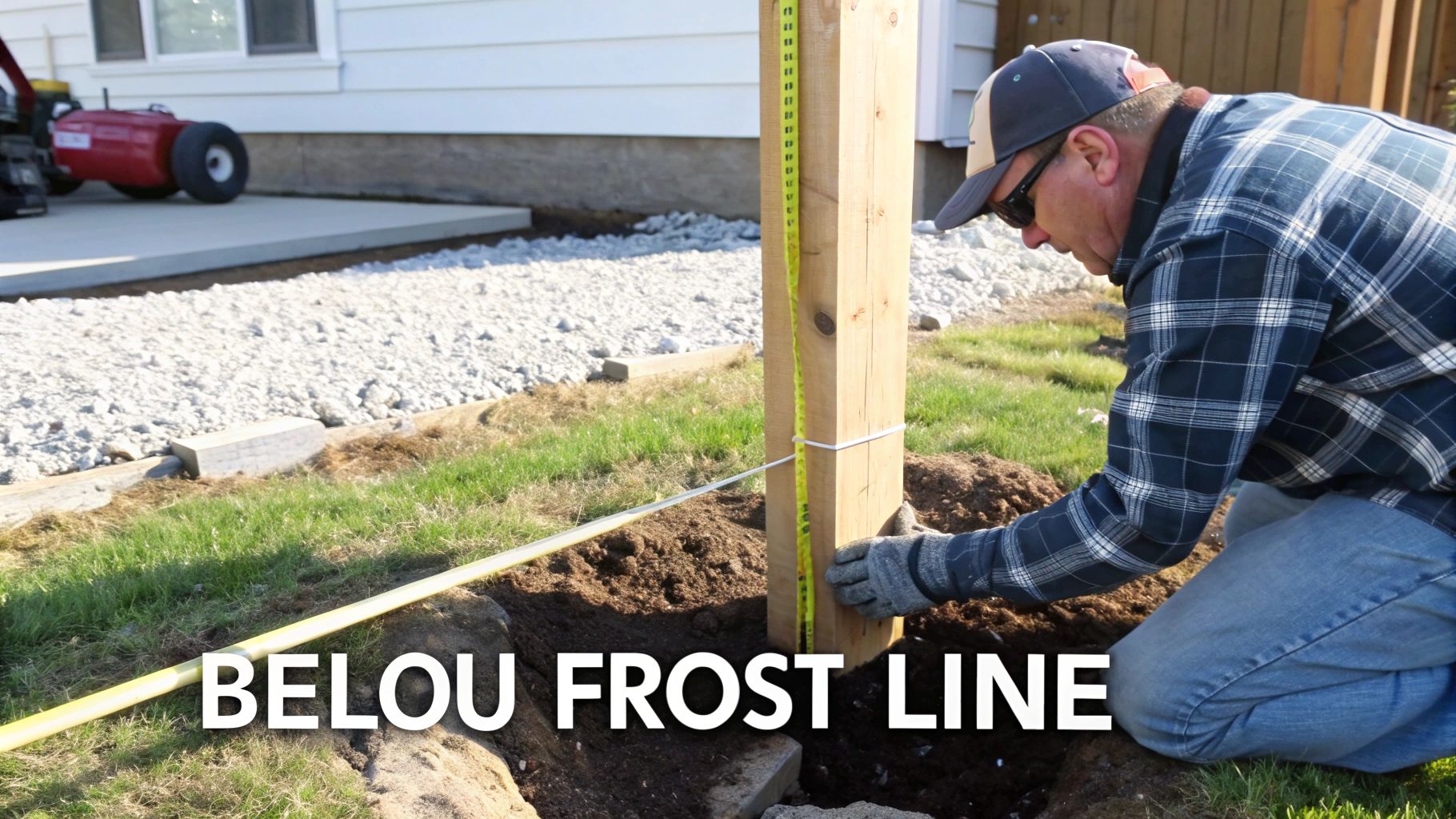
Picking out the right pressure-treated 6x6 is only half the battle. If you want it to last for decades, you have to install it correctly, especially here in Ottawa. Our climate's notorious freeze-thaw cycles are the biggest threat to a poorly set fence post.
It’s all about a powerful force called "frost heave." When the moisture in the ground freezes, it expands and pushes upward with incredible strength. If your post isn't deep enough, that force will literally jack it out of the ground winter after winter, leaving you with a crooked, unstable fence. It’s the number one reason fences fail around here, making proper installation a non-negotiable part of the job.
Digging Below the Frost Line
The single most important step you can take is to dig your post holes below the regional frost line. For the Ottawa–Gatineau area, that means going down at least four feet (48 inches). No shortcuts. This gets the base of your post into soil that stays put, never freezing or shifting during the winter.
Think of it like an anchor for a boat. You need to drop it deep enough to hit solid ground that won't move. By setting the post base below the frost line, you’re anchoring it against the immense pressure of the heaving ground above.
Actionable Tip: Before you even think about picking up a shovel, call or click before you dig. It’s the law. Contacting Ontario One Call or Info-Excavation in Quebec is the crucial safety step to locate underground gas lines, electrical cables, and other utilities.
Setting Your Posts: Concrete vs. Gravel
Once the hole is dug, what do you fill it with? The two go-to options are concrete and gravel, and your soil type should guide your decision.
Concrete: This is your go-to for maximum stability. It's the best choice for critical posts like the ones holding heavy gates or the corner and end posts that bear the fence's tension. Concrete creates a solid, unmoving footing that works perfectly in Ottawa's heavy clay soils, which tend to hold a lot of water.
Gravel: The main advantage here is drainage. Surrounding the post with clear crushed stone lets water drain away quickly instead of sitting against the wood. This is your best defense against rot and is a fantastic option for sandier or well-draining soils.
Many local pros have landed on a hybrid method that works wonders. They'll often pour a concrete "plug" at the very bottom of the hole to lock the post in place, then backfill the rest of the way with compacted gravel to handle the drainage. It’s really the best of both worlds.
The Step Everyone Forgets: Sealing Cut Ends
Here's a tip that will save you a world of headaches down the road. Whenever you cut a pressure-treated 6x6, you expose the raw, untreated wood in the middle. That fresh cut is like an open door for moisture and insects, completely bypassing the chemical protection.
It is absolutely essential to coat any cut end with a copper-based wood preservative. You can find it at any hardware store. This quick, simple step re-seals the wood, restoring its armour and stopping rot before it can start. This is especially critical for the end of the post that will sit just above the ground—its most vulnerable point. Skipping this can easily shave years off the life of your post.
Sourcing and Budgeting for Your 6x6 Posts
Walking into a lumberyard can feel a bit overwhelming, but a little bit of knowledge goes a long way. When you start budgeting for your pressure-treated 6x6 posts, the final cost really comes down to three things: the post's length, its quality grade, and the specific chemical treatment it's been given.
It's pretty straightforward—a 12-foot post will cost more than an 8-foot one. But it's the treatment that really matters. A post rated for "Ground Contact" has more preservative forced into the wood, making it more expensive than an "Above Ground" version. For any post going into the ground here in Ottawa, that extra investment isn't just a good idea; it's essential.
Asking the Right Questions at the Lumberyard
To make sure you walk out with the right material for the job, you need to be an informed buyer. Don't just ask for a "6x6 post." You have to be specific. Having a quick checklist of questions ready will save you from buying the wrong stuff and ensure your fence or deck is built to last.
Before you pull out your wallet, hit your supplier with these key questions:
Is this rated for "Ground Contact"? This is non-negotiable. If it's not, it can't be used for a fence post.
What’s the preservative retention level? For our damp climate, you’re looking for a number of at least 0.40 to get the best protection.
Is this lumber incised? You might not see it on every post, but those little slits mean the treatment has penetrated deeper into the wood—a huge bonus for longevity.
What are the actual dimensions? Just double-check that they are the standard 5.5" x 5.5". This will save you a headache later when you're trying to fit brackets and other hardware.
Do you offer any bulk discounts? If you're tackling a big fence, it never hurts to ask. Many yards will cut you a deal on a full lift of lumber.
When you walk in with specific questions like these, it signals that you know what you're talking about. It helps you accurately compare prices between different suppliers and gives you the confidence that you're buying the right product for the job.
Smart Budgeting and Sourcing Tips
For homeowners and contractors around Ottawa-Gatineau, pressure-treated 6x6 posts deliver some of the best bang for your buck. For instance, you can find 12-foot lengths from local suppliers like Kent Building Supplies for around $67.46, a much more palatable price than what we saw during the recent lumber cost spikes. Plus, with modern treatments being approved for direct contact with aluminum, they've become even more versatile for residential projects, sidestepping old corrosion worries. You can read more about the value of brown pressure-treated lumber and see if it's a fit for your project.
A little planning can make a big difference. If you take the time to accurately map out your project and calculate exactly how many posts you need, you can often save by purchasing in bulk. We dive deeper into material and labour costs in our guide to budgeting for a new wood fence, which can help you put all the pieces together.
Your Top 6x6 Post Questions, Answered
Let's tackle some of the most common questions we hear from homeowners and contractors in the Ottawa–Gatineau area when it comes to using pressure-treated 6x6 posts.
How long will a 6x6 post actually last in our climate?
When you do the job right—getting that post buried well below the frost line—a proper ground-contact rated 6x6 can easily last 25 to 40 years. The real enemy here isn't just time; it's our region's brutal freeze-thaw cycles. Correct installation is what gives the wood its fighting chance.
Is this stuff safe to use near my garden or kids' playset?
Absolutely. The pressure-treating formulas used today, like MicroPro Sienna, are a world away from the old arsenic-based treatments. They are certified to be safe around people, pets, and plants. That said, if you're building a raised vegetable garden, playing it safe by adding a simple garden liner on the inside is never a bad idea.
For professional fence design and installation using the highest quality materials, trust the experts at FenceScape. Get your free, no-obligation estimate today by visiting us at https://www.fencescape.ca.
luck8 khiến mình muốn duy trì một phiên trên điện thoại lâu hơn để xem cách tiếp nhận nội dung thay đổi theo thời gian. Mình thường bắt đầu với Bắn cá, tìm hiểu Cóc Thần Tài rồi chuyển sang Nổ hũ để quan sát Buy Free Spins. Sau đó, mình tiếp tục với Xổ số và dành thời gian xem những hình thức được giới thiệu. Trên màn hình nhỏ, mình chú ý nhiều đến vị trí các danh mục và cách những mục lựa chọn xuất hiện theo chiều cuộn. Có lúc mình thử quay lại phần đầu sau vài lần chuyển hướng để kiểm tra khả năng ghi nhớ. Qua nhiều lần thao tác, mình dần quen hơn…
UU888 gợi cho tôi câu hỏi về sự khác biệt giữa xem nhiều lựa chọn và tìm đúng lựa chọn. Tôi thử mở nổ hũ, quay về slot rồi chuyển sang casino để quan sát cách tiêu đề báo hiệu từng khu vực. Nếu hình ảnh được sử dụng, tôi muốn chúng bổ trợ tên mục thay vì thay thế thông tin chữ. Tôi cũng chú ý liệu những đường dẫn phổ biến có giữ vị trí quen thuộc sau mỗi lần chuyển trang. Với tôi, khả năng nhận biết nơi mình đang đứng là điều kiện để khám phá, đặc biệt khi các nhóm giải trí mở rộng.
EX88 khiến mình muốn tìm hiểu kỹ hơn cách các khu vực được kết nối trong những phiên sử dụng thường xuyên. Mình thường bắt đầu từ một nội dung quen thuộc rồi chuyển sang phần khác để quan sát cách hệ thống duy trì đường đi. Khi vào Casino, mình dành thời gian trải nghiệm trước khi chuyển sang Xổ số để thay đổi hướng quan tâm. Hai danh mục có phạm vi riêng nhưng những điểm điều hướng chung giúp mình nhận biết khá rõ vị trí hiện tại. Trên Mobile App, các khu vực được thu gọn theo kích thước màn hình nên mình vẫn dễ tìm hướng muốn tiếp tục. Sau nhiều lần sử dụng, mình dần…
8kbet khiến tôi chú ý đến cách một hệ thống giải trí trực tuyến tổ chức các danh mục để người dùng không mất phương hướng khi khám phá nội dung. Tôi thường quan sát menu chính, vị trí tiêu đề và cách phân chia từng khu vực trước khi thực hiện thao tác cụ thể. Khi chuyển từ Thể thao sang Sòng Bài rồi đến Slot Game, tôi muốn xem mỗi nhóm có những dấu hiệu nhận diện đủ rõ hay không. Việc quay lại khu vực ban đầu cũng giúp tôi đánh giá khả năng ghi nhớ đường đi. Tôi quan tâm đến sự nhất quán giữa tên mục, hình ảnh và bố cục hơn là số lượng lựa…
go8 khiến mình chú ý đến cách những trò cụ thể vẫn gắn với phạm vi chứa chúng khi mình liên tục đổi hướng. Có lần mình bắt đầu với Casino và Baccarat, sau đó chuyển sang Game bài rồi tìm Đường Mạt Chược. Mình thường xác định danh mục trước mỗi lần đi sâu nên hai lựa chọn không trở thành những điểm rời rạc trong cùng một phiên. Khi tiếp tục sang Bắn cá, mình lại dùng khu vực mới như một mốc để định hướng. Với mình, cách tìm theo từng lớp như vậy giúp nhiều nội dung nhỏ dễ sắp xếp trong đầu hơn, đồng thời mình vẫn hiểu được mối liên hệ giữa các bước vừa…