
Your Actionable Guide to Installing Privacy Fence Slats in Ottawa

Have a chain-link fence but need more privacy? You're not alone. Privacy fence slats are a direct, cost-effective way to convert that transparent barrier into a private backyard retreat.
Think of them as inserts you slide vertically into your fence's existing diamond mesh. This straightforward upgrade can transform an open chain-link fence into a semi-private or fully private enclosure—all for a fraction of the cost of a new fence. It's the ideal solution for gaining seclusion without committing to a major construction project.
Your Guide to Privacy Fence Slat Options
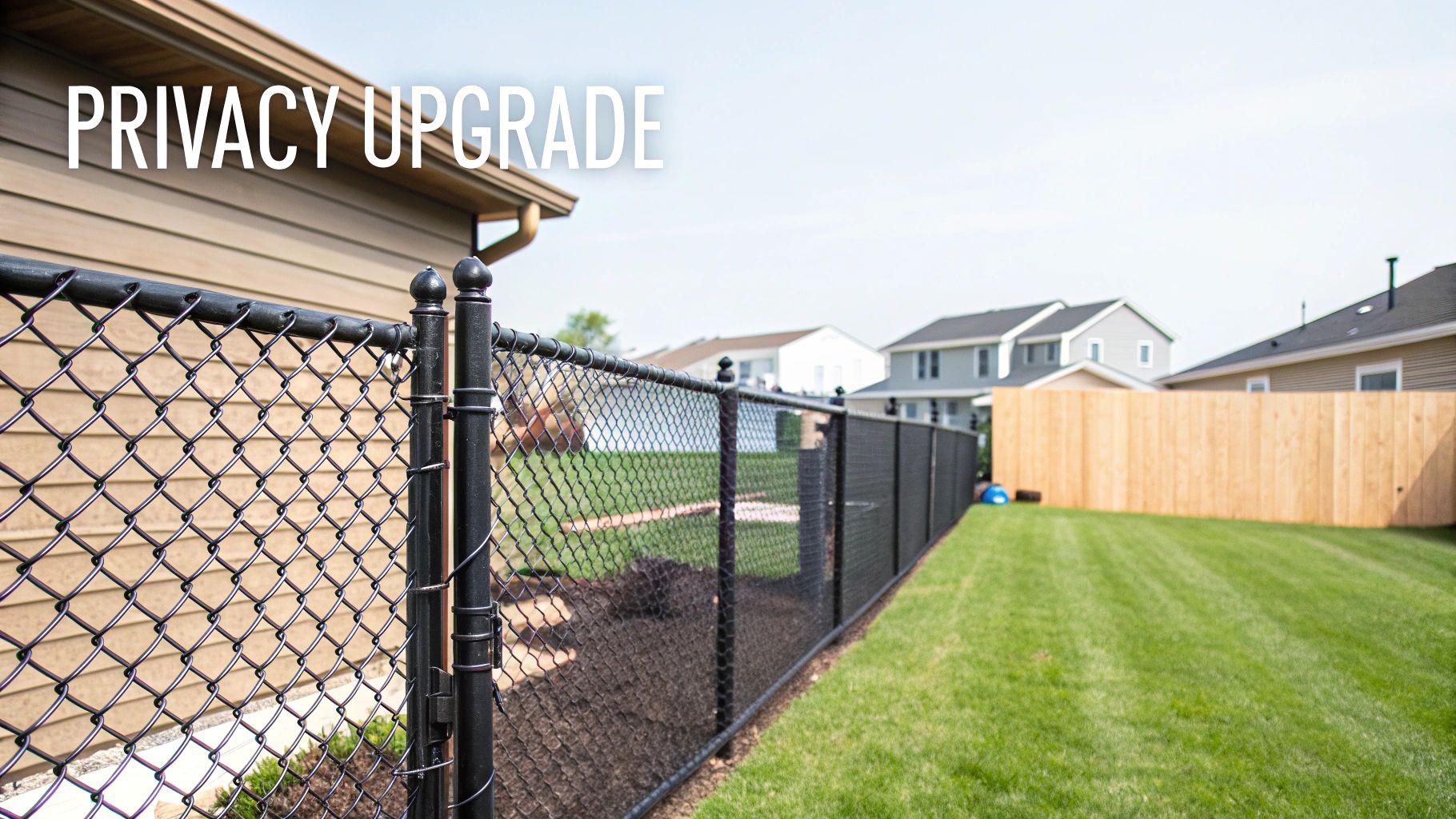
For many Ottawa homeowners, a standard chain-link fence is a functional starting point, but it lacks privacy. Whether you want to block the view from a busy road, create a secluded space for your family, or boost your home's curb appeal, fence slats offer a direct path to achieving your goal.
This is a smart retrofit. Instead of tearing down a functional fence, you weave vertical strips through the mesh. The transformation is immediate and dramatic. Your practical-but-plain fence becomes an attractive boundary that truly defines your private space.
Why Choose Fence Slats?
This approach has become popular for a few highly practical reasons, especially in the Ottawa–Gatineau region where homeowners value solutions that are both effective and efficient.
Take Action on a Budget: Adding slats is significantly more affordable than a full replacement with a new wood, vinyl, or composite fence. You achieve the privacy you want without a major financial outlay.
Install It This Weekend: For most homeowners, this is a manageable DIY project. The installation process is simple and doesn't require specialized tools.
Customize Your Look: Slats are available in a wide range of materials, colours, and styles. You can easily select an option that complements your home’s exterior and matches your aesthetic goals.
Actionable Insight: By retrofitting an existing chain-link fence with the right slats, you can achieve up to 98% visual blockage. This effectively creates a solid barrier, giving you the immediate security and seclusion needed to enjoy your yard.
To help you decide, here is a practical comparison of the most common slat materials we install at FenceScape.
Fence Slat Options at a Glance
Material Type | Typical Privacy Level | Durability in Ottawa's Climate | Average Cost |
|---|---|---|---|
PVC (Vinyl) | High (up to 98%) | Excellent; resists moisture and cold | $ |
Aluminum | Moderate to High | Excellent; rust-proof and very strong | $$$ |
Hedge Slats | High (with a natural look) | Good; UV-resistant but can trap debris | $$ |
Wood | Full (when new) | Fair; requires sealing to prevent rot/warping | $$ |
Use this table as your starting point. The best choice ultimately depends on your specific property, budget, and maintenance preferences.
What to Expect from Your Slats
Before you begin, understand what slats can—and can't—do. They are excellent for adding visual privacy and refreshing an old fence's appearance. What they don't do is add structural strength. In fact, by blocking wind, they increase the load on your fence posts—a critical factor to consider.
This guide will walk you through the practical details you need to make a confident choice. We'll cover which materials stand up to Ottawa winters and how to balance privacy levels with your fence's structural integrity.
For more in-depth information, review our homeowner's guide to chain-link privacy fence slats.
Choosing the Best Slat Material for the Ottawa Climate
Selecting the right material for your privacy fence slats is the most critical decision you'll make. In the Ottawa–Gatineau region, weather is a real factor. From deep winter freezes to humid, sunny summers, your chosen material must be durable enough to handle it all.
Think of your fence slats as a long-term investment. A low-quality material might look fine initially but will quickly fade, crack, and fail when exposed to a Canadian winter. A high-quality material, however, provides lasting performance and maintains its appearance for years, offering a much better return.
The Most Practical Choice: PVC and Vinyl Slats
For the best combination of cost, performance, and low maintenance, Polyvinyl Chloride (PVC)—or vinyl—is the top choice for our climate. It has been engineered to withstand the specific challenges of Ottawa's weather.
PVC slats are non-porous, meaning they don't absorb moisture. This is a critical advantage during our frequent freeze-thaw cycles. Water that seeps into materials like wood will freeze, expand, and cause damage. With PVC, water beads off, preventing cracks and warping.
Furthermore, modern vinyl slats are manufactured with UV inhibitors. This additive acts like sunscreen for your fence, protecting the colour from fading under intense summer sun. This ensures the colour you choose will remain vibrant for over a decade with minimal upkeep.
Actionable Insight: A key advantage of PVC is its resilience. It's designed to stay flexible in the cold, so it won’t become brittle and snap during a -30°C cold snap. This ensures your privacy fence slats can endure winter storms without sustaining damage.
The minimal maintenance is another major benefit. A quick spray with a hose and an occasional wipe-down with soapy water is all it takes to keep them looking new. For more details on these benefits, read our actionable guide to plastic and vinyl fence solutions.
The Sleek Durability of Aluminum Slats
For a modern aesthetic paired with exceptional strength, aluminum privacy fence slats are an excellent choice. Aluminum provides a sleek, contemporary look that complements many home styles, from urban townhouses to modern suburban properties.
Unlike steel, aluminum is naturally rust-proof, a critical feature for our humid summers and wet springs. It’s also lightweight yet strong, adding privacy without putting excessive strain on your fence posts.
Aluminum slats are typically finished with a powder coating. This is a tough, baked-on finish that creates a hard, protective shell resistant to chipping, scratching, and fading. While the upfront cost is higher than PVC, the longevity and near-zero maintenance justify the investment for homeowners seeking a premium, long-term solution.
Specialty Options: Composites and Beyond
Beyond the main two, you can find specialty materials like wood-plastic composites (WPC). These slats combine wood fibres with recycled plastics to create a material that offers the warm look of wood without its vulnerabilities.
Composites have good resistance to moisture and rot, making them a more durable alternative to traditional wood slats in our climate. However, they are generally heavier and more expensive than PVC. While they deliver a high-end look, you must ensure your fence structure can handle the additional weight.
Ultimately, your decision comes down to your priorities. If you value affordability and proven resilience, choose PVC. If you're aiming for a sharp, modern look with maximum durability, select aluminum. Each offers a distinct set of benefits suited for enhancing your property's privacy through Ottawa's demanding seasons.
Balancing Privacy Levels with Fence Performance
Achieving backyard privacy should not compromise your fence's strength and stability. A common mistake is choosing slats based solely on visual coverage, forgetting to consider wind load. This creates a critical trade-off between privacy and airflow—a crucial factor for any fence in Ottawa's windy conditions.
Think of your fence like a sail. An open chain-link fence allows wind to pass through. The moment you add slats, you "raise the sail," causing the fence to catch the wind. This transfers a significant amount of force—known as wind load—directly to the fence posts and their concrete footings.
Understanding Slat Designs and Privacy Ratings
Not all privacy slats are created equal. Their design directly impacts both the level of seclusion and their ability to withstand wind. Manufacturers typically provide a privacy or coverage rating (e.g., 90%), which tells you how much of the chain-link mesh the slats will cover.
For example, a 90% privacy factor means the slats block most of the view but leave small gaps for air to pass through. A slat with a 98% privacy factor, however, creates an almost solid barrier. That additional 8% coverage dramatically increases the wind load on your fence.
Here's a quick look at the core materials used for slats and what they bring to the table.
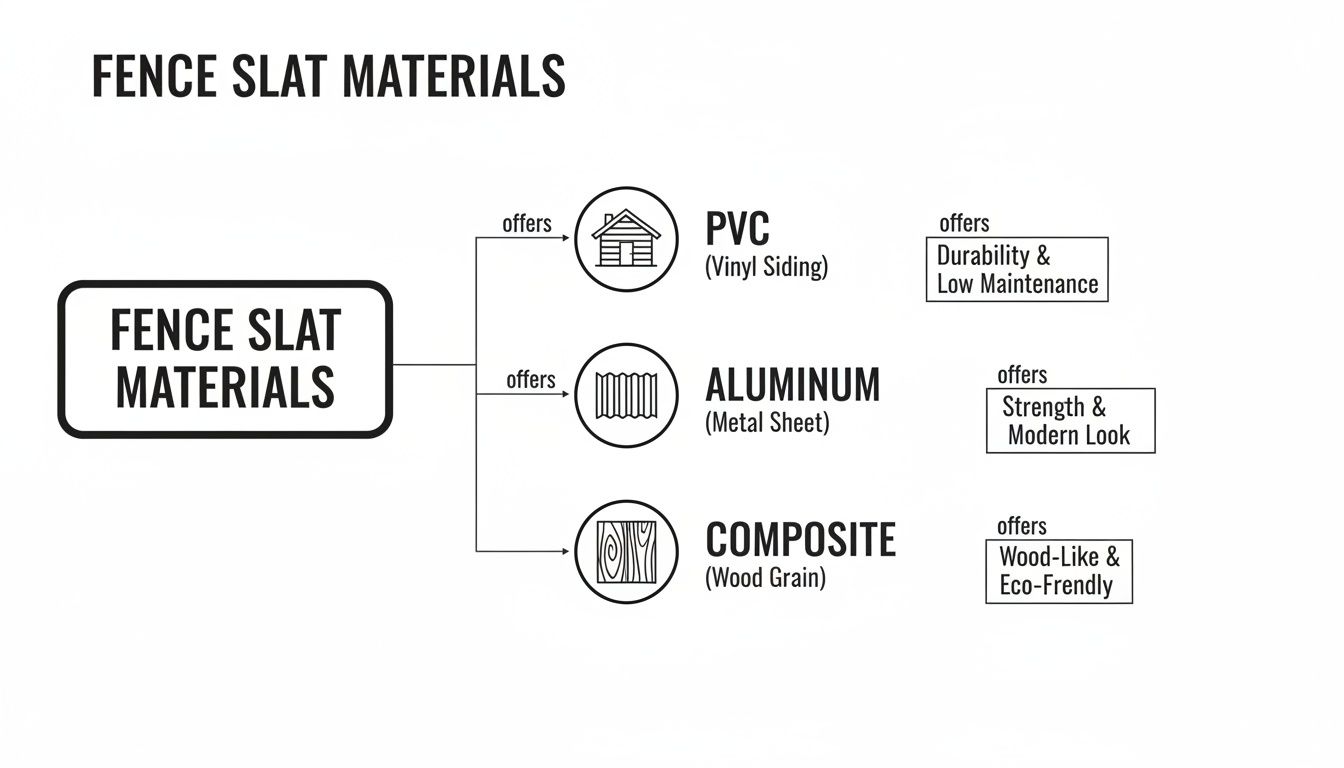
This visual helps show how different materials, from flexible PVC to rigid aluminum, play a role in the performance and final look of your privacy fence.
Common Slat Styles and Their Performance
How a slat attaches to the fence is as important as its material. Let's review three popular designs and their real-world performance.
Bottom-Locking Slats: A reliable option. Each slat has a channel at the bottom that snaps into a horizontal locking strip. This solid design delivers excellent privacy and is resilient in windy conditions.
Top-Locking Slats: Similar to the bottom-locking style, these slats are secured with a locking strip along the top of the fence. This provides a clean, finished look and makes it difficult for slats to be pushed up or tampered with.
Winged Slats: These slats have flexible "wings" on the sides that compress during insertion and then expand for a snug fit and extra coverage. They often provide the highest privacy ratings, typically around 98%.
Actionable Insight: Higher privacy ratings always equal higher wind load. A fence with 98% coverage winged slats on an exposed corner lot will be under immense pressure during a storm. If the fence posts and footings weren't built to handle that stress, you risk damage.
Matching Slat Design to Your Property's Needs
Choosing the right slat isn't about finding the "best" product; it's about finding the best one for your specific yard. Match the product to your situation.
Consider these two common Ottawa scenarios:
Securing a Backyard Pool: Here, total privacy is the priority for safety and comfort. A winged slat with a 98% privacy rating is an excellent choice. The yard is typically sheltered by the house and neighbouring properties, which naturally reduces wind exposure.
Fencing a Windy Corner Lot: For a property exposed to an open field or a wide street, airflow is critical. In this case, a standard bottom-locking slat with a 90-92% privacy rating is the smarter choice. You get substantial privacy while allowing enough air to pass through to reduce strain on the fence posts.
By carefully assessing your property's wind exposure, you can select privacy slats that provide the seclusion you desire without compromising the long-term integrity of your fence.
Deciding Between DIY and Professional Installation
You've selected the perfect privacy slats. Now, should you install them yourself or hire a professional? The right answer depends on your project's scale, your comfort with hands-on work, and the value of your time.
A DIY installation can be a satisfying weekend project. However, a professional installation ensures speed, precision, and the confidence that the job is done correctly the first time.
Let's break down the factors to help you make an informed decision.
The Do-It-Yourself Approach
For the handy homeowner, installing privacy fence slats can be a rewarding project. It requires attention to detail to avoid common mistakes that result in a sloppy appearance.
Success begins with accurate measurements. Before ordering, measure the height of the chain-link fabric (the mesh, not the posts) and the total length of the fence you plan to cover. Double-check your numbers to ensure a smooth project.
Once the slats arrive, the installation process for most common types (like bottom-locking vinyl) is straightforward. You weave each slat down through the chain-link diamonds and snap it into the bottom locking channel.
A Step-by-Step DIY Guide
Follow this clear process to achieve a professional-looking finish.
Prep Your Fence: Clean the chain-link fabric to remove dirt and debris. Inspect the mesh for any bent or damaged sections that could impede slat insertion.
Install the Locking Channel: For bottom-locking slats, weave the long, horizontal locking strip through the bottom row of diamonds along the entire fence section. This strip serves as the anchor.
Insert the First Slat: Start at one end. Slide your first slat down from the top, guiding it through the mesh until you feel it click securely into the locking channel.
Continue and Check for Consistency: Work your way down the fence, installing slats one by one. Pause every few feet to step back and check your work. Ensure everything is straight and uniform to avoid the tell-tale signs of a rushed DIY job.
Pro Tip: If a slat gets stuck, don't force it. It is likely misaligned with the diamond pattern. Gently pull it up and try again. Forcing it can bend or break the slat.
A methodical approach is key to achieving a clean, consistent finish across your entire fence.
When to Call a Professional
While DIY installation is feasible for many, there are clear indicators that hiring a professional is the better choice. A pro brings experience, specialized tools, and an eye for detail.
Consider the scale of your project. Installing slats on a 50-foot backyard fence is manageable. Tackling a 250-foot perimeter with hills, corners, and multiple gates is a much larger undertaking. Professionals can complete large jobs in a fraction of the time.
Professionals also excel at handling challenges, such as tight mesh from a stretched fence or uneven ground. Their expertise ensures every slat is seated perfectly, guaranteeing the job is finished right.
The Benefits of a Professional FenceScape Installation
Hiring a team like FenceScape provides peace of mind. Our crews are trained to install privacy slats with precision, delivering the clean, sharp lines that enhance your home's curb appeal. We ensure every slat is locked in securely to withstand Ottawa's high winds.
Furthermore, a professional installation comes with accountability. If an issue arises, you have a team to call. That support is invaluable.
The choice ultimately balances cost, time, and skill. Hiring a pro involves labour costs. In some markets, this can add $4–$6 USD per linear foot to the project. It's wise to understand these costs to see how they fit your budget.
Your Decision Checklist
Use this checklist to determine the best path for you.
Project Size: Is your fence longer than 100 feet? Does it have tricky angles, slopes, or several gates? (If yes, lean toward a pro.)
Your Time: Can you realistically dedicate a full weekend to this project? (If your time is limited, a pro is faster.)
Tool and Skill Level: Are you comfortable with detailed, repetitive work? (If not, an expert is your best bet.)
Desired Finish: Do you require a flawless, perfectly uniform look? (For a pristine finish, trust a professional.)
Answering these questions honestly will help you decide whether to take on the project yourself or invest in a professional installation.
Understanding the Costs and Getting the Most for Your Money
Let's discuss the budget. The cost of privacy fence slats is a combination of the material, the size of your fence, and your choice between DIY or professional installation.
The good news is that adding slats to an existing chain-link fence is one of the most cost-effective ways to gain privacy. By using the structure you already own, you save significantly compared to a full fence replacement. It's a smart way to achieve a major upgrade in aesthetics and function for a fraction of the cost.
Breaking Down the Costs
The primary cost driver is your material choice. PVC/vinyl slats are typically the most budget-friendly option, offering excellent durability for the price. Premium materials like aluminum or specialty composites cost more but provide unique benefits in style and longevity.
Other factors influencing your total investment include:
Fence Height and Length: Taller fences require longer, more expensive slats. The total length of your fence is the other key factor.
Project Complexity: A straight fence line is simple. Corners, gates, or slopes add complexity, increasing labour time and cost.
Labour Costs: Professional installation is a significant budget item. While DIY saves on labour costs upfront, a professional job ensures a durable finish that often provides better long-term value.
By adding slats to your existing fence, you’re choosing a solution that is far more economical than a full teardown and replacement. You maximize your initial investment while gaining the privacy you need.
Slats vs. a Full Fence Replacement: A Cost Comparison
The value of privacy slats becomes clear when compared to installing a new privacy fence. A full replacement involves demolition, hauling, digging new post holes, pouring concrete, and building the new structure—all of which add up quickly.
Consider the numbers. A new 6-foot vinyl or wood privacy fence typically costs $35–$65 per linear foot installed. In contrast, adding privacy slats often falls in the $4–$6 per linear foot range. For most projects, this keeps the total cost well under $3,000. That’s a potential upfront saving of 50–70%, making slats a practical and attractive option.
Making Your Investment Count
To get the best return, think long-term. Choosing a durable, low-maintenance material like PVC is a smart decision for the Ottawa climate, as it minimizes future repair or replacement costs.
A professional installation also adds value by ensuring a high-quality finish that boosts your home's curb appeal. At FenceScape, we offer neighbourhood group discounts. If you and your neighbours upgrade your fences simultaneously, we can provide a reduced rate for everyone. With strategic planning, you can achieve a beautiful privacy upgrade that is as smart for your wallet as it is for your yard.
Keeping Your Slats Looking Great for the Long Haul
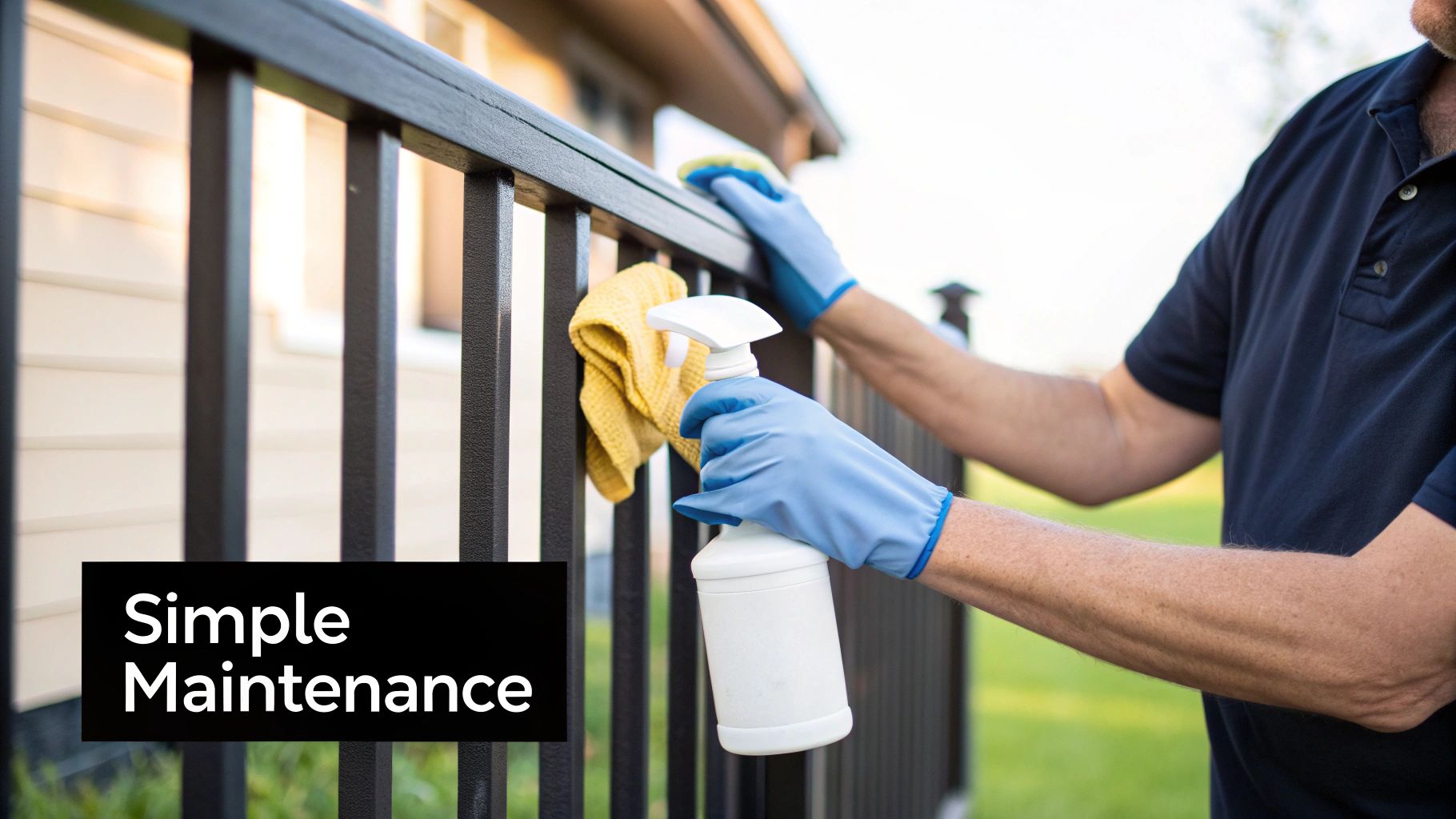
You've installed your new privacy slats; now, how do you keep them looking great? A small amount of care will protect your investment from Ottawa-Gatineau's weather and ensure your fence looks its best for years. Fortunately, most modern slat materials are designed for low maintenance.
Think of it as a quick seasonal check-up. A few proactive steps can prevent minor issues like dirt buildup from becoming larger problems. A little attention once or twice a year is typically all that's required.
Tailoring Care to Your Slat Material
Different slat materials have different maintenance needs. Aluminum and composite are nearly hands-off, while PVC and wood benefit from specific attention.
For PVC and vinyl slats, the main issues are surface grime, pollen, and potential mildew in shady areas. A simple cleaning solution is all you need.
The Right Mix: Add a small amount of mild dish soap or vinegar to a bucket of warm water.
Gentle Scrub: Use a soft-bristled brush or cloth to apply the solution.
Rinse Well: Hose the slats down thoroughly to remove any soap residue, which can attract more dirt.
For wooden privacy fence slats, the primary goal is protection from moisture and sun. A quality stain or sealant is essential to prevent rot, warping, and fading. This guidance on deck painting and staining offers useful upkeep tips for any wooden structure.
A well-maintained PVC slat fence can easily last 15 to 20 years or more in our climate. With proper sealing, wood slats can last 10 to 15 years. This longevity is a direct result of simple, consistent care.
Your Quick Seasonal Maintenance Checklist
Use this checklist each spring and fall to keep your fence in top condition.
Inspect for Damage: Walk your fence line and look for any cracked, bent, or loose slats, paying close attention to areas exposed to high winds or heavy snow.
Check the Locks: For locking slats, ensure the horizontal channel is secure and every slat is snapped in tightly.
Clear Debris: Remove any leaves, twigs, or vines caught between the slats. This promotes airflow and prevents moisture buildup that can lead to mildew.
Spot Clean: Address any dirt or stains using the methods mentioned above. A quick spot clean is often all that's needed to keep the fence looking fresh.
By incorporating these simple habits into your seasonal yard work, you'll ensure your privacy fence slats remain a durable and attractive feature of your home for their entire lifespan.
Your Top Questions About Privacy Slats Answered
Homeowners in Ottawa considering privacy slats often have the same key questions. Let's address the most common ones directly to help you make a confident decision.
Will My Privacy Slats Fade in the Sun?
This is a top concern, given Ottawa's intense summer sun. High-quality PVC or vinyl slats are manufactured with UV inhibitors integrated directly into the material, acting as a permanent sunscreen for your fence.
With this protection, you can expect the colour to remain vibrant for 15+ years. Cheaper plastics without UV protection will become brittle and fade within a few seasons. Powder-coated aluminum slats are also excellent at retaining their colour.
Actionable Insight: Always confirm that your chosen slats have UV protection. This is the single most important feature for colour longevity in our climate and distinguishes a lasting product from one that will quickly look worn.
How Do Slats Hold Up Against Heavy Snow?
Modern privacy slats are designed for durability. Their vertical orientation allows most snow to slide off rather than accumulate. PVC slats are particularly well-suited for our winters, as they remain flexible in freezing temperatures and won't crack under the pressure of snowdrifts.
The real concern is the strength of your fence frame. If your posts are not secure, the force of heavy, wet snow against the slatted surface can cause problems. A strong fence structure is essential.
Do I Need a Permit to Add Slats to My Fence?
In most cases, no. If you are simply adding slats to an existing chain-link fence in Ottawa or Gatineau without changing its height or location, you typically do not need a permit.
However, it is always a good practice to check your local municipal bylaws to be certain. If you share a fence with a neighbour, it's a courtesy to discuss your plans with them beforehand.
Ready to transform your chain-link fence into a private, attractive backdrop for your yard? The experts at FenceScape are here to help you select the right options and provide a perfect installation built to withstand an Ottawa year.
Comments