
Cedar Split Rail Fence Guide for Ottawa Homes

A cedar split rail fence offers a classic, rustic look that effectively marks your property lines without creating a visual barrier. Its renowned natural durability and easy upkeep make it a practical and aesthetically pleasing choice for homeowners in the Ottawa–Gatineau region.
Why Choose a Cedar Split Rail Fence
To add character and definition to your property, a cedar split rail fence is a proven choice. Its simple, interlocking design is both functional and visually appealing. The open-rail style blends seamlessly into the landscape, making it a perfect match for the natural beauty of the Ottawa–Gatineau area.
Historically, early settlers used this fence style to mark boundaries and contain livestock with readily available materials. That same practicality makes it popular today. The design is efficient, using fewer materials than a solid privacy fence and maintaining an open, inviting feel for your property.
The Natural Resilience of Cedar
Cedar's inherent properties make it exceptionally suited for our Canadian climate. Its natural oils and tannins act as a built-in defense system, providing powerful resistance against two of wood's biggest threats: rot and insects.
This natural protection means a cedar split rail fence can withstand the elements for decades with minimal maintenance. While other woods require chemical treatments to survive, cedar's durability is organic. Historical records, such as those from early California, confirm that cedar became the preferred material for split rail fences because it outlasted other woods susceptible to rot and blight.
A Smart Long-Term Investment
Choosing cedar is a sound investment in your property. The long-term benefits for local homeowners are clear:
Longevity: When installed correctly, expect your cedar split rail fence to last 15 to 30 years, often outliving fences made from less durable wood.
Low Maintenance: You have two practical options: let the cedar weather naturally to a beautiful silver-grey patina at no cost, or apply a stain every few years to maintain its original warm colour.
Eco-Friendly: As a renewable resource, cedar is an environmentally conscious choice that avoids the heavy chemical processing required for pressure-treated lumber.
This combination of durability and minimal upkeep makes cedar a cost-effective solution over its lifespan. When exploring wood fence options, comparing the long-term value of cedar is a crucial step.
Finding Your Perfect Fence Style
Selecting the right cedar split rail fence involves balancing aesthetics with function. Your property's specific needs—from a simple decorative border to a secure enclosure—will guide you to the ideal configuration.
The most critical decision is the number of horizontal rails. This choice determines the fence's height, appearance, and containment capabilities. Each setup is designed for a specific purpose.
2-Rail, 3-Rail, and 4-Rail Systems: What's the Difference?
Let's break down the options. The 2-rail cedar split rail fence is the simplest configuration. Typically standing 36 inches high, it serves as a decorative accent rather than a physical barrier. Use it to line a long driveway or frame a garden bed without obstructing the view.
The 3-rail system is the most popular choice for general-purpose fencing in the Ottawa–Gatineau area. At approximately 48 inches tall, it establishes a more substantial boundary. This height is the ideal middle-ground for containing larger dogs and clearly defining property lines while preserving an open, neighbourly atmosphere.
For maximum height and security, the 4-rail fence is the best option. Reaching 60 inches or more, it is commonly used to contain livestock like horses or to secure large properties needing a more formidable perimeter. While still maintaining an open feel, the extra height adds a greater sense of enclosure.
Key Takeaway: The number of rails defines the fence's function. Two rails are primarily for aesthetics, three for general boundaries and pets, and four for livestock and enhanced security.
This blend of rustic appeal and serious durability is what makes cedar split rail fences a preferred choice for so many homeowners.
If you need a durable, timeless fence that complements the natural landscape, cedar split rail is an excellent choice.
Comparing Cedar Split Rail Fence Styles
Use this table to directly compare styles and select the best configuration for your property's functional and aesthetic goals.
Fence Style | Typical Height | Best For | Common Ottawa–Gatineau Use |
|---|---|---|---|
2-Rail | ~36 inches | Decorative borders, marking boundaries | Defining front yards, garden beds, or driveways. |
3-Rail | ~48 inches | General-purpose, containing larger pets | The standard for residential property lines and pet safety. |
4-Rail | ~60+ inches | Livestock containment, enhanced security | Rural properties, equestrian farms, and larger lots. |
Ultimately, the right choice is the one that best performs the job you need it to do.
Traditional vs. Modern: Zigzag vs. Post-and-Rail
Beyond rail count, there are two primary construction methods. The historic zigzag or snake fence is a freestanding design where rails are stacked in an interlocking, angled pattern. Its key advantage is that it requires no post holes, making it an ideal solution for rocky or uneven terrain where digging is difficult.
However, the more common and space-efficient style today is the post-and-rail system. In this method, vertical posts are set securely in the ground, and the tapered ends of the rails fit into pre-cut mortises in the posts. This creates a strong, straight fence line that is standard for most residential applications. To see how this classic look compares to other options, review our guide on trending wooden fence styles for Ottawa homes.
Need More Security? Customize with Wire Mesh
A key advantage of a cedar split rail fence is its adaptability. To contain small pets or exclude wildlife, adding wire mesh is a simple and effective modification.
This upgrade transforms an open-style fence into a secure barrier. It’s the perfect way to create a safe enclosure for small dogs or protect a vegetable garden from rabbits and groundhogs. By attaching durable, black vinyl-coated or galvanized wire mesh to the inside of the fence, you gain full security without sacrificing the rustic aesthetic.
How Cedar Handles the Ottawa–Gatineau Climate
A fence in the Ottawa–Gatineau region must endure punishing winters with heavy snow and humid summers. This intense cycle of freezing, thawing, and moisture can compromise lesser materials, but it's precisely where a cedar split rail fence excels.
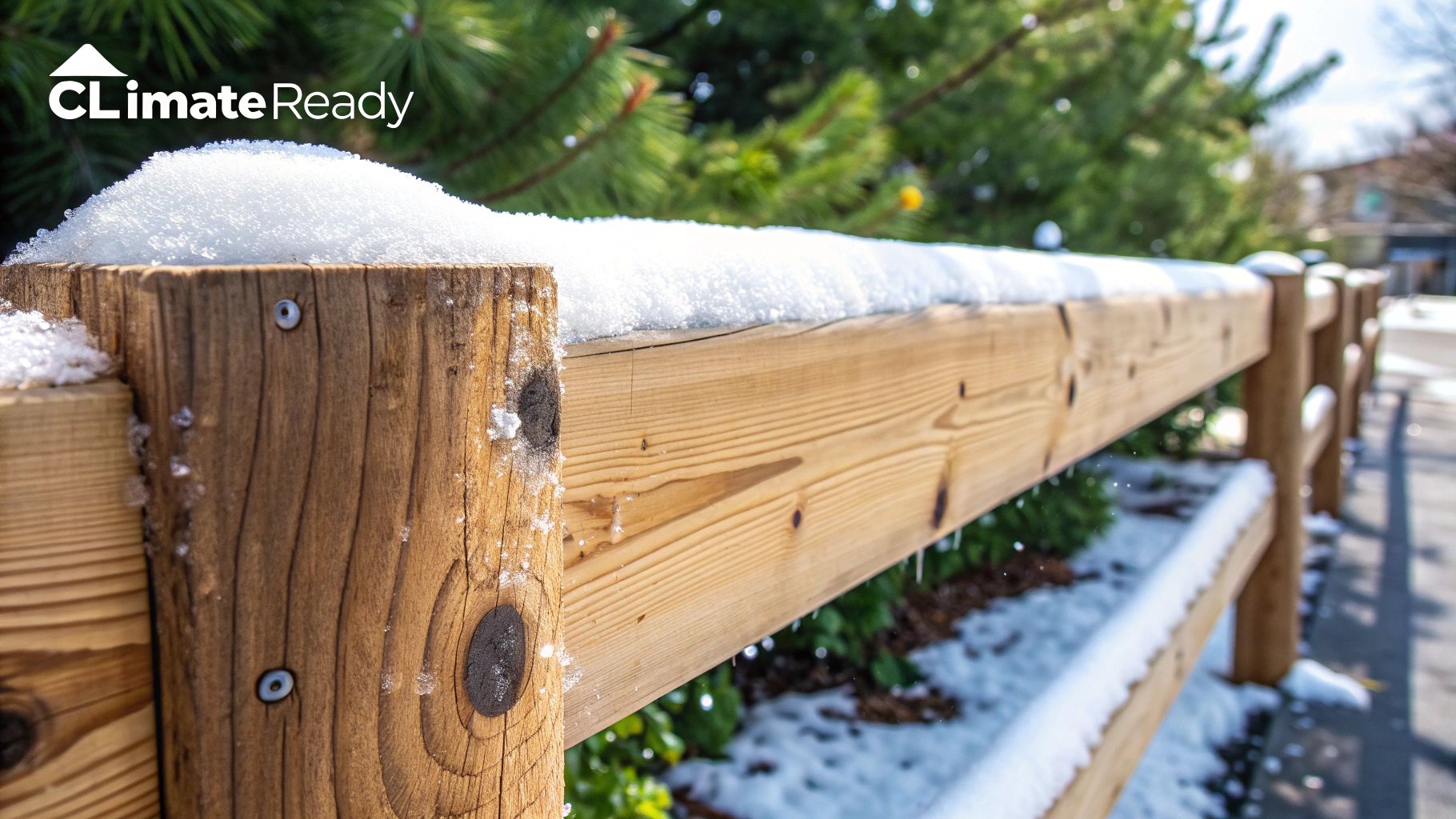
Cedar is a high-performance natural material uniquely suited for our local weather. Its cellular structure is filled with natural oils and tannins that act as a lifelong preservative, making the wood inherently resistant to moisture and insects.
This built-in defense means cedar does not require the chemical pressure-treating that woods like pine need to survive outdoors. While those chemicals can leach into the soil, cedar’s protection is organic and stable, making it a safer choice for your property and the environment.
Surviving the Freeze-Thaw Cycle
The greatest challenge for any local fence is the freeze-thaw cycle. When moisture penetrates wood and freezes, it expands, creating cracks that degrade the structure. Cedar’s natural oils repel water, preventing it from soaking deep into the wood.
This resistance means a cedar fence is far less likely to warp, twist, or crack as temperatures fluctuate. However, even the best material requires proper installation to perform.
Set Posts Below the Frost Line: In our region, the frost line can be 4 to 5 feet deep. We set posts below this depth to prevent "frost heave," where frozen ground pushes posts upward, leaving the fence crooked and unstable.
Ensure Proper Drainage: We place a gravel base in each post hole to allow water to drain away from the post, providing critical protection against moisture and rot at the base.
The Graceful Aging Process
One of cedar's most admired qualities is how it ages. Left untreated, the wood will naturally weather from its warm, reddish-brown tones to a beautiful silver-grey. This is not a sign of decay but a natural process that gives the fence a timeless, rustic character that fits perfectly into the Canadian landscape.
This weathering occurs without compromising the wood's structural integrity. The core remains strong, protected by its natural oils. It’s a desirable aesthetic that requires no effort to achieve.
If you prefer to maintain the original colour, apply a quality UV-protective stain every few years. This will preserve the rich, warm tones against sun and weather.
An Honest Look at Cedar’s Softness
While cedar's resistance to rot and insects is exceptional, it is a softwood. This makes it lightweight and easy to work with, but also more susceptible to dings and dents than a hardwood. A stray lawnmower or falling branch may leave a mark.
This softness is why professional installation is so important. A properly installed fence ensures the rails fit snugly into the post mortises, creating an interconnected system that distributes stress and stands firm.
Here's a practical tip for managing a cedar fence in Ottawa: clear heavy snow drifts from the bottom rail after a major storm. This simple action relieves pressure and helps prevent warping over the winter. With these straightforward precautions, your cedar fence will remain a beautiful, lasting feature of your property.
Planning Your Budget for a Cedar Fence
Understanding the cost of a fence is the first step toward a smart property investment. For a cedar split rail fence in the Ottawa–Gatineau area, it's essential to consider the total value over its entire lifespan, not just the initial price.
Fence projects are typically priced by the linear foot. This price includes all materials and professional installation labour, making it easy to estimate the total cost based on the length of your fence.
Breaking Down the Costs
In the Ottawa–Gatineau region, expect to invest between $25 and $45 per linear foot for a professionally installed cedar split rail fence. The final cost within this range depends on several project-specific factors, which is why an on-site quote is necessary for an accurate price.
Here are the key variables that influence the cost:
Number of Rails: A 2-rail fence is the most budget-friendly option, using less material. The cost per foot increases as you move to a 3-rail or 4-rail system for added height and security.
Terrain Conditions: A flat, open area is straightforward. Rocky ground, steep slopes, or numerous trees and roots require more labour and specialized work, which affects the final price.
Gates and Customizations: Gates are priced separately based on width and style. Adding wire mesh for pet containment is a popular customization that will also add to the material and labour costs.
Looking at the Long-Term Value
While upfront cost is a primary consideration, cedar's long-term performance provides significant value. A professionally installed cedar split rail fence can last 15 to 30 years, meaning you won’t need to budget for a replacement for a very long time.
A cedar split rail fence is an investment in lasting, natural beauty. Over its lifespan, its durability and low maintenance often make it a more financially sound choice than a cheaper fence that requires frequent repairs or a full replacement.
The low maintenance requirements also translate to future savings. You can let the cedar age to a silver-grey patina for free, or maintain its original colour with a new coat of stain every few years. You control the long-term maintenance costs.
A Timeless and Practical Choice
Wood fencing has remained a cornerstone of residential design for its practicality, affordability, and aesthetic appeal. Split rail fences were historically instrumental in defining property lines in growing suburbs, a legacy that continues today. For more on this, you can explore the history of wood fencing in residential development.
By understanding these cost factors and the fence's exceptional lifespan, you can plan your project with confidence, knowing you are making a choice that fits your budget and will enhance your property for years.
Fence Installation and Local Permit Rules
A cedar split rail fence will only achieve its full 15 to 30-year lifespan if it is built on a solid foundation. Proper installation is non-negotiable—it is the critical factor that separates a fence that stands strong for decades from one that begins to fail after a few Ottawa winters.
The key decision is whether to DIY the project or hire a professional installer.
To make the right choice, honestly assess your skills, available time, and access to the necessary tools.
DIY vs Professional Installation
A DIY installation can be a rewarding project if you have the right experience and equipment. Cedar split rail is one of the more forgiving fence styles to build, as the rails simply slide into pre-cut mortises without complex hardware.
However, the most critical—and most challenging—part of the job is setting the posts correctly. This is where most DIY projects fail.
Hiring a professional crew ensures the job is done right from the start. Experienced installers understand local soil conditions and use commercial-grade equipment like power augers to dig post holes efficiently and accurately. To see the professional difference, learn more about our fencing expertise in Ottawa.
Use this guide to determine which approach is best for you.
DIY vs Professional Installation Decision Guide
Task | DIY Considerations | Professional Advantage |
|---|---|---|
Digging Post Holes | You will need a manual post-hole digger or must rent a power auger. Digging below the local frost line (4-5 feet) is mandatory to prevent frost heave. | Uses commercial-grade equipment for fast, precise digging, guaranteeing the correct depth even in rocky soil. |
Setting Posts | Requires mixing concrete, ensuring each post is perfectly plumb, and bracing them securely while they set. This step is physically demanding and requires precision. | The crew sets posts quickly and perfectly straight, using proven techniques for alignment and long-term stability. |
Installing Rails | Relatively straightforward, but achieving even spacing and a clean fence line on sloped terrain requires a careful eye. | Professionals easily adjust for variations in terrain, ensuring the top line of the fence flows smoothly and looks intentional. |
Time and Labour | A typical backyard fence can consume an entire weekend or more for a novice. It is physically strenuous work. | An experienced crew can often install a complete residential fence in just 1-2 days, minimizing disruption to your property. |
Your final decision should balance your budget against your time, skill level, and the desire for a flawless, long-lasting fence.
Navigating Local By-Laws in Ottawa and Gatineau
Before starting any work, you must familiarize yourself with local regulations. The City of Ottawa and the Ville de Gatineau have specific fence by-laws that dictate what you can build. Non-compliance can result in fines or an order to remove the fence.
Crucial First Step: Always consult your municipality's official website for the most current fence by-laws. Rules regarding height, materials, and property line setbacks are subject to change, and compliance is the homeowner's responsibility.
Here are the key regulations to verify:
Maximum Fence Height: Permitted height varies by location. A front yard fence has a lower height limit than a backyard fence.
Property Line Setbacks: Know the exact location of your property line. Building on a neighbour’s property can lead to serious disputes. A professional property survey is the only way to be certain.
Permit Requirements: For most standard residential fences that comply with height and location rules, a permit is not required in either Ottawa or Gatineau. However, a permit is almost always necessary for fences exceeding standard height (e.g., for a pool enclosure).
When in doubt, call your city’s building code or by-law office. A brief phone call can prevent significant headaches and costly errors.
Simple Maintenance to Protect Your Investment
One of the greatest benefits of a cedar split rail fence is its low maintenance. However, a small amount of annual care will protect your investment and prevent minor issues from becoming major problems, ensuring your fence lasts for decades.
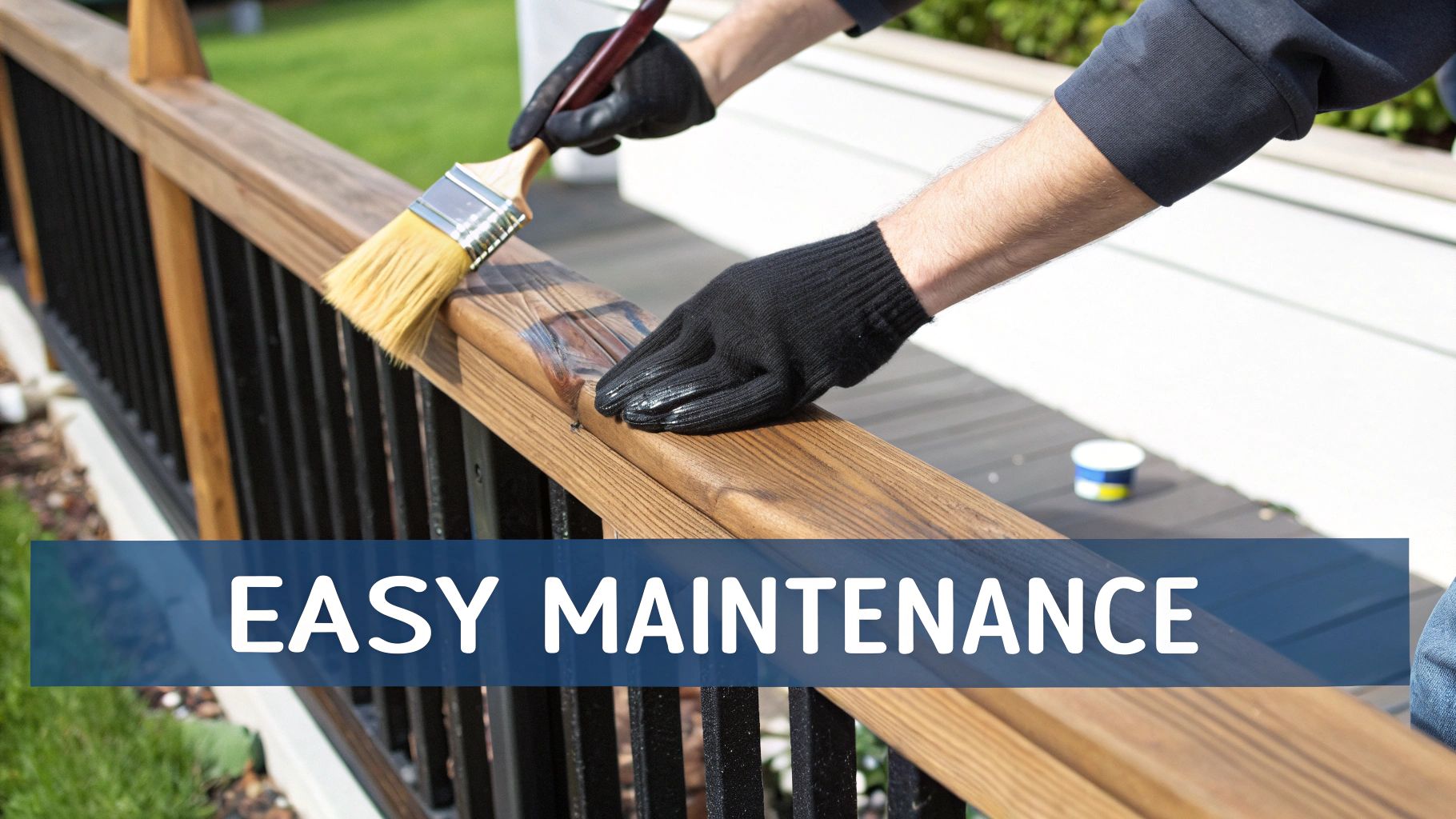
Once a year, typically in the spring, perform a quick inspection. Walk the fence line, giving each post a gentle push to check for wobbling and ensuring each rail is seated securely. This five-minute check can identify any posts shifted by frost heave before the problem worsens.
Your Annual Maintenance Checklist
Follow this simple routine to maximize the lifespan of your fence.
Inspect Post Stability: Check the base of each post. If a post is wobbly, the surrounding ground may have shifted and needs to be re-compacted.
Check for Loose Rails: Confirm that all rails are firmly seated in their mortises. Heavy snow or ground settling can sometimes dislodge them.
Clean Away Debris: Clear any accumulated leaves, soil, or grass from the base of the posts and bottom rails. This prevents moisture from being trapped against the wood, which can lead to rot.
Look for Mildew: In damp, shaded areas, you may see mildew. A quick scrub with a mixture of water and vinegar will remove it without damaging the wood.
This quick annual inspection is all a cedar split rail fence needs to remain in excellent condition.
To Stain or Let It Weather
You have two excellent aesthetic options for your fence, depending on your personal preference.
The first option is to maintain the warm colour of new cedar. To do this, apply a quality, UV-protective stain every 3 to 5 years. This acts as a sunscreen for the wood, protecting it from sun and moisture and preserving its reddish-brown hue.
The second option is to do nothing and let the fence age naturally. Over time, the cedar will develop a beautiful, rustic silver-grey patina. This is a highly desired look that requires zero maintenance and allows the fence to blend seamlessly into the landscape.
Handling Minor Repairs Yourself
The simple construction of a split rail fence makes repairs incredibly easy. If a storm cracks a rail or a post becomes loose, you can often perform the fix yourself.
Replacing a Damaged Rail: This is the easiest repair. Simply lift one end of the broken rail out of its post hole, then slide the other end out. The new rail slips directly into the empty slots—no tools required.
Shoring Up a Wobbly Post: For a slightly loose post, dig out the soil around its base, then firmly tamp a mixture of gravel and new soil back into the hole to reinforce its footing.
Knowing how to handle these basic tasks empowers you to keep your fence looking great and standing strong for its entire lifespan.
Common Questions About Cedar Split Rail Fences
Choosing the right fence involves asking the right questions. Here are clear, practical answers to the most common inquiries we receive from homeowners in Ottawa and Gatineau about a cedar split rail fence.
Can a Cedar Split Rail Fence Keep My Dog In?
Yes, with a simple modification. The gaps in a standard 2-rail or 3-rail fence are often large enough for small or agile dogs to pass through. The most effective solution is to attach a sturdy wire mesh to the inside of the fence.
This is our most frequently requested upgrade because it creates a secure boundary for pets without detracting from the open, rustic look of the fence.
For larger dogs that are not prone to jumping, a 3-rail system (48 inches high) often provides a sufficient visual and physical barrier. The best choice depends on your dog's size and temperament.
How Does Cedar Stack Up Against Pressure-Treated Pine?
This is a common question, particularly regarding budget. Upfront, pressure-treated (PT) pine is generally less expensive. However, that lower cost comes with a trade-off: PT pine is chemically treated to resist rot and insects, whereas cedar possesses natural oils that provide inherent protection.
In the long run, cedar is often the more economical investment. PT wood requires more frequent maintenance—regular sealing and staining—to prevent warping and decay. Cedar can be left untreated to age naturally, saving you significant time and money on upkeep over the life of the fence.
Do I Have to Stain or Seal My Cedar Fence?
No, it is entirely a matter of aesthetic preference. If you want to preserve the rich, reddish-brown colour of new cedar, apply a quality stain or sealant every 3-5 years. This will protect the wood from UV rays and maintain its vibrant tone.
Alternatively, you can do nothing. An untreated cedar fence will naturally weather to a beautiful, silvery-grey patina. This is a classic, low-maintenance look that many homeowners prefer, and it does not compromise the fence's structural integrity.
What’s the Best Way to Clean a Cedar Split Rail Fence?
Cleaning is simple. For general dirt and dust, a quick spray with a garden hose is usually sufficient.
If you notice mildew in a damp, shady area, scrub it lightly with a soft brush and a solution of water and vinegar. This will remove the mildew without harming the wood. Avoid using a pressure washer, as the high-intensity stream can damage and splinter the softwood. Gentle cleaning is all that is required.
Ready to bring the timeless look of a cedar split rail fence to your home? The team at FenceScape is here to guide you through the whole process, from a free, no-obligation estimate to a perfect installation. Let our in-house experts design a fence that’s built to last and looks fantastic on your Ottawa–Gatineau property.
Visit us online to see the possibilities and book your site assessment today at https://www.fencescape.ca.
Comments