
Above Ground Pool Fences: Your Guide to Safety and Compliance
- Eric Lafleche
- Jan 8
- 13 min read

An above-ground pool fence is more than a decorative touch—it’s a critical safety system. For any pool owner in the Ottawa–Gatineau region, a professionally installed fence is your most important line of defence against accidents. Think of it as an essential investment in your family's safety.
Why Your Above Ground Pool Needs a Fence
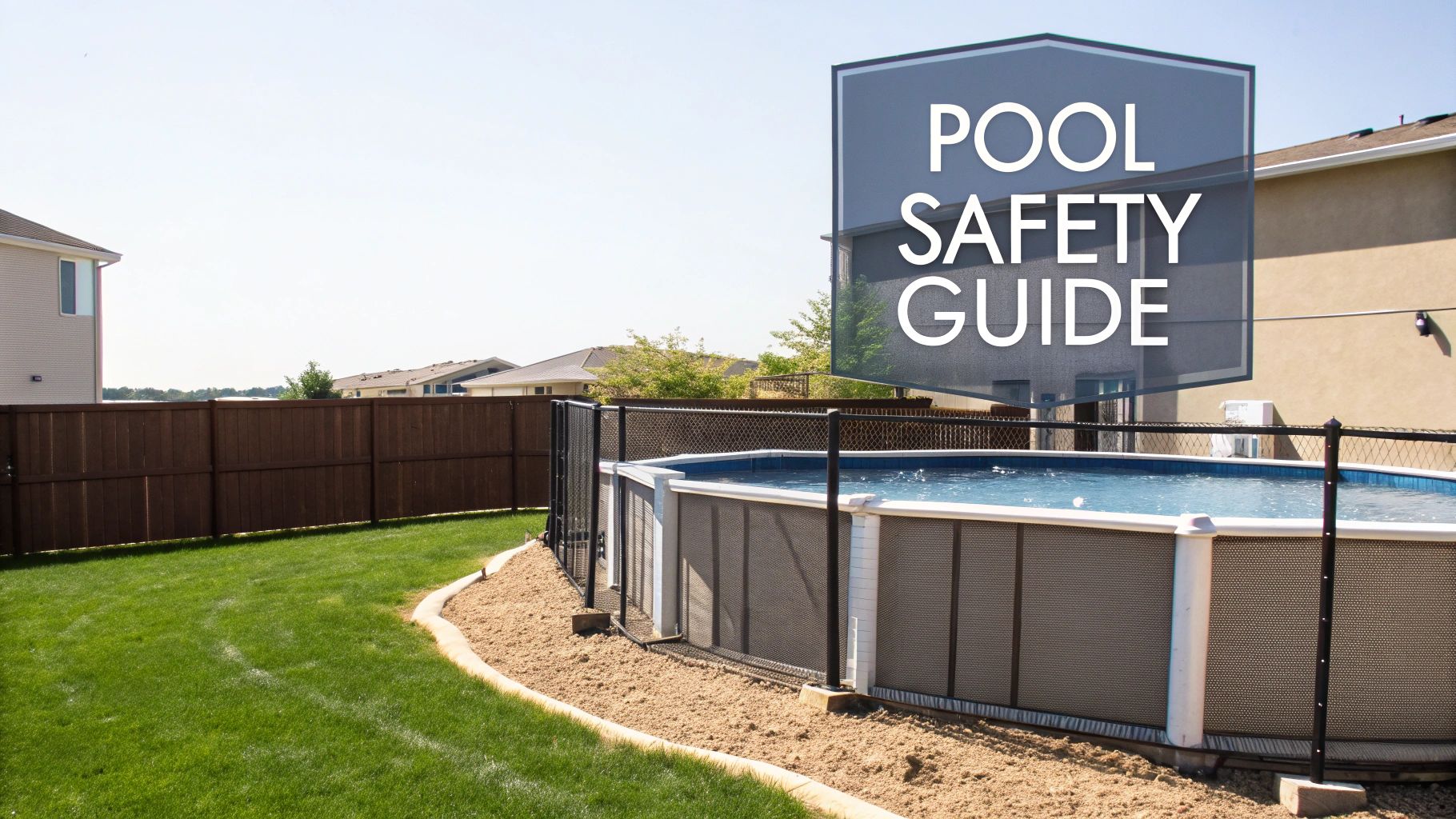
Installing an above-ground pool brings years of summer fun, but it also carries a serious responsibility. A fence transforms your pool from a potential hazard into a secure, worry-free recreational area. It's not about checking a box for a permit; it's about gaining genuine peace of mind.
Consider a pool fence like the guardrail on a balcony. While you trust your family to be careful, you would never leave the edge unprotected. A fence serves the same purpose by providing a non-negotiable physical barrier that protects children, pets, and guests from accidental falls. Since drowning can happen silently and in seconds, a proper fence buys you the critical time needed to prevent a tragedy.
More Than Just a Barrier
Beyond its life-saving role, the right fence delivers practical benefits. It clearly defines the swimming zone, creating a more organized backyard layout. This separation is also a simple way to keep pool toys contained and stop grass clippings or leaves from blowing into the water.
A well-chosen fence can also significantly enhance your property’s appearance. Modern above-ground pool fences are available in a wide range of materials and styles, allowing you to complement your home's design and boost its curb appeal. A fence that integrates with your landscape adds both value and beauty.
Meeting Safety Standards
The primary function of any pool fence is to create a secure enclosure that meets local by-laws. These safety rules are specific because they are proven to work. For example, the U.S. Consumer Product Safety Commission (CPSC) recommends a minimum fence height of 48 inches.
However, local regulations in the Ottawa area can be even stricter. Some municipalities require 60-inch fences and mandate specific gate-latching mechanisms, such as placing the latch release at least 54 inches from the ground to keep it out of a child's reach. You can learn more about these critical safety standards to understand the requirements in different communities.
Actionable Insight: When planning your project, always check your specific municipal by-laws first. Don't assume a standard height is compliant. A compliant fence is a complete system designed to protect the people you care about most, ensuring your backyard remains a place of joy.
Making Sense of Local Pool Fence By-Laws
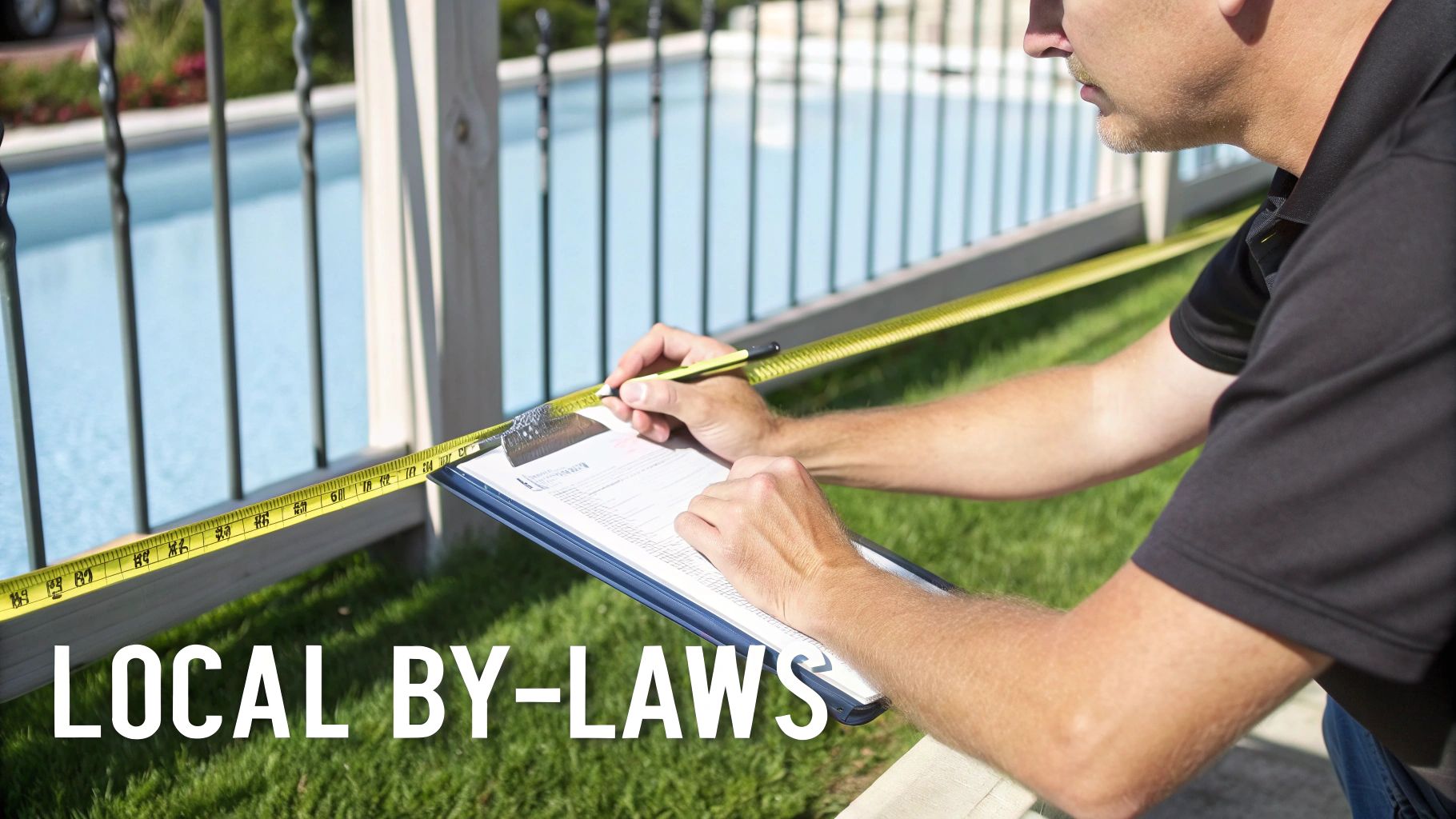
Navigating the local by-laws for above-ground pool fences in Ottawa and Gatineau can feel complex, but these rules are your roadmap to a safe installation. They exist for one reason: to prevent tragic accidents, especially involving young children.
Think of these by-laws as a safety checklist for your pool area. Every rule, from fence height to gate latch placement, is a direct response to a known risk. By understanding the "why" behind the regulations, you can move from seeing a confusing list to a practical guide for building a secure backyard. Getting this right from the start saves you the cost and frustration of a failed inspection or, worse, an unforeseen safety hazard.
The Core Safety Rules You Can't Ignore
When it comes to pool enclosures in the Ottawa–Gatineau region, an inspector will arrive with a checklist and a tape measure. Your fence must meet every requirement.
Here’s a practical checklist of what inspectors look for:
Minimum Fence Height: Ensure your fence stands no shorter than 1.5 metres (about 5 feet). This height is specifically chosen to be difficult for a small child to climb.
Gate Mechanisms: Your gates must be both self-closing and self-latching. This is a critical feature that prevents a gate from being left open accidentally. Test this function after installation.
Latch Height: The latch release mechanism must be located on the pool side of the gate, at least 1.5 metres from the ground, to keep it out of a toddler's reach.
Climb Resistance: Design the fence's exterior so it cannot be used as a ladder. Avoid any horizontal rails, protrusions, or fixtures that could serve as handholds or footholds.
This level of detailed regulation is common in home safety. For instance, understanding local safety compliance for smoke alarms is equally vital for household protection.
Why Compliance is More Than Just a Box-Ticking Exercise
Meeting these standards is non-negotiable, but your goal should be to exceed them. A compliant fence works for you 24/7. The self-latching gate is your backup, securing the pool even when someone forgets to close it. The specific height and climb-proof design create a real barrier for the most vulnerable.
However, a fence alone isn't foolproof. A high percentage of child drownings occur in pools that already have some form of fencing. This highlights a critical point: a by-law doesn't save lives—a properly installed and maintained fence does. Studies confirm that four-sided isolation fencing, which completely separates the pool from the house and yard, can reduce the risk of drowning for young children by over 50%.
Actionable Insight: Treat your local by-law as the minimum safety standard, not the goal. Your objective is to create multiple layers of protection that make unsupervised pool access as difficult as possible.
When you hire a professional installer, you're hiring an expert who ensures every component functions as a complete safety system. They know the local codes and can guarantee your project passes inspection the first time, giving you confidence that your backyard is a safe place for everyone.
Choosing Your Pool Fence Installation Style
When installing a fence for your above-ground pool, you have two primary options: mounting the fence directly onto your pool’s deck or building a freestanding fence that encloses the entire pool area. Your choice will impact your backyard's look, layout, and safety dynamics. The best decision depends on your yard's configuration, your budget, and your safety priorities.
To simplify, think of a deck-mounted fence as a 'balcony railing' for your pool. It attaches directly to the deck's edge, creating a clean, integrated barrier to prevent falls into the water.
A freestanding fence is more like a 'private courtyard.' It establishes a completely separate, enclosed zone around the pool, isolating it from the rest of the yard and creating a larger buffer between the fence and the water.
Deck-Mounted Fences: A Seamless Look
A deck-mounted fence is the ideal choice if you have a deck built flush against your above-ground pool. This style offers a sharp, streamlined look, making the pool and deck feel like a single, cohesive space. Because it follows the deck's perimeter, it consumes no additional lawn space, which is a major advantage in smaller backyards.
The key requirement is a structurally sound deck. Fence posts must be anchored securely into the deck's framework—not just the surface boards—to ensure they can withstand force without failing.
Actionable takeaways for deck-mounted fences:
Best For: Yards where space is limited and a clean, integrated aesthetic is desired.
Key Requirement: A strong, well-built deck capable of supporting the fence structure.
Action Step: Ensure any gate providing access to the deck from the yard meets the same self-closing and self-latching requirements as a main pool gate.
A deck-mounted fence essentially makes the entire deck part of the pool enclosure. This means all access points to the deck must be secured to by-law standards.
Freestanding Fences: The Ultimate Safety Zone
A freestanding, or wrap-around, fence provides the highest level of safety through total isolation. By creating a perimeter away from the pool, it establishes a distinct "safe zone" accessible only through a compliant gate. For families with young children, this is the gold standard because it adds a critical extra layer of separation.
This style also offers greater flexibility in placement and design. You can define the fence's path to enclose a patio area or leave room for lounge chairs within the secured zone. The primary trade-off is that it requires more yard space and can be more visually prominent. For homeowners interested in combining materials, you can learn how hybrid fence systems can be used in freestanding designs to balance durability and style.
Ultimately, your decision between the 'balcony railing' and the 'private courtyard' depends on your property and priorities. If you have a solid deck and want a space-saving, integrated look, a deck-mounted fence is an excellent choice. If you have the space and maximum safety is your top priority, a freestanding fence provides an unbeatable protective buffer.
Comparing The Best Materials For Your Pool Fence
Selecting the right material for your above ground pool fence is a critical decision that affects durability, maintenance, and cost. In the Ottawa–Gatineau region, your choice must withstand humid summers and freezing winters. The ideal fence performs year after year without becoming a constant maintenance task.
Let's evaluate the most practical materials based on how they hold up to our local climate, the upkeep they require, and their relative cost. This will give you the actionable insight needed to choose a material that fits your budget, complements your home, and ensures safety.
Before selecting a material, remember how your installation method—deck-mounted vs. freestanding—can influence your choice. This visual guide summarizes the key differences.

A sleek, deck-mounted fence might call for a different material than a robust, freestanding one. Keep this in mind as we explore your options.
PVC (Vinyl) Fencing: The Low-Maintenance Champion
If you want to spend more time swimming and less time on upkeep, choose PVC. It is the closest you can get to a "set it and forget it" fencing solution.
PVC's primary advantage is its resilience. It will not rot, warp, splinter, or rust, making it ideal for the moist environment around a pool. It also handles Ottawa's freeze-thaw cycles without cracking or fading.
Maintenance involves a simple wash with soap and water to remove dirt. While the initial cost may be higher than some wood options, you save significantly over time on stains, paints, and repairs. To see if the aesthetic fits your home, explore the benefits and styles of PVC fencing.
Wood Fencing: The Natural and Classic Choice
A wood fence offers a timeless, natural aesthetic that blends seamlessly into a backyard landscape. Materials like pressure-treated pine and cedar create a warm, inviting atmosphere.
However, this classic look requires consistent maintenance. Wood is susceptible to moisture and must be regularly sealed or stained to prevent rot, warping, and insect damage. This is an ongoing task necessary to keep the fence safe and attractive.
Actionable Insight: When budgeting for a wood fence, factor in the long-term costs of stains, sealers, and your own time. Neglected wood will quickly become a weathered, unsafe, and non-compliant liability.
For a natural look with enhanced durability, consider alternatives like charred larch fencing, which offers a unique and resilient option.
Ornamental Iron: The Elegant Powerhouse
For a combination of security and classic style, ornamental iron is an excellent choice. Its slender pickets provide a clear view of the pool—a key safety feature—while its solid construction forms a formidable barrier. An iron fence adds a level of sophistication that can elevate your property's curb appeal.
Modern iron fences are treated with protective coatings to resist rust, but they require periodic inspection. Check the fence line for any scratches or chips in the finish and touch them up immediately to prevent rust and maintain its appearance for decades.
Iron is a premium material, but its longevity and strength make it a worthwhile investment.
Hybrid Fencing: The Best of Both Worlds
Hybrid fences offer a smart solution by combining the strengths of different materials. A popular configuration features a galvanized steel frame with PVC or composite infill panels. This provides the structural integrity of steel with the low-maintenance, weather-resistant benefits of vinyl.
This combination is particularly effective for creating a durable and stylish privacy fence around a pool. You get a modern aesthetic without the upkeep of wood, and the steel framework ensures the fence remains straight and strong through harsh seasons. It's a practical, long-term choice for homeowners who value both performance and style.
This table provides a direct comparison to help you make your decision.
Pool Fence Material Head-to-Head Comparison
Material | Durability | Maintenance Level | Aesthetic | Relative Cost |
|---|---|---|---|---|
PVC (Vinyl) | Excellent; resists rot, rust, and insects. Handles freeze-thaw cycles well. | Very Low | Clean, modern, available in various colours and styles. | Moderate |
Wood | Good (with proper care); requires regular sealing/staining to prevent rot and warping. | High | Natural, classic, and rustic. Can be painted or stained. | Low to Moderate |
Ornamental Iron | Excellent; extremely strong and long-lasting. Requires touch-ups for rust prevention. | Low | Elegant, classic, and provides high visibility. | High |
Hybrid (Steel/PVC) | Excellent; combines the structural strength of steel with the low upkeep of PVC. | Very Low | Modern and versatile, often used for privacy styles. | Moderate to High |
Ultimately, select the material that best aligns with your priorities, whether that's minimizing maintenance, achieving a specific look, or maximizing long-term durability.
So, What's This Going to Cost? A Look at Your Pool Fence Budget
Planning your pool fence budget is about creating a clear financial roadmap. Understanding the factors that influence the final price helps you set a realistic budget and avoid surprises. Your total investment is determined by a few key variables.
The most significant cost driver is the total linear footage—the total length of the fence needed to safely enclose your pool area. A larger pool or a more extensive enclosure requires more materials and labour.
Your choice of material is the next major factor. As discussed, premium materials like ornamental iron or custom hybrid fences have a higher upfront cost than standard pressure-treated wood. However, it's crucial to consider the long-term value. Low-maintenance options like PVC may have a higher initial price but can save you significant money on upkeep over the life of the fence.
Breaking Down the Cost Per Linear Foot
To estimate your budget, think in terms of "cost per linear foot." This figure combines the price of materials and the labour required to install one foot of fencing. While market prices fluctuate, here is a general guide for the Ottawa–Gatineau region.
Pressure-Treated Wood: Typically the most budget-friendly option upfront. Remember to include the future cost of stains and sealants in your long-term budget.
PVC (Vinyl): A popular mid-range choice that balances a reasonable initial investment with the significant benefit of minimal long-term maintenance.
Ornamental Iron: A premium material priced to reflect its exceptional durability, security, and timeless aesthetic.
Hybrid Systems: Costs vary based on the combination of materials but generally fall into the mid-to-high end of the price spectrum.
Actionable Insight: Use these as starting points. Complex installations on sloped or rocky terrain, or custom features like multiple gates, will increase the final quote. Always get a detailed estimate that breaks down all costs.
Smart Ways to Fund Your Fence Project
A compliant, safe pool fence is a necessity, but it doesn't have to strain your finances. There are practical ways to manage the cost.
Here at FenceScape, we offer financing programs for clients in Ontario and Quebec. These plans allow you to spread the cost over manageable monthly payments, enabling you to install a high-quality, safe fence now without a large upfront expense.
Another effective way to save is with our neighbourhood group discount program. If you and one or more neighbours are ready for a new fence, we can schedule the projects together. This allows us to order materials in bulk and optimize our crew's time, and we pass those savings directly on to you. It's a win-win for everyone involved.
How a Professional Installation Works
When you hire a professional to install your above-ground pool fence, you are investing in a structured, predictable process. This transforms a potentially complex project into a clear workflow, delivering a safe, compliant, and beautifully finished fence that provides complete peace of mind.
The process begins with an on-site consultation. A fencing expert will visit your property to assess the space, take precise measurements, and discuss your vision. This is the crucial first step to identify potential challenges, such as slopes or buried utility lines, and plan solutions. We will help you align your design preferences with the strict local by-laws in Ottawa and Gatineau, ensuring your plan is viable from the start.
From Blueprint to Build
Once the plan is finalized and materials are selected, our installation crew begins. A professional team follows a systematic approach to ensure every detail is executed correctly.
Here are the key stages of a professional installation:
Site Prep and Layout: We begin by precisely marking the fence line and gate locations according to the approved design.
Setting the Posts: This is the foundation of your fence. We dig post holes below the frost line and set each post in concrete, guaranteeing a strong, stable fence that won't shift or heave.
Installing Panels and Gates: Once the concrete has cured, we attach the fence panels. Gates are then hung with self-closing hinges and self-latching hardware, which we test rigorously to ensure perfect function.
Final Adjustments and Inspection: We conduct a final quality check, ensuring every panel is level, every post is plumb, and all spacing meets or exceeds local safety codes.
The Hallmarks of a Quality Installation
A professional installation is defined by meticulous attention to detail and an unwavering commitment to safety. For example, the U.S. CPSC’s Safety Barrier Guidelines for Residential Pools mandate a minimum height of 48 inches and that gaps between pickets must not allow a 4-inch sphere to pass through. These are the critical standards a professional installer adheres to. You can read the full safety guidelines for residential pools to understand why these details are so important.
Actionable Insight: A professional's job isn't finished until your yard is left clean. We remove all excess soil, leftover materials, and construction debris, leaving you with a pristine yard and a secure pool area.
The final step is a walkthrough with you. The project manager will review the finished fence, demonstrate how the gates operate, and answer any questions. This ensures you are 100% satisfied with the work and confident in the safety of your new pool fence.
Ready to get started? Feel free to contact our team at FenceScape for a free, no-obligation estimate.
Your Top Questions About Above Ground Pool Fences
Planning for a new pool fence brings up many questions. Asking them is the first step toward ensuring your fence is safe, compliant, and a great addition to your backyard.
Based on our experience installing countless pool fences across the Ottawa–Gatineau region, here are direct answers to the most common questions we hear.
Can I Just Install the Fence Myself?
While the DIY approach can be appealing for saving money, pool fencing is a job best left to professionals.
Local by-laws in Ottawa and Gatineau are extremely strict, with precise requirements for height, picket spacing, and gate hardware. A small mistake can result in a failed inspection, a fine, or a critical safety failure. Professionals work with these codes daily and know how to build a fence that is both compliant and safe from the outset.
Actionable Insight: View a professional installation not as a cost, but as an investment in guaranteed compliance and peace of mind. It ensures the job is done right the first time, protecting your family and your property.
Does the Fence Really Need to Go All the Way Around the Pool?
Yes, this is non-negotiable. Local regulations require "four-sided" or "isolation" fencing. The purpose is to completely separate the pool area from your house and yard to prevent unsupervised access from all angles.
While the wall of an above-ground pool can serve as part of the barrier, any access point—such as a ladder or deck—must be secured with a compliant, self-closing, and self-latching gate. A full perimeter fence is the most straightforward and reliable way to meet all safety requirements.
How Long Will a Professional Installation Take?
The timeline depends on the project's size, the materials chosen, and any site-specific challenges like slopes. However, for most standard above-ground pool projects, our crew can typically complete the entire installation in 1 to 3 days.
This includes setting the posts in concrete, installing the panels, and ensuring all gates function perfectly. We will provide a clear and realistic timeline during your initial consultation.
What’s Involved in Maintaining a PVC Pool Fence?
PVC is a top choice for pool fences precisely because it requires almost no maintenance. It is designed to withstand poolside moisture and harsh Canadian weather without rotting, warping, or rusting. You will never need to paint or stain it.
The only upkeep a PVC fence needs is an occasional wash with soap and water to keep it looking clean. Your one critical task is to regularly check the gate to ensure its self-closing and self-latching mechanisms are functioning correctly—this is your most important safety feature.
Ready to create a safe and beautiful backyard oasis? The team at FenceScape has the expertise to guide you through every step, from design to a flawless, by-law-compliant installation. Visit us online to explore your options and request a free, no-obligation estimate.
Comments